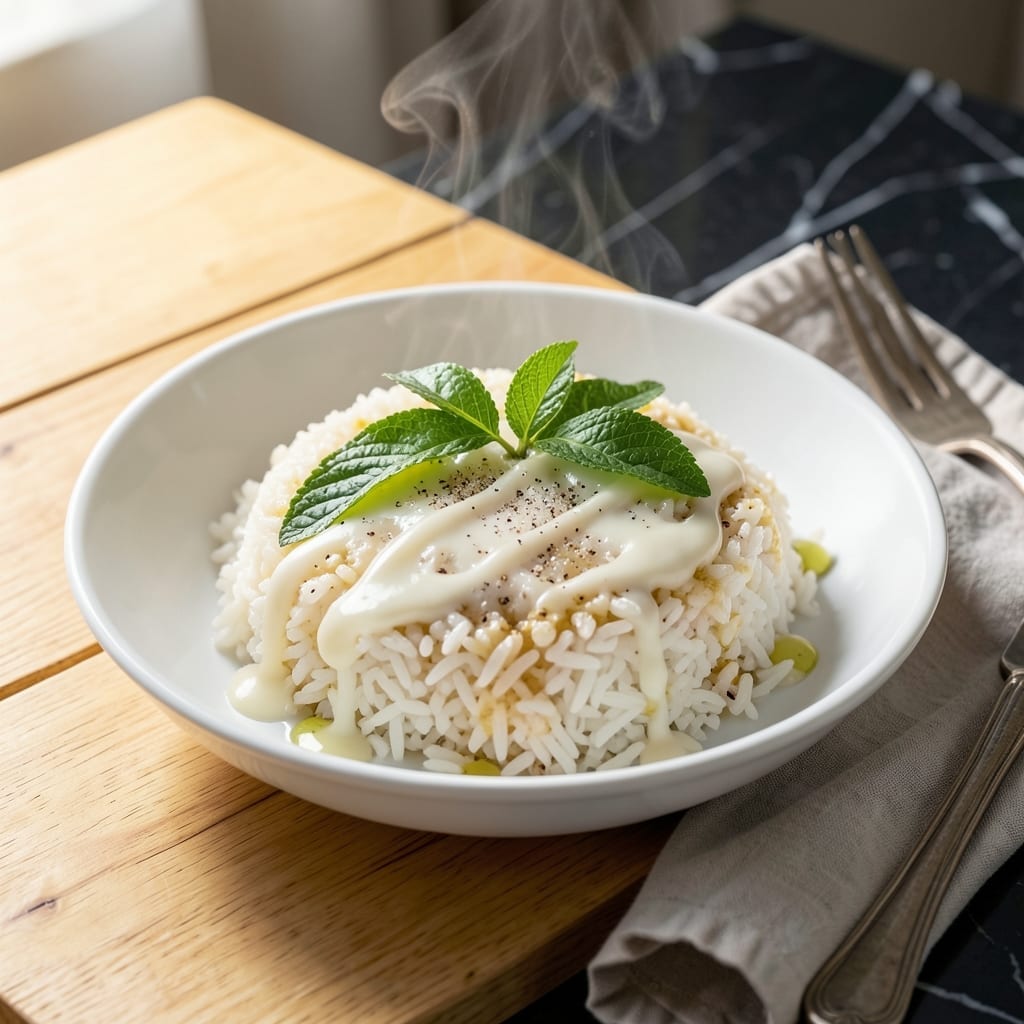
This dish transforms simple rice into a fragrant, tropical creation with minimal effort. The secret lies in using full-fat coconut milk for maximum richness.
In just 20 minutes, you’ll have perfectly fluffy grains infused with a subtle sweetness that pairs beautifully with any main course.
Ingredients for Coconut Rice Recipe with Coconut Milk
Pantry staples plus a can of coconut milk. Nothing exotic, just good stuff.
| Ingredient | Amount | Notes |
|---|---|---|
| Jasmine Rice 🌾 | 2 cups | Rinsed until water runs clear |
| Full-Fat Coconut Milk 🥥 | 1 can | 13.5 oz can preferred |
| Water 💧 | 1 ½ cups | Adjust for desired consistency |
| Granulated Sugar 🍚 | 1 tbsp | Optional for sweetness |
| Salt 🧂 | ½ tsp | Kosher or sea salt |
| Lime Leaves 🍃 | 2 pieces | Kaffir or regular (optional) |
| Fresh Cilantro 🌿 | ¼ cup | Chopped, for garnish |
| Lime 🍈 | 1 whole | Zest and juice (optional) |
| Toasted Coconut Flakes 🥥 | ¼ cup | For topping (optional) |
| Red Bell Pepper 🌶️ | ½ cup | Diced small (optional) |
| Green Onions 🧅 | 2 whole | Thinly sliced for garnish |
[recipe_ingredient_scaler]
The coconut milk is non-negotiable here. Full-fat gives you that luscious texture—light coconut milk just won’t cut it. I grab Thai Kitchen or Native Forest brands from Whole Foods or Trader Joe’s (their house brand is solid). Look for cans without guar gum if you’re picky about texture. Jasmine rice is ideal for its floral notes, but basmati works too (rinse it well—this removes excess starch).
No jasmine rice? Long-grain white rice is your next best bet. Skip the instant rice—it gets mushy. For extra flavor, swap the water for vegetable broth. Out of fresh cilantro? Fresh basil or mint adds a nice twist. The lime leaves are traditional but lime zest works in a pinch. Want heat? A pinch of red pepper flakes won’t hurt.
Cooked rice keeps 4-5 days in the fridge, but the coconut flavor intensifies over time. Reheat with a splash of water or coconut milk to revive. Freezes beautifully for up to 3 months—portion into bags for easy grab-and-go. Garnishes like cilantro and lime are best added fresh, so store those separately.
Why You’ll Love This Recipe
- One Pot Wonder: I dump everything in the rice cooker and walk away—jasmine rice soaks up the coconut milk effortlessly.
- Rich Comfort: That first bite of sweet, creamy rice with the full-fat coconut milk? Honestly, it’s like a hug on a plate.
- Pairs with Anything: I serve it with curries, grilled chicken, or just eat it plain—it’s my reliable side for any meal.
- Budget Stretch: A can of coconut milk and rice feed my family for days, and leftovers taste even better the next day.
Step-by-Step Instructions for Coconut Rice
Here’s the method. Straightforward, tested, works every time.
Step 1: Rinse and Soak the Jasmine Rice
Place the 2 cups jasmine rice in a fine-mesh strainer and rinse under cold running water until the water runs completely clear. This removes excess starch and prevents gummy rice. I always do this step in the sink with the strainer tilted at an angle.
After rinsing, let the rice soak in fresh water for 15 minutes. This step ensures even cooking and fluffier grains. Drain completely before proceeding—wet rice will dilute your coconut milk and affect the final texture.
Step 2: Combine Liquids and Aromatics
In a medium saucepan with a tight-fitting lid, combine the 1 can full-fat coconut milk, 1.5 cups water, 1 tbsp granulated sugar, 0.5 tsp salt, and 2 pieces lime leaves. Stir gently to dissolve the sugar and salt.
Bring this mixture to a gentle simmer over medium-high heat. You want to see small bubbles along the edges and occasional steam rising from the surface. Don’t let it reach a rolling boil—this can cause the coconut milk to separate.
Step 3: Cook the Rice to Perfection
Add the drained rice to the simmering liquid and stir once to distribute it evenly. Bring the mixture back to a gentle simmer, then immediately reduce the heat to low. Cover the saucepan with the lid and let it cook undisturbed for 15 minutes.
After 15 minutes, turn off the heat and let the rice steam, covered, for an additional 10 minutes. This resting period allows the rice to absorb all the liquid and develop its full, fragrant flavor. Resist the urge to peek—releasing steam interrupts the cooking process.
Step 4: Fluff and Garnish
After the resting period, remove the lime leaves and discard them. Gently fluff the rice with a fork to separate the grains and release any trapped steam. You’ll notice the rice has a beautiful, glossy sheen from the coconut milk.
Transfer the rice to a serving dish. Garnish with 0.25 cup fresh cilantro, 0.25 cup toasted coconut flakes, 0.5 cup diced red bell pepper, and 2 thinly sliced green onions. For an extra zing, squeeze a little lime juice over the top before serving.
Pro Tips For Making Coconut Rice Recipe With Coconut Milk
- Rinse the Rice: Wash the jasmine rice until the water runs clear—this removes excess starch so your coconut rice stays fluffy, not gummy. I learned this the hard way after ending up with a sticky mess more than once.
- Use Full-Fat Only: Skip the light coconut milk; the full-fat version is non-negotiable for that rich, creamy texture. Sounds obvious, but I tried cutting corners once and the rice tasted thin and watery.
- Simmer Low and Slow: Once it starts bubbling, drop the heat to low and cover tightly—no peeking. After burning a batch from lifting the lid too soon, I finally got the hang of letting it steam undisturbed for 15-20 minutes.
- Add Sugar Late: Stir in the granulated sugar after the rice is cooked, not before. My grandmother swore by this, and she was right: it prevents the grains from turning mushy while still giving that subtle sweetness.
Common Mistakes When Making Great coconut rice recipe with coconut milk
Over-Rinsing the Rice
Rinsing rice removes excess starch, but overdoing it washes away flavor too. Stop once the water runs completely clear—usually after 3-4 rinses. I learned this the hard way after my rice lost its body one too many times.
Using Low-Fat Coconut Milk
Full-fat coconut milk is non-negotiable for that luscious texture. Light versions lack richness and can make your rice taste watery. Stick to 13.5 oz cans of Thai Kitchen or similar brands for best results.
Skipping the Soak
Soaking jasmine rice for 15 minutes ensures even cooking and fluffier grains. Skip this, and you risk uneven texture. I always set a timer—it’s an easy step that makes a noticeable difference.
Peeking While Cooking
Every time you lift the lid, you release precious steam that’s cooking your rice. Keep it covered for the full 15 minutes of cooking and 10 minutes of resting. Trust the process—resist the urge to check. 💡
Over-Sweetening
The 1 tbsp sugar enhances the coconut’s natural sweetness, but more can overpower. Taste the cooking liquid before adding rice—adjust then if needed. Coconut milk already brings subtle sweetness to the party.
Ignoring the Rest
That 10-minute rest after cooking lets the rice absorb all the liquid and steam to perfection. Rushing this step gives you undercooked grains or a soupy texture. Patience pays off with fluffy, fragrant results. 🌟
Nutrition Facts
Frequently Asked Questions
Can I use a different type of rice?
Jasmine works best, but long-grain white rice is a good substitute. Avoid instant rice as it gets mushy. Basmati also works if rinsed well.
What if I don’t have lime leaves?
No problem! Lime zest or a splash of lime juice adds similar citrus notes. You can also skip it entirely.
How do I store leftovers?
Keep in an airtight container in the fridge for up to 5 days. Reheat with a splash of water or coconut milk to restore moisture.
Why is my rice sticky?
This usually means too much liquid or not enough rinsing. Use 1.5 cups water per 1 can coconut milk and rinse rice thoroughly.

Trained in classic French technique but raised on slow-cooked ribs and spicy rubs, she blends culinary skill with smoke and soul.
- Recipe for Crock Pot Lasagna Using Ravioli: No-Boil Cheese Layers - October 3, 2026
- Recipe for Cut Up Chicken: One-Pan Crispy Bites - October 3, 2026
- Recipe For Oven Baked Haddock: Buttery Crumbs With Zesty Lemon Topping - October 3, 2026