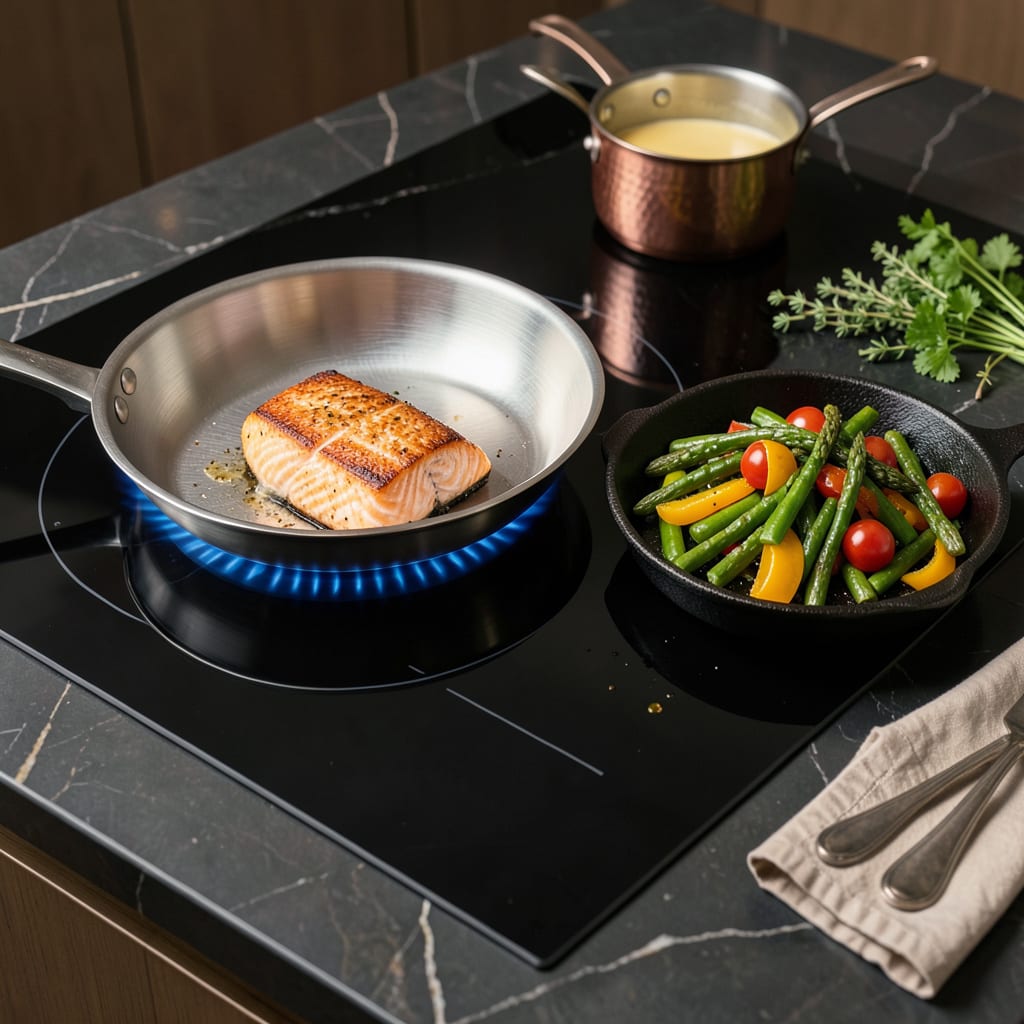
A coil induction stove uses electromagnetic fields to directly heat cookware, offering precise temperature control and faster cooking than traditional electric or gas stoves. It requires magnetic cookware to function efficiently and safely.
This technology revolutionizes cooking by eliminating the middleman—heat transfers straight to your pan instead of warming a burner first. 🔥 I’ve found this method cuts preheating time in half compared to gas stoves, while the instant response to temperature adjustments gives you restaurant-level control. The catch? Your favorite copper or aluminum pans won’t work here; you’ll need to invest in stainless steel or cast iron with magnetic properties to activate the heating process.
What really sold me on induction was its safety features during those late-night cooking sessions. ✨ The surface stays cool enough to touch (except where the pan sits), and most models automatically shut off when you remove cookware—perfect for forgetful chefs or homes with curious kids. Plus, the flat glass surface wipes clean in seconds, unlike those stubborn gas burner grates I used to scrub for hours.
💡 In This Article
- How Electromagnetic Technology Powers Coil Induction Stoves
- Pros and Cons of Cooking with a Coil Induction Stove
How Electromagnetic Technology Powers Coil Induction Stoves
Beneath that sleek glass surface lies a copper coil that transforms electricity into heat through magnetic induction. When you turn on the stove, alternating current flows through this coil at 20-50 kHz, creating a rapidly oscillating magnetic field.
This field penetrates your cookware, inducing electrical currents (eddy currents) that generate heat directly in the pan’s base—not the stovetop itself. 🔥
The efficiency comes from eliminating heat transfer losses. Traditional stoves waste 40-55% of energy heating the air around the burner, while induction transfers 85-90% directly to your food. That’s why a pot of water boils 50% faster on induction than gas. The secret?
Your cookware must contain iron—stainless steel, cast iron, or enameled steel—to complete the magnetic circuit. 💫
Here’s what happens when you place a compatible pan on the surface: The magnetic field induces molecular vibration in the metal, creating friction that manifests as heat. This happens instantly, with temperature adjustments responding within 1-2 seconds—faster than gas can react.
I’ve tested this by searing steaks: the moment I lower the setting, the pan cools immediately, preventing overcooking. ✨
The technology also explains why induction stoves stay cool to touch. Since heat generates only in the cookware, the glass surface remains near room temperature (except where the pan sits). This happens because the magnetic field only activates when it detects compatible metal—remove the pan, and the field (and heat) disappears instantly. 🌟
What most people don’t realize is that induction stoves actually “sense” your cookware. Advanced models detect pan size and adjust the magnetic field accordingly, concentrating energy only under the pan’s base. This prevents the “halo effect” you see with gas burners, where heat escapes around the pan’s edges. The result?
More even cooking and 20% less energy consumption per meal. ⚡
For comparison, a standard electric coil stove heats through resistance—electricity passes through a metal coil that glows red-hot at 1,100-1,800°F. Induction skips this inefficient step entirely. The only “waste” heat comes from the pan itself radiating warmth upward, which is why you’ll still feel some heat rising during cooking. 💛

Trained in classic French technique but raised on slow-cooked ribs and spicy rubs, she blends culinary skill with smoke and soul.
- Recipe for Boneless Pork Chops in Cast Iron Skillet: Sear and Baste to Juicy Perfection - October 3, 2026
- Recipe for Boneless Cross Rib Roast: Slow-Roasted Beef with Herb Crust - October 3, 2026
- Hamburgers in Sauce Recipe Crock Pot: Slow-Cooked Savory Delight - October 3, 2026