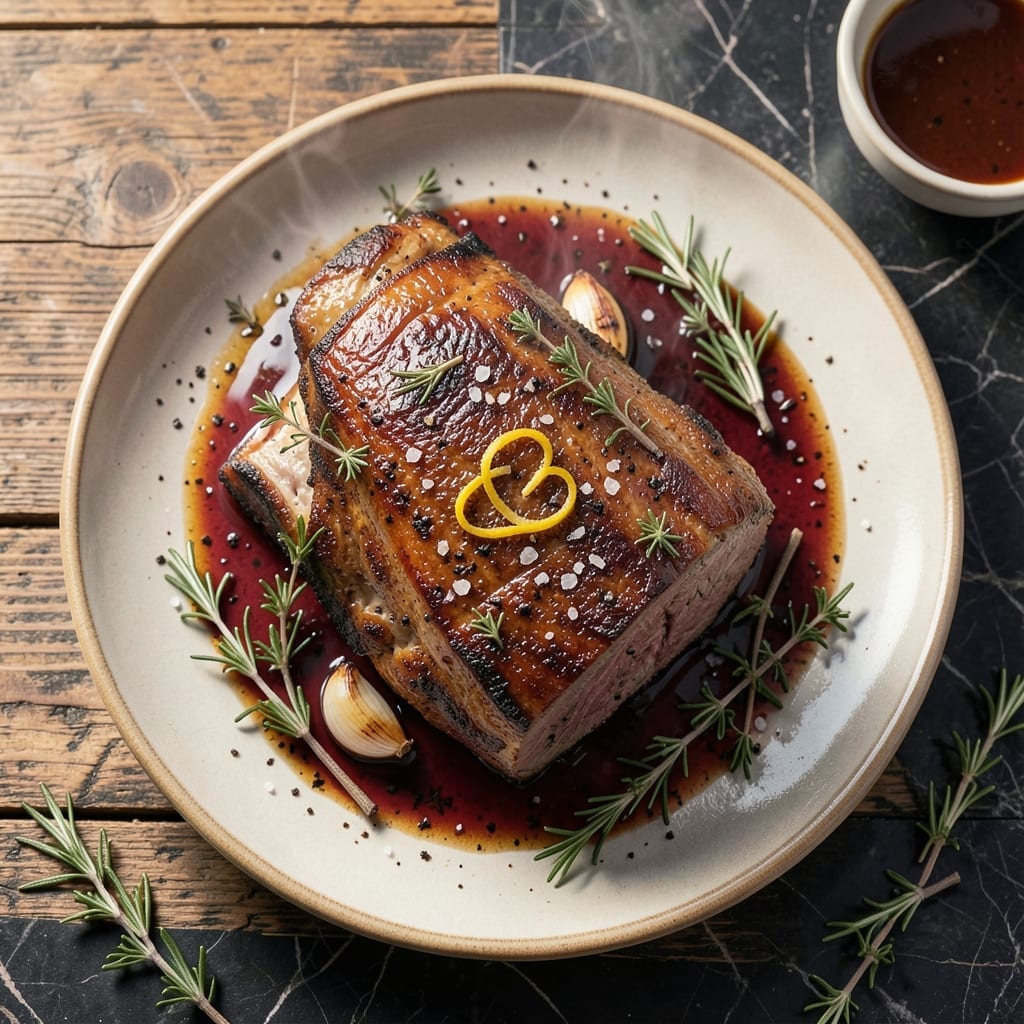
This prime rib delivers tender results with a fragrant herb crust that locks in juices. My French training meets pitmaster instincts in this foolproof method.
Slow-roasted at low heat, the meat stays perfectly pink inside while the crust forms a flavorful seal. Serve with au jus for a restaurant-quality experience at home.
Ingredients for Colorado Cache Prime Rib
Prime rib with herb crust demands quality beef and fresh aromatics for restaurant results.
| Ingredient | Amount | Notes |
|---|---|---|
| Prime Rib Roast 🥩 | 4 lb | Bone-in, well-marbled preferred |
| Kosher Salt 🧂 | 2 tbsp | Diamond Crystal preferred |
| Freshly Ground Black Pepper 🌶️ | 2 tsp | Coarse grind for crust |
| Fresh Rosemary 🌿 | 3 tbsp | Chopped, stems removed |
| Fresh Thyme 🍃 | 2 tbsp | Leaves stripped from stems |
| Garlic Cloves 🧄 | 6 cloves | Minced for herb paste |
| Dijon Mustard 🟡 | 3 tbsp | Smooth, not whole grain |
| Extra-Virgin Olive Oil 🫒 | ¼ cup | High quality, fruity notes |
| Red Wine 🍷 | 1 cup | Dry variety for au jus |
| Beef Stock 🥩 | 2 cups | Low-sodium preferred |
| Unsalted Butter 🧈 | 4 tbsp | For finishing au jus |
| All-Purpose Flour 🌾 | 2 tbsp | For thickening au jus |
| Shallots 🧅 | 2 whole | Finely minced for au jus |
[recipe_ingredient_scaler]
The prime rib is non-negotiable for this preparation. USDA Prime grade delivers the marbling essential for tenderness, though Choice works acceptably. Source from reputable butchers like Snake River Farms or high-end grocers. Bone-in roasts provide superior flavor and moisture retention. Look for vibrant red color with abundant white fat streaking—this fat renders during cooking, basting the meat from within.
Substitutions compromise the dish but can work in a pinch. No fresh rosemary? Dried at one-third the quantity, though the flavor profile flattens. For the red wine, a quality beef broth with balsamic vinegar mimics depth. Thyme can be swapped for marjoram (equal amounts). Avoid pre-minced garlic—its flavor degrades too quickly. The Dijon mustard binds the herb crust; whole-grain mustard adds texture but may burn more easily.
Store the raw roast on a rack over a plate, uncovered, for up to 3 days. Fresh herbs keep in damp paper towels for 5-7 days. The prepared au jus can be refrigerated for 4 days or frozen for 3 months. Reheat gently to preserve the emulsion—boiling causes separation.
Why You’ll Love This Recipe
- Set It and Forget: I rub the prime rib with kosher salt, pepper, and fresh herbs, then let the oven do all the work.
- Herb-Crusted Perfection: The rosemary and thyme create a fragrant crust that makes every bite ridiculously good.
- Holiday Showstopper: This is my go-to for Christmas dinner—impressive enough for guests, simple enough for me.
- Leftovers for Days: One roast feeds us for two meals, and the sandwiches the next day? Even better than the first serving.
Step-by-Step Instructions for Colorado Cache Prime Rib
Master the reverse sear method for consistent edge-to-edge doneness with a flavorful herb crust.
Step 1: Prepare the Herb Crust and Season the Roast
In a small bowl, combine the 3 tbsp Fresh Rosemary, 2 tbsp Fresh Thyme, 6 cloves Garlic Cloves, 3 tbsp Dijon Mustard, and 0.25 cup Extra-Virgin Olive Oil to form a paste. The olive oil’s fruity notes will complement the herbs beautifully.
Pat the 4 lb Prime Rib Roast dry with paper towels, then season generously with the 2 tbsp Kosher Salt and 2 tsp Freshly Ground Black Pepper. Rub the herb paste all over the roast, ensuring every surface is coated. This creates a flavorful crust that locks in moisture during cooking.
Step 2: Slow Roast for Even Doneness
Preheat your oven to 250°F. Place the seasoned roast on a wire rack set over a roasting pan, bone-side down. This low and slow method ensures the meat cooks evenly from edge to edge without overcooking the outer layers.
Roast for approximately 2 to 2.5 hours, or until the internal temperature reaches 110-115°F for medium-rare. Use a meat thermometer inserted into the thickest part of the roast, avoiding the bone. The slow cooking process guarantees the promised tenderness throughout.
Step 3: Sear for a Crust and Begin the Au Jus
Remove the roast from the oven and increase the temperature to 450°F. While the oven heats, place the roast in a large skillet over high heat on the stovetop. Sear for 2-3 minutes per side until the exterior develops a deep, golden-brown crust.
Transfer the roast to a cutting board to rest. In the same skillet, add the 2 whole Shallots and cook over medium heat for 2 minutes until softened. This builds the foundation for your au jus with rich, caramelized flavors.
Step 4: Finish the Au Jus and Rest the Meat
Pour in the 1 cup Red Wine to deglaze the skillet, scraping up all the browned bits. Simmer for 3-4 minutes until the liquid reduces by half. Add the 2 cups Beef Stock and bring to a gentle simmer.
In a small bowl, mix the 2 tbsp All-Purpose Flour with 2 tbsp of the 4 tbsp Unsalted Butter to form a slurry. Whisk this into the skillet and simmer for 5 minutes until the au jus thickens slightly. Stir in the remaining 2 tbsp Unsalted Butter for a glossy finish. Strain before serving.
Let the roast rest for 20-30 minutes before carving. This allows the juices to redistribute, ensuring each slice is moist and flavorful. The internal temperature will rise 5-10°F during this time, reaching the ideal 125-130°F for medium-rare.
Pro Tips For Making Colorado Cache Prime Rib
- Reverse Sear First: Start in a 250°F oven until the internal temp hits 110°F for medium-rare, then finish with a 5-minute blast at 500°F for a perfect crust—I learned this the hard way after ruining two roasts with uneven cooking.
- Salt Overnight: Dry-brine the prime rib with kosher salt (at least 1 tablespoon per pound) and let it sit uncovered in the fridge for 12-24 hours. Sounds weird, but it works: the salt penetrates deep, and the surface dries out just enough for a better sear.
- Skip Cold Meat: After burning three batches, I finally figured out to pull the roast from the fridge 2 hours before cooking. A cold center means uneven doneness, and nobody wants a perfect crust with a lukewarm middle.
- Herb Paste Last: Mix the rosemary, thyme, and a little olive oil into a paste, then slather it on just before the final sear. My grandmother swore by this, and she was right: it keeps the herbs from burning and locks in their flavor.
Flavor Customization for This Dish
Smoky BBQ Rub
Swap the herb paste for a bold dry rub: combine 3 tbsp smoked paprika, 2 tbsp brown sugar, and 1 tbsp chili powder with the existing Kosher Salt and Freshly Ground Black Pepper. I learned this blend at local BBQ competitions—it adds a deep, smoky complexity that pairs perfectly with the rich beef. 🔥
Coffee-Chili Crust
Add 2 tbsp finely ground coffee and 1 tsp cayenne to your herb paste for a Colorado-inspired twist. The coffee enhances the meat’s natural flavors while the cayenne provides a subtle kick. This is my go-to when I want to impress at dinner parties.
Use dark roast beans for maximum depth. The bitterness balances the fat beautifully.
Garlic-Herb Butter
Mix ½ cup softened Unsalted Butter with 2 minced Garlic Cloves, 1 tbsp Fresh Rosemary, and 1 tbsp Fresh Thyme. Spread this compound butter over the roast during the final 30 minutes of cooking for an extra layer of richness.
Red Wine Reduction
For a deeper au jus, reduce 2 cups Red Wine with 1 tbsp balsamic vinegar before adding the Beef Stock. Simmer until syrupy, then proceed with the recipe. This adds a tangy depth that elevates the sauce to restaurant quality. 💛
Horse Radish Cream
Whisk ½ cup sour cream with 2 tbsp prepared horseradish and 1 tsp Dijon Mustard for a creamy, spicy accompaniment. Serve alongside the prime rib for those who love a little heat with their meat.
Nutrition Facts
Frequently Asked Questions
What’s the ideal internal temperature for medium-rare?
Aim for 110-115°F when removing from oven. The temp will rise to 125-130°F during the 20-30 minute rest. This ensures perfect doneness throughout.
Can I use a boneless roast instead?
Yes, but bone-in provides better flavor and moisture. For boneless, reduce cooking time by 15-20% and use a meat thermometer to check doneness. The bone acts as an insulator.
How do I prevent the herb crust from burning?
Press the paste firmly onto the meat and avoid adding it too early. Sear at 450°F only after the slow roast. Watch closely—herbs can scorch in 1-2 minutes.
What wine pairs best with this dish?
Use the same dry red for cooking and serving. A bold Cabernet Sauvignon or Malbec complements the rich beef and herb crust perfectly.

Trained in classic French technique but raised on slow-cooked ribs and spicy rubs, she blends culinary skill with smoke and soul.
- Recipe for Boneless Pork Chops in Cast Iron Skillet: Sear and Baste to Juicy Perfection - October 3, 2026
- Recipe for Boneless Cross Rib Roast: Slow-Roasted Beef with Herb Crust - October 3, 2026
- Hamburgers in Sauce Recipe Crock Pot: Slow-Cooked Savory Delight - October 3, 2026