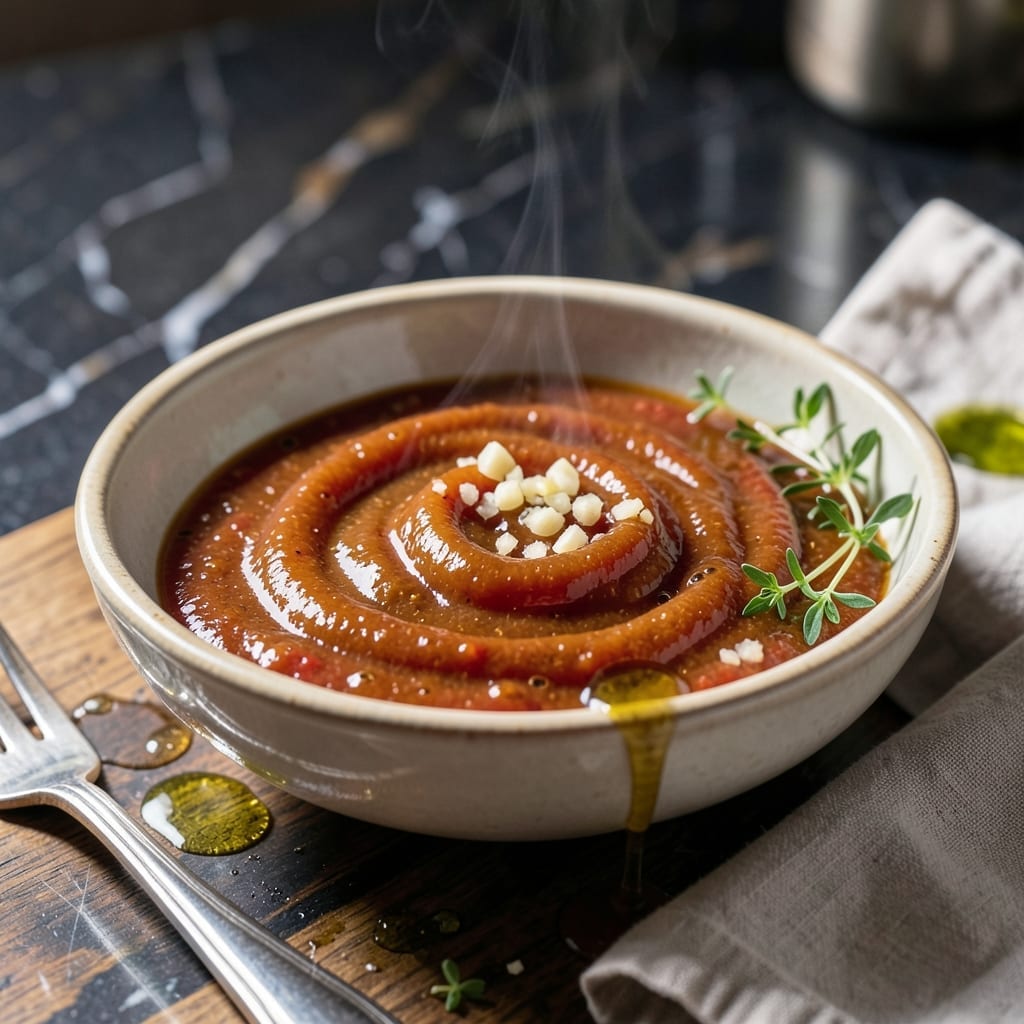
This sauce brings the perfect balance of tangy vinegar and sweet tomato to any dish. I developed this version after years of tweaking the classic ratio.
With just a few pantry staples, you can create a versatile condiment that elevates chicken, pork, or vegetables. The result is consistently smooth and well-balanced.
Ingredients for Contadina Sweet and Sour Sauce
A few pantry staples blend into a smooth, tangy-sweet condiment for any dish.
| Ingredient | Amount | Notes |
|---|---|---|
| Tomato Sauce 🍅 | 1 cup | Canned or bottled, unsalted |
| White Vinegar 💧 | ½ cup | Distilled for clean flavor |
| Brown Sugar 🍚 | ½ cup | Packed for sweetness balance |
| Ketchup 🍅 | ¼ cup | For extra tang and thickness |
| Soy Sauce 🫒 | 2 tbsp | Low-sodium preferred |
| Worcestershire Sauce 🫒 | 1 tbsp | Vegetarian version if available |
| Garlic Powder 🧄 | 1 tsp | Or 2 fresh cloves minced |
| Onion Powder 🧅 | 1 tsp | Dried minced onion works too |
| Ground Black Pepper 🌶️ | ½ tsp | Freshly ground preferred |
[recipe_ingredient_scaler]
The tomato base matters most. Contadina or Hunts canned sauce both work well—just avoid varieties with added herbs (they clash with the flavor profile). For vinegar, any distilled white vinegar is fine, but Heinz is my go-to for consistency. Brown sugar is non-negotiable for that deep caramel note. Domino or store brand both dissolve evenly.
No brown sugar? White sugar plus 1 tbsp molasses gets you close. Swap ketchup for tomato paste plus a splash of water if that’s what you’ve got. For soy sauce, tamari works at a 1:1 ratio. Missing Worcestershire? A dash of soy plus a pinch of sugar mimics the depth. The garlic and onion powders can be replaced with fresh at double the amount, but powders blend more smoothly.
This keeps in the fridge for 2-3 weeks in a sealed jar. The flavors deepen after a day, so make it ahead if you can. Freezes well for up to 3 months—just thaw overnight before using (the texture stays perfect).
Why You’ll Love This Recipe
- 5-Minute Magic: I dump everything in one pot—tomato sauce, vinegar, brown sugar—and it’s done before the rice finishes cooking.
- Tangy-Sweet Balance: The vinegar cuts through the brown sugar so it’s sweet but not cloying, with ketchup adding that familiar depth.
- Pairs With Anything: I’ve slathered it on meatballs, stir-fried veggies, even straight-up chicken tenders. Yes, even on a Tuesday night.
- Pantry Staples Only: No special trips to the store. I always have tomato sauce, vinegar, and soy sauce tucked away, so dinner’s never far off.
Step-by-Step Instructions for Sweet and Sour Sauce
This no-fuss method delivers the perfect balance of tangy and sweet every time.
Step 1: Combine Wet Ingredients in a Saucepan
In a medium saucepan, pour in the 1 cup Tomato Sauce, 0.5 cup White Vinegar, 0.5 cup Brown Sugar, and 0.25 cup Ketchup. Use a whisk to blend them together until the brown sugar starts to dissolve into the liquid.
I always use a saucepan with a heavy bottom to prevent hot spots. The mixture will look a bit thin at this stage, but don’t worry—it thickens beautifully as it cooks down. Place the pan over medium heat and stir occasionally to help the sugar dissolve completely.
Step 2: Add Savory and Seasoning Elements
Once the sugar is fully dissolved, stir in the 2 tbsp Soy Sauce, 1 tbsp Worcestershire Sauce, 1 tsp Garlic Powder, 1 tsp Onion Powder, and 0.5 tsp Ground Black Pepper. The soy and Worcestershire add depth that balances the sweetness.
Here’s the thing—taste the mixture now. You’ll notice how the flavors start to meld together, with the vinegar’s sharpness rounded out by the sugar. Bring the mixture to a gentle simmer at this stage, watching for small bubbles to appear at the edges.
Step 3: Simmer to Achieve Ideal Consistency
Reduce the heat to medium-low and let the sauce simmer uncovered for 10-12 minutes. Stir occasionally to prevent sticking, especially as it begins to thicken.
You’ll know it’s ready when the sauce coats the back of a spoon and has reduced by about one-third. It should have a glossy appearance and a syrupy consistency that drizzles slowly from a spoon. If it thickens too much before the time is up, add a splash of water and continue cooking.
Step 4: Cool and Store Properly
Remove the saucepan from heat and let the sauce cool to room temperature. It will thicken slightly more as it cools down. This takes about 20-30 minutes at room temperature.
Transfer to an airtight container once completely cool. The sauce keeps well in the refrigerator for up to 2 weeks. For best results, make it a day ahead—this allows the flavors to fully develop and meld together.
Pro Tips For Making Contadina Sweet And Sour Sauce
- Simmer Low and Slow: Cook the sauce on medium-low heat for at least 15 minutes—high heat can make the vinegar and sugar separate or burn, and you want that deep, melty blend of flavors.
- Balance the Vinegar: White vinegar is strong, so start with 2 tablespoons and taste before adding more; I learned this the hard way after ruining a batch with too much sharpness.
- Use Real Ketchup: Skip the generic store brand—Heinz or a quality ketchup makes a real difference because the tomato depth and sweetness are more consistent.
- Dissolve the Sugar First: Mix the brown sugar with 2 tablespoons of warm water before adding it to the pot—this prevents clumps and guarantees it distributes evenly through the sauce.
Common Mistakes When Making This Recipe
Over-Sweetening the Sauce
It’s tempting to add extra sugar, but resist the urge. The 0.5 cup Brown Sugar is perfectly balanced with the vinegar’s tang. I once added 2 tbsp extra and ended up with syrup instead of sauce. 💡
Skipping the Simmer
This sauce needs 10-12 minutes of simmering to develop its depth. Rushing it leaves you with a thin, watery mixture. I use a heavy-bottomed pan for even heat and stir often to prevent scorching.
Using Substitutes Blindly
Not all vinegars work here. Stick with White Vinegar—apple cider or balsamic will alter the flavor profile. I learned this the hard way when a batch turned muddy brown with an odd aftertaste.
Ignoring the Cooling Step
Let it cool completely before storing. Hot sauce in a sealed container creates condensation that dilutes the flavor. I transfer mine to a glass jar only after it reaches room temperature.
Over-Stirring While Simmering
Stir occasionally, not constantly. Too much stirring can break down the sauce’s body. I check mine every 2-3 minutes during simmering to ensure even cooking without overworking it.
Forgetting to Taste
Always taste before finalizing. The balance might need a pinch more salt or a splash of vinegar. I keep soy sauce nearby to adjust the savory notes if needed. 🌟
Nutrition Facts
Frequently Asked Questions
Can I use apple cider vinegar instead?
Stick with white vinegar for the cleanest flavor. Apple cider vinegar adds a fruity note that changes the classic taste. In a pinch, use it but expect a slightly different profile.
How long does this sauce stay fresh?
Stored in an airtight container in the fridge, it keeps for 2-3 weeks. For longer storage, freeze for up to 3 months—thaw overnight before using.
What if my sauce is too thin?
Simmer it uncovered for 2-3 extra minutes to reduce further. If it thickens too much, stir in 1-2 tbsp water until desired consistency is reached.
Can I make this gluten-free?
Yes! Swap the soy sauce for tamari or a certified gluten-free alternative. Ensure all other ingredients, like Worcestershire, are also gluten-free.

Trained in classic French technique but raised on slow-cooked ribs and spicy rubs, she blends culinary skill with smoke and soul.
- Recipe for Boneless Pork Chops in Cast Iron Skillet: Sear and Baste to Juicy Perfection - October 3, 2026
- Recipe for Boneless Cross Rib Roast: Slow-Roasted Beef with Herb Crust - October 3, 2026
- Hamburgers in Sauce Recipe Crock Pot: Slow-Cooked Savory Delight - October 3, 2026