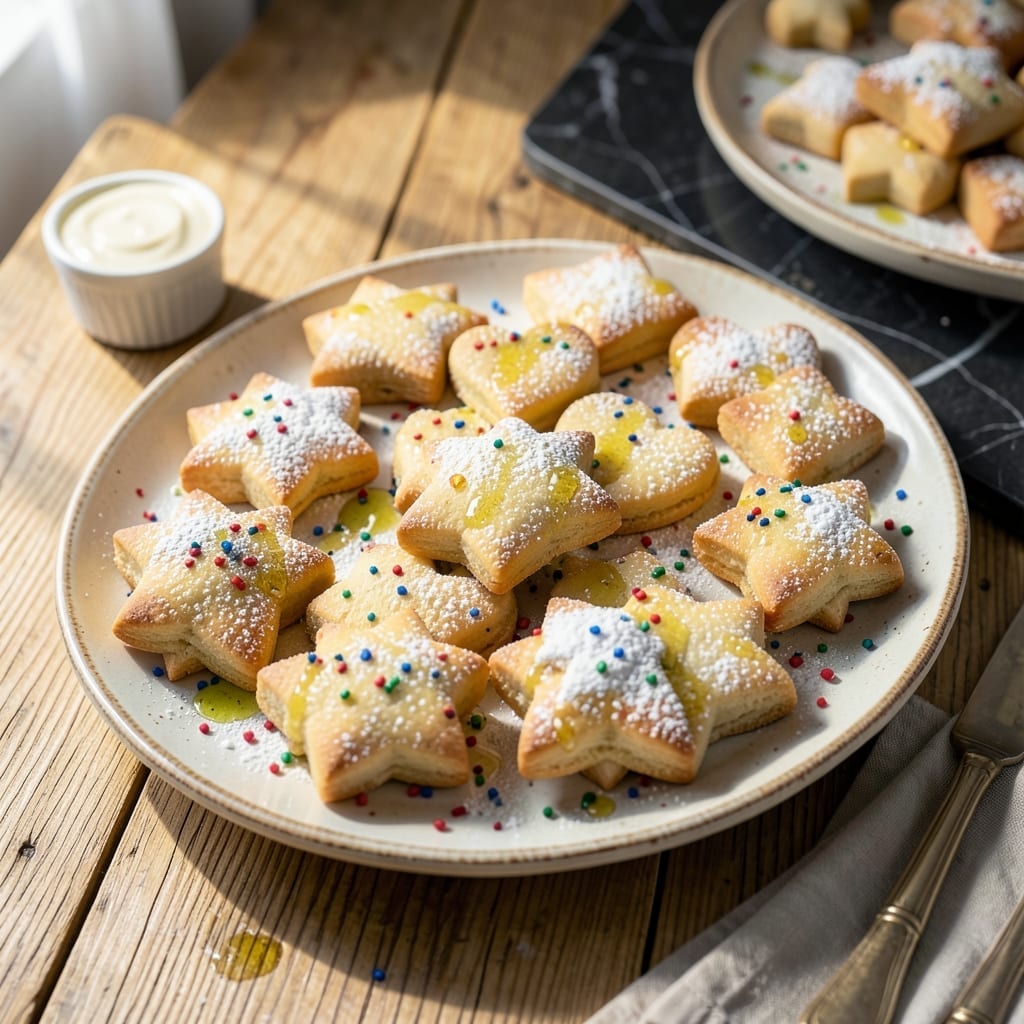
This recipe delivers clean-edged cutout cookies that hold their shape perfectly during baking. The buttery dough rolls out smoothly and cuts without spreading.
I’ve refined this method through years of holiday baking, ensuring consistent results every time. The secret lies in proper chilling and precise rolling thickness.
Ingredients for Cookie Recipe for Cutout Cookies
Precise ingredients yield clean-edged cutout cookies that hold shape perfectly during baking.
| Ingredient | Amount | Notes |
|---|---|---|
| All-Purpose Flour 🌾 | 3 cups | Sifted for smooth texture |
| Unsalted Butter 🧈 | 1 cup | Cold, cubed for flaky dough |
| Granulated Sugar 🍚 | ¾ cup | Fine grain for even distribution |
| Large Egg 🥚 | 1 whole | Room temperature for binding |
| Vanilla Extract 🌿 | 1 tsp | Pure for best flavor |
| Fine Sea Salt 🧂 | ½ tsp | Balances sweetness precisely |
| Baking Powder 🧂 | 1 tsp | Ensures even rise without spreading |
| Almond Extract 🌿 | ¼ tsp | Optional, enhances depth of flavor |
| Heavy Cream 🥛 | 2 tbsp | For tender, rollable dough |
| Powdered Sugar 🍚 | 1 cup | For dusting work surface |
[recipe_ingredient_scaler]
The flour is fundamental here. King Arthur or Gold Medal all-purpose deliver consistent protein content for structural integrity. Butter must be cold—Plugra or European-style for superior flavor and lower water content. Measure flour by spooning into cups and leveling (don’t scoop directly from the bag). The sugar’s fine grain ensures even distribution without gritty texture in the finished cookies.
No almond extract? Skip it entirely—vanilla carries the flavor profile sufficiently. For a richer dough, substitute 1 tbsp sour cream for the heavy cream. Egg size matters: use large for proper binding. If dough cracks while rolling, let it rest at room temperature for 5-10 minutes before continuing. The powdered sugar for dusting prevents sticking without adding moisture.
Dough keeps wrapped tightly in the refrigerator for up to 3 days or in the freezer for 1 month. Baked cookies stay fresh in airtight containers at room temperature for 5 days. For longer storage, freeze undecorated cookies between layers of parchment for up to 2 months.
Why You’ll Love This Recipe
- I’ll be real: I always double the batch and freeze half for last-minute treats—no one knows they weren’t fresh.
- One Bowl Wonder: I love that I can mix the dough right in one bowl—no fancy equipment, just flour, butter, and sugar coming together effortlessly.
- Buttery Vanilla Bliss: The unsalted butter and vanilla extract give these cookies that rich, melt-in-your-mouth flavor I crave every time.
- Holiday Ready: Honestly, these are my go-to for Christmas, birthdays, or even a random Tuesday when the kids want to decorate.
Step-by-Step Instructions for Cutout Cookies
This method ensures crisp edges and consistent shapes without spreading during baking.
Step 1: Cream Butter and Sugars for a Tender Base
In a stand mixer fitted with the paddle attachment, beat the 1 cup Unsalted Butter with the 0.75 cup Granulated Sugar on medium speed for 3-4 minutes until light and fluffy. The mixture should appear pale and nearly double in volume, indicating proper aeration for a tender crumb.
This creaming process is critical—it incorporates air that expands during baking, creating the cookie’s structure. Stop when the butter mixture clings to the sides of the bowl and leaves a faint trail when the paddle passes through.
Step 2: Incorporate Wet Ingredients and Flavorings
Add the 1 whole Large Egg, 1 tsp Vanilla Extract, 0.25 tsp Almond Extract, and 0.5 tsp Fine Sea Salt. Mix on low speed for 30 seconds until fully emulsified. The egg should disappear completely into the butter mixture, with no streaks remaining.
Scrape the bowl with a silicone spatula, then add the 2 tbsp Heavy Cream and mix for another 15 seconds. The heavy cream provides just enough moisture for a dough that rolls out smoothly without sticking. The mixture will look slightly curdled at this stage, which is normal.
Step 3: Combine Dry Ingredients and Form the Dough
Whisk together the 3 cups All-Purpose Flour and 1 tsp Baking Powder in a separate bowl. Gradually add this to the wet mixture on low speed, mixing just until the flour disappears and the dough begins to pull away from the bowl sides. Overmixing develops gluten, which makes cookies tough.
The finished dough should be soft but not sticky. If it clings to your fingers when pressed, chill it for 15 minutes before rolling. Divide the dough into two discs, wrap in plastic, and refrigerate for 1-2 hours or until firm enough to roll without sticking.
Step 4: Roll, Cut, and Prepare for Baking
On a surface dusted with 1 cup Powdered Sugar, roll one dough disc to ¼-inch thickness. The powdered sugar prevents sticking while adding a subtle sweetness. Rotate the dough frequently to maintain even thickness and prevent warping during baking.
Cut shapes using your desired cookie cutters, placing them close together to minimize rerolling. Transfer the cutouts to a parchment-lined baking sheet, leaving 1 inch between each. Freeze the shaped cookies on the sheet for 10 minutes before baking—this solidifies the butter, preventing spread and preserving sharp edges.
Step 5: Bake to Golden Perfection
Preheat the oven to 350°F. Bake the chilled cookies for 8-10 minutes, or until the edges are just beginning to turn golden brown. The centers should still appear slightly underdone; they’ll firm up as they cool on the baking sheet.
Allow the cookies to cool on the baking sheet for 5 minutes before transferring to a wire rack. This brief rest period lets them set completely, ensuring they maintain their shapes. The cookies will be crisp at the edges with a tender center, perfect for decorating or enjoying plain.
Pro Tips For Making Cookie Recipe For Cutout Cookies
- Chill the Dough: After mixing, refrigerate the dough for at least 1 hour—this prevents spreading and makes cutting shapes easier. I learned this the hard way when my first batch turned into blobs.
- Use Cold Butter: Cut the unsalted butter into small cubes and chill it before mixing; it creates flakier, sturdier cookies that hold their edges when baked.
- Skip Overworking: Mix just until the flour disappears—overworking develops gluten, making the cookies tough instead of tender.
- Roll Evenly: Aim for ¼-inch thickness when rolling; use guide sticks or a ruler if needed. Sounds fussy, but it guarantees even baking and consistent shapes.
Flavor Customization for This cookie recipe for cutout cookies
Citrus Zest Variations
Add 1 tbsp lemon zest or orange zest to the dough with the wet ingredients for a bright, fresh flavor. The citrus oils will make your kitchen smell amazing while baking. I love how the zest speckles look in the finished cookies. ✨
Spiced Warmth Options
For holiday cookies, mix in 1 tsp cinnamon and ¼ tsp nutmeg with the dry ingredients. These spices complement the vanilla beautifully. A pinch of cardamom adds an unexpected depth that impresses everyone.
Chocolate Lovers Twist
Replace ¼ cup of flour with ¼ cup cocoa powder for chocolate cutout cookies. The dough will be slightly darker but holds shapes just as well. Add ½ cup mini chocolate chips for extra richness if desired.
Nutty Flavor Boost
Toast ½ cup finely chopped pecans or almonds and fold into the dough after adding the flour. The nuts add a delightful crunch and subtle texture. I prefer pecans for their buttery flavor.
Coconut Delight
Swap ½ cup flour for ½ cup unsweetened shredded coconut. The coconut adds a tropical note and a slightly chewy texture. Press the dough together well to incorporate the coconut evenly.
Herb-Infused Surprise
Add 1 tbsp finely chopped fresh rosemary or thyme for an unexpected savory-sweet combination. These herbs pair wonderfully with the buttery dough. I forage wild rosemary along my coastal rides for this. 🌿
Nutrition Facts
Frequently Asked Questions
Why chill the dough before rolling?
Chilling firms the butter, preventing spreading during baking. This ensures your shapes stay sharp and defined. Aim for at least 1-2 hours in the fridge.
Can I use a different flour?
All-purpose works best for structure. For gluten-free, try a 1:1 baking blend, but add ½ tsp xanthan gum to help maintain shape.
How do I prevent sticking when rolling?
Dust your surface with powdered sugar instead of flour. It adds subtle sweetness and prevents toughness. Rotate the dough frequently for even thickness.
What if my cookies spread in the oven?
This usually means the butter was too warm. Freeze cutouts for 10 minutes before baking, and ensure your oven is fully preheated to 350°F.

Trained in classic French technique but raised on slow-cooked ribs and spicy rubs, she blends culinary skill with smoke and soul.
- Recipe for Boneless Pork Chops in Cast Iron Skillet: Sear and Baste to Juicy Perfection - October 3, 2026
- Recipe for Boneless Cross Rib Roast: Slow-Roasted Beef with Herb Crust - October 3, 2026
- Hamburgers in Sauce Recipe Crock Pot: Slow-Cooked Savory Delight - October 3, 2026