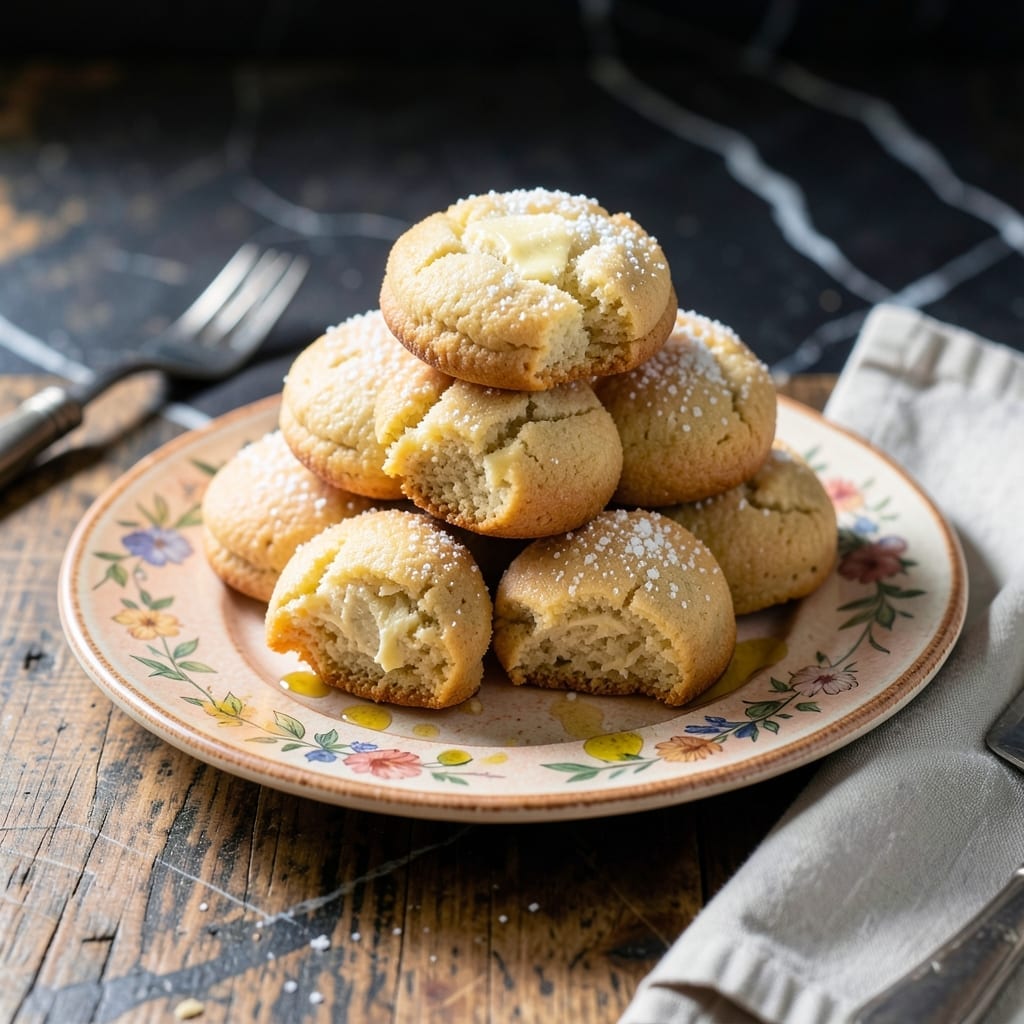
This recipe proves you don’t need brown sugar to bake perfect cookies. Using only white sugar creates a crispier, more delicate texture with a subtle buttery sweetness.
I’ve tested this method extensively, ensuring consistent results with simple ingredients. The cookies spread beautifully and develop a golden edge while staying soft inside.
Ingredients for Cookie Recipe No Brown Sugar
Simple staples create cookies with crisp edges and soft centers using only white sugar.
| Ingredient | Amount | Notes |
|---|---|---|
| All-Purpose Flour 🌾 | 2 ¼ cups | Spoon and level method |
| Baking Soda 🧂 | 1 tsp | Ensures even spreading |
| Salt 🧂 | 1 tsp | Fine sea salt preferred |
| Unsalted Butter 🧈 | 1 cup | Softened to room temperature |
| Granulated White Sugar 🍚 | 1 ½ cups | Fine granulated for texture |
| Large Eggs 🥚 | 2 whole | Room temperature for emulsification |
| Vanilla Extract 🌿 | 2 tsp | Pure extract for best flavor |
| Cornstarch 🌾 | 2 tsp | Adds tenderness to texture |
| Light Corn Syrup 💧 | 2 tbsp | Enhances moisture retention |
[recipe_ingredient_scaler]
The butter quality matters here. Land O’Lakes or Kerrygold unsalted delivers the best flavor. Use real vanilla extract—imitation lacks depth. For flour, King Arthur all-purpose is my go-to for consistent texture. The cornstarch is the secret for that delicate crumb (don’t skip it). Most grocery stores carry all these—no specialty trips needed.
No corn syrup? Honey works in a pinch (though it darkens the cookies slightly). Out of cornstarch? Arrowroot powder at equal amount substitutes well. For a richer flavor, brown the butter first—lets it cool completely before mixing. The sugar amount is precise here (don’t reduce), but you can add 1/4 cup more flour if you prefer thicker cookies.
Dough keeps in the fridge for 3 days or can be frozen for 3 months. Baked cookies stay fresh in an airtight container for 1 week. For longer storage, freeze baked cookies between layers of parchment paper (they thaw quickly at room temperature).
Why You’ll Love This Recipe
- One Bowl Wonder: I love that I can mix everything in a single bowl—no extra dishes, just flour, butter, and sugar coming together effortlessly.
- Buttery Sweetness: The unsalted butter and granulated sugar create this rich, caramel-like flavor that’s honestly hard to resist.
- Weeknight Hero: Between us, these cookies are my go-to when I need something quick for school bake sales or last-minute guests.
- Pantry Staples: No fancy ingredients here—just basics I always have on hand, so I can bake a batch whenever the craving hits.
Step-by-Step Instructions for Cookie Recipe No Brown Sugar
Master this technique to achieve perfectly textured cookies using only white sugar and expert methods.
Step 1: Cream the Butter and Granulated White Sugar
In a stand mixer with paddle attachment, beat the 1 cup Unsalted Butter and 1.5 cups Granulated White Sugar on medium-high speed for 4-5 minutes. The mixture should become noticeably pale and fluffy, nearly doubling in volume.
This extended creaming incorporates maximum air, compensating for the absence of brown sugar’s moisture. The texture should resemble wet sand when properly aerated. Stop the mixer occasionally to scrape down the bowl’s sides with a silicone spatula.
Step 2: Incorporate Eggs, Vanilla Extract, and Light Corn Syrup
Add the 2 whole Large Eggs one at a time, mixing for 30 seconds after each addition until fully emulsified. Then add the 2 tsp Vanilla Extract and 2 tbsp Light Corn Syrup, mixing for another 20 seconds.
The corn syrup replaces brown sugar’s hygroscopic properties, maintaining moisture in the final product. The mixture may appear slightly curdled at this stage – this is normal and will resolve when dry ingredients are added. Ensure all ingredients are at room temperature for proper emulsification.
Step 3: Combine Dry Ingredients and Create the Dough
In a separate bowl, whisk together the 2.25 cups All-Purpose Flour, 1 tsp Baking Soda, 1 tsp Salt, and 2 tsp Cornstarch. The cornstarch modifies the gluten structure, creating a more tender crumb.
Gradually add the dry ingredients to the wet mixture on low speed, mixing just until the flour disappears. Avoid overmixing, which would develop tough gluten strands. The dough should be soft but not sticky, with a smooth, uniform texture.
Step 4: Chill and Portion the Dough
Cover the dough and refrigerate for at least 1 hour or up to 24 hours. This resting period allows the flour to fully hydrate and the butter to firm up, preventing excessive spreading during baking.
Using a cookie scoop or tablespoon measure, portion the chilled dough into 12 equal portions (about 3 tablespoons each). Roll into balls and place on parchment-lined baking sheets, spacing them 2 inches apart to allow for spreading.
Step 5: Bake to Golden Perfection
Preheat oven to 350°F. Bake the cookies for 10-12 minutes, rotating the pans halfway through for even browning. The edges should be light golden brown while the centers still appear slightly underdone.
The cookies will continue setting as they cool on the baking sheet for 5 minutes before transferring to a wire rack. This carryover cooking ensures a soft center with crisp edges. The absence of brown sugar makes these particularly sensitive to overbaking, so err on the side of underdone.
Pro Tips For Making Cookie Recipe No Brown Sugar
- Chill the Dough: After mixing, refrigerate the dough for at least 30 minutes—I learned this the hard way when my first batch spread into one giant, flat cookie. The cold butter solidifies, giving you thicker, chewier cookies.
- Cream Butter Longer: Beat the butter and sugar for a full 3-4 minutes, not just until combined. Sounds tedious, but it incorporates air, which makes a real difference in texture when you’re skipping brown sugar.
- Skip Warm Butter: Use butter that’s soft but still cool to the touch, about 65°F. After burning three batches, I finally figured out that overly warm butter leads to greasy, flat cookies.
- Add a Pinch Extra Salt: Since you’re not using brown sugar, bump the salt up by just ¼ teaspoon—my grandmother swore by this, and she was right. It balances the sweetness and actually changes the outcome.
Dietary Considerations for This Recipe
Gluten-Free Option
Swap the all-purpose flour for a 1:1 gluten-free baking blend like King Arthur Measure for Measure. The texture will be slightly denser but still delicious. Add an extra ½ tsp xanthan gum if your blend doesn’t include it. 💪
Vegan Adaptation
Use vegan butter (like Miyoko’s) and replace eggs with flax eggs (2 tbsp ground flaxseed + 6 tbsp water). Let the flax mixture sit for 5 minutes before adding to mimic egg binding properties.
Dairy-Free Version
Replace the butter with coconut oil (refined for neutral flavor) or Earth Balance buttery spread. Chill the dough for 30 extra minutes since plant-based fats soften faster. Ensure all other ingredients are dairy-free.
Lower Sugar Alternative
Reduce sugar by ¼ cup and add 1 tsp molasses for depth. The cookies will be less sweet but still flavorful. For a sugar-free option, use monk fruit sweetener (measurement may vary by brand).
Frequently Asked Questions
Why use corn syrup instead of brown sugar?
Corn syrup mimics brown sugar’s moisture-retaining properties. Without it, cookies can dry out faster. The 2 tbsp keeps them soft for days.
Can I skip the chilling step?
No, chilling for at least 1 hour prevents excessive spreading. Warm dough spreads too thin, losing that perfect texture. Patience pays off!
How do I know when they’re done?
Bake at 350°F for 10-12 minutes until edges are light golden but centers look slightly underdone. They’ll finish setting while cooling.
What if my cookies spread too much?
Add 1-2 tbsp extra flour to the dough next time. Also ensure butter is properly softened—not melted. Measure flour accurately too.
Nutrition Facts

Trained in classic French technique but raised on slow-cooked ribs and spicy rubs, she blends culinary skill with smoke and soul.
- Hamburgers in Sauce Recipe Crock Pot: Slow-Cooked Savory Delight - October 3, 2026
- Sanjeev Kapoor Egg Biryani Recipe: Fragrant Spiced Rice With Boiled Eggs - October 3, 2026
- Recipe for French Pork Spread Gorton: Savory Gallic Flavors in a Spreadable Delight - October 3, 2026