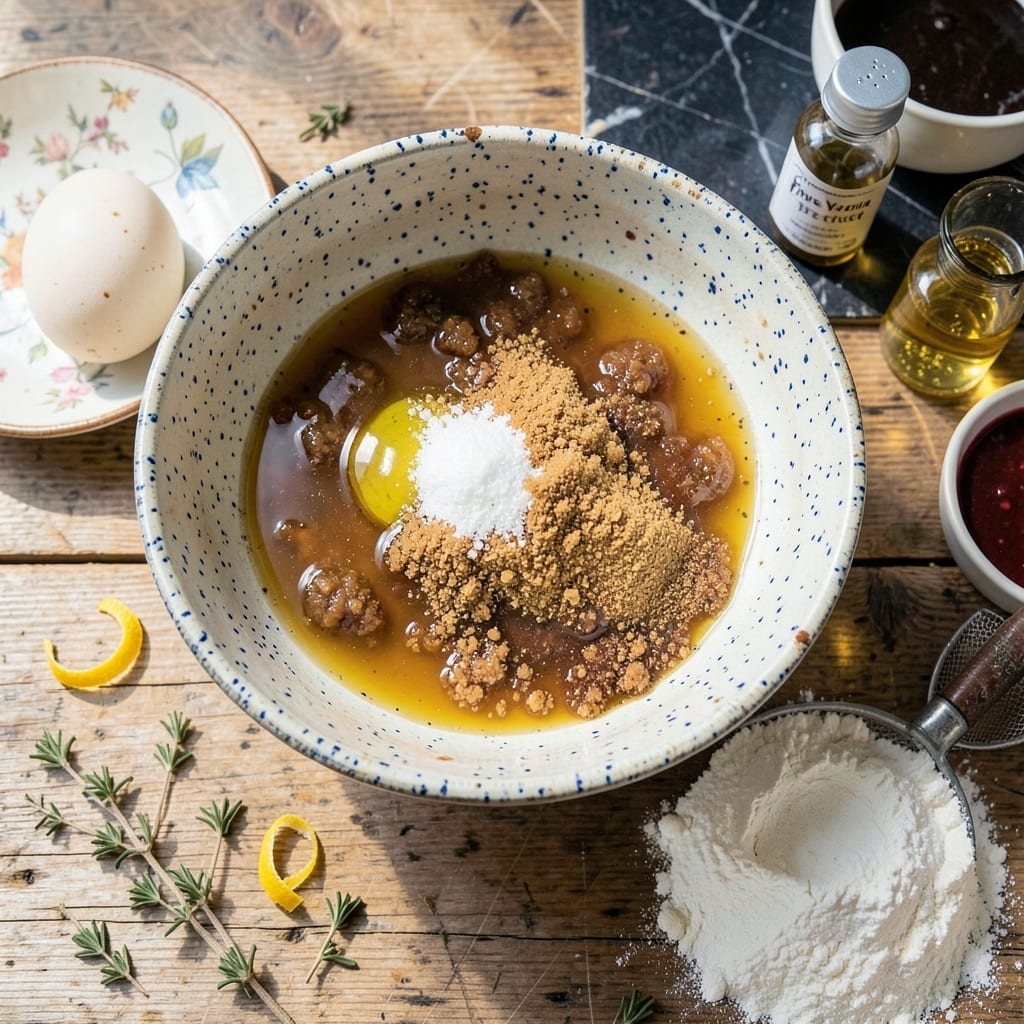
This oil-based cookie recipe delivers chewy, flavorful results without a single stick of butter. The secret lies in using vegetable oil to create a tender texture that stays soft for days.
With just a few pantry staples and 30 minutes from start to finish, you’ll have warm, golden cookies that rival any traditional recipe. The oil keeps them moist while maintaining perfect structure.
Ingredients for Cookie Recipe No Butter
Pantry staples transform into chewy, oil-based cookies with perfect texture every time.
| Ingredient | Amount | Notes |
|---|---|---|
| All-Purpose Flour 🌾 | 2 ¼ cups | Spoon and level for accuracy |
| Granulated Sugar 🍚 | 1 cup | Fine white sugar preferred |
| Light Brown Sugar 🟤 | ¾ cup | Packed firmly into cup |
| Vegetable Oil 🫒 | ¾ cup | Neutral flavor like canola |
| Large Eggs 🥚 | 2 whole | Room temperature preferred |
| Vanilla Extract 🌿 | 2 tsp | Pure extract for best flavor |
| Baking Soda 🧂 | 1 tsp | Ensures proper rise |
| Salt 🧂 | ½ tsp | Fine sea salt preferred |
| Ground Cinnamon 🌶️ | 1 tsp | Optional for warmth |
| Semi-Sweet Chocolate Chips 🍫 | 1 ½ cups | Or chunks of chocolate |
| Old-Fashioned Oats 🌾 | 1 cup | Quick oats work too |
| Chopped Walnuts 🌰 | ½ cup | Optional for crunch |
[recipe_ingredient_scaler]
The oil choice significantly impacts texture. Canola or vegetable oil provides neutral flavor, while coconut oil (melted) adds subtle richness. For best results, use name-brand flour like King Arthur or Gold Medal—store brands often vary in protein content, affecting chewiness. Room-temperature eggs incorporate more smoothly into the batter, ensuring even texture throughout.
No chocolate chips? Chopped chocolate bars (70% cocoa) offer superior melt. For nut-free versions, toasted oats provide similar crunch. Brown sugar can be swapped with coconut sugar at equal volume, though flavor will shift slightly. The cinnamon is optional but enhances warmth—omit if you prefer pure chocolate flavor. Egg substitute works at 1/4 cup per egg.
Store cookies in airtight container at room temperature for up to 5 days. For longer storage, freeze dough balls on a tray, then transfer to ziplock bags—bake straight from frozen, adding 2-3 minutes to bake time. Dough keeps in fridge for 3 days before baking.
Why You’ll Love This Recipe
- No Butter Needed: I can make these even when I’m out of butter—vegetable oil works just as well.
- Crispy Yet Chewy: The mix of granulated and light brown sugar gives them that perfect texture every time.
- Freezer Friendly: I double the batch and freeze half for fresh cookies on demand.
- Budget Stretch: All-purpose flour and oil keep costs low without sacrificing flavor.
Step-by-Step Instructions for Oil-Based Chewy Cookies
This method ensures perfect texture without butter, using oil for a tender, chewy result.
Step 1: Combine Wet Ingredients for Smooth Base
In a large mixing bowl, whisk together the 0.75 cup Vegetable Oil, 1 cup Granulated Sugar, and 0.75 cup Light Brown Sugar (packed firmly) until fully incorporated and slightly pale. The oil should create a smooth, homogeneous mixture with no sugar granules visible.
Add the 2 whole Large Eggs one at a time, whisking thoroughly after each addition until emulsified. Stir in the 2 tsp Vanilla Extract. This wet base provides structure and moisture without butter, so ensure it’s well-mixed for even distribution.
Step 2: Incorporate Dry Ingredients Gradually
In a separate bowl, sift together the 2.25 cups All-Purpose Flour, 1 tsp Baking Soda, 0.5 tsp Salt, and 1 tsp Ground Cinnamon. Sifting prevents clumps and aerates the flour for a lighter texture.
Gradually add the dry mixture to the wet ingredients, folding gently with a spatula until just combined. Avoid overmixing—stop as soon as no dry streaks remain. The dough will be thicker than typical butter-based cookie dough but still pliable.
Step 3: Fold in Add-Ins for Texture
Using the spatula, fold in the 1.5 cups Semi-Sweet Chocolate Chips and 1 cup Old-Fashioned Oats until evenly distributed. The oats add chewiness, while the chocolate chips ensure pockets of melted richness.
If using, gently stir in the 0.5 cup Chopped Walnuts for a nutty crunch. The dough should be thick and hold its shape when scooped. Chill the dough for 30 minutes to firm up, making it easier to handle.
Step 4: Bake to Golden Perfection
Preheat the oven to 350°F and line baking sheets with parchment paper. Scoop 2-tablespoon portions of dough onto the sheets, spacing them 2 inches apart. The dough won’t spread as much as butter-based cookies, so flatten slightly with your palm.
Bake for 10-12 minutes until the edges are light golden brown but the centers still appear soft. The cookies will continue to set as they cool. Let them rest on the baking sheet for 5 minutes before transferring to a wire rack to cool completely.
Pro Tips For Making Cookie Recipe No Butter
- Chill the Dough: After mixing, refrigerate the dough for at least 30 minutes—I learned this the hard way when my first batch spread into flat pancakes.
- Use Room-Temp Eggs: Take the eggs out 20 minutes before baking; they blend better with the oil and sugars, and I was skeptical until I tried it.
- Skip Overmixing: Once the flour disappears, stop mixing; overworking the dough makes cookies tough, and I’ve ruined two batches by ignoring this.
- Swap Oil Wisely: If substituting, stick to neutral oils like canola or sunflower—olive oil leaves a weird aftertaste, and yes, I’ve regretted that experiment.
Troubleshooting cookie recipe no butter
Dough Too Oily
If your dough feels greasy, you likely added too much oil. Start with ½ cup and gradually add the remaining ¼ cup while mixing. The dough should hold together when pressed but not pool oil. 💡
Cookies Spread Too Much
Chill your dough for the full 30 minutes before baking. Oil-based doughs are softer at room temperature. If they still spread, reduce oil by 1-2 tbsp next time.
Flat Cookies
Check your baking soda freshness—old leavening loses potency. Also, measure flour by spooning into cups, not scooping directly, to avoid compacting. This prevents dense, flat results.
Dry Texture
Overbaking is the usual culprit. Pull cookies when edges are just golden but centers look underdone. They’ll firm up as they cool. For extra moisture, add 1 tbsp applesauce to the wet ingredients.
Grainy Sugar
Ensure you whisk oil and sugars for at least 2 minutes—oil needs more time to dissolve sugar than butter. Using superfine sugar can also prevent this issue entirely.
Uneven Baking
Rotate pans halfway through baking and avoid crowding the sheet. Oil-based cookies brown faster than butter ones, so keep an eye on them after 8 minutes. ✨
Nutrition Facts
Frequently Asked Questions
Can I use coconut oil instead of vegetable oil?
Yes, melted coconut oil works perfectly and adds a subtle richness. Use the same 0.75 cup amount, but ensure it’s cooled slightly before mixing to avoid cooking the eggs.
Why do oil-based cookies stay soft longer?
Oil remains liquid at room temperature, unlike butter which solidifies. This keeps cookies tender and moist for up to 5 days in an airtight container.
Can I make these cookies vegan?
Replace eggs with 1/4 cup of unsweetened applesauce per egg. The texture will be slightly denser but still delicious.
How do I prevent cookies from spreading too much?
Chill the dough for the full 30 minutes before baking. If they still spread, reduce oil by 1-2 tbsp next time.

Trained in classic French technique but raised on slow-cooked ribs and spicy rubs, she blends culinary skill with smoke and soul.
- Recipe for Boneless Pork Chops in Cast Iron Skillet: Sear and Baste to Juicy Perfection - October 3, 2026
- Recipe for Boneless Cross Rib Roast: Slow-Roasted Beef with Herb Crust - October 3, 2026
- Hamburgers in Sauce Recipe Crock Pot: Slow-Cooked Savory Delight - October 3, 2026