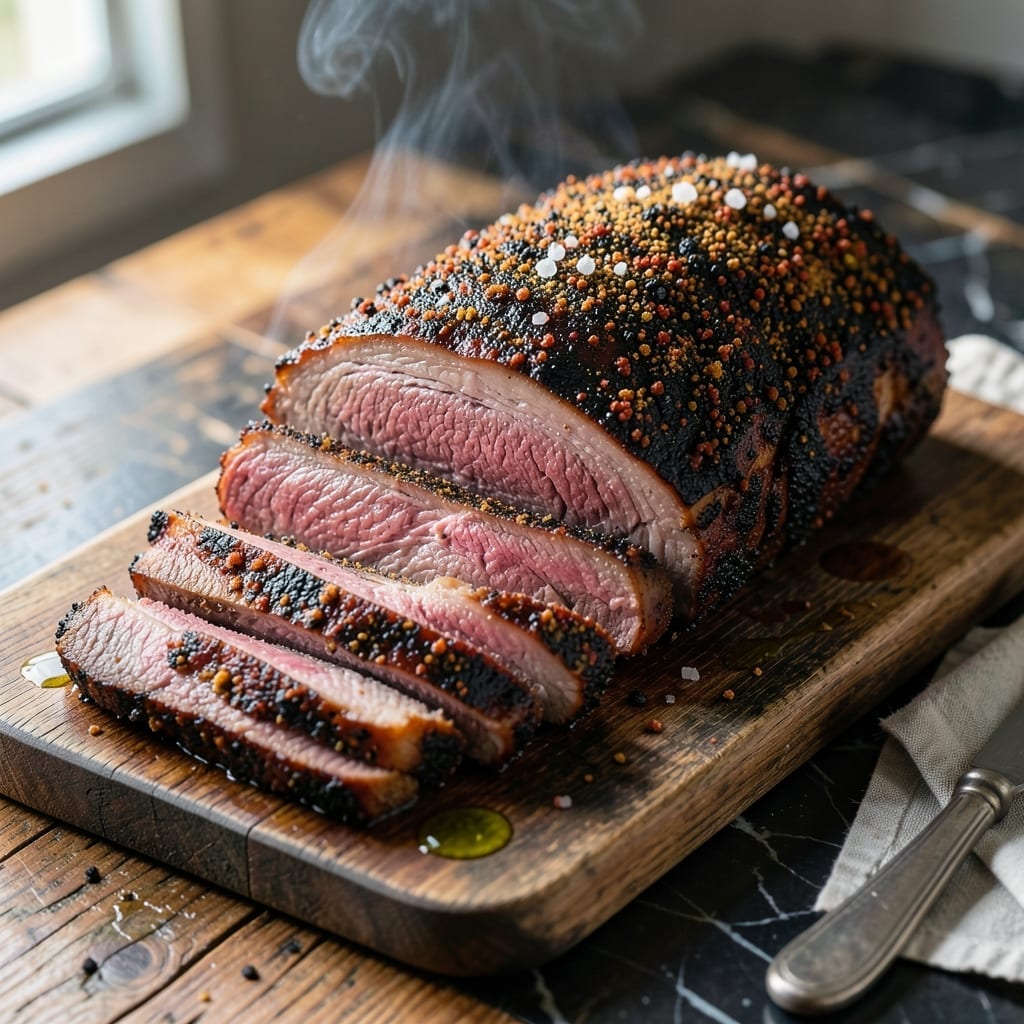
True Texas barbecue brisket demands patience and precision. This method delivers tender, smoke-kissed results every time.
Low heat and slow cooking transform tough brisket into a melt-in-your-mouth masterpiece with a perfect bark.
Ingredients for Cook’s Country Texas Barbecue Brisket
Patience and precision start with these carefully selected ingredients for authentic results.
| Ingredient | Amount | Notes |
|---|---|---|
| Beef Brisket 🥩 | 4 lb | Whole packer cut preferred |
| Kosher Salt 🧂 | ¼ cup | Diamond Crystal brand preferred |
| Coarse Black Pepper 🌶️ | ¼ cup | Freshly ground for best results |
| Paprika 🌶️ | 2 tbsp | Sweet or smoked variety |
| Garlic Powder 🧄 | 2 tbsp | Not garlic salt |
| Onion Powder 🧅 | 2 tbsp | Fresh ground preferred |
| Brown Sugar 🍚 | ¼ cup | Light or dark variety |
| Yellow Mustard 🟡 | ¼ cup | For binder, not flavor |
| Hickory Wood Chunks 🪵 | 4 pieces | For authentic smoke flavor |
| Apple Cider Vinegar 🍏 | ½ cup | For spritzing during cook |
| Beef Broth 🥩 | 2 cups | Low-sodium preferred |
| Unsalted Butter 🧈 | ½ cup | For finishing, optional |
[recipe_ingredient_scaler]
The brisket selection is paramount. Whole packer cut from a reputable butcher ensures optimal marbling and fat cap for low-and-slow cooking. Costco offers excellent pre-trimmed options for home cooks. Look for USDA Choice grade or higher with a thick, even fat cap. The salt and pepper form the bark foundation—Diamond Crystal kosher salt and freshly ground pepper deliver superior texture and flavor penetration.
Substitutions require careful consideration. Sea salt can replace kosher salt at half the volume due to density differences. If using pre-ground black pepper, increase quantity by 25%. Maple syrup may substitute for brown sugar, though it alters the bark color. For smoke, pecan or oak wood works well alongside hickory. The mustard binder can be replaced with olive oil, though it lacks the same adhesion properties.
Store brisket in original packaging until ready to prep—use within 3-4 days of purchase. The dry rub can be mixed in advance and stored in an airtight container for up to 1 month. Leftovers reheat beautifully and freeze well for 3 months. Always slice against the grain for serving.
Why You’ll Love This Recipe
- Set It and Forget: I rub the brisket with salt, pepper, paprika, and garlic powder, then let the smoker do the work for hours.
- Smoky, Spiced Crust: That thick black pepper and paprika crust forms the most addictive bark I’ve ever tasted.
- Feeds a Hungry Crowd: One brisket turns into sandwiches, tacos, and chili leftovers that disappear fast.
- Budget-Friendly Centerpiece: A whole packer brisket costs less per serving than most steaks, and it’s way more impressive.
Step-by-Step Instructions for Texas Barbecue Brisket
Here is the professional method for achieving competition-level tenderness with foolproof technique.
Step 1: Prepare and Season the Brisket
Begin by trimming the 4 lb beef brisket of excess fat, leaving about ¼ inch for protection during the long cook. Pat the surface completely dry with paper towels to ensure the rub adheres properly and promotes bark formation.
In a bowl, combine the 0.25 cup kosher salt, 0.25 cup coarse black pepper, 2 tbsp paprika, 2 tbsp garlic powder, 2 tbsp onion powder, and 0.25 cup brown sugar. Brush the 0.25 cup yellow mustard thinly over the entire surface of the brisket as a binder—this won’t affect flavor but creates the perfect base for the rub.
Apply the rub mixture generously, pressing it into the meat so it forms a thick, even crust. Let the seasoned brisket rest at room temperature for 1 hour while you prepare your smoker, allowing the salt to begin penetrating the meat.
Step 2: Set Up the Smoker for Low and Slow Cooking
Preheat your smoker to 225°F using the 4 pieces hickory wood chunks for authentic Texas-style smoke flavor. Maintain this temperature throughout the cook—consistency is critical for even doneness and proper smoke absorption.
Place a water pan in the smoker to stabilize the temperature and add humidity, which helps prevent the brisket from drying out during the long cook. Once the smoker reaches temperature and you see thin, blue smoke (not thick white smoke), you’re ready to begin.
Position the brisket fat-side up on the grates, as the rendering fat will baste the meat as it cooks. Close the lid and resist the urge to peek—every time you open the smoker, you lose heat and add 15-20 minutes to your cooking time.
Step 3: Smoke and Monitor Through the Stall
Smoke the brisket undisturbed for 6-8 hours or until the internal temperature reaches 165-170°F. This is when you’ll hit the stall—a natural plateau where the meat’s internal temperature stops rising as moisture evaporates from the surface.
Prepare a spritz mixture of 0.5 cup apple cider vinegar and 2 cups beef broth in a spray bottle. Every 1-2 hours, lightly spritz the brisket to keep the surface moist and enhance bark development. This step is particularly important during the stall to maintain momentum in the cooking process.
Step 4: Wrap and Finish to Probe-Tender Perfection
Once the brisket hits 170°F, remove it from the smoker and wrap it tightly in pink butcher paper. This Texas crutch method helps power through the stall while preserving the bark’s texture. Return the wrapped brisket to the smoker.
Continue cooking until the internal temperature reaches 200-205°F and a probe slides into the thickest part of the flat with no resistance—this is the definitive test for doneness. The total cooking time will typically range from 10-12 hours, depending on your smoker’s consistency and the brisket’s size.
Step 5: Rest and Serve
Transfer the brisket to a cutting board or warm cooler, wrap it in a towel, and let it rest for at least 1 hour (up to 2 hours is ideal). This resting period allows the juices to redistribute, ensuring every slice is moist and tender.
Optional finishing step: Melt the 0.5 cup unsalted butter and brush it over the brisket just before slicing for added richness. Slice against the grain into ¼-inch thick portions, adjusting the angle as you go since the grain direction changes between the flat and point. Serve immediately while warm.
Pro Tips For Making Cook’S Country Texas Barbecue Brisket
- Trim the Fat Cap: Leave about 1/4 inch of fat on the brisket to keep it moist, but trim any thicker sections—I learned this the hard way after my first few came out greasy.
- Season Overnight: Rub that mix of kosher salt, coarse black pepper, paprika, and garlic powder onto the brisket the night before; the flavors penetrate deeper than if you do it right before cooking.
- Low and Slow: Keep your smoker or oven at 225°F and resist the urge to crank it up, or you’ll end up with a tough, dry brisket instead of that fall-apart tenderness.
- Rest Under Foil: After cooking, let it rest wrapped in foil for at least 1 hour—this lets the juices redistribute, and skipping it means half your work goes to waste.
Wine and Beer Pairings for This cooks country texas barbecue brisket
Bold Texas Reds
For this rich, smoky dish, I reach for Texas Tempranillo from William Chris Vineyards. Its bold tannins and dark fruit notes stand up to the brisket’s intensity. The wine’s acidity cuts through the fat beautifully, creating perfect balance. 🍷
Classic Lone Star Beer
A Shiner Bock is my go-to—its smooth, slightly sweet profile complements the bark’s peppery crust. The light carbonation refreshes your palate between bites. I’ve judged many BBQ competitions where this was the official beer.
Unexpected White Option
Surprisingly, an off-dry Texas Viognier works wonderfully. The stone fruit aromatics and subtle sweetness contrast the smoke while the body holds its own. Try Duchman Family Winery‘s version.
Craft Beer Alternative
For hop lovers, Live Oak Hefeweizen offers banana and clove notes that play well with the rub’s spices. The wheat beer’s creaminess mirrors the brisket’s texture. I discovered this pairing at a coastal BBQ joint after a long motorcycle ride. 💛
Non-Alcoholic Pairing
Sparkling black cherry soda provides the same dark fruit complement as red wine. The effervescence cleanses your palate like a good beer. I keep Dublin Dr Pepper on hand for designated drivers.
Nutrition Facts
Frequently Asked Questions
What’s the best wood for authentic flavor?
Hickory is traditional, but oak or pecan work well too. Each wood offers distinct notes—hickory is bold, oak is balanced, pecan adds sweetness.
How do I know when it’s done?
Use a probe thermometer: it’s ready at 200-205°F when the probe slides in like butter. The total cook time is typically 10-12 hours at 225°F.
Can I use a regular oven instead of a smoker?
Yes! Set your oven to 225°F and use a roasting pan with a rack. Add liquid smoke to mimic the flavor, but the bark won’t be as crisp.
Why does my brisket turn out dry?
This usually happens from cooking at too high a temperature or not wrapping during the stall. Always keep the smoker at 225°F and wrap at 170°F to retain moisture.

Trained in classic French technique but raised on slow-cooked ribs and spicy rubs, she blends culinary skill with smoke and soul.
- Recipe for Boneless Pork Chops in Cast Iron Skillet: Sear and Baste to Juicy Perfection - October 3, 2026
- Recipe for Boneless Cross Rib Roast: Slow-Roasted Beef with Herb Crust - October 3, 2026
- Hamburgers in Sauce Recipe Crock Pot: Slow-Cooked Savory Delight - October 3, 2026