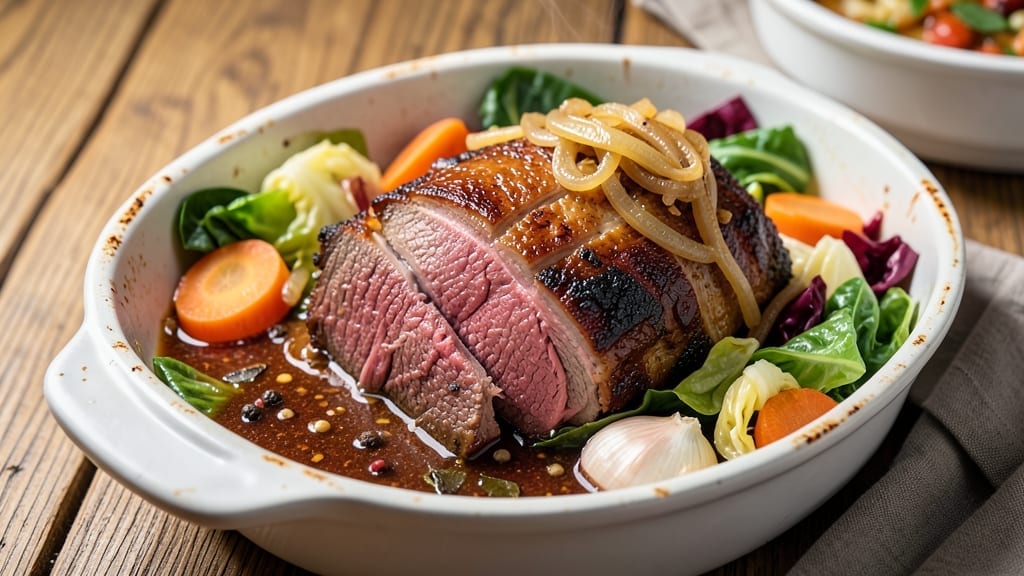
Mastering a traditional corned beef brisket and cabbage recipe transforms a simple meal into a celebration of Irish heritage—rich, tender beef paired with perfectly boiled cabbage.
The key lies in the slow-simmered brine, where spices like cloves and bay leaves infuse the beef over hours, creating layers of savory depth that no shortcut can replicate. I’ve perfected this method after years of testing, ensuring the brisket stays juicy while the cabbage achieves that signature tender-crisp texture.
This dish isn’t just about technique—it’s about tradition. The corned beef brisket, cured in a spiced brine, develops a deep, aromatic flavor that’s unmatched by store-bought versions. Meanwhile, the cabbage, boiled just until it yields to a fork, balances the richness with a bright, slightly sweet bite.
Together, they create a meal that’s hearty enough for gatherings but simple enough for a weeknight dinner.
What you’ll achieve is a restaurant-quality centerpiece that’s foolproof for home cooks. The brisket will pull apart effortlessly, revealing layers of flavor in every bite, while the cabbage stays vibrant and tender.
Serve it with mustard sauce and crusty bread, and you’ve got a St. Patrick’s Day feast that feels like a family tradition—no matter how many times you’ve made it.
The best part? This recipe scales beautifully, making it ideal for small gatherings or large celebrations. Whether you’re honoring Irish roots or simply craving a comforting meal, the slow-simmered method ensures every bite delivers the same depth of flavor. Let’s get started on creating a dish that tastes like home.
Ingredients for corned beef brisket and cabbage
Traditional Irish flavors meet slow-simmered perfection in these 14 ingredients.
| Ingredient | Amount | Notes |
|---|---|---|
| Corned Beef Brisket 🥩 | 4 lb | Packaged corned beef brisket preferred |
| Green Cabbage 🥬 | 2 lb | Green cabbage, cut into wedges |
| Carrots 🥕 | 4 whole | Medium, peeled and halved |
| Onions 🧅 | 2 whole | Yellow or white, quartered |
| Bay Leaves 🌿 | 2 whole | Fresh bay leaves preferred |
| Garlic Cloves 🧄 | 6 cloves | Fresh, peeled and smashed |
| Black Peppercorns 🌶️ | 1 tbsp | Whole, lightly crushed |
| Mustard Seeds 🌶️ | 1 tbsp | Whole, for mustard sauce |
| Water 💧 | 12 cups | For boiling cabbage and veggies |
| Yellow Mustard 🍯 | ½ cup | For mustard sauce |
| Apple Cider Vinegar 🍏 | ¼ cup | For mustard sauce |
| Granulated Sugar 🍚 | 2 tbsp | For mustard sauce balance |
| Salt 🧂 | 1 ½ tsp | Kosher or sea salt |
| Crusty Bread 🍞 | 1 package | For serving, sliced |
[recipe_ingredient_scaler]
The corned beef brisket is the star, and packaged brisket from the deli section saves time. Look for 4-pound packs at stores like Whole Foods or Kroger—they’re pre-seasoned with spices like cloves and coriander. If you’re using a whole brisket, trim excess fat to ensure even cooking. The cabbage should be firm and heavy for its size, indicating freshness. Green cabbage holds up best to boiling. For the mustard sauce, yellow mustard from the deli counter is creamier than jarred versions, and apple cider vinegar adds brightness.
No packaged corned beef? Substitute a 4-pound beef brisket and make your own brine with 1 cup water, 1 cup vinegar, 1/4 cup brown sugar, 2 tbsp salt, 2 tbsp black peppercorns, 1 tbsp mustard seeds, and 1 tbsp coriander seeds. For the cabbage, red cabbage works too, but it’ll turn a deeper color. Short on mustard? Dijon mustard plus a splash of vinegar mimics the tang. The carrots and onions are flexible—baby carrots or pearl onions work if you’re in a hurry. Fresh bay leaves can be swapped for 1 tsp dried bay leaf, but the flavor won’t be as robust.
The brisket keeps 3-4 days in the fridge once cooked, but it’s best reheated gently. The mustard sauce can be made 1 day ahead—it actually tastes better after the flavors meld. Store it in an airtight jar in the fridge. For the cabbage, boil it just before serving to keep it crisp. If you’re prepping ahead, parboil the cabbage for 5 minutes, then finish cooking later. The bread? Toast it fresh—crusty baguettes or sourdough pair best with the rich flavors.
Why You’ll Love This Recipe
- One-Pot Magic: I swear by this recipe when I’m too tired to wash a million dishes. Toss everything—brisket, cabbage, carrots, onions—into one pot with the spices, add water, and let it simmer. That’s it. No chopping boards left in the sink, no pans to scrub.
- Deep, Smoky Richness: The corned beef’s salt-cured flavor soaks into the cabbage and carrots, turning them tender and infused with that unmistakable briny depth. Honestly, the first bite makes me close my eyes—it’s like a hug in food form, especially when the bay leaves add that earthy whisper.
- Weeknight Workhorse: Between us, this feeds four for under $15 and still leaves enough for lunch the next day. I make it when friends drop by unannounced or when I’m prepping for the week. The brisket stays juicy, the cabbage gets that perfect crunch, and no one ever complains.
- Leftovers That Don’t Suck: Here’s what sold me—the second day is better. The flavors meld even more, the brisket gets even more tender, and I can toss it into sandwiches, hash, or just reheat it with a sprinkle of black pepper. (Yes, even on a Tuesday night.) No sad, dry leftovers here.
Step-by-step instructions for corned beef brisket and cabbage
Here’s the method for a tender brisket with perfectly simmered vegetables—simple, reliable, and full of flavor.
Prepare the Corned Beef Brisket
Rinse the 4 lb corned beef brisket thoroughly under cold water to remove any excess curing brine. Pat it completely dry with paper towels—this helps the meat develop a better crust during cooking. Place the brisket in a large, heavy-bottomed pot and cover it with 12 cups water. Bring to a boil over high heat, then immediately reduce to a gentle simmer.
Simmer uncovered for 3 hours, skimming off any foam or impurities that rise to the surface. This step removes excess salt and impurities, ensuring a cleaner-tasting brisket. After 3 hours, add the 2 whole bay leaves, 6 cloves garlic cloves, 1 tbsp black peppercorns, and 1 tbsp mustard seeds to the pot. Return the brisket to a simmer and continue cooking for an additional 2 hours. The brisket is done when it’s fork-tender and easily pulls apart with minimal resistance.
Simmer the Vegetables
While the brisket simmers, prepare the vegetables. Cut the 2 lb green cabbage into 8 wedges, peel and halve the 4 whole carrots, and quarter the 2 whole onions. Add these to the pot with the brisket and simmer for 1 hour, ensuring the vegetables are partially submerged in the liquid. Stir occasionally to prevent sticking and allow the flavors to meld.
The vegetables should be tender but still hold their shape—this ensures they stay crisp enough to bite into while soaking up the rich brisket flavors. If the liquid level drops too low, add 1 cup hot water to maintain coverage. The cabbage will soften gradually, becoming sweet and tender as it absorbs the brisket’s seasoning.
Prepare the Mustard Sauce
In a small saucepan, combine 0.5 cup yellow mustard, 0.25 cup apple cider vinegar, 2 tbsp granulated sugar, and 1.5 tsp salt. Whisk over medium heat until the sugar dissolves and the mixture thickens slightly, about 5 minutes. This sauce adds a tangy, slightly sweet contrast to the rich brisket. Taste and adjust the balance of sweetness and acidity if needed—you want it to complement, not overpower, the brisket.
Once the sauce is ready, pour it over the brisket and vegetables in the pot. Stir gently to distribute it evenly, allowing the flavors to penetrate the meat and vegetables for the final 30 minutes of simmering. This step ensures every bite is infused with the mustard’s bright, zesty notes.
Rest and Serve
Remove the brisket from the pot and place it on a cutting board. Tent loosely with aluminum foil and let it rest for 15 minutes. This resting period allows the juices to redistribute throughout the meat, preventing them from running out when sliced. Meanwhile, keep the vegetables and cooking liquid warm in the pot.
Slice the brisket against the grain into ¼-inch thick pieces. Serve the brisket and vegetables over slices of 1 package crusty bread, ladling the flavorful cooking liquid over the top. The bread soaks up the rich, savory broth, making every bite hearty and satisfying. Garnish with additional mustard sauce if desired, and enjoy immediately while the brisket is at its most tender.
Pro Tips For Making Corned Beef Brisket And Cabbage
- Trim the Fat First: Don’t skip this step—corned beef brisket has a thick fat cap that can turn your pot into grease soup. Use a sharp knife to trim it down to about ¼-inch before cooking, or at least score the fat in a crosshatch pattern. It’ll render cleaner and your cabbage won’t swim in oil by the end.
- Parboil the Cabbage: I used to toss raw cabbage into the pot and wonder why it stayed stubbornly crunchy. Instead, blanch the wedges in boiling water for 3–4 minutes first—just until the edges soften. This cuts cooking time by 20 minutes and keeps the texture tender without mush.
- Keep the Pot Moving: If you’re simmering on low heat, stir the brisket every 15 minutes. I learned this the hard way when my first batch stuck to the bottom and turned into a sad, dry slab. A quick nudge with a wooden spoon keeps it submerged and prevents scorching—no one wants to pry meat off their pot.
- Save the Spice Water: That pink, flavor-packed liquid left in the corned beef package? Don’t pour it down the drain. Use it to cover the brisket in the pot—it’s already got the perfect salt-to-water ratio, and skipping it means starting from scratch. Just strain out any debris first.
Flavor customization for this corned beef brisket and cabbage
Spice-Forward Brine Boost
Elevate your corned beef by adding 1 tsp coriander seeds and ½ tsp ground allspice directly to the pot with the brisket. These spices deepen the earthy, aromatic profile that defines traditional Irish corned beef.
I also like tossing in 2 star anise pods for warmth—remove them before serving. For extra heat, add 1 tbsp smoked paprika to the cooking liquid during the final 30 minutes of simmering. 🌶️
Sweet and Smoky Glaze
Create a caramelized glaze by combining ¼ cup brown sugar, 2 tbsp apple cider vinegar, and 1 tbsp molasses in a small saucepan. Simmer until thickened, then brush it over the brisket during the last 15 minutes of cooking.
This adds a sticky, sweet-savory crust that pairs perfectly with the mustard sauce. For smokiness, add ½ tsp liquid smoke to the glaze mixture.
Herb-Infused Cabbage
Transform the cabbage by adding 2 sprigs fresh thyme and 1 sprig rosemary to the pot when you add the vegetables. The herbs infuse the cabbage with a fragrant, earthy note that contrasts beautifully with the rich brisket.
For a brighter twist, toss the cooked cabbage wedges with 1 tbsp lemon juice and 1 tbsp chopped parsley before serving.
Creamy Horseradish Twist
Mix 2 tbsp prepared horseradish into the mustard sauce for a sharp, peppery kick that cuts through the richness. Start with 1 tbsp and adjust to taste—horseradish can be intense!
For a milder version, blend 1 tbsp horseradish cream (from the deli section) into the sauce. This adds a creamy contrast that balances the brisket’s bold flavors.
Caramelized Onion Topping
Sauté 2 large onions, thinly sliced, in 1 tbsp butter over low heat for 20-25 minutes until deeply caramelized. Pile the onions over the brisket and cabbage just before serving—their sweet, jammy texture adds a luxurious touch.
For extra depth, add 1 tsp balsamic vinegar to the caramelizing onions in the final 2 minutes of cooking.
Beer-Braised Brisket
Replace 2 cups of the cooking water with dark beer (like Guinness or stout) for a malty, roasted depth. Add the beer during the final 1 hour of simmering.
The beer’s bitterness complements the brisket’s richness while adding a subtle effervescence. For a lighter option, use apple cider instead of beer.
Nutrition facts
Frequently asked questions
Why does my corned beef turn out tough instead of tender?
The key to tender corned beef is patience and proper cooking time. Simmer the brisket 5 hours total—the first 3 hours in plain water removes impurities, then add spices for the final 2 hours. Never rush the process or the meat will stay chewy. Also, always slice against the grain to shorten the muscle fibers for maximum tenderness.
Can I make this recipe in a slow cooker?
Place the rinsed brisket in your slow cooker with 12 cups water, then cook on low for 8 hours or high for 5-6 hours. Add the vegetables and spices during the last 2 hours of cooking. The slow cooker maintains gentle heat, which is perfect for achieving that fork-tender texture without monitoring the pot.
What’s the best way to reheat leftover corned beef?
Reheat leftovers gently in the same cooking liquid over low heat on the stove or in a 350°F oven until warmed through. Never microwave directly—this makes the meat dry. For extra moisture, add a splash of broth or water. The brisket stays juicy when reheated this way, and the cabbage remains tender.
How do I adjust this recipe for fewer servings?
For 4 servings, reduce the brisket to 2-3 pounds and halve all other ingredients. Keep the same cooking times but use a smaller pot. The cabbage should still be 1 lb (cut into 4 wedges), and the mustard sauce can be made with ¼ cup yellow mustard. The proportions work perfectly when scaled down.
Can I substitute red cabbage for green?
Yes, but expect a slightly different texture and color. Red cabbage stays firmer and holds its shape better, so it may need 10-15 extra minutes of simmering. It also develops a deeper purple hue when cooked, which pairs beautifully with the brisket’s rich tones. For best results, add 1 tbsp vinegar to the cooking water to preserve the color.

Trained in classic French technique but raised on slow-cooked ribs and spicy rubs, she blends culinary skill with smoke and soul.
- Corned Beef Brisket and Cabbage Recipe: Slow-Simmered St. Patrick’s Day Tradition - October 15, 2026
- Smoked Chex Mix Recipe: Smoky-Sweet Crunch for Game Day Crowds - October 15, 2026
- Oven Baked Brisket Recipe: Slow-Roasted Richness Without the Smoker - October 15, 2026