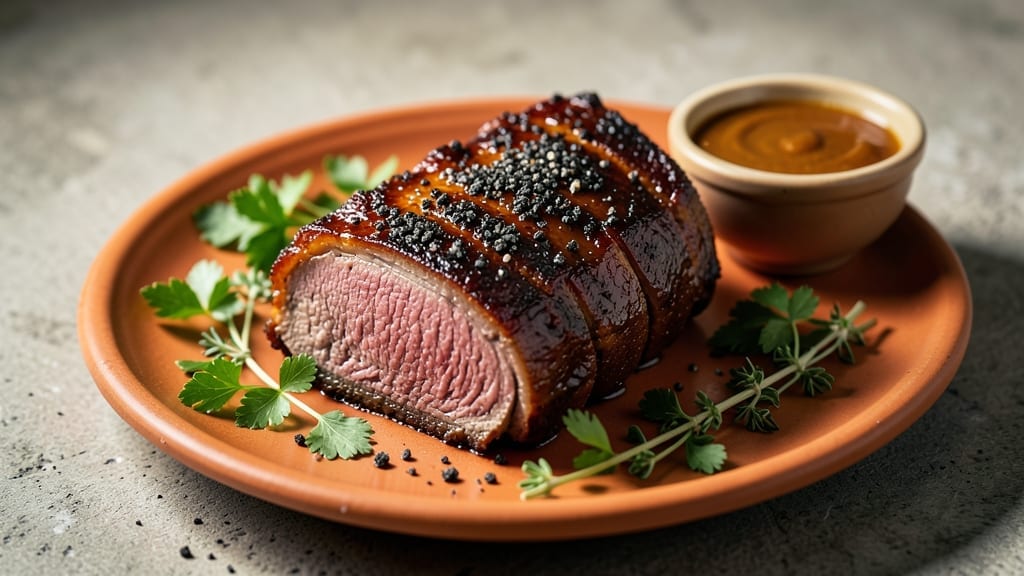
Mastering corned beef brisket from scratch delivers juicy, spiced perfection that transforms tough meat into melt-in-your-mouth tenderness. 🔥 The key lies in the slow braise—where hours of gentle heat break down connective tissue while the spices infuse deeply.
I first discovered this technique during a family cookout when my grandfather showed me how patience turns simple ingredients into something extraordinary.
This recipe begins with a foolproof curing process, where salt, spices, and time work together to tenderize the brisket before it even hits the pot. No shortcuts here—just a precise blend of mustard, garlic, and bay leaves that builds layers of flavor.
The slow cook transforms tough cuts into fork-tender slices that practically fall apart, all while developing a rich, aromatic broth.
By the time your brisket emerges from the oven, you’ll have a dish that’s restaurant-quality at home—deeply savory, with a caramelized crust and juices that make every bite worth the wait.
The aroma alone will have everyone gathering around the table, and the leftovers? Even better the next day. Here’s how to achieve it step by step.
Whether you’re hosting a St. Patrick’s Day feast or simply craving comfort food, this method delivers results that feel like a labor of love—without the guesswork. Let’s get started on your perfect brisket.
Ingredients for corned beef brisket recipe from scratch
Pantry staples meet slow-cooked magic for brisket that melts in your mouth.
| Ingredient | Amount | Notes |
|---|---|---|
| Beef Brisket 🥩 | 5 lb | Flat cut, 1-inch thick, trimmed of fat |
| Diamond Crystal Kosher Salt 🧂 | 1 ½ cups | Non-iodized, coarse grain preferred |
| Brown Sugar 🍯 | ½ cup | Light or dark, packed |
| Yellow Mustard Seeds 🌶️ | 1 tbsp | Whole seeds, toasted |
| Ground Black Peppercorns 🌶️ | 2 tbsp | Freshly cracked preferred |
| Garlic Cloves 🧄 | 8 cloves | Whole, peeled |
| Bay Leaves 🍃 | 4 whole | Dried, high quality |
| Allspice Berries 🌿 | 1 tsp | Crushed, whole berries |
| Cloves 🌿 | 4 whole | Whole, lightly crushed |
| Water 💧 | 2 cups | Cold, filtered preferred |
| Beef Broth 🍲 | 4 cups | Low-sodium, homemade or high-quality |
| Red Wine Vinegar 🍷 | ¼ cup | Dry, not balsamic |
| Onion Powder 🧅 | 1 tbsp | Freshly ground preferred |
| Dried Thyme 🌿 | 1 tsp | French preferred, oregano substitute |
| Extra-Virgin Olive Oil 🫒 | 2 tbsp | For searing, high quality |
[recipe_ingredient_scaler]
The brisket cut is everything—flat cut, 1-inch thick gives you the best balance of tenderness and flavor. Costco or local butchers usually have it pre-cut, but if you’re buying whole, ask for the flat portion. Trim excess fat to about 1/4-inch thickness—it renders beautifully but can make the meat greasy. I always buy mine from Whole Foods or Trader Joe’s because their meat selection is reliable. For the curing process, Diamond Crystal kosher salt is non-negotiable—it dissolves cleanly and doesn’t leave a metallic aftertaste. If you can’t find it, Morton kosher salt works too, but measure carefully since it’s finer.
No mustard seeds? Dijon mustard at half the amount works in a pinch, but the seeds add that signature tang. Short on allspice? Cinnamon plus a pinch of nutmeg mimics the warmth. The garlic and bay leaves are non-negotiable—they’re the heart of the corned beef flavor. For the broth, homemade is ideal, but Annie’s or Pacific Foods low-sodium versions work great. The red wine vinegar adds brightness, so don’t skip it—Bragg or Maier are my go-tos. If you’re feeling fancy, add a 1-inch piece of fresh ginger to the curing mix for depth. For the thyme, dried is fine, but if you’ve got fresh, use one-third the amount.
This brisket keeps beautifully—3-4 days in the fridge, 3 months frozen. The curing mix can be made 2 days ahead and stored in an airtight container. For serving, I like to slice it against the grain into 1/4-inch thick slices. The leftovers reheat perfectly in the broth—just warm everything together on the stove. The broth alone is worth saving; it makes a fantastic base for mashed potatoes or gravy. Portion it into containers so you can grab it straight from the fridge for quick meals.
Why You’ll Love This Recipe
- No-Fuss Marination Magic: Honestly, the 24-hour brine in the bag with red wine vinegar? Game-changer. I don’t have to chop a single vegetable or stand over the stove for hours—just toss the brisket in spices, add vinegar, and forget about it. The salt and brown sugar do all the work while you sleep.
- Crispy-Outside, Creamy-Inside: That sear with olive oil? It’s not just for show. The crust locks in all the garlic, allspice, and peppercorn goodness while keeping the inside so tender it falls apart with a fork. Trust me, that crispy edge with the creamy center is chef’s kiss.
- Budget-Friendly Luxury: A 5-pound brisket isn’t cheap, but the spices and broth stretch the flavor so far. I’ve made this on a Tuesday night when I wanted to feel fancy without breaking the bank. Plus, freezing it means I always have a protein on hand for those “I don’t want to cook” days.
Step-by-step instructions for slow-braised corned beef brisket
Here’s the method you need for tender, spiced perfection—every step designed to deliver juicy, fall-apart texture.
👨🍳 Step 1: Craft the Spice Rub and Prep the Brisket
In a medium bowl, combine the 1½ cups Diamond Crystal Kosher Salt, ½ cup Brown Sugar, 1 tbsp Yellow Mustard Seeds, 2 tbsp Ground Black Peppercorns, 1 tsp Allspice Berries, 1 tbsp Onion Powder, and 1 tsp Dried Thyme. Crush the 8 Garlic Cloves and 4 Cloves lightly with a mortar and pestle, then add to the dry mix. Stir until fully integrated—this is your corned beef blend.
Pat the 5 lb Beef Brisket dry with paper towels, then rub the spice mixture all over, pressing firmly so it adheres. Place the brisket in a large resealable plastic bag, add ¼ cup Red Wine Vinegar, and seal tightly. Refrigerate for 24 hours, turning the bag occasionally. This step ensures deep flavor penetration and tenderizes the meat.
🔥 Step 2: Sear and Layer for Deep Flavor
Remove the brisket from the fridge and let it sit at room temperature for 1 hour. Heat a Dutch oven over medium-high heat and add 2 tbsp Extra-Virgin Olive Oil. Once shimmering, sear the brisket on all sides until deeply browned—about 5-7 minutes per side. This creates a flavorful crust that locks in moisture.
Transfer the seared brisket to a plate. In the same Dutch oven, add 2 cups Water and scrape up any browned bits from the bottom. Stir in 4 Bay Leaves and bring to a simmer. Place the brisket fat-side up in the pot, then pour in 4 cups Beef Broth until it covers the meat by about 1 inch. Bring to a gentle boil, then reduce heat to low to maintain a bare simmer.
⏰ Step 3: Slow-Braise to Tender Perfection
Cover the Dutch oven and braise for 3-4 hours, adding ½ cup hot water every 30 minutes to maintain liquid level. The brisket is done when a fork slides in easily and the internal temperature reaches 200-205°F. Here’s the thing—don’t rush this. The long, slow cook breaks down collagen into gelatin, creating that signature melt-in-your-mouth texture.
Once tender, carefully remove the brisket and let it rest on a cutting board for 15 minutes. This resting period allows juices to redistribute, ensuring every slice stays moist. Discard the bay leaves before slicing against the grain into ¼-inch thick pieces. The result? Juicy, spiced perfection that falls apart at the touch.
Pro Tips For Making Corned Beef Brisket Recipe From Scratch
- CRUSH THOSE SPICES: I learned this the hard way—skipping the mortar and pestle for those whole cloves and garlic cloves means you’re basically sprinkling flavor confetti. Lightly crush them until you can smell the aroma when you stir the mix; that’s when you know it’s ready to work its magic.
- SEAR UNTIL IT’S DARK: That brisket won’t develop a proper crust if you’re half-hearted with the sear. Medium-high heat, 5-7 minutes per side, until it’s deep golden-brown—almost black in spots. Yes, it’ll look scary, but that’s the crust that’ll hold all the juices in.
- DON’T PEAK AT THE LIQUID: Every time you lift that lid during the 3-4 hour braise, you’re letting out steam and making the brisket work harder to stay tender. Only check the liquid level when you’re adding the ½ cup hot water every 30 minutes—trust the process.
- TOAST THE MUSTARD SEEDS: Sounds weird, but it works: dry-toast those yellow mustard seeds in a small pan for 2-3 minutes until they’re fragrant before mixing them into the rub. It deepens their flavor and cuts through the saltiness—my grandmother swore by this, and she was right.
Common mistakes when making your corned beef brisket recipe from scratch
Skipping the Curing
One of my biggest mistakes early on was rushing the curing process. I thought I could skip the 24-hour soak with red wine vinegar and still get great results. Spoiler alert: it didn’t work. The brisket stayed tough and lacked that signature depth of flavor.
The vinegar and salt combination is what tenderizes the meat and infuses it with that classic corned beef taste. If you’re short on time, at least let it cure for 12 hours—but don’t skip it entirely. 💧
Overcrowding the Pot
I’ve learned the hard way that overcrowding the Dutch oven is a recipe for disaster. When I tried to cook two briskets at once, the liquid boiled away too quickly, and the meat didn’t get that slow, gentle braise it needs.
The 4 cups of beef broth should cover the brisket by about 1 inch—any more, and the flavor gets diluted; any less, and it dries out. Stick to one brisket per pot for that perfect balance. 🔥
Ignoring the Resting Time
After all that patience during the braising process, I’ve been guilty of slicing into the brisket too soon. Resting for just 15 minutes after cooking is non-negotiable—it lets the juices redistribute so every bite is moist and flavorful.
I’ve sliced into briskets straight from the pot and ended up with dry, sad slices. Trust me, that 15-minute wait makes all the difference. 💡
Using Low-Quality Broth
Cheap, salty broth can ruin your brisket’s flavor profile. I once used a store-bought broth with added salt and preservatives, and the result was a brisket that tasted flat. Always opt for low-sodium, high-quality beef broth—homemade is ideal, but brands like Annie’s or Pacific Foods work well too.
The broth should enhance the meat, not overpower it. 🍲
Skipping the Sear
The sear step is where you build that delicious crust, and I’ve seen cooks skip it entirely. Without searing the brisket in extra-virgin olive oil for 5-7 minutes per side, you miss out on the Maillard reaction—the chemical process that gives food its rich, caramelized flavor.
Trust me, that crust is worth the effort. 🌟
Nutrition facts
Frequently asked questions
Why does the brisket need a 24-hour curing process?
The 24-hour soak with the spice blend and red wine vinegar does two critical things: it tenderizes the tough brisket fibers and allows the flavors to penetrate deep into the meat. Without this step, your brisket will remain chewy and lack the rich, spiced depth that makes corned beef special. Even if you’re short on time, 12 hours is the minimum—never skip it!
Can I use a slow cooker instead of a Dutch oven?
A slow cooker works in a pinch, but it won’t give you the same depth of flavor or crust. The Dutch oven’s heavy lid and even heat distribution create a more controlled braise, while a slow cooker can lead to uneven cooking or a soggy texture. For the best results, stick with the Dutch oven method described. If you’re set on a slow cooker, use the low setting and add liquid as needed.
How do I know when the brisket is fully cooked?
Your brisket is done when it reaches an internal temperature of 200-205°F and a fork slides in easily. The meat should also pull apart gently when prodded. Overcooking can make it dry, so trust your thermometer—it’s the most reliable way to check doneness. The 15-minute rest afterward ensures juices stay where they belong!
What’s the best way to reheat leftovers?
Reheat your brisket gently in the broth over low heat on the stovetop until warmed through. This keeps it moist and prevents drying out. You can also add a splash of water or broth to the Dutch oven and cover it while reheating. Avoid microwaving directly, as it can make the meat tough. The broth alone is great for gravy or mashed potatoes!
Can I make the spice rub ahead of time?
The curing mix can be prepped 2 days ahead and stored in an airtight container. Just make sure to seal it tightly to keep it fresh. When you’re ready to use it, simply rub it onto the brisket and follow the curing instructions. This saves time and ensures your spices stay flavorful.

Trained in classic French technique but raised on slow-cooked ribs and spicy rubs, she blends culinary skill with smoke and soul.
- Smoked Brisket Recipe: Low and Slow to Fall-Apart Tenderness - November 2, 2026
- Smoked Turkey Breast Recipe: Juicy Pink Center With Crispy Skin Every Time - November 2, 2026
- Leftover Smoked Pulled Pork Chili Recipe: Rustic Flavor Revival in One Pot - November 2, 2026