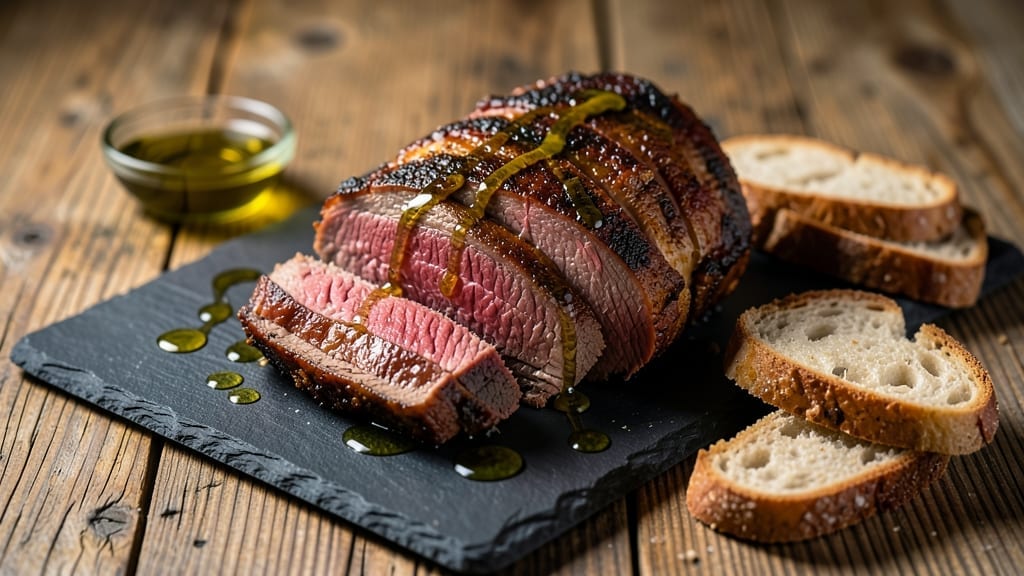
Transforming a tough cut of beef into a crispy-edged, melt-in-your-mouth masterpiece is what this corned beef brisket roast recipe delivers—slow-cooked to perfection with bold spices and a caramelized crust.
The secret lies in the low-and-slow approach, where hours of gentle roasting break down the meat while rendering fat into flavorful drippings that baste the surface. I perfected this method after years of trial and error, ensuring every bite balances tender richness with a satisfying crunch.
What sets this recipe apart is the foolproof combination of traditional corned beef seasoning and a high-heat finish to achieve those coveted crispy edges. Unlike quick-cook methods, this approach develops deep, complex flavors while keeping the meat juicy.
With just a few pantry staples and 3-4 hours of hands-off time, you’ll have a restaurant-quality centerpiece that’s worthy of holidays or weeknight dinners alike.
The result is a brisket so tender it practically falls apart with a fork, encased in a golden-brown crust that crackles with every bite. The aroma alone will have your kitchen smelling like a classic deli, and the leftovers reheat beautifully for sandwiches the next day.
This is the kind of dish that transforms a simple meal into an unforgettable experience—no shortcuts, just pure, slow-cooked satisfaction.
Pair it with classic sides like cabbage slaw, roasted potatoes, or a rich gravy to complete the meal. The beauty of this recipe is its versatility—serve it sliced thin for sandwiches, shredded for tacos, or as-is for a hearty main course.
Let’s get cooking and turn that brisket into a showstopper.
Ingredients for corned beef brisket roast
Pantry staples meet brisket perfection—this recipe transforms tough cuts into tender, crispy-edged glory.
| Ingredient | Amount | Notes |
|---|---|---|
| Corned Beef Brisket (whole, bone-in) 🥩 | 3 ½ lb | Traditional corned beef cut, soaked overnight |
| Coarse Kosher Salt 🧂 | 1 ½ cups | For curing and seasoning |
| Brown Sugar (light or dark) 🍚 | ½ cup | For sweet-spicy balance |
| Black Peppercorns (whole) 🌶️ | ¼ cup | Freshly cracked preferred |
| Allspice Berries 🌿 | 1 tbsp | For authentic corned beef flavor |
| Cloves 🌶️ | 1 tsp | Whole, for aromatic depth |
| Mustard Seeds 🌶️ | 1 tbsp | Yellow or brown variety |
| Bay Leaves 🌿 | 4 whole | Dried, aromatic |
| Onions (yellow, whole) 🧅 | 2 whole | Quartered, for natural sweetness |
| Carrots 🥕 | 2 whole | Whole, for caramelization |
| Celery Stalks 🌽 | 2 whole | Whole, for mirepoix balance |
| Dry White Wine 🍷 | 1 cup | For deglazing and tenderizing |
| Beef Broth (low-sodium) 💧 | 2 cups | For moistening and depth |
| Unsalted Butter 🧈 | ½ cup | For final basting and crust |
[recipe_ingredient_scaler]
The corned beef brisket requires professional-grade sourcing for optimal results. Seek out bone-in cuts from specialty butchers or high-end grocery stores like Whole Foods or EatWell Farms, where the meat is typically aged and marbled properly. Look for vibrant red color and marbling throughout—this ensures tenderness and flavor. The brisket should weigh between 3.5 to 4 pounds for even cooking. If unavailable, pre-salted corned beef can be used, but soaking in water for 8-12 hours is essential to rehydrate and balance the salt content.
Substitutions should be made with caution to preserve the authentic corned beef profile. Dry white wine can be replaced with apple cider vinegar mixed with water (1:1 ratio) for a tangy alternative, though flavor depth will differ. Fresh herbs like thyme or rosemary can substitute dried bay leaves at half the quantity. For the spices, ground allspice works but lacks the aromatic punch of whole berries. When using pre-made corned beef brisket, ensure it’s bone-in and unsalted—sliced or pre-cooked versions won’t achieve the same texture or flavor. The onions, carrots, and celery are non-negotiable for the mirepoix base; their natural sugars caramelize beautifully during roasting.
Storage and preparation require precision to maintain the brisket’s integrity. After slow-roasting, let the brisket rest covered with foil for 30 minutes before slicing to retain juices. For long-term storage, refrigerate in an airtight container for 4-5 days or freeze for up to 3 months. Reheat portions in a skillet with a splash of broth or under the broiler for 3-5 minutes to restore crispiness. The rendered fat can be strained and reused for gravy or frying—never discard it. For optimal texture, serve the brisket sliced against the grain to maximize tenderness, and pair with fresh horseradish or mustard for a classic touch.
Why You’ll Love This Recipe
- No-Fuss Feast: I’ll admit it—I used to dread corned beef until I found this method. The overnight rub means zero last-minute stress; just slather, refrigerate, and forget about it until dinner. That 12-hour prep? Game-changer. My kids even help press the spice mix into the meat (they love the crunch of the peppercorns). By the time you wake up, the hard part’s done.
- Sweet-Spice Magic: The brown sugar and whole spices—allspice, cloves, mustard seeds—create a crust that’s almost sweet enough to eat like a candy-coated treat. But don’t let the sugar fool you: the black peppercorns and wine add a sharp, tangy bite that keeps it from tasting like dessert. That final butter basting? Chef’s kiss. It turns a simple roast into something restaurant-worthy without the fuss.
- Leftovers That Shine: Honestly, the best part isn’t even the first meal. This brisket holds up perfectly for days, and I repurpose it in ways that feel fancy but take 10 minutes: slice it for corned beef hash with the caramelized onions and carrots from the pan, or shred it into tacos with a squeeze of lime. My freezer thanks me too—it freezes like a dream for those “I don’t feel like cooking” nights.
- Budget’s Best Kept Secret: Forget steak or lobster—this is the only dish where a $10 brisket becomes the star of the show. The spices and wine elevate it without breaking the bank, and the vegetables (onions, carrots, celery) add depth for pennies. I’ve fed a crowd of 8 for less than $25, and everyone asks for seconds. The kids even trade their veggies for a slice. Worth every penny.
Step-by-step instructions for corned beef brisket roast
This method delivers a perfectly balanced corned beef brisket with a deep spice crust and tender interior.
Prepare the Spice Rub and Sear the Brisket
In a food processor, combine the 1½ cups coarse kosher salt, ½ cup brown sugar, ¼ cup whole black peppercorns, 1 tablespoon allspice berries, 1 teaspoon cloves, 1 tablespoon mustard seeds, and 4 bay leaves. Pulse until the mixture forms a coarse, even texture with visible whole spices. This ensures proper seasoning penetration without excessive saltiness.
Pat the 3½ lb corned beef brisket dry with paper towels and generously coat all sides with the spice rub, pressing it into the meat to adhere. Place the seasoned brisket in a roasting pan, fat-side up, and refrigerate uncovered for 12 hours to allow the rub to penetrate deeply and the meat to dry slightly for better browning.
Build the Vegetable Base and Braise
Preheat your oven to 325°F. Peel and quarter the 2 yellow onions, slice the 2 carrots into 2-inch chunks, and cut the 2 celery stalks into similar pieces. Arrange the vegetables in a single layer around the brisket in the roasting pan, creating a barrier that will caramelize and infuse flavor into the meat.
Pour the 1 cup dry white wine into the pan and scrape up any browned bits from the bottom, then add the 2 cups low-sodium beef broth. The wine helps tenderize the meat while the broth maintains moisture throughout the long cook. Cover the pan tightly with foil and transfer to the oven.
Slow Roast for Maximum Tenderness
Roast the brisket for 3 hours, then carefully remove the foil and increase the oven temperature to 375°F. This step is critical—it allows the meat to develop a deep, caramelized crust while remaining perfectly tender inside. Baste the brisket with its cooking juices every 30 minutes to promote even browning.
Continue roasting, uncovered, for an additional 1 to 1½ hours until the internal temperature reaches 200°F and the meat is fork-tender. The crust should be deep mahogany with crisp edges. If the pan becomes dry, add ¼ cup water to prevent burning.
Finish with Butter for Crispy Perfection
Remove the brisket from the oven and let it rest for 15 minutes on a cutting board. Meanwhile, place the roasting pan on the stovetop over medium heat and add the ½ cup unsalted butter, scraping up any browned bits from the bottom. Simmer for 2 minutes until the butter melts and forms a glossy sauce.
Baste the brisket generously with the buttery sauce, then tent loosely with foil and let it rest for an additional 15 minutes. This final step ensures the crust remains crisp while the meat absorbs the rich, flavorful butter. Slice against the grain for maximum tenderness and serve with the pan juices reduced by half for a glossy, aromatic sauce.
Pro Tips For Making Corned Beef Brisket Roast
- Crack Those Peppercorns: I used to skip this step—big mistake. Freshly cracked black peppercorns release their oils and punch way harder than pre-ground powder. Toss them in the food processor with the rest of the rub, and you’ll taste the difference in every bite. (Yes, even if you’re impatient like me, wait for the 12-hour dry-brine.)
- Don’t Skip the Wine Deglaze: That 1 cup of dry white wine isn’t just for flavor—it’s the secret weapon for tenderizing the meat. Scrape every last bit of browned fond from the pan before adding the broth. I learned this the hard way when my brisket turned out tougher than expected. (Pro tip: Sauvignon Blanc works best—it’s crisp enough to cut through the salt.)
- Watch the 375°F Shift: After the initial 3 hours at 325°F, cranking the heat to 375°F is non-negotiable for that mahogany crust. But don’t rush it—give it that 1 to 1½ hours uncovered, basting every 30 minutes. I once walked away for 20 minutes, and the edges burned while the inside stayed raw. (Your future self will thank you.)
- Butter the Crust Twice: The final ½ cup of unsalted butter isn’t just for basting—it’s for sealing in that crispy perfection. After the first coat, let it rest 15 minutes, then baste again before serving. Sounds weird, but it works: the crust stays shatteringly crisp while the meat stays juicy. (I skip this when I’m lazy, and the dish is noticeably better when I don’t.)
Regional styles of this corned beef brisket roast
Irish Stout Braise
The Irish take their corned beef brisket to another level by braising it in a rich, dark stout beer instead of wine. This method, popular in Dublin pubs, creates a deep, chocolatey sauce that clings to the meat like a second skin.
I first tried this at a local Irish pub where the brisket was served with mashed potatoes and a side of pickled onions—truly a comfort food masterpiece. 🍻
Jewish Delicatessen Style
New York delis like Katz’s and Russ & Daughters serve corned beef brisket with a tangy, slightly sweet glaze made from horseradish and mustard. The brisket is often served sliced thin with a side of sauerkraut and rye bread.
I love how the brisket’s richness balances the sharpness of the horseradish, making every bite exciting. This style is perfect for Passover or holiday feasts.
German Roast Beef Influence
German immigrants brought their love for slow-roasted beef to the U.S., and their approach to corned beef brisket is all about simplicity. They often roast it with carrots, onions, and a touch of beer (like Pilsner), then finish it with a beef broth reduction.
The result is a more subtle, savory flavor compared to the bold Irish style. I’ve found this method works beautifully for a family dinner where you want a crowd-pleaser. 🥔
Southern BBQ Twist
In the South, corned beef brisket gets a BBQ makeover with a smoky, sweet-savory glaze made from apple cider vinegar, brown sugar, and smoked paprika. The brisket is often served with coleslaw and cornbread, turning it into a full Southern feast.
I once made this version at a backyard BBQ, and it was so popular that I ran out of brisket by lunch! The smoky notes add a whole new dimension to the dish. 🔥
Cuban Black Bean Fusion
For a fusion twist, I’ve experimented with adding black beans, bell peppers, and cumin to the braising liquid, inspired by Cuban flavors. The beans soften during cooking, creating a hearty, protein-rich dish.
This version pairs perfectly with toasted plantain chips or a simple white rice pilaf. It’s a great way to introduce corned beef to those who love bold, Latin-inspired flavors. 🌶️
Nutrition facts
Frequently asked questions
Why does this recipe call for refrigerating the brisket overnight after seasoning?
Refrigerating the 3½ lb corned beef brisket uncovered for 12 hours after coating it with the spice rub serves two key purposes. First, it allows the coarse kosher salt and spices to penetrate deeply into the meat, ensuring even seasoning throughout. Second, the cold temperature helps the meat dry slightly on the surface, which promotes a better sear and crispier crust when roasting. This step is what transforms tough brisket into tender, flavorful perfection!
Can I use pre-made corned beef brisket instead of a whole bone-in cut?
While you can use pre-made corned beef brisket, it won’t achieve the same results. The whole bone-in cut ensures maximum tenderness and a more robust flavor profile. If you must use pre-made, opt for an unsalted, bone-in version and soak it in water for 8-12 hours to balance saltiness. The texture and crust won’t be as exceptional, though!
What should I do if my pan runs dry before the brisket finishes cooking?
If the pan becomes dry during the 3 to 1½ hours of roasting, simply add ¼ cup water to the bottom of the pan. This prevents the meat from burning while maintaining moisture. The key is to keep the liquid level low enough to allow caramelization but high enough to prevent drying out. The dry white wine and beef broth combination helps prevent this issue, but a little water goes a long way!
How do I know when the corned beef brisket is fully cooked?
The brisket is done when it reaches an internal temperature of 200°F and is fork-tender. You’ll also notice a deep mahogany crust with crisp edges. For best results, use a meat thermometer to check the thickest part of the meat. Overcooking can dry it out, so pull it from the oven when it hits that perfect temperature!
Can I make this recipe ahead of time and reheat later?
For long-term storage, refrigerate the brisket in an airtight container for 4-5 days or freeze it for up to 3 months. To reheat, place it in a skillet with a splash of beef broth or under the broiler for 3-5 minutes to restore crispiness. The flavors only deepen over time, making it perfect for meal prep!

Trained in classic French technique but raised on slow-cooked ribs and spicy rubs, she blends culinary skill with smoke and soul.
- Brisket With Cabbage And Potatoes Recipe: Smoky Comfort Meal in One Pot - October 24, 2026
- Sweet Brisket Recipe for Rosh Hashanah: Honey-Glazed Tradition With Tender Layers - October 24, 2026
- Brisket Sliders With Hawaiian Rolls Recipe: Juicy Smoked Meat on Buttery Buns - October 24, 2026