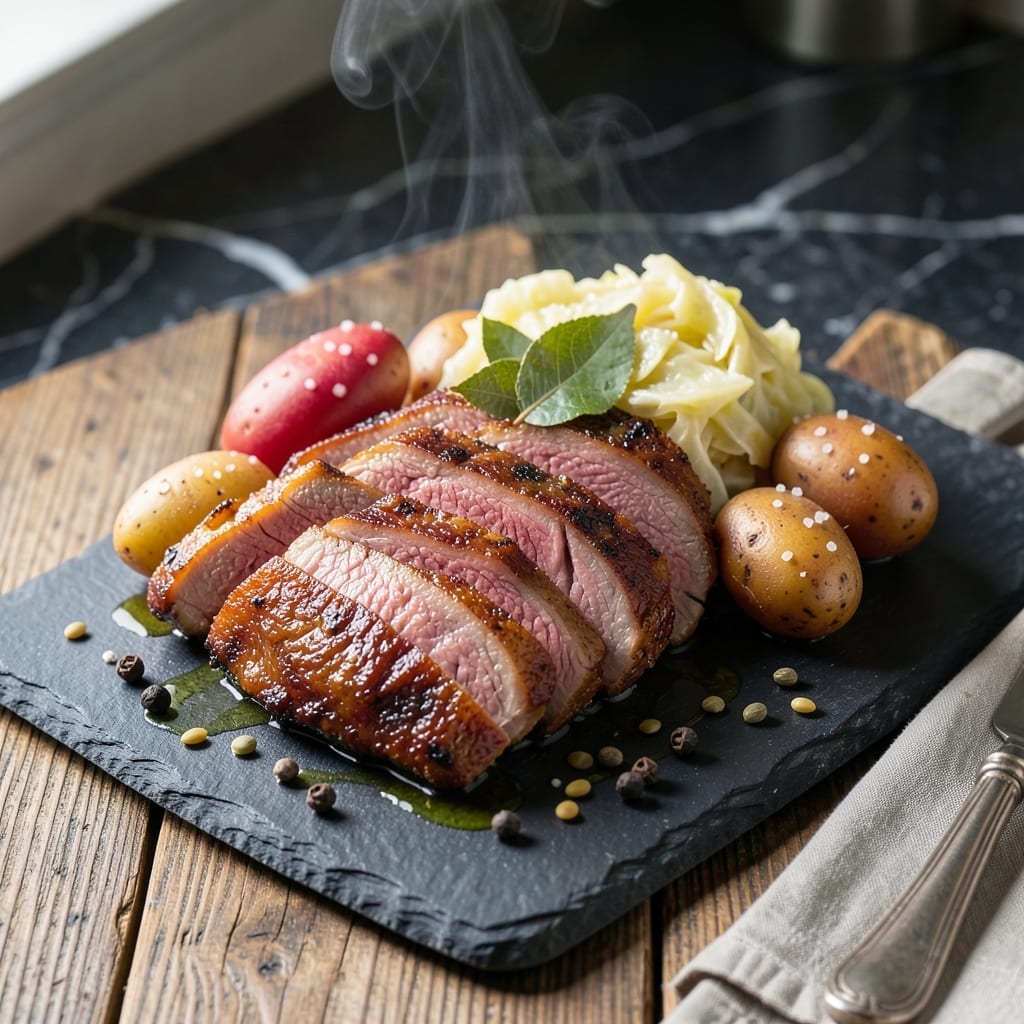
This cut delivers unmatched marbled richness when prepared with patience and precision. The slow-smoking process transforms the beef into a tender, flavorful masterpiece.
Every bite reveals the perfect balance of smoky depth and natural juiciness. This method ensures a perfect result that honors the meat’s quality.
Ingredients for Corned Beef Point
A well-curated selection of brined beef and aromatic spices for slow-smoked perfection.
| Ingredient | Amount | Notes |
|---|---|---|
| Corned Beef Point Cut 🥩 | 3 lb | Well-marbled, brined |
| Kosher Salt 🧂 | ¼ cup | Diamond Crystal preferred |
| Black Peppercorns 🌶️ | 2 tbsp | Freshly cracked for depth |
| Yellow Mustard Seeds 🌿 | 1 tbsp | Whole, not ground |
| Coriander Seeds 🍃 | 1 tbsp | Lightly toasted enhances aroma |
| Bay Leaves 🌿 | 4 whole | Dried, high-quality Turkish |
| Garlic Cloves 🧄 | 6 cloves | Peeled, smashed for infusion |
| Apple Cider Vinegar 🍏 | ½ cup | Raw, unfiltered for acidity |
| Brown Sugar 🍚 | ¼ cup | Light or dark variety |
| Hickory Wood Chips 🪵 | 2 cups | Soaked 1 hour before use |
| Beer 🍺 | 12 oz | Dark stout or porter preferred |
| Beef Broth 🥩 | 2 cups | Low-sodium for balance |
| Carrots 🥕 | 3 whole | Peeled, cut into chunks |
| Yellow Onions 🧅 | 2 whole | Quartered with skin on |
| Celery Stalks 🥬 | 3 whole | Cut into large pieces |
[recipe_ingredient_scaler]
The corned beef point cut is paramount. Seek out a well-marbled piece from a reputable butcher—Costco or Whole Foods carry quality options. The marbling ensures the meat stays juicy through the long smoking process. Ensure the beef is already brined; dry brining at home requires 5-7 days advance preparation. The spices should be fresh and whole for maximum aromatic impact during cooking.
No hickory chips? Apple or cherry wood provides a milder, fruit-forward smoke. For the beer, a dark stout adds depth, but any malty brew works in a pinch. If avoiding alcohol, substitute with additional beef broth and a splash of apple cider vinegar. The brown sugar can be replaced with maple syrup, though it may slightly alter the caramelization on the bark.
Store the smoked corned beef wrapped in butcher paper, then foil, for up to 5 days in the refrigerator. For longer storage, vacuum-seal and freeze for up to 3 months. Reheat gently in the broth or steam to maintain moisture and tenderness.
Why You’ll Love This Recipe
- Set and Forget: I love that I can toss the point cut with those spices in the morning and come home to a house that smells like a deli.
- Crust You Crave: The coriander and mustard seeds form this ridiculous crust that cracks when you slice it—so good.
- Feeds the Weekend: One brisket point makes sandwiches for Friday, tacos for Saturday, hash for Sunday brunch.
- Budget Stretcher: Honestly, one point cut costs less than pre-sliced corned beef and gives me four solid meals.
Instructions
Master the technique for transforming this cut into a tender, smoky masterpiece with rich bark and juicy interior.
Step 1: Prepare the Brine and Corned Beef
In a large pot, combine the 2 cups Beef Broth, 12 oz Beer, 0.5 cup Apple Cider Vinegar, 0.25 cup Brown Sugar, 0.25 cup Kosher Salt, 2 tbsp Black Peppercorns, 1 tbsp Yellow Mustard Seeds, 1 tbsp Coriander Seeds, 4 whole Bay Leaves, and 6 cloves Garlic Cloves.
Bring to a simmer over medium-high heat, stirring until the salt and sugar dissolve completely. Remove from heat and let cool to room temperature. Submerge the 3 lb Corned Beef Point Cut in the brine, ensuring it’s fully covered. Refrigerate for 5-7 days, turning the meat daily to ensure even curing.
Step 2: Soak Wood Chips and Prep Vegetables
Soak the 2 cups Hickory Wood Chips in water for 1 hour before smoking. This prevents them from burning too quickly and ensures a steady, flavorful smoke. While the wood soaks, prepare the vegetables: peel and cut the 3 whole Carrots into chunks, quarter the 2 whole Yellow Onions (leaving the skin on for color), and cut the 3 whole Celery Stalks into large pieces.
These vegetables will serve dual purposes: they’ll add moisture to the smoking environment and infuse the meat with subtle, complementary flavors as they cook alongside the corned beef.
Step 3: Smoke the Corned Beef
Remove the corned beef from the brine, rinse briefly under cold water, and pat dry. Preheat your smoker to 225°F using the soaked hickory wood chips for a robust, traditional smoke flavor. Place the corned beef on the smoker grate, fat-side up, along with the prepared vegetables arranged around it.
Smoke for 6-8 hours or until the internal temperature reaches 195-200°F and the meat is probe-tender. Maintain a consistent temperature throughout the process, adding more wood chips as needed to sustain a thin, blue smoke. Spritz the meat with apple juice or water every 1-2 hours to keep the surface moist and encourage bark formation.
Step 4: Rest and Slice
Once the corned beef reaches the desired internal temperature and tenderness, remove it from the smoker. Transfer to a cutting board or warm platter, tent loosely with foil, and let rest for 30-45 minutes. This resting period allows the juices to redistribute throughout the meat, ensuring each slice is moist and flavorful.
Slice the corned beef against the grain into ¼-inch thick slices. The meat should have a dark, caramelized bark on the outside and a beautiful pink smoke ring just beneath the surface. Serve immediately with the smoked vegetables and your choice of mustard or horseradish sauce.
Pro Tips For Making Corned Beef Point
- Low and Slow: I learned this the hard way—cook the point cut at 275°F for 3-4 hours, or until it hits 195°F internally. Any hotter and the meat turns tough and dry.
- Toast Your Spices: Dry-toast the black peppercorns, mustard seeds, and coriander in a pan for 1-2 minutes until fragrant before adding them. Sounds weird, but it works: it wakes up the flavors in a way raw spices just can’t.
- Skip the Boil: Resist the urge to boil the brining liquid—keep it at a gentle simmer, or you’ll end up with a rubbery, sad piece of meat. My grandmother swore by this, and she was right.
- Rest Before Slicing: Give it a solid 15-20 minutes under foil after cooking. This isn’t the prettiest method, but it’s the tastiest—it keeps the juices from running all over the cutting board.
Perfect Pairings for This Dish
Beer Pairings
Nothing complements this dish like a bold Irish stout such as Guinness. The roasted barley notes mirror the smoky depth of the beef, creating harmony in each bite. For a lighter option, try a crisp Irish lager like Smithwick’s. 🍺
Side Dish Ideas
I love serving this with classic colcannon potatoes—mashed with kale and scallions. The creamy texture balances the meat’s richness. Alternatively, braised cabbage with apples adds a sweet-tart contrast that cuts through the smokiness.
Bread Options
A warm loaf of Irish soda bread is perfect for soaking up juices. I often bake mine with currants and caraway seeds for added flavor. For a twist, try rye bread—its earthy notes pair wonderfully with the beef.
Sauce Pairings
Offer whole-grain mustard and horseradish cream on the side. The mustard’s tanginess enhances the smoky flavor, while horseradish adds a sharp kick. I also recommend a beer cheese sauce for dipping—use the same stout you served. ✨
Vegetable Sides
Roasted carrots and parsnips glazed with honey and thyme complement the dish beautifully. Their natural sweetness contrasts the savory beef. For something lighter, a shaved Brussels sprout salad with lemon vinaigrette works well.
Dessert Follow-Up
End the meal with bread pudding made with Irish whiskey and raisins. The warm, custardy dessert is a comforting finish. Alternatively, apple tart with a scoop of vanilla ice cream keeps the theme going. 💛
Nutrition Facts
Frequently Asked Questions
What’s the ideal smoking temperature?
Maintain a steady 225°F in your smoker for best results. This low temperature allows the connective tissue to break down slowly, ensuring tender, juicy meat without drying out.
How long should I smoke the beef?
Plan for 6-8 hours at 225°F until the internal temperature hits 195-200°F. The meat is done when it’s probe-tender, which ensures perfect texture and flavor.
Can I use a different wood for smoking?
Yes! If hickory isn’t available, apple or cherry wood provides a milder, fruit-forward smoke. Avoid strong woods like mesquite, which can overpower the beef’s natural flavor.
Why rest the meat before slicing?
Resting for 30-45 minutes lets juices redistribute throughout the meat. Slicing too soon can cause dryness, as the juices will spill out instead of staying in the beef.

Trained in classic French technique but raised on slow-cooked ribs and spicy rubs, she blends culinary skill with smoke and soul.
- Recipe for Boneless Pork Chops in Cast Iron Skillet: Sear and Baste to Juicy Perfection - October 3, 2026
- Recipe for Boneless Cross Rib Roast: Slow-Roasted Beef with Herb Crust - October 3, 2026
- Hamburgers in Sauce Recipe Crock Pot: Slow-Cooked Savory Delight - October 3, 2026