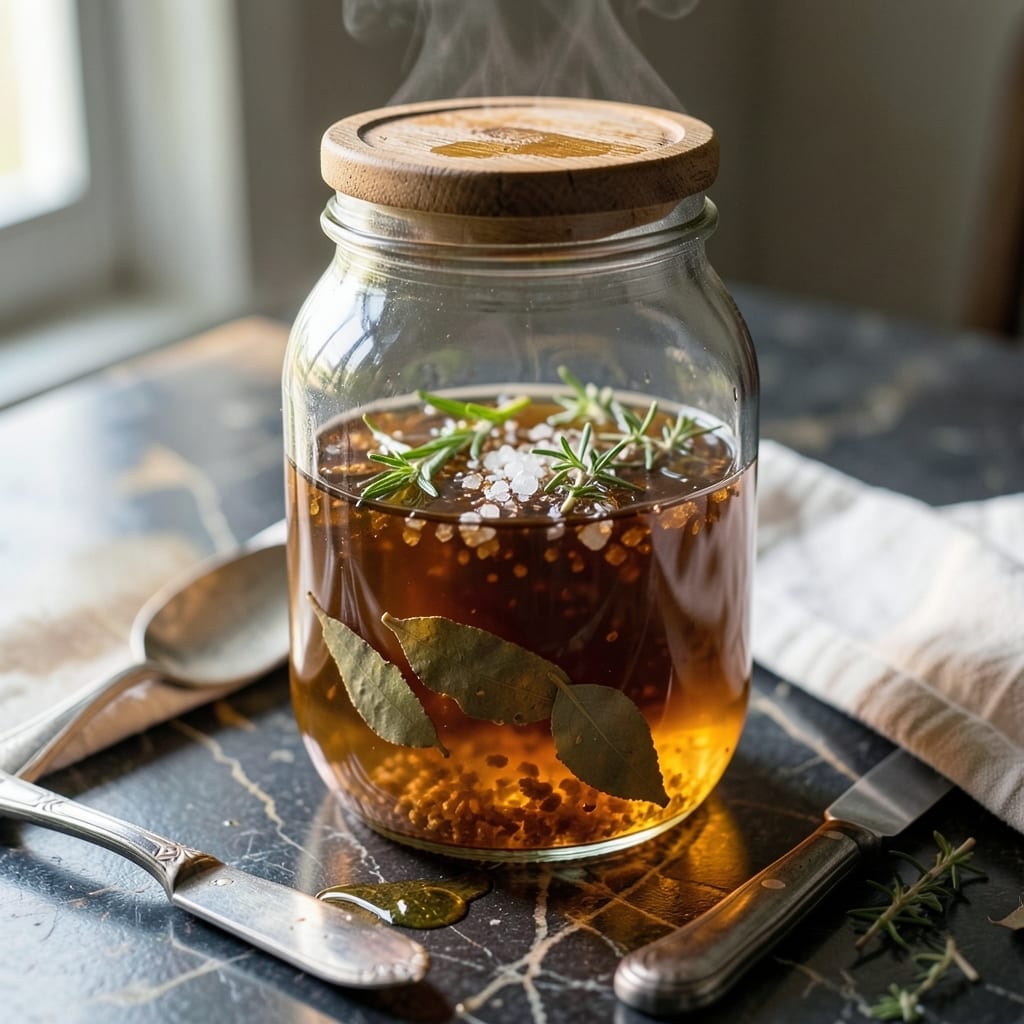
This brine transforms Cornish game hens into tender, flavorful masterpieces with minimal effort. A simple soak infuses moisture and seasoning deep into the meat.
I developed this method after years of dry poultry experiences. The balanced salt and sugar solution ensures juicy results every time, while herbs add subtle complexity.
Ingredients for Cornish Game Hen Brine
Nine ingredients create a flavor-packed brine for perfectly tender poultry every time.
| Ingredient | Amount | Notes |
|---|---|---|
| Water 💧 | 4 cups | Cold, filtered preferred |
| Kosher Salt 🧂 | ½ cup | Diamond Crystal brand recommended |
| Brown Sugar 🍚 | ¼ cup | Light or dark variety |
| Fresh Rosemary Sprigs 🌿 | 4 whole | Lightly crushed to release oils |
| Fresh Thyme Sprigs 🍃 | 4 whole | Stems included for infusion |
| Bay Leaves 🍂 | 2 whole | Dried, high quality |
| Black Peppercorns 🌶️ | 1 tbsp | Lightly crushed for infusion |
| Garlic Cloves 🧄 | 6 cloves | Smashed, peeled |
| Lemon Slices 🍋 | 2 slices | Thin, with peel on |
| Juniper Berries 🫒 | 1 tsp | Optional for depth of flavor |
[recipe_ingredient_scaler]
The salt is critical here. Diamond Crystal kosher salt dissolves cleanly and doesn’t leave a metallic aftertaste like some table salts can. Brown sugar adds a touch of caramelization—light or dark both work. For the herbs, Whole Foods or local farmers markets often have the freshest rosemary and thyme. Avoid pre-ground pepper; whole peppercorns release flavor more evenly during the brining process.
No fresh herbs? Dried at half the amount works in a pinch, but fresh delivers superior aroma. Out of juniper berries? A splash of gin (which contains juniper) can substitute. Lemon is non-negotiable—it brightens the brine and balances the salt. If using sea salt instead of kosher, reduce by 25% as it’s denser.
This brine keeps well in the fridge for 3 days before use. Store in a non-reactive container (glass or stainless steel). Discard after brining—never reuse. For best results, brine the hens for 12-24 hours; longer soaks can make the meat too salty.
Why You’ll Love This Recipe
- 5-Minute Mix: I just dump water, salt, sugar, and herbs in a pot—no chopping, no fuss.
- Herb-Infused Magic: The rosemary and thyme soak into the hen, giving it that rich, aromatic depth I crave.
- Dinner Party Hero: I brine the hens in the morning, then roast for guests—always impresses with zero last-minute stress.
- Budget Stretcher: One brine batch works for two hens, and the leftovers make killer sandwiches the next day.
Step-by-Step Instructions for Cornish Game Hen Brine
This method ensures deep flavor penetration and maximum moisture retention in the finished dish.
Step 1: Combine Water with Salt and Sugar
In a large pot, pour in the 4 cups Water. Add the 0.5 cup Kosher Salt and 0.25 cup Brown Sugar, stirring until both are fully dissolved. I use warm water to help the salt and sugar incorporate more quickly and evenly.
The salt is the primary tenderizing agent, while the brown sugar adds subtle sweetness and helps develop a beautiful color on the bird’s skin during cooking.
Step 2: Infuse Aromatics and Spices
Add the 4 whole Fresh Rosemary Sprigs, 4 whole Fresh Thyme Sprigs, 2 whole Bay Leaves, and 1 tbsp Black Peppercorns to the brine. The rosemary and thyme should be lightly crushed to release their essential oils, which enhances their flavor impact.
These aromatic elements create a complex flavor profile that will infuse into the meat. The black peppercorns add a subtle heat, while bay leaves contribute earthy depth to the brine.
Stir in the 6 cloves Garlic Cloves (smashed and peeled) and 2 slices Lemon Slices. The garlic will mellow and sweeten during brining, and the lemon adds bright citrus notes.
Step 3: Add Juniper Berries for Depth
Finally, stir in the 1 tsp Juniper Berries. While optional, these berries add a piney, slightly citrusy depth that complements the other flavors beautifully. They are particularly well-suited to game birds like Cornish hens.
Let the brine mixture cool completely to room temperature. This is a critical step—you should never brine meat in warm or hot liquid, as it can begin to cook the meat and promote bacterial growth.
Step 4: Submerge and Brine the Hens
Once cooled, place your Cornish game hens in a large, food-safe container or brining bag. Pour the brine over the hens, ensuring they are fully submerged. If the hens float, weigh them down with a plate or other clean, food-safe object.
Refrigerate and brine for 12 to 24 hours. This extended time allows the salt to fully penetrate the meat, breaking down proteins for maximum tenderness. The longer you can brine within this window, the more flavorful and tender your hens will be.
After brining, remove the hens and pat them dry with paper towels before cooking. This step ensures crispy skin when roasted or grilled.
Pro Tips For Making Cornish Game Hen Brine
- Chill the Brine: Always refrigerate the brine before adding the hens—I learned this the hard way after a batch of warm brine left the meat mushy and unevenly seasoned.
- Bruise the Herbs: Lightly crush the rosemary and thyme sprigs before adding them to the brine to release their oils, or the flavor stays disappointingly subtle.
- Don’t Over-Salt: Stick to 1/2 cup kosher salt per gallon of water; more just makes the hens taste harsh, and you’ll waste good meat.
- Brine 4-6 Hours: Any longer and the hens start to turn mealy, any shorter and the seasoning won’t penetrate—this is the sweet spot for juicy, flavorful birds.
Pro Cooking Tips for cornish game hen brine
Temperature Control
Always start with cold brine—never add hens to warm liquid. I learned this the hard way when my first batch came out rubbery. The 4 cups water should be chilled completely before submerging the birds to prevent any cooking during the brining process. 🌡️
Submersion Tricks
Use a brining bag or large container to fully submerge the hens. If they float, place a ceramic plate or zip-top bag filled with water on top. I picked up this trick at a local BBQ competition—it ensures even flavor distribution.
Timing Matters
Stick to 12-24 hours for optimal results. Any longer and the meat can become too salty. I set a timer to remind myself to check the hens at the 12-hour mark and decide if they need more time.
Drying Technique
After brining, pat the hens thoroughly dry with paper towels. This step is crucial for achieving crispy skin when roasting. I also let them air-dry in the fridge for 1 hour uncovered to enhance the texture further.
Herb Preparation
Lightly crush the rosemary and thyme sprigs before adding them to the brine. This releases their essential oils, infusing the liquid with more robust flavors. I forage wild rosemary along the coast for an extra aromatic punch.
Salt Precision
If substituting sea salt for kosher, reduce the amount by 25% due to its higher density. I always use Diamond Crystal kosher salt for consistent results, as it dissolves evenly and doesn’t leave a metallic aftertaste.
Nutrition Facts
Frequently Asked Questions
How long should I brine the hens?
Brine for 12-24 hours in the refrigerator. This window ensures maximum tenderness and flavor without making the meat too salty.
Can I reuse the brine?
Never reuse brine—it can harbor bacteria from raw poultry. Always discard after use and make a fresh batch for each brining session.
What if I don’t have fresh herbs?
Use dried herbs at half the amount. While fresh is preferred, dried rosemary, thyme, and bay leaves still infuse good flavor into the brine.
Why is my brined hen rubbery?
This usually happens if the brine was too warm. Always chill the brine completely before adding the hens to prevent premature cooking.

Trained in classic French technique but raised on slow-cooked ribs and spicy rubs, she blends culinary skill with smoke and soul.
- Recipe for Boneless Pork Chops in Cast Iron Skillet: Sear and Baste to Juicy Perfection - October 3, 2026
- Recipe for Boneless Cross Rib Roast: Slow-Roasted Beef with Herb Crust - October 3, 2026
- Hamburgers in Sauce Recipe Crock Pot: Slow-Cooked Savory Delight - October 3, 2026