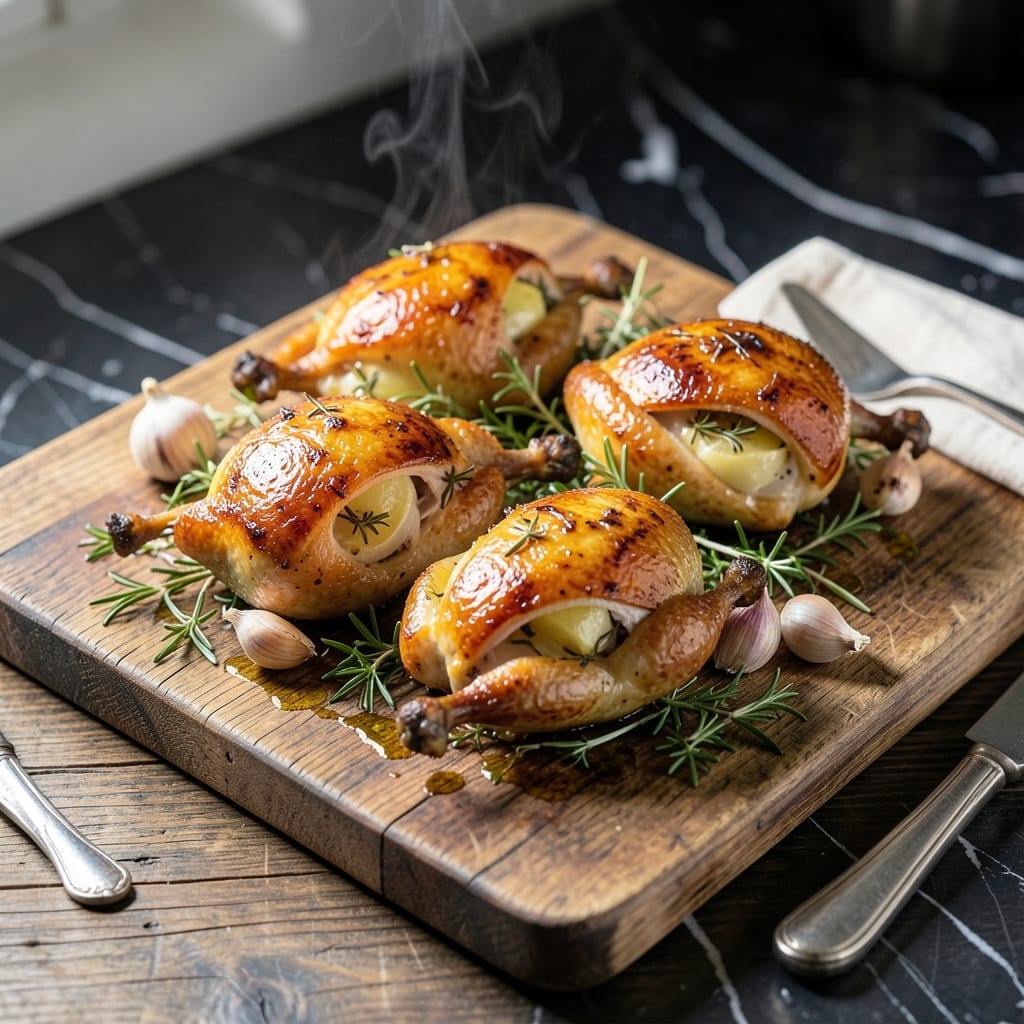
This oven-roasted Cornish hen delivers golden crisp skin and herb-infused juiciness with minimal effort. The high-heat method ensures even cooking while locking in natural flavors.
Simple seasoning and proper trussing create a presentation-worthy dish. Perfect for special dinners or Sunday suppers with family.
Ingredients for Cornish Hen Recipe Oven
Quality poultry and fresh herbs create this elegant yet simple roasted dish.
| Ingredient | Amount | Notes |
|---|---|---|
| Cornish Hens 🍗 | 4 whole | Thawed if frozen, patted dry |
| Unsalted Butter 🧈 | 4 tbsp | Softened to room temperature |
| Fresh Rosemary 🌿 | 2 tbsp | Finely chopped, stems removed |
| Fresh Thyme 🍃 | 2 tbsp | Finely chopped, stems removed |
| Garlic Cloves 🧄 | 4 cloves | Minced to fine paste |
| Kosher Salt 🧂 | 1 ½ tsp | Diamond Crystal preferred for texture |
| Freshly Ground Black Pepper 🌶️ | 1 tsp | Coarse grind for robust flavor |
| Lemon 🍋 | 1 whole | Zest and juice separated |
| Olive Oil 🫒 | 2 tbsp | Extra-virgin for drizzling |
| Yellow Onion 🧅 | 1 whole | Quartered for cavity stuffing |
| Carrots 🥕 | 2 whole | Peeled and cut into chunks |
| Celery Stalks 🌿 | 2 whole | Cut into large pieces |
| Dry White Wine 🍷 | ½ cup | For deglazing and moisture |
[recipe_ingredient_scaler]
The hens are the foundation—source air-chilled Cornish hens from Whole Foods or local butchers for superior texture and flavor. Avoid previously frozen if possible, but thawed works with care. Proper drying is essential (pat with paper towels) to achieve that promised golden crisp skin. The Diamond Crystal kosher salt provides the right texture for even distribution on the skin.
No fresh herbs? Dried at one-third the amount works, but fresh delivers the vibrant flavor the dish deserves. Substitute sage for thyme if needed, though rosemary is non-negotiable for that piney depth. The white wine can be swapped with chicken stock (use low-sodium) or even apple cider for a different but still delicious result.
Prepare the hens the morning of cooking for best results. Store raw poultry on the bottom fridge shelf, use within 2 days of purchase. Leftovers keep 3-4 days refrigerated or freeze for 2 months in airtight containers.
Why You’ll Love This Recipe
- One Pan Wonder: I just toss the hens with butter, garlic, and herbs on a sheet pan—no complicated steps.
- Herb-Infused Richness: The rosemary and thyme soak into the meat while roasting, and that garlic butter? Unbeatable.
- Date Night Ready: It looks fancy but takes almost no effort, so I serve it for special dinners or even a quiet Sunday.
- Leftovers Win: Honestly, the cold hen tastes just as good the next day in a sandwich or salad.
Step-by-Step Instructions for Cornish Hen
Precision and patience transform these birds into a showstopping centerpiece with golden skin.
Step 1: Prepare and Season the Hens
Pat the 4 whole Cornish Hens completely dry with paper towels, inside and out. This critical step removes moisture that would otherwise steam the skin instead of crisping it. I always check the cavities thoroughly—water tends to pool there.
Season the hens generously inside and out with 1.5 tsp Kosher Salt and 1 tsp Freshly Ground Black Pepper. Rub 4 tbsp Unsalted Butter under the skin and over the surface, then sprinkle with 2 tbsp Fresh Rosemary and 2 tbsp Fresh Thyme. The butter helps the herbs adhere while creating a flavor barrier that locks in moisture.
Step 2: Stuff and Truss for Even Cooking
Stuff each cavity with 1 whole Yellow Onion (quartered), 2 whole Carrots (peeled and chunked), and 2 whole Celery Stalks (cut into large pieces). These aromatics infuse the meat with subtle sweetness and earthy depth as they roast alongside the hens.
Truss the legs together with kitchen twine to maintain a compact shape. This ensures even cooking and prevents the legs from drying out. Tuck the wings under the body to protect the breast meat. I find that securing the legs tightly prevents them from splaying open during cooking.
Step 3: Roast at High Heat for Initial Browning
Preheat your oven to 425°F. Place the hens breast-side up on a roasting rack set in a rimmed baking sheet. The rack elevates the birds, allowing hot air to circulate underneath for all-over crisping. Drizzle with 2 tbsp Olive Oil for additional browning.
Roast for 25 minutes at this higher temperature to jumpstart the browning process. You’ll see the skin begin to tighten and take on a light golden hue. This initial blast of heat is crucial for developing that coveted crisp texture before we lower the temperature to finish cooking through.
Step 4: Reduce Heat and Finish Cooking
Reduce the oven temperature to 375°F and continue roasting for 45-55 minutes, or until the internal temperature reaches 165°F in the thickest part of the thigh. The skin should be deep golden brown and crisp to the touch, while the juices run clear when you pierce the meat.
Baste the hens with their pan juices every 15 minutes during this phase. I use a bulb baster for precision, but a spoon works too. This basting process redistributes the rendered butter and herbs, ensuring every bite is infused with flavor and the skin stays moist as it browns.
Step 5: Rest, Deglaze, and Serve
Transfer the hens to a cutting board and tent loosely with foil. Let them rest for 10-15 minutes before carving. This allows the juices to redistribute throughout the meat—skipping this step results in dry, tough meat as all the moisture escapes onto your cutting board.
While the hens rest, place the roasting pan on the stovetop over medium heat. Add 4 cloves Garlic Cloves (minced) and 0.5 cup Dry White Wine, scraping up all the browned bits with a wooden spoon. Simmer for 2-3 minutes until slightly reduced, then strain this flavorful liquid to serve alongside the carved hens. The zest from 1 whole Lemon can be sprinkled over the top just before serving for a bright finish.
Pro Tips For Making Cornish Hen Recipe Oven
- Start High, Finish Low: I learned this the hard way—sear the hens at 425°F for 20 minutes to crisp the skin, then drop to 375°F to cook through without burning the herbs.
- Butter Under Skin: Sounds weird, but it works: gently loosen the skin and rub softened butter mixed with minced garlic, rosemary, and thyme directly onto the meat before roasting.
- Don’t Overcrowd Pan: After burning three batches, I finally figured out—give each hen at least 2 inches of space so they brown instead of steam in their own juices.
- Rest Before Carving: My grandmother swore by this, and she was right: let the hens rest 10 minutes under foil before serving to keep the juices where they belong—in the meat, not on the cutting board.
Regional Styles of This cornish hen recipe oven
French Provençal Style
In Provence, I’d add herbes de Provence blend—about 1 tbsp mixed with the butter. The lavender notes in this mix give the hens a distinctly floral aroma. Stuff the cavities with fennel wedges and lemon halves instead of onion for a brighter, more aromatic profile.
Mediterranean Citrus
For a Greek-inspired version, I rub the hens with a paste of minced garlic, lemon zest, and dried oregano. Replace the white wine with ½ cup chicken broth mixed with 2 tbsp lemon juice. The acidity cuts through the richness beautifully. 🍋
Southern American
Down South, I’d swap the herbs for 1 tbsp smoked paprika and 1 tsp cayenne. The cavity gets stuffed with apple wedges and pecan halves for sweetness. Brush the skin with honey butter during the last 10 minutes for a sticky, caramelized finish.
Moroccan Spiced
Rub the hens with a mix of 1 tsp ground cumin, 1 tsp coriander, and ½ tsp cinnamon. Stuff with preserved lemon and fresh cilantro. The warm spices create a deeply aromatic dish that pairs perfectly with couscous.
Asian Five-Spice
For an Eastern twist, I use 1 tsp Chinese five-spice powder in the butter rub. The cavity holds star anise pods and ginger slices. Replace the white wine with ½ cup soy sauce diluted with ¼ cup water for deglazing. 🌟
British Sunday Roast
Keep it classic with just salt, pepper, and thyme. Stuff with sage leaves and pork sausagemeat. Serve with a rich gravy made from the pan drippings, flour, and beef stock for that traditional British touch.
Nutrition Facts
Frequently Asked Questions
What temperature should I use?
Start with 425°F for 25 minutes, then reduce to 375°F to finish. This two-step method ensures crispy skin and juicy meat.
How long does it take to cook?
Total roasting time is 70-80 minutes for 165°F internal temperature. Always check the thickest part of the thigh with a meat thermometer.
Can I substitute fresh herbs?
Yes, use dried herbs at one-third the amount. Fresh rosemary and thyme are ideal, but sage or oregano work well too.
Why is my skin not crispy?
Pat the hens completely dry before seasoning. Moisture is the enemy of crispy skin. Also, use a roasting rack for air circulation.

Trained in classic French technique but raised on slow-cooked ribs and spicy rubs, she blends culinary skill with smoke and soul.
- Recipe for Boneless Pork Chops in Cast Iron Skillet: Sear and Baste to Juicy Perfection - October 3, 2026
- Recipe for Boneless Cross Rib Roast: Slow-Roasted Beef with Herb Crust - October 3, 2026
- Hamburgers in Sauce Recipe Crock Pot: Slow-Cooked Savory Delight - October 3, 2026