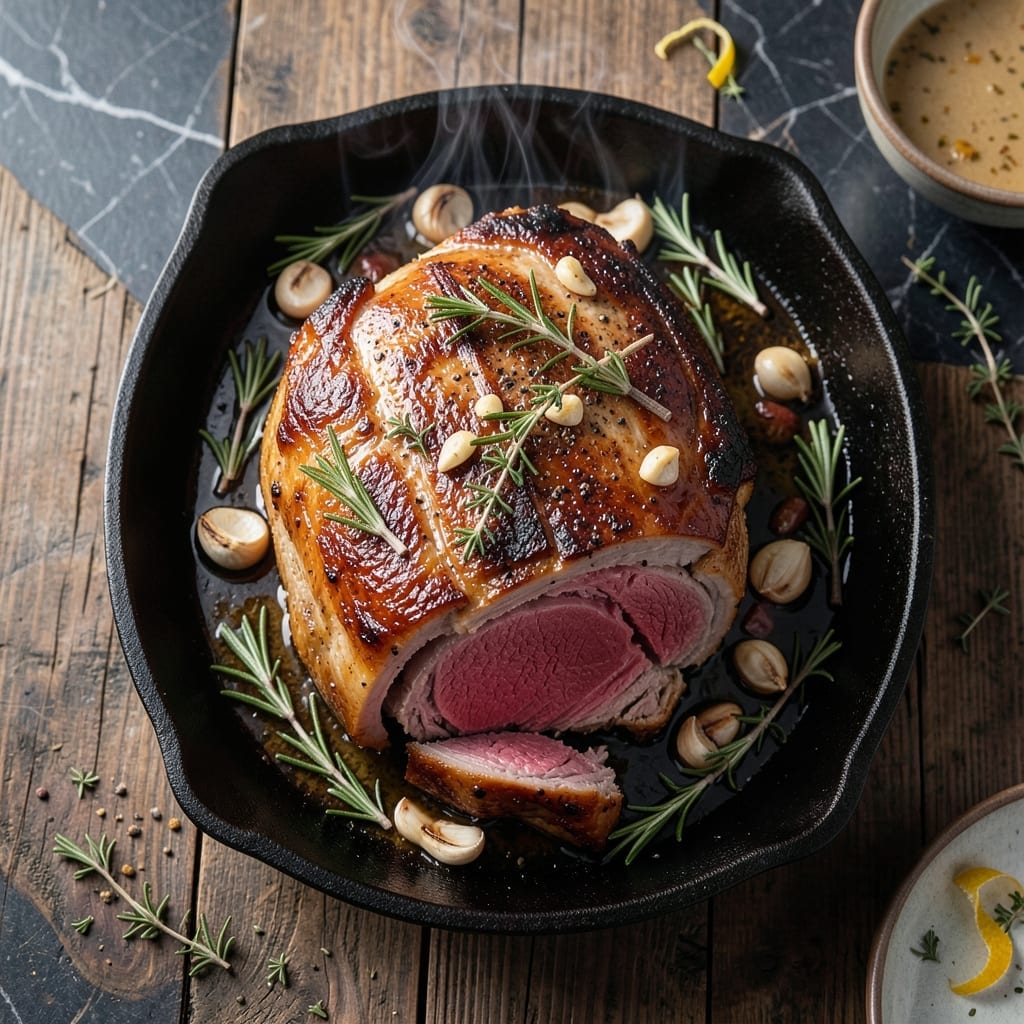
This oven-roasted cross rib delivers tender, flavorful beef with minimal effort. The slow roasting process enhances the natural marbling.
I rely on simple seasoning and precise temperature control for perfect results every time. The meat stays juicy while developing a rich crust.
Ingredients for Cross Rib Roast Recipe Oven
Simple ingredients transform this robust cut into something unforgettable with almost no effort.
| Ingredient | Amount | Notes |
|---|---|---|
| Cross Rib Roast 🥩 | 3 lb | Bone-in, well-marbled preferred |
| Kosher Salt 🧂 | 2 tbsp | Diamond Crystal or Morton preferred |
| Freshly Ground Black Pepper 🌶️ | 2 tsp | Coarse grind for best texture |
| Garlic Cloves 🧄 | 6 cloves | Peeled, smashed for maximum flavor |
| Fresh Rosemary Sprigs 🌿 | 4 pieces | Woody stems removed, roughly chopped |
| Fresh Thyme Sprigs 🍃 | 6 pieces | Leaves stripped from stems |
| Olive Oil 🫒 | 2 tbsp | Extra-virgin for richness |
| Red Wine 🍷 | 1 cup | Dry variety like Cabernet Sauvignon |
| Beef Broth 🥣 | 1 cup | Low-sodium preferred for control |
| Unsalted Butter 🧈 | 2 tbsp | Softened for finishing baste |
| Yellow Onion 🧅 | 1 whole | Large, quartered for roasting bed |
| Carrots 🥕 | 3 whole | Large, cut into chunks |
| Celery Stalks 🌿 | 2 pieces | Cut into 2-inch pieces |
[recipe_ingredient_scaler]
The beef is everything here. Cross rib with good marbling (look for white flecks throughout) stays juicy—avoid lean cuts. I grab mine from Whole Foods or a trusted butcher, but Costco has solid options too. Ask for bone-in if possible; it adds flavor and helps with even cooking. The roast should feel heavy for its size, a sign of good fat content.
No red wine? Beef broth with a splash of balsamic vinegar works in a pinch. Fresh herbs are ideal but dried at one-third the amount gets you close—just rehydrate them in the broth first. If you’re missing rosemary, sage or oregano can step in. The butter at the end is non-negotiable for that glossy, rich finish (trust me on the full-fat version).
Leftovers taste even better the next day. Store sliced beef in its juices for up to 5 days in the fridge, or freeze for 3 months. I like to shred the leftovers for sandwiches—just warm the meat gently in its juices to keep it moist.
Why You’ll Love This Recipe
- Set It and Forget: I rub the roast with salt, pepper, garlic, and rosemary, pop it in the oven, and let the heat do all the work.
- Crave-Worthy Crust: That garlic-rosemary crust forms the most incredible flavor—rich, herby, and worth every bite.
- Feeds a Crowd: One cross rib roast and I’ve got a hearty meal for family dinners or weekend gatherings with zero stress.
- Leftovers for Days: Honestly, the next-day sandwiches with the leftover slices might be even better than the first meal.
Step-by-Step Instructions for Cross Rib Roast in the Oven
Here’s the method I’ve perfected for melt-in-your-mouth beef with a rich, flavorful crust.
Step 1: Season and Prepare the Cross Rib Roast
Remove the 3 lb Cross Rib Roast from the refrigerator 1 hour before cooking to bring it to room temperature. This ensures even cooking throughout. Pat it thoroughly dry with paper towels—moisture is the enemy of a good sear.
Rub the roast all over with the 2 tbsp Olive Oil. Then, generously season with the 2 tbsp Kosher Salt and 2 tsp Freshly Ground Black Pepper. I press the seasoning into the meat to ensure it adheres well. The salt will draw out some moisture initially, but it will reabsorb, creating a perfectly seasoned crust.
Step 2: Create the Aromatic Herb Mix and Sear
In a small bowl, combine the 6 cloves Garlic Cloves (smashed), 4 pieces Fresh Rosemary Sprigs (roughly chopped), and the leaves from the 6 pieces Fresh Thyme Sprigs. This aromatic blend will infuse the roast with incredible depth of flavor.
Heat a large oven-safe roasting pan or Dutch oven over medium-high heat. Sear the roast on all sides until deeply browned, about 3-4 minutes per side. This step creates a flavorful crust and renders some of the fat, which will baste the meat as it roasts.
Step 3: Build the Roasting Bed and Add Liquids
While the roast sears, scatter the 1 whole Yellow Onion (quartered), 3 whole Carrots (cut into chunks), and 2 pieces Celery Stalks (cut into 2-inch pieces) across the bottom of the pan. These vegetables will create a natural roasting rack and add sweetness to the pan juices.
Place the seared roast on top of the vegetables. Pour the 1 cup Red Wine and 1 cup Beef Broth into the pan, being careful not to wash off the seasoning. The liquids will braise the meat gently, keeping it moist and creating a rich sauce.
Step 4: Slow-Roast to Perfection
Preheat your oven to 325°F. Once hot, transfer the pan to the oven and roast uncovered. For a 3 lb Cross Rib Roast, plan for about 2 to 2½ hours of cooking time. I start checking the internal temperature after 1½ hours to gauge progress.
You’ll know it’s ready when an instant-read thermometer inserted into the thickest part reads 130-135°F for medium-rare. The meat should be deeply browned on the outside and tender when pierced with a fork. If the top starts to darken too quickly, tent the pan with foil.
Step 5: Rest, Baste, and Serve
Transfer the roast to a cutting board and tent loosely with foil. Let it rest for at least 15-20 minutes—this is non-negotiable for juicy meat. While it rests, skim any excess fat from the pan juices, then whisk in the 2 tbsp Unsalted Butter to create a glossy, rich sauce.
Slice the roast against the grain and serve with the pan sauce spooned over the top. The vegetables will have soaked up incredible flavor and can be served alongside the beef. This dish is all about the slow-roasted tenderness and the deep, savory notes from the herbs and wine.
Pro Tips For Making Cross Rib Roast Recipe Oven
- Reverse Sear First: Start the roast at 275°F until it hits 110°F internal, then blast it at 450°F for 15 minutes—this gives edge-to-edge pink with a killer crust. I ruined two roasts by going high heat the whole time before figuring this out.
- Score the Fat Cap: Cut 1/4-inch deep crosshatches in the fat before seasoning so the salt, pepper, and rosemary really penetrate. Sounds fussy, but it makes the crust actually stick to the meat instead of peeling off.
- Rest Under Foil: Tent it loosely with foil and let it sit 15-20 minutes after pulling it from the oven—this keeps the juices from running all over the cutting board. My first few were dry because I sliced right away.
- Crush the Garlic: Smash the garlic cloves with the flat of your knife before mincing so they release more flavor into the rub. I was skeptical until I tried it, but the aroma difference is insane.
Health Benefits of These Flavors
Rich Protein Source
This roast delivers 45-50 grams of protein per 6-ounce serving, supporting muscle repair and growth. The slow roasting preserves these amino acids better than quick high-heat methods. I notice my energy levels stay steadier after meals with this dish. 💪
Iron and Zinc Boost
Beef is one of the best sources of heme iron—the most easily absorbed form—with a 3-ounce serving providing about 2.5mg. It’s also packed with zinc, crucial for immune function and wound healing.
B Vitamin Powerhouse
The B12 in beef supports nerve function, while B6 aids metabolism. A serving gives you 30-40% of your daily B12 needs. I feel the difference in my focus when I include beef regularly in my diet.
Healthy Fats Content
The marbling provides monounsaturated fats similar to those in olive oil. In moderation, these support heart health. A 3-ounce portion has about 12-15 grams of total fat, with only 5 grams saturated. 💛
Collagen and Gelatin
Connective tissues in cross rib break down during slow cooking, releasing collagen and gelatin. These support joint health and skin elasticity. The longer cooking time maximizes this benefit.
Low-Carb Friendly
With zero carbs naturally, this roast fits perfectly into low-carb or keto diets. The protein and fat content helps maintain satiety. I often serve it with roasted vegetables for a complete meal.
Nutrition Facts
Frequently Asked Questions
What’s the ideal internal temperature for medium-rare?
Pull it at 130-135°F for perfect medium-rare. The temperature will rise 5-10°F during resting. Use an instant-read thermometer for accuracy.
Can I cook it from frozen?
No, always thaw completely first. Cooking from frozen leads to uneven doneness. Thaw overnight in the fridge for best results.
How do I prevent the roast from drying out?
Sear it well first, then roast at 325°F with liquid in the pan. Letting it rest 15-20 minutes before slicing locks in juices.
What if I don’t have red wine?
Substitute with 1 cup beef broth plus 1 tbsp balsamic vinegar. This mimics the acidity and depth wine provides.

Trained in classic French technique but raised on slow-cooked ribs and spicy rubs, she blends culinary skill with smoke and soul.
- Recipe for Boneless Pork Chops in Cast Iron Skillet: Sear and Baste to Juicy Perfection - October 3, 2026
- Recipe for Boneless Cross Rib Roast: Slow-Roasted Beef with Herb Crust - October 3, 2026
- Hamburgers in Sauce Recipe Crock Pot: Slow-Cooked Savory Delight - October 3, 2026