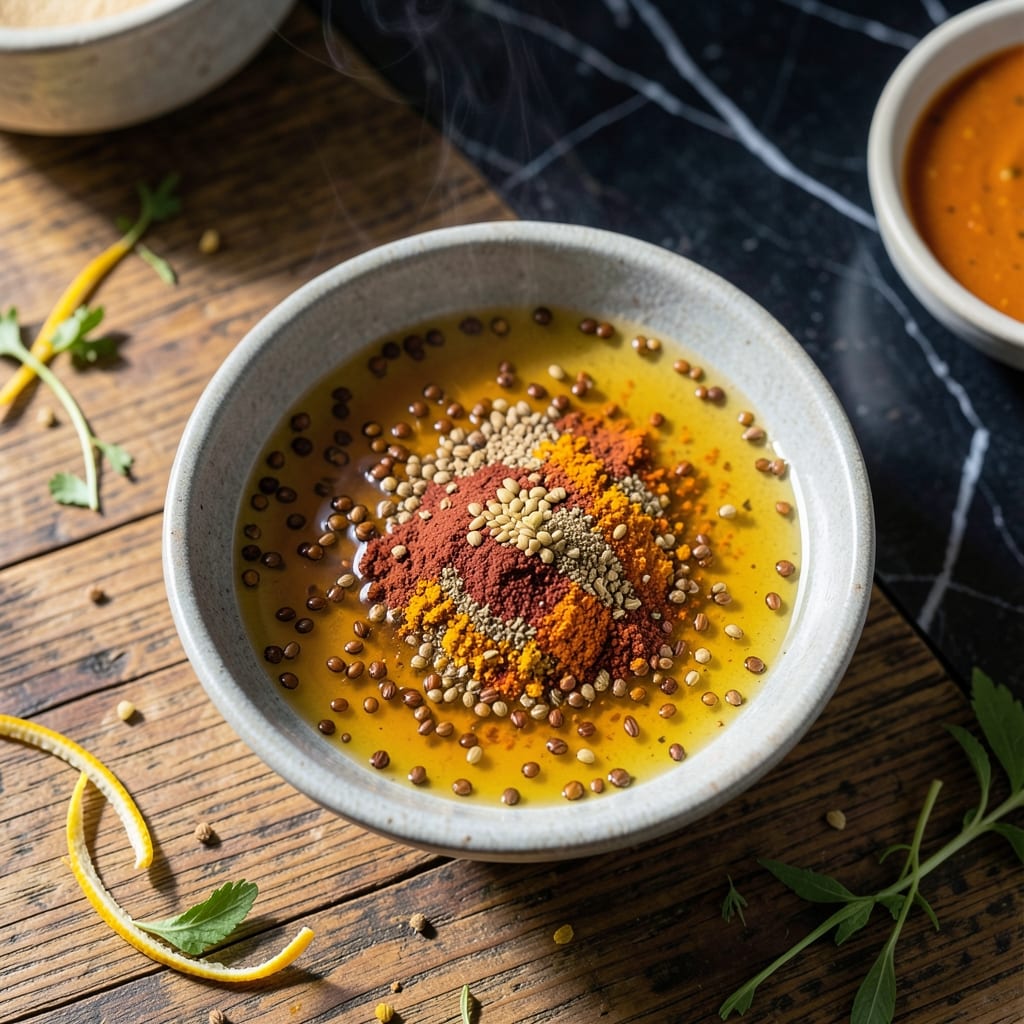
This aromatic oil transforms simple dishes into restaurant-quality creations with minimal effort. I developed this method after years of experimenting with spice infusions in my tiny Boston kitchen.
The process is straightforward: gently heat oil with curry spices to extract their essence. This creates a versatile condiment that adds depth to everything from roasted vegetables to grilled meats without overpowering them.
What results is a golden, fragrant oil that captures the complexity of curry in liquid form. It keeps well for weeks, making it perfect for adding a flavor boost to meals whenever inspiration strikes.
Use it as a finishing drizzle, marinade base, or cooking oil. This infusion technique works with any neutral oil you have on hand.
Ingredients for Curry Oil
Eight simple ingredients create this golden, fragrant condiment for your pantry.
| Ingredient | Amount | Notes |
|---|---|---|
| Neutral Oil 🫒 | 1 cup | Grapeseed, avocado, or light olive oil |
| Curry Powder 🌶️ | 2 tbsp | Mild or hot variety preferred |
| Ground Cumin 🌿 | 1 tsp | Freshly toasted for depth |
| Ground Coriander 🌿 | 1 tsp | Complements cumin perfectly |
| Ground Turmeric 🟡 | ½ tsp | For golden color |
| Mustard Seeds 🌱 | 1 tsp | Yellow or brown variety |
| Fenugreek Seeds 🌱 | ½ tsp | Optional but authentic |
| Dried Red Chili Flakes 🔥 | ½ tsp | Adjust for heat preference |
[recipe_ingredient_scaler]
The oil base matters—grapeseed or avocado oil have high smoke points and neutral flavors. I grab mine from Whole Foods or the bulk section at Market Basket in Boston. For the curry powder, Penzeys or a well-stocked spice shop will have the freshest stuff. Don’t use that dusty jar from the back of your cabinet (trust me, I’ve learned the hard way). Fresh spices make all the difference in the final infusion.
No curry powder? Mix 1 tbsp cumin + 1 tsp each coriander, turmeric, and ginger. Mustard seeds can be swapped for fennel seeds for a different twist. Skip the fenugreek if you can’t find it—it’s traditional but not essential. The chili flakes are flexible too (a pinch of cayenne works). Just don’t skip the toasting step—it wakes up the spices.
This keeps for 3-4 weeks in a cool, dark place. Store in a clean glass jar (I reuse old honey jars). The flavor deepens over time, so make a double batch. Shake before using—spices settle at the bottom.
Why You’ll Love This Recipe
- One Pot Wonder: I just heat the oil, toast the curry powder, cumin, coriander, and turmeric, then strain—no fuss, no mess.
- Warm and Fragrant: That first whiff of toasted spices blooming in hot oil is pure comfort in a jar.
- Drizzle Everything: Honestly, I use it on eggs, rice, soups—even a plain piece of toast comes alive.
- Pantry Staple: A single batch lasts me weeks, and it costs pennies compared to store-bought flavored oils.
Step-by-Step Instructions for Curry Oil
This method extracts maximum flavor with minimal effort and works every time.
Step 1: Toast the Whole Spices
Heat a small saucepan over medium-low heat and add the 1 tsp mustard seeds and 0.5 tsp fenugreek seeds. Toast for 1-2 minutes, stirring constantly, until the mustard seeds begin to pop and the fenugreek turns light golden brown.
This step wakes up the essential oils in the whole spices, creating a deeper, more complex base for your infusion. Watch closely—they can go from perfectly toasted to burnt in seconds. The aroma should be nutty and warm, not acrid or harsh.
Step 2: Bloom the Ground Spices
Immediately add the 1 cup neutral oil to the pan with the toasted seeds. Then stir in the 2 tbsp curry powder, 1 tsp ground cumin, 1 tsp ground coriander, and 0.5 tsp ground turmeric. The oil should sizzle gently around the spices.
Cook for 2-3 minutes at the same medium-low heat, stirring frequently, until the mixture turns deep golden and the curry powder loses its raw edge. You’ll notice small bubbles forming at the edges—that’s the moisture cooking off. Don’t let it reach a rolling boil.
Step 3: Add Heat and Steep
Sprinkle in the 0.5 tsp dried red chili flakes and stir for 30 seconds just to warm them through. Then remove the pan from heat. The residual warmth will continue infusing the oil without risk of scorching the chili flakes.
Let the mixture steep off heat for 10-15 minutes. This resting period allows the flavors to meld and intensify. The oil will take on a vibrant amber hue, and the surface should glisten with suspended spices. If it looks cloudy, that’s normal—the spices are still releasing their essence.
Step 4: Strain and Cool
Line a fine-mesh strainer with cheesecloth and place it over a clean glass jar or bowl. Pour the warm oil through the strainer, pressing gently on the solids with a spoon to extract every last drop of fragrant oil. Discard the spent spices.
Let the strained oil cool to room temperature, then seal the jar. The finished product should be clear and deeply colored, with a potent aroma that hits you the moment you open the container. Store in a cool, dark place for up to 1 month.
Pro Tips For Making Curry Oil
- Heat Oil First: Always heat the neutral oil until it shimmers before adding the spices—I learned this the hard way after ending up with a bitter, burnt batch.
- Toast the Spices: Let the curry powder, cumin, and coriander sizzle for 30-45 seconds until fragrant, but pull them off before they darken or they’ll turn bitter.
- Skip the Turmeric First: Add turmeric last, as it burns easily and can make the oil taste acrid if cooked too long with the other spices.
- Cool Before Storing: Let the oil cool completely before transferring to a jar—hot oil can create condensation, which shortens its shelf life.
Make-Ahead Tips for This Recipe
Prep Ahead Strategy
I always make a double batch of this oil—it keeps beautifully for 3-4 weeks in a cool, dark pantry. The flavors actually deepen over time, so the second week’s drizzle tastes even better than the first. 💪
Ingredient Prep
Measure all your spices the night before and store in a small bowl. This saves 5 minutes on cooking day. I use my Boston neighborhood market‘s bulk section for fresh spices—it makes a noticeable difference.
Infusion Shortcut
For faster results, gently warm the finished oil in a 200°F oven for 30 minutes after straining. This accelerates the flavor melding without risking bitterness. I discovered this trick during my marketing days when I needed quick meals.
Storage Containers
Clean, dry glass jars are ideal—I reuse old honey or jam jars. Avoid plastic as it can absorb flavors. Fill to the top to minimize air exposure, which helps prevent oxidation.
Flavor Testing
Taste your oil after 24 hours of steeping. If it needs more punch, add ½ tsp curry powder to the jar and shake. The flavor will bloom within 12 hours. This forgiving nature is why I love making it.
Labeling Tip
Write the date on your jar with a masking tape label. After 3 weeks, use any remaining oil in cooking rather than as a finishing drizzle, as the flavors will start to mellow. 💡
Nutrition Facts
Frequently Asked Questions
What’s the best oil for infusing?
Use neutral oils with high smoke points like grapeseed or avocado oil. Their mild flavor lets the spices shine. Avoid extra virgin olive oil—its strong taste competes with the curry.
How do I adjust the spice level?
Start with 0.5 tsp chili flakes for mild heat. For extra kick, add another 0.25 tsp or swap in cayenne. Taste after 24 hours and adjust if needed.
Can I reuse the strained spices?
No, the spices lose most flavor during infusion. Discard them after straining. For a second batch, use fresh spices to ensure bold, vibrant taste.
Why did my oil turn bitter?
Bitterness usually means the spices were overheated. Always use medium-low heat and never let the oil boil. Steep off-heat to prevent scorching.

Trained in classic French technique but raised on slow-cooked ribs and spicy rubs, she blends culinary skill with smoke and soul.
- Recipe for Boneless Pork Chops in Cast Iron Skillet: Sear and Baste to Juicy Perfection - October 3, 2026
- Recipe for Boneless Cross Rib Roast: Slow-Roasted Beef with Herb Crust - October 3, 2026
- Hamburgers in Sauce Recipe Crock Pot: Slow-Cooked Savory Delight - October 3, 2026