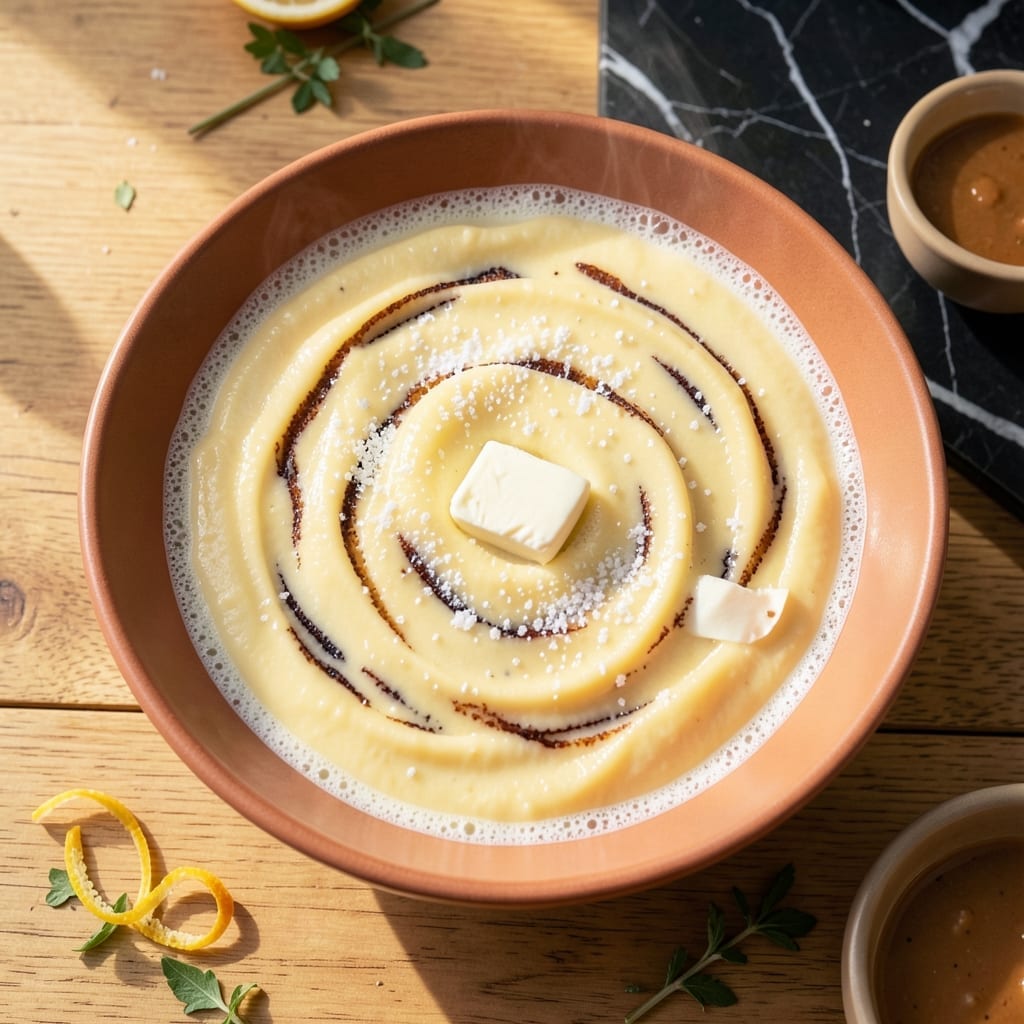
This custard filling transforms ordinary cakes into restaurant-quality desserts with its velvety texture and rich flavor. A simple stovetop preparation yields a smooth, spreadable consistency perfect for layering.
With just a few basic ingredients and careful temperature control, you’ll create a foolproof filling that holds its shape while remaining creamy. Ideal for filling, frosting, or pairing with fresh fruit.
Ingredients for Custard Recipe Cake Filling
Eight ingredients create this velvety, restaurant-quality filling with foolproof results every time.
| Ingredient | Amount | Notes |
|---|---|---|
| Whole Milk 🥛 | 2 cups | Full-fat for richest texture |
| Granulated Sugar 🍚 | ¾ cup | Fine grain for even dissolution |
| All-Purpose Flour 🌾 | ¼ cup | Sifted for lump-free custard |
| Large Egg Yolks 🥚 | 6 pieces | Room temperature for smooth incorporation |
| Unsalted Butter 🧈 | 4 tbsp | Cubed for even melting |
| Vanilla Extract 🌿 | 2 tsp | Pure extract for best flavor |
| Salt 🧂 | ¼ tsp | Fine sea salt preferred |
| Heavy Cream 🥛 | ½ cup | Cold for temperature control |
[recipe_ingredient_scaler]
The milk forms the base, so whole milk is non-negotiable—lower fat versions yield thin, watery custard. Organic Valley or local dairy brands offer the richest flavor. Egg yolks provide structure and color; room temperature yolks incorporate more smoothly into the warm milk. For the butter, Plugrá or Kerrygold deliver superior richness. Always use pure vanilla extract, not imitation, for depth of flavor.
No whole milk? Half-and-half works in a pinch but reduce by 2 tbsp to compensate for higher fat. Out of egg yolks? Whole eggs at a 1:1 ratio but the custard will be less rich. Need to make it gluten-free? Cornstarch at half the flour amount provides similar thickening power. Vanilla bean paste can replace extract—use 1 tbsp and scrape in the seeds.
Custard keeps 3-4 days refrigerated in an airtight container. Press plastic wrap directly onto the surface to prevent a skin from forming. For longer storage, freeze up to 1 month—thaw in the fridge overnight and rewhisk before using. Always bring to room temperature before spreading between cake layers.
Why You’ll Love This Recipe
- One-Bowl Wonder: I mix everything right in the saucepan—no extra bowls, no fuss, just smooth custard ready for layering.
- Velvety Richness: The egg yolks and butter create a filling so luscious it turns a simple cake into something special.
- Bakeshop Secret: Honestly, I use this for everything from layer cakes to cream puffs, and no one guesses how simple it is.
- Stretch Your Dollar: A handful of pantry staples makes enough filling for two cakes, and it keeps beautifully in the fridge for days.
Step-by-Step Instructions for Custard Cake Filling
Master this technique for a luscious, professional-quality custard that sets beautifully between cake layers.
Step 1: Heat the Milk and Cream Mixture
In a medium saucepan, combine the 2 cups Whole Milk and 0.5 cup Heavy Cream over medium heat. Bring the mixture to a gentle simmer, watching for tiny bubbles to form around the edges of the pan. This gradual heating prevents scorching and ensures even temperature distribution.
Remove from heat just as the mixture begins to steam and small bubbles appear. The liquid should be hot but not boiling—boiling can cause the proteins to curdle when combined with the eggs later. I maintain constant visual contact during this stage to catch the perfect moment.
Step 2: Temper the Egg Yolks with Dry Ingredients
In a separate bowl, whisk together the 0.75 cup Granulated Sugar, 0.25 cup All-Purpose Flour, and 0.25 tsp Salt. Add the 6 pieces Large Egg Yolks and whisk vigorously until the mixture turns pale yellow and forms thick ribbons when the whisk is lifted.
Slowly pour about 1 cup of the hot milk mixture into the egg yolk mixture while whisking constantly. This tempering process raises the egg temperature gradually, preventing them from cooking into scrambled eggs when added to the hot liquid. The mixture should remain smooth and lump-free throughout.
Step 3: Cook the Custard to Proper Consistency
Return the tempered egg mixture to the saucepan with the remaining hot milk. Cook over medium-low heat, stirring constantly with a wooden spoon or silicone spatula. The custard will begin to thicken after 5-7 minutes of steady cooking.
Continue cooking and stirring until the mixture reaches a pudding-like consistency and coats the back of the spoon. When you run your finger through the custard on the spoon, it should leave a clear path that holds its shape. This visual test indicates the custard has thickened sufficiently.
Remove from heat immediately once this consistency is achieved to prevent overcooking.
Step 4: Finish with Butter and Vanilla
Add the 4 tbsp Unsalted Butter and 2 tsp Vanilla Extract to the hot custard. Stir until the butter melts completely and the vanilla is fully incorporated. The butter adds a luxurious silkiness to the texture, while the vanilla provides depth of flavor.
The finished custard should be glossy and smooth, with a rich golden color. If any lumps appear, press the mixture through a fine-mesh sieve immediately for a perfectly velvety texture. This step ensures your cake filling will be impeccably smooth when sliced.
Step 5: Cool and Prepare for Assembly
Transfer the custard to a clean bowl and press plastic wrap directly onto the surface to prevent a skin from forming. Let it cool to room temperature, then refrigerate for at least 2 hours or until completely chilled and set.
The custard will thicken further as it cools. For cake assembly, the filling should hold its shape when spooned but still spread easily between layers. This chilling time is essential for both texture and ease of handling during cake construction.
Pro Tips For Making Custard Recipe Cake Filling
- Temper the Yolks: Slowly whisk a third of the hot milk mixture into the egg yolks before combining everything—this prevents scrambled eggs in your custard.
- Use Room-Temp Ingredients: Pull milk, eggs, and butter out of the fridge 30 minutes ahead; cold ingredients make lumpy custard that never smooths out.
- Skip the Boil: Cook the custard just until it thickens enough to coat the back of a spoon—any further and you’ll end up with a rubbery filling.
- Strain the Mixture: After cooking, push the custard through a fine-mesh sieve to remove any flour lumps or cooked egg bits for a silky texture.
Troubleshooting This Recipe
Lumpy Custard
If your custard has lumps, it likely means the eggs scrambled during tempering. Immediately strain through a fine-mesh sieve to remove curdled bits. To prevent this, whisk constantly while adding hot milk and keep the heat at medium-low. 💡
Too Thin
Undercooked custard stays runny. Return it to medium-low heat and cook while stirring for 2-3 more minutes until it coats the spoon. If it still won’t thicken, mix 1 tsp cornstarch with 1 tsp cold water and whisk in.
Too Thick
Overcooked custard becomes gluey. Thin it by whisking in 1-2 tbsp warm milk at a time until smooth. Avoid adding too much liquid—custard thickens further as it cools. I often rescue mine this way after a moment of distraction.
Skin Formation
That unappetizing skin forms when custard cools uncovered. Press plastic wrap directly onto the surface before refrigerating. If a skin does form, simply whisk it in or strain it out—no harm done.
Grainy Texture
This usually signals undissolved sugar or flour. Ensure you whisk dry ingredients thoroughly with eggs before tempering. If it happens, strain while hot and stir vigorously. For insurance, I always sift my All-Purpose Flour first. ✨
Separated Custard
If the custard breaks or looks curdled, it’s been overheated. Remove from heat immediately and whisk in 1 tbsp ice-cold heavy cream to help re-emulsify. Keep the temperature steady—patience is everything here.
Nutrition Facts
Frequently Asked Questions
Can I use this for cupcakes too?
Pipe or spoon cooled custard into cupcake centers for a delightful surprise. Use a small cookie scoop for even portions.
Why does my custard weep after a day?
This happens when moisture separates. To prevent, ensure custard is fully chilled before use and store cakes in an airtight container in the fridge.
Can I flavor it with chocolate?
Yes! Melt 4 oz dark chocolate with the butter in Step 4, or stir in 2 tbsp cocoa powder with dry ingredients. Both add rich depth.
How far ahead can I make the filling?
Prepare up to 2 days ahead. Store covered in the fridge, then give it a good whisk before using to restore its creamy texture.

Trained in classic French technique but raised on slow-cooked ribs and spicy rubs, she blends culinary skill with smoke and soul.
- Recipe for Boneless Pork Chops in Cast Iron Skillet: Sear and Baste to Juicy Perfection - October 3, 2026
- Recipe for Boneless Cross Rib Roast: Slow-Roasted Beef with Herb Crust - October 3, 2026
- Hamburgers in Sauce Recipe Crock Pot: Slow-Cooked Savory Delight - October 3, 2026