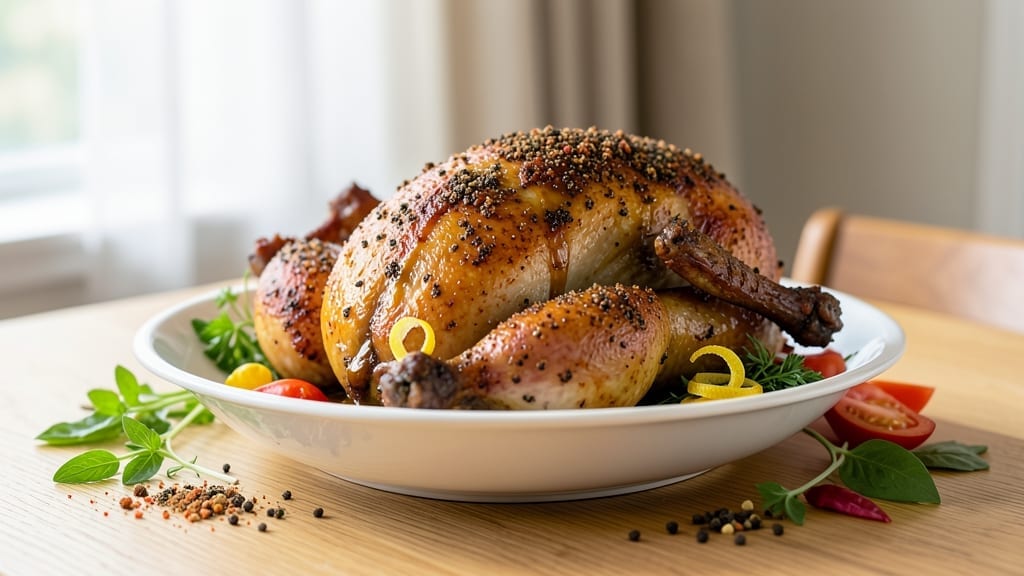
This deep fried turkey rub and injection recipe transforms Thanksgiving dinner from ordinary to unforgettable with crispy skin and juicy, flavor-packed meat inside. I perfected this method after years of experimenting with rubs and injections—combining my family’s backyard cookout traditions with French technique precision.
The key? A dry rub that locks in moisture while creating a crackling crust, paired with an injection that infuses every fiber with bold, savory depth.
The secret lies in the two-step flavor approach: first, the injection—equal parts apple cider, bourbon, and melted butter—penetrates deep into the meat while you brine overnight. Then, the dry rub (paprika, brown sugar, garlic powder, and cayenne) forms a flavorful bark during frying.
This isn’t just another turkey recipe; it’s a foolproof method that delivers restaurant-quality results with minimal fuss.
By the time you pull it from the oil, you’ll have a turkey with golden, shatteringly crisp skin and meat so tender it falls apart at the touch. The rub adds a smoky-sweet crust, while the injection ensures every bite is moist and packed with flavor.
This is the kind of turkey that has guests asking for seconds—and thirds. Let’s get started on the perfect centerpiece for your holiday table.
Pro tip: Keep a thermometer handy—maintaining 325°F oil temperature is critical for even cooking without burning. And don’t skip the resting time; it’s what makes the difference between good and explosively flavor-packed.
The sides? Gravy made from the pan drippings and a classic stuffing complete the meal. Safety first, flavor always.
Ingredients for deep fried turkey rub and injection
Pantry staples meet backyard cookout magic for Thanksgiving centerpiece perfection.
| Ingredient | Amount | Notes |
|---|---|---|
| Fresh Whole Turkey 🦃 | 12 lb | Thawed, giblets removed |
| Unsalted Butter 🧈 | ½ cup | Melted for injection |
| Apple Cider 🍎 | ½ cup | Unfiltered for depth |
| Bourbon Whiskey 🥃 | ½ cup | 80-proof minimum |
| Paprika 🌶️ | ¼ cup | Smoked for rich color |
| Light Brown Sugar 🍚 | ¼ cup | Packed, for caramelization |
| Garlic Powder 🧄 | 2 tbsp | Freshly ground preferred |
| Cayenne Pepper 🔥 | 1 tbsp | Adjust for heat preference |
| Diamond Crystal Kosher Salt 🧂 | 1 tbsp | Fine grain preferred |
| Black Peppercorns 🌶️ | 1 tbsp | Freshly cracked |
| Peanut Oil 🫒 | 4 gal | High smoke point, neutral flavor |
| Fresh Thyme Sprigs 🌿 | 4 whole | For aromatics during frying |
| Fresh Rosemary Sprigs 🌿 | 4 whole | For aromatics during frying |
| Lemon Wedges 🍋 | 4 whole | For serving |
[recipe_ingredient_scaler]
The turkey is non-negotiable—12 lbs gives you a generous 4 servings with leftovers. Look for a fresh, free-range bird from Costco or a trusted butcher; they’ll have the best marbling for juiciness. Thaw it in the fridge for 48 hours if frozen—never in cold water. The bourbon and apple cider injection is where the magic happens: 80-proof bourbon ensures proper penetration, and unfiltered cider adds complexity. Grab a high-quality bourbon like Maker’s Mark or Buffalo Trace for the best results.
No bourbon? Brandy or apple brandy works in a pinch, but the caramel notes are key. Short on time? Substitute with extra apple cider plus 1 tbsp maple syrup—it’ll still be delicious, just less complex. The rub’s smoked paprika is critical for that deep, charred flavor—Penzeys or McCormick make solid options. For the oil, peanut oil is ideal (high smoke point, neutral flavor), but vegetable or canola oil will work if that’s what you’ve got. Just keep the temperature steady at 325°F—a deep-fry thermometer is worth every penny.
This turkey needs 24 hours to marinate in the injection mix before frying—plan ahead. The rub stays fresh for 2 weeks in an airtight container, so make extra for next year. Store the cooked turkey in the fridge for 3 days or freeze for 3 months. Pro tip: Let it rest 30 minutes after frying before carving—this is what keeps it juicy. The leftovers? Gravy made from the pan drippings and a classic stuffing will turn scraps into a meal.
Why You’ll Love This Recipe
- No Oil Mess Worries: Honestly, the prep is way less intimidating than you’d think. Just dry the turkey, mix the rub, and inject that buttery bourbon-apple cider blend—no fancy skills required. The hardest part is just keeping your kids away from the fryer while the oil heats.
- Smoky-Sweet Magic: That smoked paprika and brown sugar rub? It’s like giving your turkey a caramelized, papery crust that’s almost too good to eat. The bourbon and apple cider injection keeps it juicy inside while the cayenne adds a little kick—no bland turkey here.
- Feeds a Crowd (With Leftovers): A 12-pound turkey isn’t just for Thanksgiving—it’s your secret weapon for game days, family BBQs, or even a lazy Sunday lunch. And yes, there’ll be leftovers. That’s the beauty of it; you’ll have enough for sandwiches or fried turkey tacos the next day.
- Weeknight-Friendly (Sort Of): Okay, fine, it takes a little planning (the overnight rest is key), but it’s still so much easier than roasting. No basting, no constant monitoring—just fry, rest, and serve. And if you’re short on time, even a 2-hour rest works. Progress is progress.
Step-by-step instructions for deep fried turkey rub and injection recipe
Here’s how to transform a simple turkey into a showstopper with explosive flavor and perfect texture.
Prepare the Injection Mixture and Season the Turkey
In a heatproof bowl, combine the ½ cup melted unsalted butter, ½ cup apple cider, and ½ cup bourbon whiskey. Stir gently to emulsify the mixture—this will become the turkey’s flavorful lifeblood. Transfer to a zip-top bag with a sealable tip for easy injection.
Meanwhile, pat the 12 lb fresh whole turkey completely dry with paper towels, especially focusing on the cavity and under the wings. This step is non-negotiable for crispy skin. In a large bowl, whisk together the ¼ cup paprika, ¼ cup light brown sugar, 2 tbsp garlic powder, 1 tbsp cayenne pepper, 1 tbsp diamond crystal kosher salt, and 1 tbsp freshly cracked black peppercorns. Rub this mixture all over the turkey, pressing firmly so it adheres well—don’t skip this, as it creates that coveted dark, flavorful crust.
Inject and Rest the Turkey
Using a meat injector, carefully pierce the turkey in multiple spots—focus on the breast, thighs, and wings—adding the injection mixture. You should use all of it, and the turkey will look plump and moist. This technique ensures every bite is infused with flavor rather than just the exterior. After injecting, place the turkey on a rack set over a baking sheet and refrigerate uncovered for at least 4 hours, or ideally overnight. This resting period allows the flavors to penetrate deeply and the skin to dry out slightly, which is crucial for that perfect crisp.
Real talk: If you’re short on time, you can do a minimum of 2 hours in the fridge, but longer is always better. The turkey should feel cold to the touch before frying—this prevents uneven cooking.
Set Up the Frying Station
Fill a deep fryer or heavy stockpot with 4 gallons of peanut oil and heat it to 350°F. Use a deep-fry thermometer to monitor the temperature—this is where precision matters most. The oil should be shimmering but not smoking. While the oil heats, tie the turkey’s legs together with kitchen twine and insert the 4 fresh thyme sprigs and 4 fresh rosemary sprigs into the cavity. The herbs will infuse the oil with aromatic depth as the turkey fries.
Here’s the thing—never submerge a cold turkey in hot oil. The temperature will drop dramatically, leading to greasy, uneven cooking. That’s why the turkey must be fully chilled before frying. Also, keep a heatproof spatula nearby to help maneuver the turkey in the oil.
Fry to Golden Perfection
Carefully lower the turkey into the oil, breast-side up, using the spatula to guide it gently. Maintain the oil temperature at 325-350°F—this range ensures a crispy exterior while keeping the meat juicy inside. Fry for 3-4 minutes per pound, which should take about 30-40 minutes total for your 12 lb turkey. You’ll know it’s done when the skin is deep golden brown and crispy, and the internal temperature reaches 165°F in the thickest part of the thigh.
Pro tip: If the turkey browns too quickly, reduce the heat slightly. If it’s not browning enough, increase it by 25°F. The goal is that beautiful contrast between crispy skin and juicy meat. Once done, transfer the turkey to a wire rack set over a baking sheet to drain excess oil.
Rest and Serve with Zesty Lemon
Let the turkey rest for 15-20 minutes before carving. This resting period is critical—it allows the juices to redistribute, ensuring every slice is moist and flavorful. During this time, you can make gravy from the drippings if desired, but we’re keeping it simple here.
Slice the turkey and serve immediately with the 4 lemon wedges on the side. The acidity of the lemon cuts through the richness of the fried turkey, balancing the bold flavors of the rub and injection. Each bite should deliver crispy skin, juicy meat, and layers of smoky, sweet, and spicy notes—exactly what you’re after.
Pro Tips For Making Deep Fried Turkey Rub And Injection
- Check Oil Temp Twice: I learned this the hard way—peanut oil at 350°F isn’t forgiving. Test it with a thermometer before lowering the turkey, then check again after 5 minutes. A drop of 25°F means greasy skin instead of crisp. Keep a heat source nearby to adjust quickly.
- Inject Evenly, Not Just the Breast: Dumping all the bourbon-butter mix into the breast leaves the thighs dry. Pierce the drumsticks and wings too—aim for 10-12 spots total. The turkey will taste like a flavor bomb everywhere, not just the first few bites.
- Skip the Cold Turkey Shortcut: I know, you’re eager to fry. But pulling a chilled turkey straight from the fridge into 350°F oil is a one-way ticket to soggy skin. Let it sit uncovered on the counter for 20 minutes first—just enough to equalize the temperature without drying it out.
- Whisk the Rub Like You Mean It: The smoked paprika and brown sugar clump like a stubborn ex. Whisk them with the salt and cayenne before adding the garlic powder—this breaks up the sugar crystals so the rub sticks to the skin instead of clinging to your fingers. Trust me, your turkey’s crust will thank you.
Common mistakes when making your deep fried turkey rub and injection
Cold Turkey, Cold Oil
This is the #1 mistake I see every year—people rush the turkey straight into hot oil after thawing. The turkey must be cold to the touch before frying, or you’ll get greasy, uneven cooking.
I’ve learned this the hard way after pulling a turkey out of the fridge right before frying and watching the oil temperature plummet. Always chill the turkey for at least 2 hours after injecting, even if it’s already cold.
The skin needs to dry out slightly for that perfect crisp. ❄️
Skipping the Rest
After frying, many people can’t wait to carve their turkey. But that’s a big mistake! Let it rest for 15-20 minutes—this allows the juices to redistribute so every bite is moist.
I’ve seen people slice too soon and end up with dry, stringy meat. Trust me, that 15 minutes makes all the difference. It’s worth the wait for that perfect texture.
Temperature Fluctuations
Keeping the oil temperature steady is critical, but people often adjust the heat too much. If the turkey browns too quickly, lowering the heat by 25°F is fine, but don’t let the oil drop below 325°F.
If it’s not browning enough, you can increase the heat slightly—but watch closely to avoid burning. I use a deep-fry thermometer to keep things precise. Consistency is key here!
Overcrowding the Fryer
Some folks try to fry multiple turkeys at once, but that’s a recipe for disaster. Overcrowding causes the oil temperature to drop dramatically, leading to greasy, soggy results. Stick to one turkey at a time and keep the oil temperature stable.
It takes longer, but it’s worth it for that perfect crispy skin. Patience is your friend!
Ignoring the Skin Drying
After injecting, many people forget to let the turkey dry in the fridge. This is a big no-no—dry skin is essential for crispiness. Pat it dry thoroughly, then let it sit uncovered in the fridge for at least 4 hours (overnight is even better).
The longer it dries, the better the crust will be. Trust me, this step separates the pros from the amateurs!
Nutrition facts
Frequently asked questions
Why does my turkey need to be cold before frying?
A cold turkey ensures even cooking and crispy skin. When you submerge a warm turkey into hot oil, the temperature drops dramatically, leading to greasy results. Chilling the turkey for at least 2 hours after injecting lets the skin dry out slightly—critical for that perfect crackling crust. Trust me, this step separates the pros from the amateurs!
How do I adjust the heat while frying if my turkey browns too quickly?
If the turkey browns too fast, lower the heat by 25°F to maintain control. Keep the oil between 325-350°F for that perfect crispy exterior. Use a deep-fry thermometer to monitor the temperature—consistency is key! Watch closely to avoid burning, but don’t let the oil drop below 325°F.
Can I make the rub ahead of time?
The dry rub stays fresh for 2 weeks in an airtight container. Make it ahead and store it at room temperature—just whisk it up before applying. This way, you’re ready to season your turkey whenever you’re prepared to fry. Plus, it’s a great way to avoid last-minute stress!
What if I don’t have bourbon for the injection?
No problem! Substitute with brandy or apple brandy for similar caramel notes. If you’re out of alcohol entirely, use 1 tbsp maple syrup mixed with the apple cider to add sweetness. The turkey will still be delicious—just a little less complex.
Why is resting the turkey after frying so important?
Resting for 15-20 minutes lets the juices redistribute evenly, ensuring every bite is moist. Slicing too soon leads to dry, stringy meat—trust me, I’ve seen it happen! This step might seem like a wait, but it’s what makes the difference between good and spectacular. Patience pays off!

Trained in classic French technique but raised on slow-cooked ribs and spicy rubs, she blends culinary skill with smoke and soul.
- Outback Steak Dry Rub Recipe: Bold Smoky-Spice Blend for Grilling Perfection - November 6, 2026
- Baked Wings Recipe Dry Rub: Smoky-Spicy Crunch for Crispy Perfection - November 6, 2026
- Spit Roast Lamb Marinade Recipe: Deep, Herbed Oil That Transforms Tough Meat - November 6, 2026