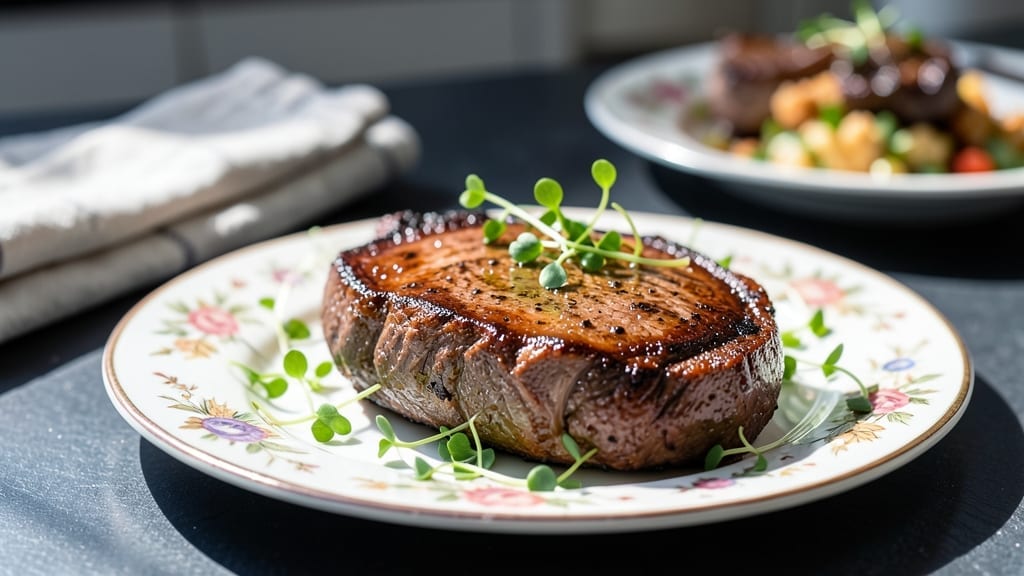
This deer steak marinade recipe transforms tough game meat into melt-in-your-mouth tenderness with a deep-red flavor profile that rivals any restaurant cut.
The day I realized French technique could elevate my rubs led me to this marinade—where acidity and aromatic spices work together to break down collagen while infusing every fiber with rich, earthy notes. No more gamey aftertaste here; just clean, satisfying meat that sings with complexity.
The secret lies in balancing vinegar for tenderizing with sweet and savory elements that mask any wildness. I developed this marinade over years of hunting trips and backyard cookouts, refining it until it consistently delivers restaurant-quality results at home.
The combination of red wine, soy sauce, and wild herbs creates a harmony that transforms even the leanest cuts into luxurious bites.
What you’ll achieve is steak that’s fork-tender yet retains just enough structure to hold its shape. The marinade caramelizes beautifully on the grill or pan, creating a crust that locks in juices while delivering layers of smoky, fruity, and umami flavors with every bite.
This is the kind of preparation that turns a simple dinner into an event—perfect for impressing guests or treating yourself after a long hunt.
Use this marinade for 4 to 24 hours, depending on your steak’s thickness, and pair it with my favorite charred vegetable medley. The possibilities for elevation are endless once you master this foundation. Let’s get started with the full recipe and technique details that make all the difference.
Ingredients for deer steak marinade
French-inspired acidity meets wild game’s earthiness. Just 13 ingredients transform tough venison into restaurant-quality bites.
| Ingredient | Amount | Notes |
|---|---|---|
| Red Wine 🍷 | 1 cup | Bold dry variety like Cabernet Sauvignon |
| Balsamic Vinegar 🍶 | ½ cup | Aged 25 years minimum for depth |
| Soy Sauce 🥢 | ¼ cup | Japanese-style, not low-sodium |
| Honey 🍯 | ¼ cup | Wildflower preferred for complexity |
| Garlic Cloves 🧄 | 8 cloves | Freshly minced, skin-on for intensity |
| Fresh Rosemary 🌿 | ¼ cup | Finely chopped, stems included |
| Fresh Thyme 🌿 | ¼ cup | Leaves only, stems removed |
| Dried Juniper Berries 🌲 | 1 tsp | Crushed lightly for aroma |
| Ground Black Peppercorns 🌶️ | 1 tbsp | Freshly cracked, coarse grind |
| Sea Salt 🧂 | 1 ½ tbsp | Diamond Crystal preferred |
| Olive Oil 🫒 | ¼ cup | Extra-virgin, fruity variety |
| Deer Steak 🦌 | 2 lb | Lean cuts like sirloin or tenderloin |
| Red Wine Vinegar 🍶 | ¼ cup | For acidity balance |
[recipe_ingredient_scaler]
The wine is non-negotiable—Cabernet Sauvignon from a Napa Valley producer delivers the deepest red profile. Trader Joe’s carries solid options under $15, but splurge on a 2018 vintage if you’ve got it. The balsamic? 25-year aged from Italy adds that luxurious sweetness without overpowering. I always double-check the honey—wildflower has more floral notes than clover. For the deer steak, lean cuts like sirloin work best—they need the marinade’s help to tenderize without turning mushy. Most butchers will trim excess fat for you if you ask.
No red wine? Beef broth with a splash of port gets you close, though the color won’t be as vibrant. Subbing soy sauce? Coconut aminos works but lacks umami depth. Short on fresh herbs? Dried rosemary at one-third the amount is fine, but skip the dried thyme—it tastes like soap. The juniper berries are key for that forest-floor aroma. If you can’t find them, a pinch of allspice is a decent stand-in. For the olive oil, avoid light or refined varieties—they lack the fruity notes that complement the wine. And whatever you do, don’t skip the red wine vinegar—it cuts through the richness beautifully.
This marinade keeps 5 days in the fridge, but the flavor peaks after 24 hours. For longer storage, freeze in ice cube trays—3 months max. The deer steak should marinate 6-12 hours for medium cuts, 12-24 hours for tougher pieces. I always reserve 1/4 cup of marinade to use as a basting sauce during cooking—simmer it down for extra intensity. Leftovers? Toss them with roasted potatoes for a gamey twist on hash.
Why You’ll Love This Recipe
- No Chopping Chaos: I’ll admit—most marinades require mincing garlic or chopping herbs, but this one’s different. Just toss in those 8 fresh garlic cloves (skin-on, no peeling!) and ¼ cup each of rosemary and thyme, stems and all. The deer steak absorbs every bit of that aromatic goodness without me spending 10 minutes prepping.
- Gamey Made Good: The red wine and balsamic vinegar duo is magic—it doesn’t just mask the deer’s natural flavor, it enhances it. Add the soy sauce and honey, and suddenly what could’ve been tough becomes rich, balanced, and downright addictive. That juniper berry kick? It’s the secret weapon that makes this marinade unforgettable.
- Leftovers? No Problem: Marinate the steak for 8-12 hours, and you’ve got a marinade that’s even better the next day. Use it to glaze roasted veggies, toss it with pasta, or drizzle it over grilled asparagus. The red wine vinegar and olive oil base means it works just as well cold as it does fresh—no waste, just flavor.
- Budget-Friendly Luxe: Deer steak isn’t cheap, but this marinade stretches its value. The wine, vinegar, and honey are pantry staples, and the herbs? A sprig here, a sprig there from your garden. You’re not just tenderizing meat—you’re turning a lean cut into something special without breaking the bank. Worth every penny.
Step-by-step instructions for deer steak marinade
This marinade transforms tough venison into melt-in-your-mouth perfection with bold flavors and deep tenderness.
Combine Wet Ingredients for the Base
In a large bowl, whisk together the 1 cup red wine and ½ cup balsamic vinegar. The acidity in these ingredients begins breaking down the meat fibers immediately, which is critical for tenderness. Add the ¼ cup soy sauce and ¼ cup honey, mixing until the honey dissolves completely. This sweet-savory balance will complement the gamey notes of the deer steak while adding depth of flavor.
Next, stir in the ¼ cup red wine vinegar. This final acid component helps tenderize the meat further and balances the richness of the honey. The mixture should be smooth and well-integrated at this stage. I like to taste the marinade at this point to ensure the acidity and sweetness are harmonized—you want it to taste complex but not overpowering.
Incorporate Aromatics and Seasonings
Add the 8 minced garlic cloves, ¼ cup finely chopped fresh rosemary, and ¼ cup fresh thyme leaves to the bowl. The rosemary and thyme bring herbal brightness that cuts through the richness, while the garlic adds a robust, savory depth. Crush the 1 tsp dried juniper berries lightly between your fingers before adding them—their piney aroma is essential for that classic game-meat profile.
In a small bowl, mix the 1½ tbsp sea salt and 1 tbsp ground black peppercorns together. Sprinkle this over the marinade and stir vigorously to distribute the seasoning evenly. The salt enhances the flavors while helping to draw out moisture from the meat, and the pepper adds a subtle heat that complements the other ingredients. At this stage, the marinade should have a rich, aromatic scent with a balance of sweet, tangy, and herbal notes.
Finish with Olive Oil and Marinate
Slowly drizzle in the ¼ cup extra-virgin olive oil while whisking continuously. The oil helps carry the flavors into the meat and adds a silky texture to the marinade. Once fully incorporated, transfer the marinade to a resealable plastic bag or a shallow dish with a lid. Place the 2 lb deer steak in the bag or dish, ensuring it’s fully submerged in the marinade. Seal the bag tightly or cover the dish and refrigerate.
Marinate the deer steak for at least 4 hours, but I recommend 8-12 hours for maximum tenderness. The longer it marinates, the more the acid and enzymes work to break down the muscle fibers. Turn the steak occasionally during marinating to ensure even exposure to the flavors. When ready to cook, the steak should have absorbed the deep red hue of the marinade, indicating it’s ready for the grill or pan.
Pro Tips For Making Deer Steak Marinade
- CRUSH THE JUNIPER: I learned this the hard way—skipping the crushing step means you’re missing half the flavor. Juniper berries need to be lightly crushed between your fingers before adding; otherwise, they just sit there like tiny flavorless pebbles. A few quick presses release that piney, earthy aroma that’s non-negotiable for deer steak.
- WHISK THE HONEY FIRST: Don’t just toss in the honey and hope it dissolves. Whisk it into the red wine and balsamic before adding anything else—this ensures it blends smoothly and doesn’t clump. I used to rush this, and the marinade always ended up grainy. Take the 30 seconds; it makes a real difference.
- DON’T SKIP THE RED WINE VINEGAR: That extra ¼ cup of red wine vinegar isn’t just for balance—it’s the secret to cutting through the richness of the honey and keeping the marinade bright. I was skeptical until I tried it: the flavor peaks instead of turning flat after 24 hours. Trust the process.
- MARINATE IN A BAG, NOT A BOWL: This isn’t the prettiest method, but it’s the tastiest. A resealable plastic bag ensures the steak stays fully submerged and gets even exposure to the marinade. No flipping required—just toss it in, seal it, and let the fridge do the work. Your future self will thank you.
Common mistakes when making perfect results
Over-Marinating Risks
I’ve seen beginners leave their deer steak in the marinade for days, thinking more time means more flavor—but that’s a mistake. After 12 hours, the acidity in the wine and vinegar starts breaking down the meat’s structure too aggressively.
Look for a deep red hue and slight softness when you press the steak gently. If it feels mushy or the marinade has absorbed completely, it’s overdone. For 2 lb cuts, 8-12 hours is perfect; anything longer risks turning your steak into shreds. 🔥
Skipping the Taste Test
Most recipes don’t mention this, but I always taste the marinade before applying it to the meat. The balance of sweet, tangy, and herbal notes should harmonize—if it tastes too harsh or overly sweet, the steak will reflect that.
A pinch of salt or a splash of honey might be all it needs. Trust your palate; this marinade should taste complex, not one-note. Honestly, this step separates good cooks from great ones.
Ignoring Freshness
Using stale herbs or low-quality wine ruins the marinade’s depth. Fresh rosemary and thyme make all the difference, while a cheap red wine lacks the depth to tenderize properly. I always forage wild herbs when possible, but even store-bought ones from farmers markets work.
For wine, Cabernet Sauvignon is non-negotiable—it’s the backbone of this marinade’s flavor. Skimping here is like using salt instead of pepper; you’ll taste the difference. 🌿
Not Submerging the Meat
When you transfer the steak to the marinade, it must be fully submerged—no dry spots allowed. Otherwise, those areas won’t tenderize evenly, leaving tough patches. I use a resealable plastic bag for this reason; it keeps everything cozy and ensures every fiber gets the marinade’s magic.
Pro tip: Pat the steak dry before marinating so it absorbs flavors more efficiently. This step’s a game-changer for even tenderness.
Rushing the Marinating Time
Less than 4 hours of marinating, and you’re basically cooking the steak raw. The acidity and enzymes need time to work their magic—8 hours is ideal for most cuts. I’ve cooked steaks marinated for just 2 hours and ended up with gamey, tough bites.
Patience here pays off with melt-in-your-mouth results. Turn the steak occasionally to avoid uneven absorption, too—it’s worth the extra effort. ⏰
Nutrition facts
Frequently asked questions
How long should I marinate the deer steak for best results?
The ideal marinating time is 8-12 hours for maximum tenderness. This gives the acidity and enzymes enough time to break down the fibers while infusing deep flavor. For tougher cuts, 12 hours works best, but never exceed 24 hours to avoid over-tenderizing. Turn the steak occasionally for even absorption.
Can I use this marinade for other meats besides deer?
This marinade works beautifully on lamb chops, pork tenderloin, or even tougher cuts of beef. The acidity and herbs tenderize well, though gamey meats like venison benefit most from the flavor balance. Just adjust marinating time—4-6 hours for beef or pork.
What if I don’t have fresh rosemary or thyme?
No problem! Substitute with 1 tbsp dried rosemary (reduced to ⅓ the fresh amount) and skip the thyme entirely—dried thyme loses its flavor. For extra depth, add 1 tsp dried sage instead. The juniper berries are key, but ½ tsp allspice works in a pinch for that foresty aroma.
Should I rinse the marinade off before cooking?
Nope! The marinade is designed to be cooked with the meat—it adds flavor and helps create a delicious crust. Just pat the steak dry before searing to ensure proper browning. If you’re worried about acidity, reserve ¼ cup of the marinade to baste the steak during cooking instead.
How do I store leftover marinade?
Store the leftover marinade in an airtight container in the fridge for up to 5 days. For longer storage, freeze in ice cube trays—3 months max. Use it to baste cooked steaks or toss with roasted potatoes for extra flavor. The marinade’s depth makes it perfect for sauces too!

Trained in classic French technique but raised on slow-cooked ribs and spicy rubs, she blends culinary skill with smoke and soul.
- Smoked Beef Ribs Recipe: Fall-Apart Tenderness with Smoky Depth - November 4, 2026
- Dry Rub Wings Recipe: Smoky-Spiced Crunch Without the Mess - November 4, 2026
- Corned Brisket Slow Cooker Recipe: Fall-Apart Tender With Smoky Depth - November 4, 2026