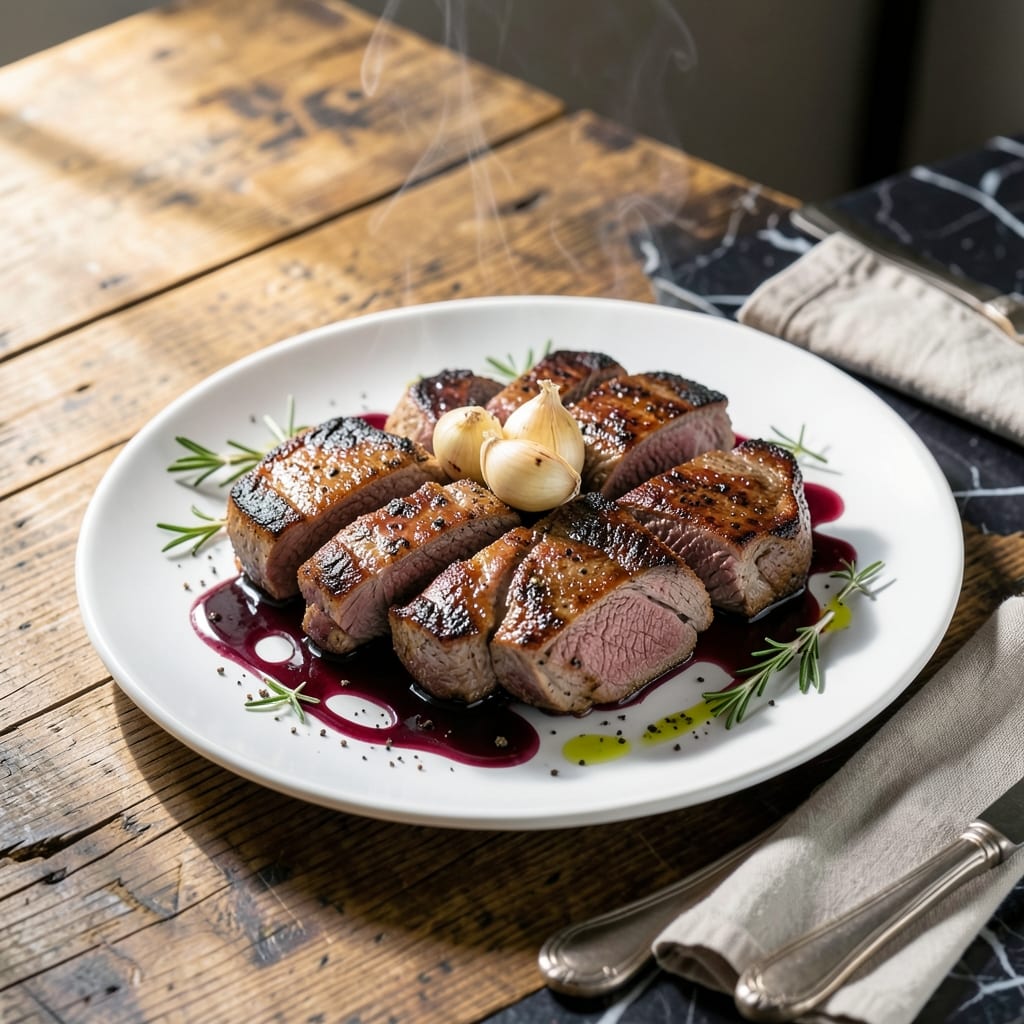
There’s a reason lamb chops feel special—they transform any dinner into an occasion. This method delivers restaurant-quality results with a simple pan-searing technique and a bold red wine reduction that elevates every bite.
I perfected this after years of trial and error, learning that high heat and patience are key. The wine reduces into a deep, velvety sauce that pairs beautifully with the rich, tender lamb.
The result is seared, juicy chops with crisp edges, topped with a glossy, flavor-packed sauce. It looks impressive but comes together in under 30 minutes.
Serve with roasted potatoes or greens for a complete meal that feels indulgent without the fuss.
Ingredients for Lamb Chops Recipe Red Wine
Elevate your dinner with these premium ingredients for restaurant-quality lamb chops.
| Ingredient | Amount | Notes |
|---|---|---|
| Lamb Loin Chops 🐑 | 1 ½ lb | About 8 chops, 1-inch thick |
| Kosher Salt 🧂 | 1 ½ tsp | Diamond Crystal preferred |
| Freshly Ground Black Pepper 🌶️ | 1 tsp | Coarse grind for texture |
| Olive Oil 🫒 | 2 tbsp | High smoke point variety |
| Unsalted Butter 🧈 | 2 tbsp | For basting and sauce |
| Garlic Cloves 🧄 | 4 cloves | Smashed, peeled |
| Fresh Rosemary Sprigs 🌿 | 2 whole | Stems intact for infusion |
| Dry Red Wine 🍷 | 1 ½ cups | Bold variety like Cabernet |
| Low-Sodium Chicken Broth 🥘 | ½ cup | Or substitute beef broth |
| Shallot 🧅 | 1 whole | Finely minced |
| Dijon Mustard 🟡 | 1 tsp | For sauce depth |
| Fresh Thyme Sprigs 🌿 | 3 whole | Optional for garnish |
[recipe_ingredient_scaler]
The lamb chops are the star here. Loin chops offer the best balance of meat and fat for even cooking. Source from Whole Foods or a trusted butcher for consistent 1-inch thickness—critical for timing. The fat cap should be bright white, not yellowed. For the wine, opt for a bold Cabernet Sauvignon or Merlot; avoid cooking wines with added salt.
No red wine? Beef broth with a splash of balsamic vinegar mimics the acidity and depth. Fresh rosemary is ideal, but dried at one-third the amount works. Butter can be substituted with ghee for a higher smoke point. Shallots? Red onion in a pinch, though the flavor is sharper. Always use low-sodium broth to control seasoning.
Lamb chops keep 3-4 days wrapped in the fridge. For longer storage, vacuum-seal and freeze for up to 6 months. The reduction sauce can be made ahead and reheated gently—don’t boil or it may break. Bring chops to room temp 30 minutes before cooking for even doneness.
Why You’ll Love This Recipe
- 20-Minute Meal: I can sear these chops in a hot pan with olive oil and butter faster than it takes to argue about takeout.
- Crave-Worthy Crust: That salt and pepper crust with the caramelized butter edges? I could eat it every single night.
- Date Night Ready: Honestly, it feels fancy enough for guests but I’ve made it in sweatpants on a Tuesday.
- Leftovers? Rare: Between us, there’s never any left—but if there were, they’d reheat like a dream.
Step-by-Step Instructions for Lamb Chops with Red Wine Reduction
Master the technique for restaurant-quality results with this elegant preparation.
Step 1: Season and Sear the Lamb Loin Chops
Pat the 1.5 lb lamb loin chops dry with paper towels, then season both sides evenly with 1.5 tsp kosher salt and 1 tsp freshly ground black pepper. The dry surface ensures a perfect sear rather than steaming the meat.
Heat 2 tbsp olive oil in a large, heavy skillet over medium-high heat until it shimmers. Add the chops and sear for 3-4 minutes per side until a deep golden-brown crust forms. Work in batches if needed to avoid crowding the pan.
Step 2: Infuse with Aromatics and Baste
Reduce heat to medium and add 2 tbsp unsalted butter, 4 cloves garlic cloves, 2 whole fresh rosemary sprigs, and 3 whole fresh thyme sprigs to the pan. Tilt the skillet slightly and spoon the melted butter over the chops continuously for 1-2 minutes.
This basting technique enhances flavor and ensures even cooking. The garlic and herbs should become fragrant but not burn—if they darken too quickly, lower the heat immediately. Remove the chops to a plate and tent with foil to keep warm.
Step 3: Build the Red Wine Reduction
In the same skillet, add 1 whole shallot (finely minced) and cook for 1-2 minutes until softened. Pour in 1.5 cups dry red wine and scrape the browned bits from the bottom of the pan with a wooden spoon.
Simmer for 5-6 minutes until the wine reduces by half. Add 0.5 cup low-sodium chicken broth and 1 tsp Dijon mustard, then simmer for another 3-4 minutes until the sauce thickens enough to coat the back of a spoon.
Step 4: Finish and Serve
Return the chops to the skillet along with any accumulated juices. Spoon the sauce over them and turn to coat evenly. Simmer for 1-2 minutes to heat through and allow the flavors to meld.
Discard the herb sprigs before serving. The sauce should be glossy and rich, with a balance of acidity from the wine and depth from the reduction. Plate immediately, garnishing with fresh thyme if desired.
Pro Tips For Making Lamb Chops Recipe Red Wine
- Dry the Chops: Pat the lamb loin chops thoroughly dry with paper towels before seasoning—this guarantees a proper sear instead of steaming. I learned this the hard way after wondering why my chops looked boiled.
- Start Hot, Finish Low: Sear the chops over high heat for 2-3 minutes per side, then reduce to medium-low to finish cooking. This keeps the outside crisp while letting the inside reach a perfect medium-rare.
- Skip the Cold Butter: Take the unsalted butter out of the fridge 10 minutes before cooking so it melts evenly when basting. Cold butter can cause uneven browning and a greasy pan.
- Rest Before Serving: Let the chops rest for 5-10 minutes under foil after cooking—this lets the juices redistribute. Sounds weird, but it actually changes the outcome from dry to tender.
Troubleshooting This Recipe
Sauce Too Thin
If your reduction isn’t thickening, simmer longer over medium-high heat. The wine needs to reduce by at least half. I find a wide skillet speeds this up. If impatient, mix ½ tsp cornstarch with 1 tbsp cold water and stir in off-heat. 💡
Chops Overcooking
Lamb chops cook fast—pull them at medium-rare (130-135°F internal). Use an instant-read thermometer. If they’re tough, you likely went past medium (140°F). Rest them 5 minutes under foil before serving.
Sauce Breaking
If your sauce looks greasy, you overheated the butter. Remove from heat and whisk vigorously. To prevent this, keep heat at medium when adding butter. If it happens, a splash of cold broth can help re-emulsify.
Bitter Reduction
The wine can turn bitter if reduced too much. Balance it with 1 tsp honey or ½ tsp brown sugar. Taste as you go—this is where my grandmother’s “by feel” method really shines. 🍷
Sticking to Pan
Prevent this by ensuring your pan is ripping hot before adding chops and not moving them for 3-4 minutes per side. Use a heavy stainless steel or cast iron skillet. Avoid nonstick for proper searing.
Weak Flavor
If the sauce tastes flat, you likely used a mild wine. Next time, opt for a bold Cabernet Sauvignon. Boost existing sauce with 1 tsp Dijon mustard or a pinch of salt. Fresh herbs at the end add brightness.
Nutrition Facts
Frequently Asked Questions
What’s the best internal temperature for lamb chops?
Pull them at 130-135°F for perfect medium-rare. Use an instant-read thermometer to check. Rest for 5 minutes before serving to let juices redistribute.
Can I use a different wine for the sauce?
A bold Merlot or Syrah works well. Avoid light whites or cooking wines—they lack depth. The sauce needs a wine with strong tannins to balance the richness.
How do I prevent the sauce from breaking?
Keep heat at medium when adding butter. If it separates, remove from heat and whisk vigorously. A splash of cold broth can help re-emulsify the sauce.
What if my reduction tastes too bitter?
Balance it with 1 tsp honey or ½ tsp brown sugar. This happens when wine reduces too much. Taste as you go to catch it early.

Trained in classic French technique but raised on slow-cooked ribs and spicy rubs, she blends culinary skill with smoke and soul.
- Recipe for Boneless Pork Chops in Cast Iron Skillet: Sear and Baste to Juicy Perfection - October 3, 2026
- Recipe for Boneless Cross Rib Roast: Slow-Roasted Beef with Herb Crust - October 3, 2026
- Hamburgers in Sauce Recipe Crock Pot: Slow-Cooked Savory Delight - October 3, 2026