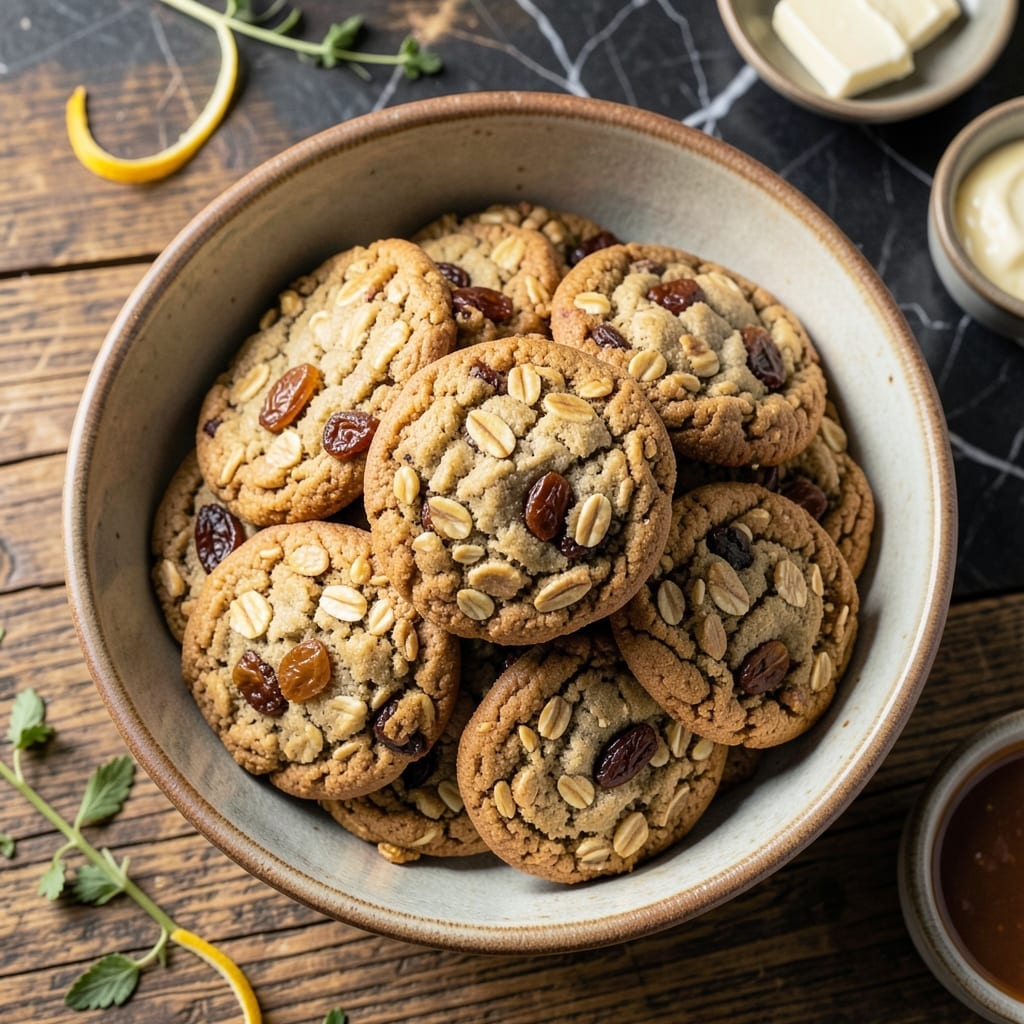
These cookies prove you don’t need sugar for soft, chewy perfection. A blend of oats, raisins, and sugar-free sweetener creates classic flavor without the spike.
Baked at 350°F for 12 minutes, they deliver all the comfort of traditional oatmeal raisin cookies while keeping blood sugar in check.
Ingredients for Diabetic Oatmeal Raisin Cookie
Soft, chewy cookies with zero sugar but all the classic flavor you love.
| Ingredient | Amount | Notes |
|---|---|---|
| Old-Fashioned Rolled Oats 🌾 | 3 cups | Certified gluten-free if needed |
| All-Purpose Flour 🌾 | 1 cup | Or whole wheat pastry flour |
| Granulated Erythritol 🍚 | ¾ cup | Or monk fruit sweetener blend |
| Brown Sugar Substitute 🍚 | ½ cup | Swerve or Lakanto brand |
| Raisins 🍇 | 1 cup | Plump in warm water if hard |
| Unsalted Butter 🧈 | ½ cup | Softened to room temperature |
| Large Eggs 🥚 | 2 whole | Room temperature preferred |
| Vanilla Extract 🌿 | 2 tsp | Pure vanilla for best flavor |
| Ground Cinnamon 🌿 | 1 ½ tsp | Ceylon or cassia variety |
| Baking Soda 🧂 | ½ tsp | Ensures proper rise |
| Salt 🧂 | ¼ tsp | Fine sea salt preferred |
| Chopped Walnuts 🌰 | ½ cup | Optional, lightly toasted |
[recipe_ingredient_scaler]
The oats are the backbone here. Bob’s Red Mill old-fashioned rolled oats give the perfect chewy texture—don’t substitute instant. For the sweetener, Swerve or Lakanto brown sugar substitutes melt and caramelize like the real thing. I grab mine from Whole Foods or order online. The raisins should be plump; if they’re dry, soak in warm water for 10 minutes (drain well). Butter needs to be truly softened, not melted.
No erythritol? Monk fruit sweetener blend at a 1:1 ratio works fine. Swap raisins for dried cranberries or chopped dates if you prefer. Want it nut-free? Skip the walnuts or use sunflower seeds instead. The flour can be whole wheat pastry flour for a nuttier taste, but all-purpose keeps them light. Vanilla extract is worth the splurge—Nielsen-Massey is my go-to.
Dough keeps in the fridge for 3 days or freeze for 3 months (scoop and freeze balls, then bag). Baked cookies stay soft for 5 days in an airtight container. They’ll firm up as they cool—resist the urge to overbake. Pro tip: underbake by a minute for extra chewiness.
Why You’ll Love This Recipe
- One Bowl Wonder: I toss everything in—oats, erythritol, raisins—and mix. No fancy equipment, just a bowl and a spoon.
- Chewy Sweet Bites: The raisins plump up while baking, and that brown sugar substitute gives just the right caramel note without the guilt.
- Meal Prep Hero: Honestly, I make a double batch on Sunday and portion them out for the week. Breakfast or snack, they’re ready when I am.
- Budget Friendly: Old-fashioned oats and raisins are pantry staples, and the sugar substitutes stretch further than the real stuff. Cheap to make, expensive to buy.
Step-by-Step Instructions for Diabetic Oatmeal Raisin Cookies
Here’s the method I use for perfectly chewy cookies with just the right texture.
Step 1: Cream Butter and Sweeteners
In a large mixing bowl, beat the 0.5 cup Unsalted Butter until smooth and creamy. This should take about 1-2 minutes with an electric mixer on medium speed. The butter needs to be properly softened—if it’s too cold, it won’t incorporate air, and your cookies will be dense.
Add the 0.75 cup Granulated Erythritol and 0.5 cup Brown Sugar Substitute, then continue beating for another 2-3 minutes until the mixture is light and fluffy. You’ll notice the color lighten slightly, and the texture should look almost like wet sand. This step ensures even distribution of sweetness and a tender crumb.
Step 2: Incorporate Wet Ingredients and Vanilla
Crack in the 2 whole Large Eggs, one at a time, beating well after each addition. I always use room-temperature eggs—they emulsify better with the butter, creating a smoother dough. Beat for about 30 seconds per egg until fully combined.
Add the 2 tsp Vanilla Extract and mix for another 15-20 seconds. The vanilla deepens the flavor profile, balancing the natural sweetness of the sweeteners. At this point, your mixture should look cohesive and slightly glossy.
Step 3: Combine Dry Ingredients and Form the Dough
In a separate bowl, whisk together the 1 cup All-Purpose Flour, 1.5 tsp Ground Cinnamon, 0.5 tsp Baking Soda, and 0.25 tsp Salt. This ensures the leavening agent and spices are evenly distributed. If you’re using whole wheat pastry flour, the texture will be slightly denser but still delicious.
Gradually add the dry ingredients to the wet mixture, beating on low speed until just combined. Overmixing develops gluten, which can make the cookies tough. Fold in the 3 cups Old-Fashioned Rolled Oats, 1 cup Raisins, and 0.5 cup Chopped Walnuts by hand using a spatula. The dough will be thick and slightly sticky—this is normal.
Step 4: Chill the Dough for Optimal Texture
Cover the bowl with plastic wrap and refrigerate the dough for at least 30 minutes, or up to 24 hours. Chilling solidifies the butter, which prevents excessive spreading during baking. It also allows the oats to absorb moisture, resulting in a chewier cookie.
If you’re in a hurry, you can freeze the dough for 15-20 minutes, but I don’t recommend skipping this step entirely. The difference in texture is noticeable—cookies made from chilled dough hold their shape and have a more pronounced flavor.
Step 5: Bake to Golden Perfection
Preheat your oven to 350°F and line two baking sheets with parchment paper. Scoop the dough into 1.5-tablespoon portions (I use a cookie scoop for consistency) and place them 2 inches apart on the prepared sheets. Flatten each slightly with the palm of your hand—they won’t spread much on their own.
Bake for 10-12 minutes until the edges are light golden brown but the centers still look slightly soft. They’ll continue to set as they cool on the baking sheet. Let them rest for 5 minutes before transferring to a wire rack. The cookies should be soft and chewy with a subtle spice from the cinnamon.
Pro Tips For Making Diabetic Oatmeal Raisin Cookie
- Chill the Dough: After mixing, refrigerate the dough for at least 30 minutes—I learned this the hard way when my first batch spread into one giant cookie. The oats soak up moisture, making them chewier and easier to shape.
- Soak the Raisins: Cover raisins with hot water for 10 minutes before adding them, then drain well. Sounds weird, but it works: they stay plump and juicy instead of dry and hard in the finished cookies.
- Watch the Oven Time: Bake at 350°F for 10-12 minutes, no longer. These cookies firm up as they cool, and overbaking dries them out—after burning two batches, I set a timer and pull them out when edges are just golden.
- Use Room-Temp Substitutes: Take granulated erythritol and brown sugar substitute out of the fridge 20 minutes before mixing. Cold sweeteners can make the dough grainy, and I skip this when I’m lazy, but the texture is noticeably smoother when I don’t.
Essential Equipment for Perfect Results
Mixing Essentials
I always start with a stand mixer—my KitchenAid 5-Quart handles this dough perfectly. A hand mixer works too, but you’ll need strong arms for the thick batter. The paddle attachment creams the butter and sweeteners evenly without overworking the dough. 💪
Precision Tools
For accurate measurements, I use OXO Good Grips measuring cups and spoons. The sweeteners need precise ratios to balance flavors. A cookie scoop ensures uniform portions—1.5 tablespoons per cookie gives consistent baking.
Baking Gear
Invest in heavy-duty baking sheets—I love Nordic Ware half-sheet pans for even heat distribution. Line them with parchment paper or silicone mats to prevent sticking. The cookies bake best on the middle oven rack at 350°F.
Cooling Setup
A wire cooling rack is non-negotiable for proper airflow. Transfer cookies after 5 minutes on the baking sheet to stop the cooking process. This keeps them soft and chewy, not dry or crumbly.
Optional Upgrades
For serious bakers, a digital scale ensures perfect ingredient ratios. I also recommend an oven thermometer to verify temperature accuracy—many home ovens run hot or cold. These small investments make a big difference.
Storage Solutions
Keep cookies fresh in an airtight container with parchment between layers. For dough, use silicone-freezer safe bags labeled with the date. Proper storage maintains texture for days. 💡
Nutrition Facts
Frequently Asked Questions
Can I use regular sugar instead of sweeteners?
No, regular sugar will spike blood glucose levels. Stick with erythritol or monk fruit blends designed for diabetics. These mimic sugar’s sweetness without the carbs.
Why are my cookies crumbly?
Overbaking or too much flour can cause this. Bake for exactly 10-12 minutes at 350°F and measure flour precisely. Chilling the dough helps too.
Can I swap raisins for another dried fruit?
Yes! Try dried cranberries or chopped dates for variety. Just ensure they’re unsweetened to keep the recipe diabetic-friendly.
How long will these stay fresh?
Store in an airtight container for up to 5 days. For longer shelf life, freeze baked cookies for up to 3 months.

Trained in classic French technique but raised on slow-cooked ribs and spicy rubs, she blends culinary skill with smoke and soul.
- Recipe for Boneless Pork Chops in Cast Iron Skillet: Sear and Baste to Juicy Perfection - October 3, 2026
- Recipe for Boneless Cross Rib Roast: Slow-Roasted Beef with Herb Crust - October 3, 2026
- Hamburgers in Sauce Recipe Crock Pot: Slow-Cooked Savory Delight - October 3, 2026