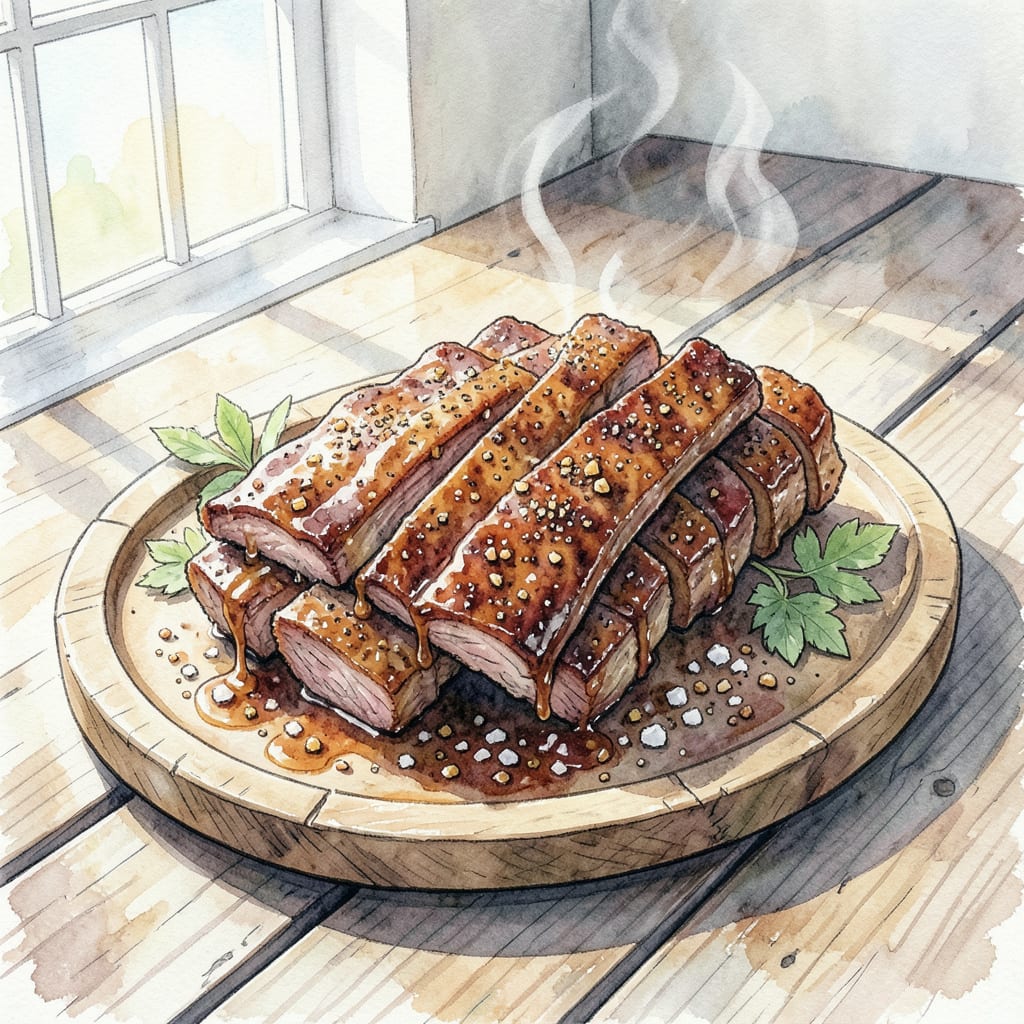
As a pitmaster, I’ve perfected the art of fall-off-the-bone tender dino ribs. My secret? Low and slow cooking with a blend of spices that’ll make your taste buds dance. 🔥 I’ve spent years mastering this technique, and it’s a game-changer.
These tender dino ribs are perfect for any BBQ enthusiast. With just a few hours of slow cooking, you’ll be rewarded with meat that’s literally falling off the bone. The key is patience and the right blend of spices, which I’ll share with you. The result is perfectly cooked ribs every time.
Ingredients for Dino Ribs
Low and slow cooking brings out the best in these dino ribs. Simple, quality ingredients make all the difference.
| Ingredient | Amount | Notes |
|---|---|---|
| Beef Dino Ribs 🥩 | 2 ½ lb | Preferably with good marbling |
| Brown Sugar 🍮 | ¼ cup | Packed, for dry rub |
| Smoked Paprika 🌶️ | 2 tbsp | For smoky flavor |
| Garlic Powder 🧄 | 1 tbsp | Not garlic salt |
| Onion Powder 🧅 | 1 tbsp | For depth of flavor |
| Salt 🧂 | 1 tbsp | Kosher or sea salt |
| Black Pepper 🌶️ | 2 tsp | Freshly ground preferred |
| Chili Powder 🌶️ | 1 tsp | Mild or hot variety |
| Cayenne Pepper 🔥 | ½ tsp | Optional, for heat |
| Apple Cider Vinegar 🍎 | ½ cup | For mop sauce |
| Beef Broth 🥩 | 1 cup | Low sodium, for braising |
| Olive Oil 🫒 | 2 tbsp | For initial sear |
[recipe_ingredient_scaler]
The ribs are the star here. Look for good marbling—it makes them tender. Most butchers have them, or you can ask your grocery store to order some. I prefer mine from Costco when I’m doing a big batch.
No smoked paprika? Regular paprika works, but you’ll lose that smoky depth. Penzeys has great smoked paprika if you want to splurge. For the dry rub, mix everything together the night before so the flavors meld. If you’re short on chili powder, chili flakes at half the amount can work in a pinch.
These reheat beautifully—honestly taste better the next day. Keeps for 4-5 days in the fridge, freezes for 3 months. I portion mine into containers so dinners are sorted for the week.
Step-by-Step Instructions for Dino Ribs
Here’s the method that’ll get you tender, fall-off-the-bone dino ribs every time.
🔥 Step 1: Prep and Season the Dino Ribs
Start by prepping the 2.5 lb Beef Dino Ribs. I like to remove the membrane from the back of the ribs to help the rub penetrate better. To do this, slide a knife under the membrane at one end, then grip it with a paper towel and peel it off in one piece. Don’t worry if it tears – just get as much off as you can.
Next, mix together the dry rub ingredients: 0.25 cup Brown Sugar, 2 tbsp Smoked Paprika, 1 tbsp Garlic Powder, 1 tbsp Onion Powder, 1 tbsp Salt, 2 tsp Black Pepper, 1 tsp Chili Powder, and 0.5 tsp Cayenne Pepper. Sprinkle this mixture evenly over both sides of the ribs, making sure to coat them thoroughly. Let the ribs sit at room temperature for 30 minutes to allow the rub to adhere.
🔥 Step 2: Sear the Ribs
Heat 2 tbsp Olive Oil in a large Dutch oven or oven-safe pot over high heat. When the oil is shimmering, add the ribs and sear them for 2-3 minutes per side until they’re nicely browned. You want a good crust on the ribs to lock in the juices. Remove the ribs from the pot and set them aside.
After searing, you’ll be left with some nice browned bits in the pot. Don’t clean it – these bits will add tons of flavor to your ribs. Just reduce the heat to medium and get ready for the next step.
🥘 Step 3: Braise the Ribs to Tender Perfection
Pour in 1 cup Beef Broth and 0.5 cup Apple Cider Vinegar, scraping up any browned bits from the bottom of the pot. Return the ribs to the pot, bone-side down. Cover the pot with a lid and transfer it to a preheated oven at 300°F.
Braise the ribs for 2 1/2 to 3 hours until they’re tender and the meat is falling off the bone. You can check for doneness by inserting a fork or knife into the meat – it should slide in easily. If it’s still a bit tough, cover and return to the oven for another 30 minutes.
🔥 Step 4: Finish with a Glaze (Optional)
If you want a glazed finish, remove the ribs from the pot after braising and strain the braising liquid to remove excess fat. Reduce the liquid on the stovetop over medium heat until it’s thick and syrupy. Brush this glaze over the ribs and return them to the oven (or under the broiler) for 5-10 minutes until caramelized.
Once done, remove the ribs from the heat and let them rest for 10-15 minutes before serving. The meat should be so tender it practically falls off the bone. Serve with your favorite BBQ sides and enjoy!
Health Benefits of This Dish
Nutritional Power of Dino Ribs
Dino ribs, being a cut of beef, are rich in high-quality protein essential for muscle repair and growth. A 3-ounce serving provides about 25 grams of protein. They’re also a good source of iron, particularly heme iron, which is more easily absorbed by the body than non-heme iron from plant sources.
Micronutrient Benefits
These ribs are a good source of zinc, crucial for immune function and wound healing. They also contain B vitamins, particularly B12, important for nerve function and red blood cell formation. The presence of selenium acts as an antioxidant, protecting cells from damage.
Considerations for Balanced Consumption
While dino ribs offer valuable nutrients, they’re also relatively high in fat and calories. A typical serving can range from 300 to 500 calories depending on the cut and cooking method. Moderation is key, especially for those watching their calorie intake. Pairing them with vegetable sides can help balance the meal.
Impact of Cooking Methods
The way you cook dino ribs can affect their nutritional value. Slow cooking methods like braising can make the meat tender and retain nutrients. However, be mindful of additional ingredients like sauces and marinades, which can add sodium and sugar.
Healthier Preparation Tips
To make dino ribs a healthier option, consider using low-sodium broth and seasonings. Trimming visible fat before cooking can also reduce overall fat content. Pairing the ribs with a variety of vegetables can enhance the nutritional profile of your meal. 🌟
Balancing Your Meal
Enjoying dino ribs as part of a balanced diet means considering what else you’re eating with them. Adding fiber-rich sides like roasted vegetables or a fresh salad can help create a more balanced meal. This approach not only enhances nutritional value but also adds variety to your diet.

Trained in classic French technique but raised on slow-cooked ribs and spicy rubs, she blends culinary skill with smoke and soul.
- Recipe for Boneless Pork Chops in Cast Iron Skillet: Sear and Baste to Juicy Perfection - October 3, 2026
- Recipe for Boneless Cross Rib Roast: Slow-Roasted Beef with Herb Crust - October 3, 2026
- Hamburgers in Sauce Recipe Crock Pot: Slow-Cooked Savory Delight - October 3, 2026