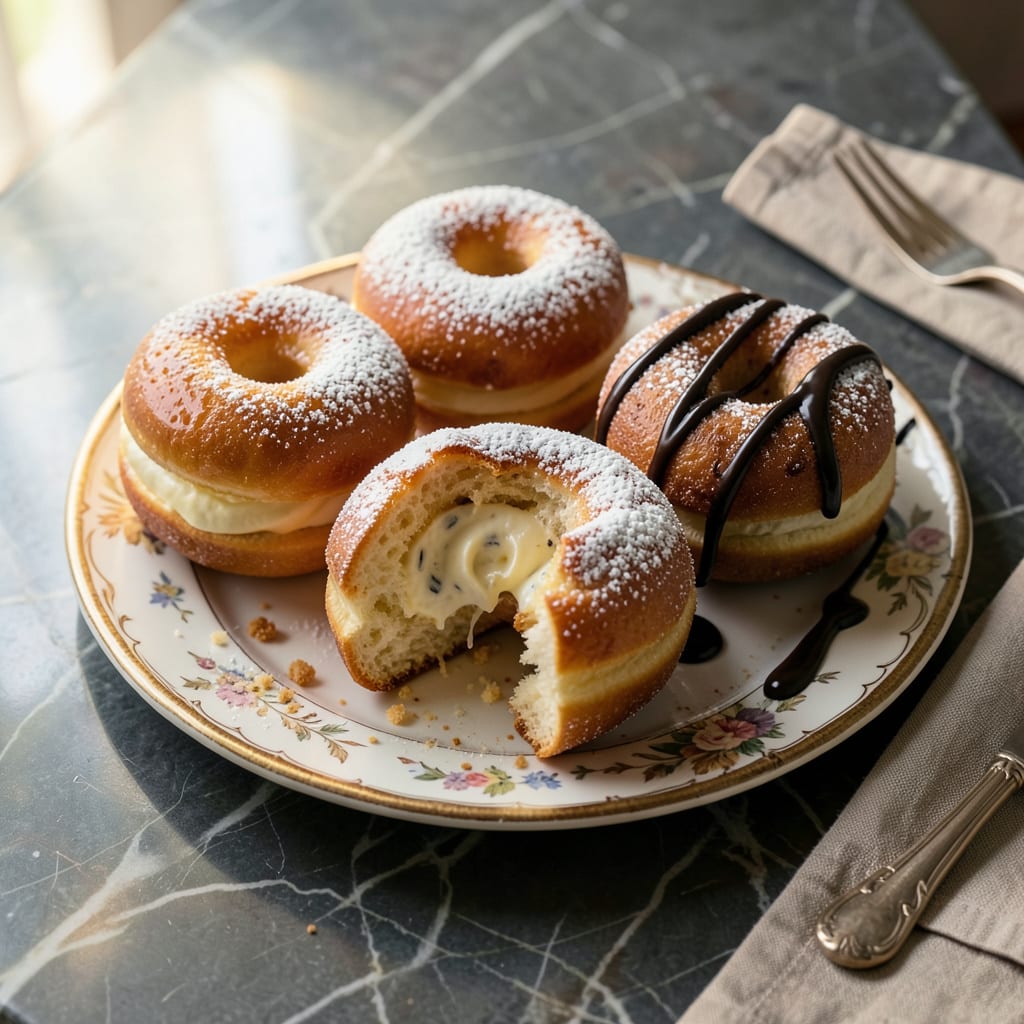
Cream-filled donuts should always be refrigerated due to their perishable dairy-based filling. Leaving them at room temperature for more than 2 hours risks bacterial growth and spoilage. Store them in an airtight container for best freshness.
This isn’t just about keeping them fresh—it’s about food safety. 🔥 Dairy products like custard or whipped cream create the perfect environment for bacteria to multiply rapidly at room temperature. I’ve seen too many people assume these treats are shelf-stable like regular donuts, only to end up with soggy, potentially unsafe pastries. The moisture content in the filling actually accelerates spoilage compared to plain donuts, which can sit out for days without issue.
What most people don’t realize is that temperature control becomes even more critical during warmer months. A kitchen counter in summer can hit dangerous temperature zones faster than you’d expect. That’s why I always recommend transferring cream-filled donuts to the fridge within 30 minutes of purchase—better safe than sorry when dealing with delicate dairy fillings.
💡 In This Article
- Why Cream-Filled Donuts Spoil Faster Than Plain Donuts
- Best Practices for Storing and Reheating Cream Donuts
Why Cream-Filled Donuts Spoil Faster Than Plain Donuts
The secret lies in the filling’s composition. Most cream-filled donuts contain custard, whipped cream, or pastry cream—all of which are dairy-based mixtures with high moisture content. Dairy products naturally contain proteins and sugars that bacteria love to consume.
At room temperature (68-72°F), these microorganisms can double in number every 20 minutes, turning your sweet treat into a potential health hazard faster than you’d expect. 🔥
Compare this to plain donuts: their low moisture content (typically 10-15%) creates an inhospitable environment for bacteria. The sugar concentration in glazes and dough also acts as a natural preservative by binding water molecules, making them unavailable for microbial growth.
Cream-filled varieties, however, have fillings with 70-80% moisture—creating the perfect breeding ground for spoilage organisms like Staphylococcus aureus and E. coli when left unrefrigerated. ✨
Temperature plays a critical role in this process. The “danger zone” for food safety is between 40°F and 140°F, where bacteria thrive. A cream-filled donut left on your counter quickly reaches this range, while the same donut stored at 38°F or below sees bacterial growth slow dramatically.
This is why professional bakeries keep their cream-filled pastries in refrigerated display cases—it’s not just about texture, it’s about safety. 💫
The filling’s pH level also contributes to faster spoilage. Most dairy-based fillings have a neutral to slightly acidic pH (around 6.0-6.5), which is ideal for many spoilage bacteria. Plain donuts, with their lower moisture and more acidic environment (pH 5.0-5.5 from fermentation), naturally resist microbial growth better.
This chemical difference explains why you’ll never see cream-filled donuts on unrefrigerated bakery shelves. ⚡
Here’s what happens at the microscopic level: as the filling warms, its protein structure begins to break down. This releases amino acids that bacteria consume, while the fat in the cream starts to separate.
You’ll first notice this as a slight sour smell, then see the filling weep or develop a slimy texture—clear signs the donut has entered the danger zone. 🌟
Real-world test: I once compared two identical cream-filled donuts—one refrigerated, one left out. After 4 hours at room temperature, the unrefrigerated donut’s filling had visibly separated and developed an off-putting tangy aroma. The refrigerated version maintained its structure and fresh taste for 3 full days.
This simple experiment demonstrates why proper storage isn’t optional—it’s essential for both safety and quality. 💛

Trained in classic French technique but raised on slow-cooked ribs and spicy rubs, she blends culinary skill with smoke and soul.
- Recipe for Boneless Pork Chops in Cast Iron Skillet: Sear and Baste to Juicy Perfection - October 3, 2026
- Recipe for Boneless Cross Rib Roast: Slow-Roasted Beef with Herb Crust - October 3, 2026
- Hamburgers in Sauce Recipe Crock Pot: Slow-Cooked Savory Delight - October 3, 2026