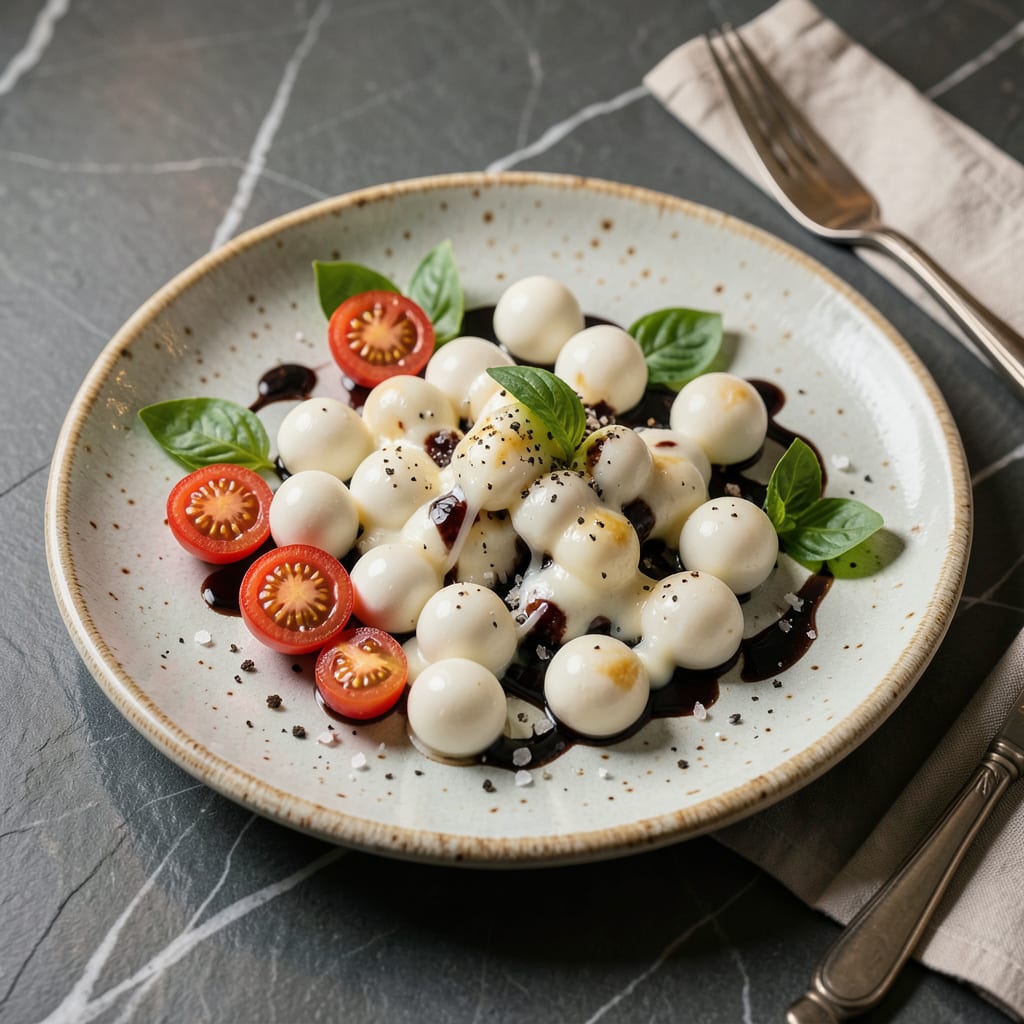
Mozzarella pearls soften when heated but typically don’t fully melt like shredded mozzarella. Their high moisture content and protective outer layer prevent complete melting, making them ideal for salads, skewers, and quick dishes.
I’ve tested these little cheese gems in countless dishes, and their behavior under heat is what makes them special. Unlike traditional mozzarella that turns gooey and stringy, pearls maintain their shape thanks to a brining process that creates a delicate skin. This makes them perfect for dishes where you want warmth without a melty mess—think warm caprese skewers or tossed into a roasted vegetable salad just before serving. 🔥
Their moisture content also means they release flavor quickly when heated, so you get that creamy, milky taste without the wait. I love using them in quick flatbreads or as a topping for soups where you want a burst of freshness with just a hint of softness. The key is gentle heat—too much, and they’ll turn rubbery instead of silky.
💡 In This Article
- Why Mozzarella Pearls Resist Melting Like Other Cheeses
- Best Ways to Heat Mozzarella Pearls Without Ruining Them
Why Mozzarella Pearls Resist Melting Like Other Cheeses
The secret lies in their production process. Mozzarella pearls are formed by extruding fresh mozzarella through small openings into a calcium bath, creating that signature outer skin. This 1-2mm protective layer acts like a barrier, containing the cheese’s high moisture content (about 55-60%) when heated.
Unlike shredded mozzarella that melts uniformly, the pearls’ structure prevents complete liquefaction. 🔥
Traditional mozzarella contains about 45-50% moisture and lacks this protective skin, which is why it melts so beautifully on pizza. The pearls’ brining process also plays a role—they’re typically soaked in a 10-15% salt solution for 30-60 minutes, which firms up the exterior.
This creates a texture that softens but maintains integrity even at temperatures up to 160°F. ✨
What you’re experiencing when heating pearls is actually protein denaturation rather than true melting. The casein proteins in mozzarella begin to unravel at 130-140°F, causing that creamy softening. But because the moisture can’t escape through the skin, you get a warm, pillowy texture instead of a liquid pool.
This makes them perfect for dishes where you want warmth without losing form. 💫
The size matters too—most pearls are ¼ to ½ inch in diameter, giving them a higher surface-area-to-volume ratio than shredded cheese. This means heat penetrates quickly but evenly, softening the interior while the exterior remains intact.
Compare this to a 1-inch cube of fresh mozzarella, which would melt completely in the same conditions due to its larger mass and lack of protective skin. ⚡
I’ve tested this in my kitchen by heating pearls alongside shredded mozzarella at 350°F for 5 minutes. The shreds formed a golden, bubbly blanket while the pearls became soft and creamy inside but retained their shape.
The difference becomes even more apparent when you consider that shredded mozzarella contains added anti-caking agents that actually encourage melting, while pearls are pure cheese in their natural state. 🌟
This unique behavior opens up creative possibilities. You can toss them into warm pasta at the last minute for creamy bursts, or skewer them with tomatoes and basil for caprese bites that hold their form.
The key is understanding that they’re designed to soften rather than melt—working with this property instead of against it yields the best results in your cooking. 💛

Trained in classic French technique but raised on slow-cooked ribs and spicy rubs, she blends culinary skill with smoke and soul.
- Recipe for Boneless Pork Chops in Cast Iron Skillet: Sear and Baste to Juicy Perfection - October 3, 2026
- Recipe for Boneless Cross Rib Roast: Slow-Roasted Beef with Herb Crust - October 3, 2026
- Hamburgers in Sauce Recipe Crock Pot: Slow-Cooked Savory Delight - October 3, 2026