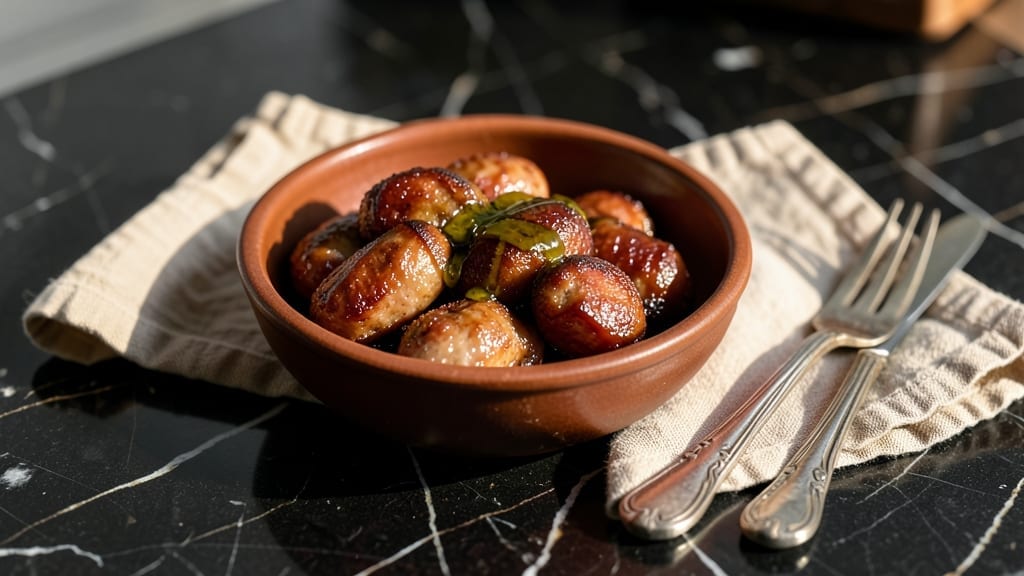
Understanding why some smoked sausages need cooking while others don’t starts with the curing process.
Many fresh or homemade varieties rely on minimal preservation techniques, making them unsafe to eat raw. 🔥 On the other hand, commercially processed options like kielbasa undergo thorough cooking during manufacturing, which eliminates foodborne risks entirely.
The key difference lies in the nitrates/nitrites used in curing—some recipes include enough to make them shelf-stable, while others require additional heat treatment for safety.
Even when pre-cooked sausages are safe cold, heating them can actually enhance their flavor by developing deeper smoky notes and improving texture. For breakfast sausages, a quick pan-fry adds crispiness, while charcuterie-style sausages shine when served at room temperature with complementary cheeses and fruits.
Always verify the packaging—some brands specify refrigeration requirements even for pre-cooked products.
💡 In This Article
- Smoked Sausage Safety Rules Explained
- Best Ways to Eat Smoked Sausage Hot or Cold
Smoked sausage safety rules explained
The safety of smoked sausage comes down to two key factors: the curing process and whether it’s been fully cooked during manufacturing. Fresh or homemade varieties often use minimal curing—typically just salt, spices, and sometimes natural nitrates from vegetables like celery.
These products rely on additional heat treatment (like grilling or frying) to reach a safe internal temperature of 165°F, killing harmful bacteria like Listeria or Salmonella. The smoking process itself doesn’t fully sterilize the meat unless combined with cooking temperatures above 145°F for at least 15 seconds.
Commercially processed sausages like kielbasa or andouille take a different approach. They’re cured with a precise blend of salt, sugar, and sodium nitrite (typically 200 ppm or less), then fully cooked during smoking at 160-180°F for several hours.
This combination of curing salts and heat creates a stable, shelf-stable product that’s safe to eat cold. The nitrites actually form compounds that inhibit bacterial growth while developing that signature pink color and smoky flavor.
What most people don’t realize is that these nitrites must be properly distributed throughout the meat—uneven curing can create unsafe pockets.
Here’s what’s actually happening at the molecular level: The smoking process dehydrates the sausage slightly (losing about 10-15% of its original moisture), which helps preserve it. But for true shelf stability, the product must either be vacuum-packed or contain enough curing agents to prevent microbial growth.
The USDA classifies these as “ready-to-eat” products when they meet specific pH (4.6 or lower) and moisture content (50% or less) standards. This is why you’ll see terms like “fully cooked” or “smoked and ready-to-eat” on packaging—those phrases indicate the product has undergone this complete process.
Even when pre-cooked sausages are safe cold, there’s a critical distinction between breakfast-style sausages and charcuterie varieties. Breakfast sausages often contain fillers like breadcrumbs that can dry out when refrigerated, while charcuterie sausages are formulated to maintain moisture and texture.
The fat content also plays a role—sausages with 20%+ fat (like andouille) stay more flavorful when served cold, while leaner varieties (10-15% fat) benefit from reheating to enhance their texture. Always check the fat content on the label if you’re unsure.
The USDA provides clear guidelines but leaves room for interpretation in some cases. For example, “smoked” on a label doesn’t automatically mean “ready-to-eat”—it could refer to just the flavor treatment. That’s why the packaging instructions are your best friend.
Some brands specify “must be cooked” even if the product is smoked, while others guarantee safety when refrigerated properly. When in doubt, err on the side of cooking—especially with homemade or artisanal products where curing standards might vary. 🔥
What most people overlook is how storage conditions affect safety. Pre-cooked sausages kept above 40°F for more than 2 hours can develop dangerous bacteria, even if they’re technically “ready-to-eat.” The curing process slows but doesn’t eliminate all risks.
This is why many charcuterie sausages come with “consume within 7 days of opening” warnings—even though they’re shelf-stable unopened. The moment you cut into the package, you’re introducing new surfaces for bacteria to colonize.

Trained in classic French technique but raised on slow-cooked ribs and spicy rubs, she blends culinary skill with smoke and soul.
- Smoked Brisket Recipe: Low and Slow to Fall-Apart Tenderness - November 2, 2026
- Smoked Turkey Breast Recipe: Juicy Pink Center With Crispy Skin Every Time - November 2, 2026
- Leftover Smoked Pulled Pork Chili Recipe: Rustic Flavor Revival in One Pot - November 2, 2026