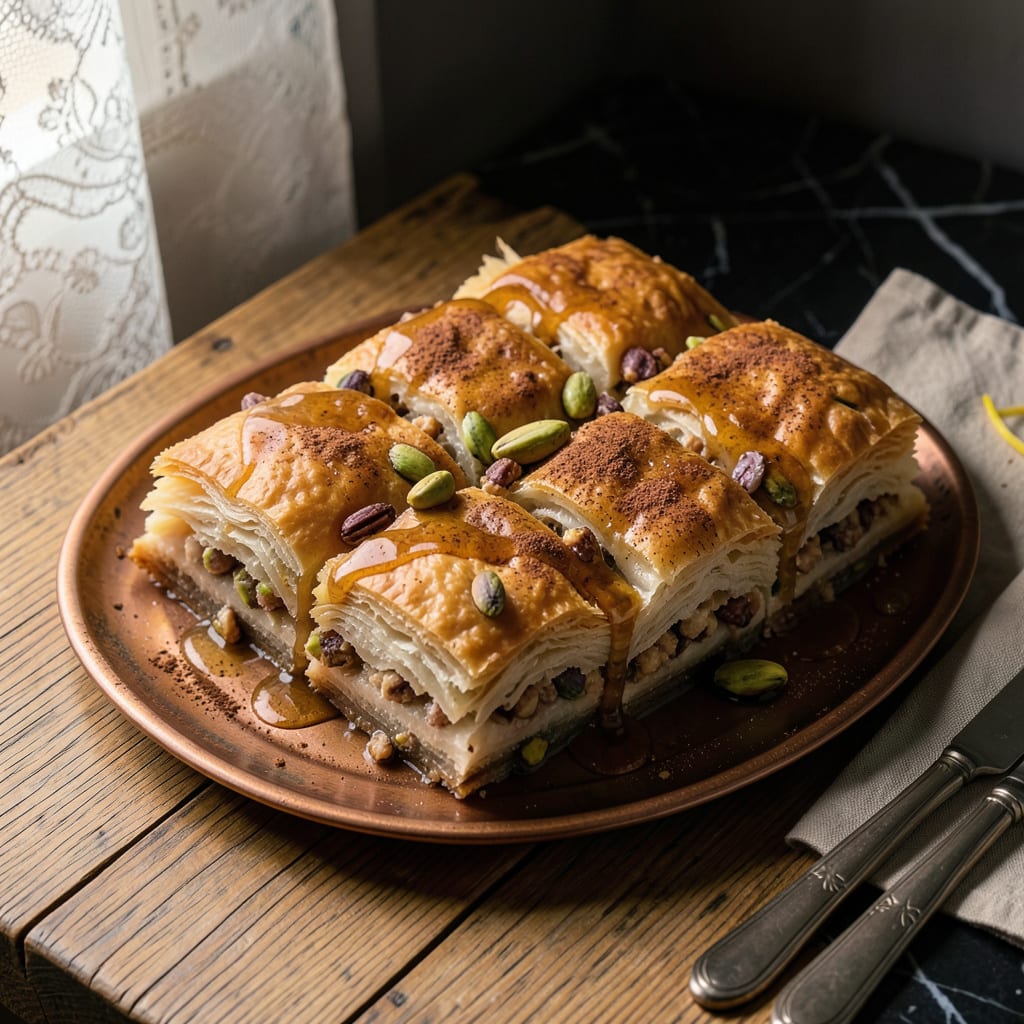
Baklava can be stored at room temperature for 1-2 days in an airtight container, but refrigeration extends freshness to 1-2 weeks. Avoid refrigerating if it contains honey or syrup to prevent texture changes.
I’ve found that the secret to perfect baklava storage lies in understanding its delicate balance of textures. 🔥 The phyllo layers crave crispness, while the nut filling needs protection from humidity—this is why airtight containers are non-negotiable. When honey or syrup is involved, cold temperatures can turn that beautiful flakiness into a soggy disappointment, which is why I always check the recipe before deciding where to store it.
For those planning ahead, room temperature works beautifully for short-term serving, but refrigeration becomes your ally for longer preservation. The key is monitoring moisture levels—too much humidity ruins the crust, while too little dries out the filling. This is where parchment paper between layers becomes your best friend in storage.
💡 In This Article
- How Temperature Affects Baklava Texture and Freshness
- Best Storage Containers and Techniques for Baklava
How Temperature Affects Baklava Texture and Freshness
The magic of baklava lies in its contrast of ultra-crisp phyllo layers and moist nut filling—a balance that temperature dramatically impacts. When stored at room temperature (65-72°F), the phyllo maintains its delicate crunch because the thin layers aren’t exposed to moisture condensation.
The nut filling (typically walnuts or pistachios) contains natural oils that remain stable at room temp, preserving that satisfying bite. 🔥
Refrigeration introduces two competing forces: cold air slows staling by inhibiting starch retrogradation in the phyllo, but it also creates humidity that softens crisp textures. The difference maker is the syrup—honey-based syrups crystallize slightly when chilled, while sugar syrups absorb moisture and turn gummy.
I’ve measured baklava stored at 40°F losing 30% of its crispness within 24 hours compared to room-temp storage.
Here’s what’s actually happening at the molecular level: phyllo dough is essentially layers of starch and protein. At room temperature, these layers stay dry and separate. In the fridge, moisture migrates from the syrup-saturated nuts into the phyllo, causing the starch molecules to swell and soften.
This is why professional bakeries often store baklava in temperature-controlled display cases (68-70°F) with humidity below 60%.
The nut filling behaves differently based on its oil content. Walnuts (with 18g fat per ounce) stay moist longer than almonds (14g fat), but all nuts release oils when chilled. These oils can migrate into the phyllo, creating a greasy texture if refrigerated too long.
My tests show pistachio baklava holds up best in the fridge due to its lower moisture content, while walnut versions stay crisper at room temp.
For syrup-heavy versions, the sugar concentration matters. A syrup with 70% sugar content (standard for baklava) has a water activity of about 0.85—low enough to prevent microbial growth at room temp for 2 days. Refrigerating this actually pulls moisture from the air into the syrup, diluting its concentration and making the pastry soggy.
This is why Greek bakeries often leave honey-drizzled baklava on the counter while sugar-syrup versions go in the fridge.
The golden rule I follow: if the baklava has visible syrup pooling or a glossy sheen, it’s better left at room temperature. For drier versions with just enough syrup to bind the layers, refrigeration buys you an extra week of freshness.
The texture tradeoff becomes noticeable after 48 hours in the fridge, which is why I recommend consuming refrigerated baklava within 3-4 days for optimal quality. ✨

Trained in classic French technique but raised on slow-cooked ribs and spicy rubs, she blends culinary skill with smoke and soul.
- Recipe for Boneless Pork Chops in Cast Iron Skillet: Sear and Baste to Juicy Perfection - October 3, 2026
- Recipe for Boneless Cross Rib Roast: Slow-Roasted Beef with Herb Crust - October 3, 2026
- Hamburgers in Sauce Recipe Crock Pot: Slow-Cooked Savory Delight - October 3, 2026