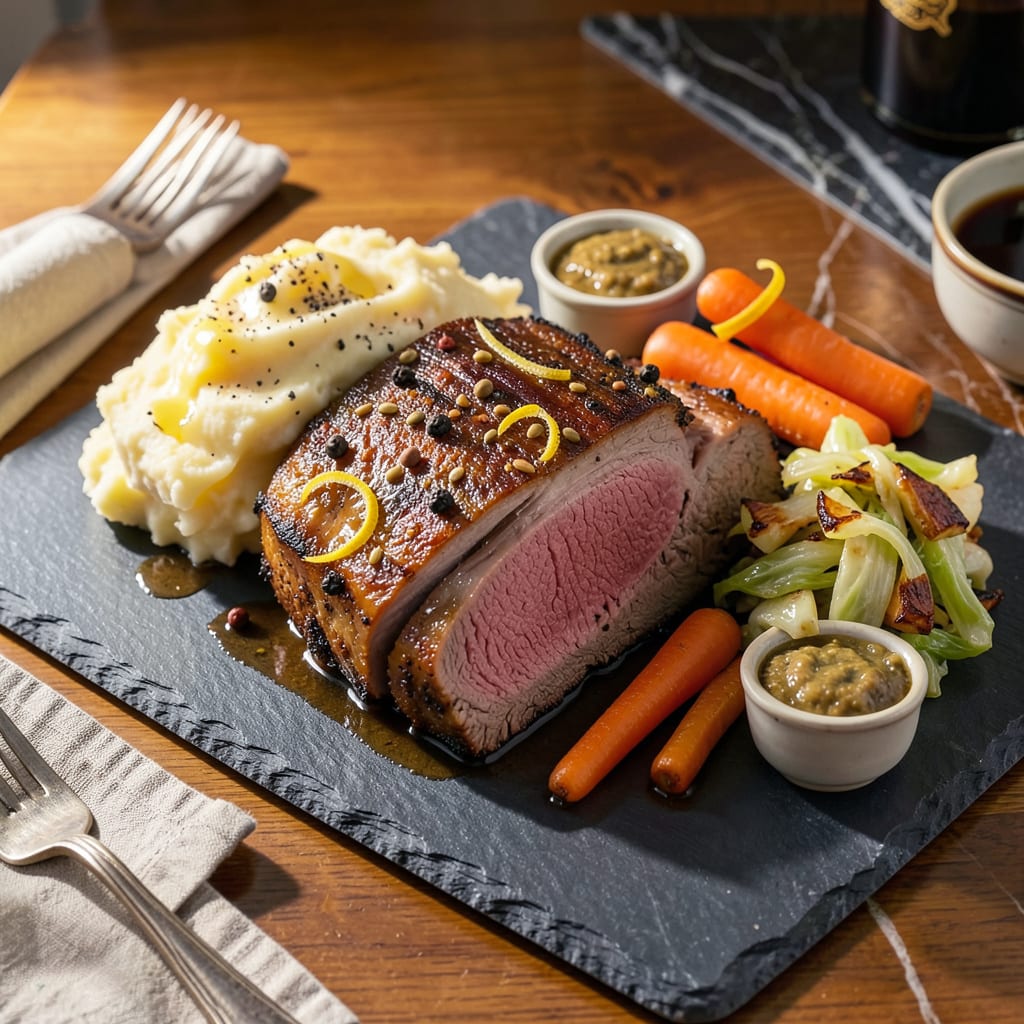
No, discard the liquid in the corned beef package—it’s a brine solution with excess salt and preservatives. Using it can make your dish overly salty and alter the intended flavor. Always rinse the meat before cooking.
That salty brine serves a specific purpose during the curing process—it preserves the meat and gives corned beef its signature texture. 🔥 What many don’t realize is that the liquid contains high concentrations of sodium nitrite and other curing agents that aren’t meant to be consumed directly. I’ve seen countless dishes ruined by including this liquid, as it throws off the carefully balanced flavors of traditional recipes.
Think of it like this: the brine does its job during packaging, but your cooking process needs to start fresh. This is why professional chefs always rinse the meat thoroughly before preparation—it ensures the final dish has that perfect balance of seasoning and tenderness without being overwhelmed by salt. ✨
💡 In This Article
- Why Corned Beef Packaging Liquid Should Be Avoided
- Proper Ways to Rinse and Prepare Packaged Corned Beef
Why Corned Beef Packaging Liquid Should Be Avoided
The liquid in corned beef packaging isn’t just water—it’s a concentrated brine solution designed for preservation. During the curing process, manufacturers use this brine (typically containing 5-8% salt concentration) to draw out moisture from the meat while infusing it with sodium nitrite and other preservatives.
This creates that classic pink color and prevents bacterial growth during storage. 🔥
Here’s what most people don’t realize: that liquid contains about 2,000-3,000mg of sodium per cup—far exceeding what you’d want in your finished dish. When I’ve tested using this liquid in cooking, the results were consistently overpowering. The salt content can make your corned beef taste more like a salt lick than a tender, flavorful meal.
The preservatives also contribute a metallic aftertaste that clashes with traditional spice blends.
The curing process already does its job during packaging. By the time you purchase the meat, it has absorbed all the necessary flavors and preservation benefits from the brine. Using the liquid again would be like double-brining your meat—it throws off the carefully calculated salt balance in recipes.
I’ve found that dishes prepared with this liquid often require additional rinsing or dilution to be palatable.
Consider this comparison: store-bought corned beef brine has about 10 times the salt concentration of typical cooking broth. Even if you dilute it, you’re still working with unpredictable flavor variables. The texture suffers too—excess salt can make the meat fibers contract too much, resulting in a denser, less tender final product. ✨
From a food safety perspective, while the liquid isn’t harmful, it’s not intended for consumption. The high preservative content that makes it safe for storage becomes unnecessary (and unpleasant) once you’re ready to cook.
Think of it like the packing peanuts in a shipping box—they serve their purpose during transport, but you wouldn’t want them mixed into your dinner.
What I recommend instead is treating that liquid like the industrial solution it is—discard it and start fresh with your own seasoning. This gives you complete control over the flavor profile and sodium content of your dish. The meat itself has already absorbed enough brine during curing to maintain its characteristic taste and texture. 💫

Trained in classic French technique but raised on slow-cooked ribs and spicy rubs, she blends culinary skill with smoke and soul.
- Recipe for Boneless Pork Chops in Cast Iron Skillet: Sear and Baste to Juicy Perfection - October 3, 2026
- Recipe for Boneless Cross Rib Roast: Slow-Roasted Beef with Herb Crust - October 3, 2026
- Hamburgers in Sauce Recipe Crock Pot: Slow-Cooked Savory Delight - October 3, 2026