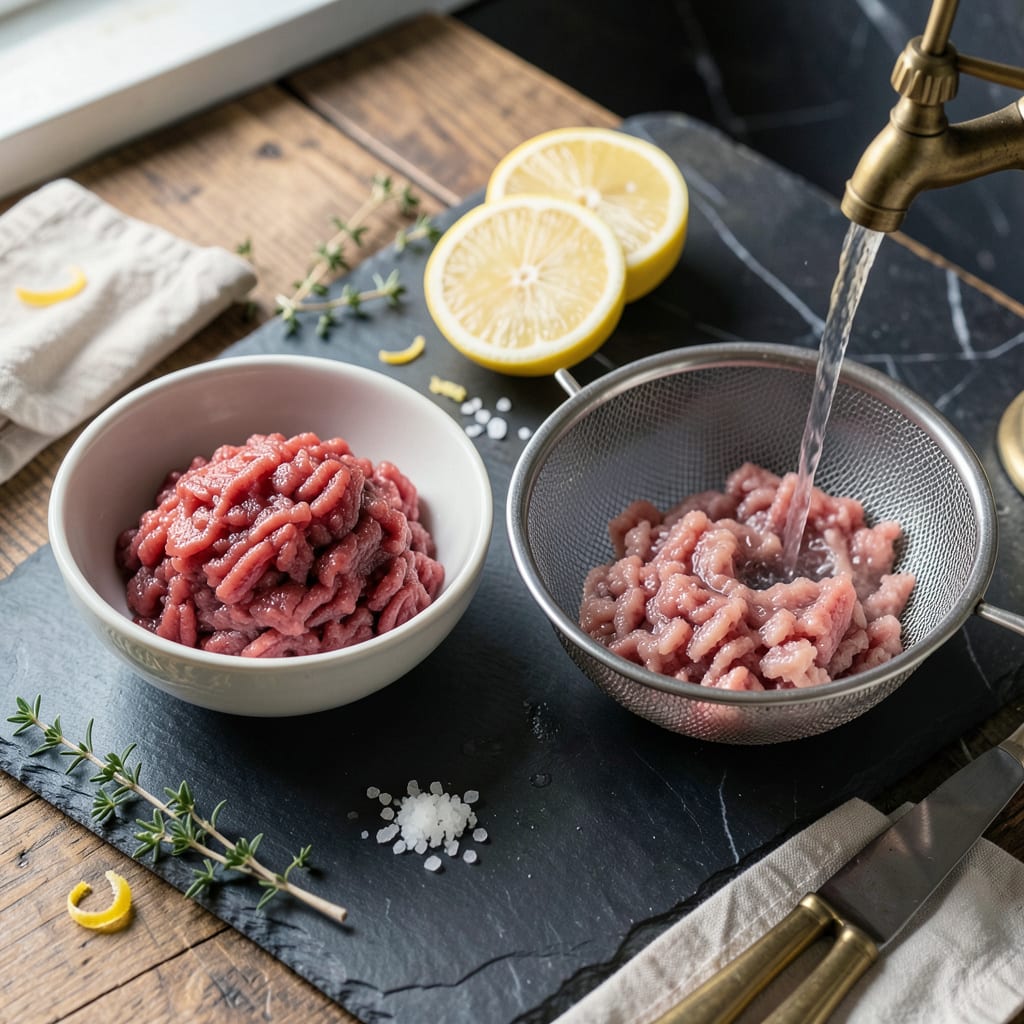
No, washing minced meat is unsafe and unnecessary. Rinsing spreads harmful bacteria via splashing and removes natural juices that enhance flavor. Cooking to proper temperatures (160°F for beef/pork, 165°F for poultry) eliminates pathogens effectively.
I’ve seen this practice in many home kitchens, but the science is clear: water doesn’t clean meat—it just creates a bacterial spray that contaminates your sink, countertops, and nearby foods. 🔥 That juicy flavor you love comes from the meat’s natural moisture, which gets washed down the drain when you rinse. What most people don’t realize is that proper cooking temperatures are designed specifically to neutralize any harmful bacteria, making washing completely redundant.
From my years working with meat, I’ve learned that patting it dry with paper towels gives you better browning and texture without the safety risks. ✨ The key is handling it properly before cooking—keeping it cold until ready to use and preventing cross-contamination with other ingredients.
💡 In This Article
- Why Washing Minced Meat Creates Food Safety Risks
- Proper Handling Techniques for Minced Meat Instead of Washing
Why Washing Minced Meat Creates Food Safety Risks
When you rinse minced meat under running water, you’re essentially creating a bacterial bomb in your kitchen. The force of the water causes pathogens like E. coli and Salmonella to aerosolize, spreading up to 3 feet in all directions. Studies show this contamination can land on your sink, countertops, utensils, and even ready-to-eat foods nearby.
The CDC specifically warns against this practice because these bacteria can survive on surfaces for hours or even days.
The problem gets worse with ground meat because the grinding process distributes any surface bacteria throughout the entire batch.
When you wash it, you’re not just spreading contaminants from the surface—you’re dispersing bacteria that were internalized during processing. 🦠 Water also can’t penetrate the meat’s protein structure to “wash out” bacteria; it just creates a false sense of cleanliness while actually increasing your exposure risk.
Here’s what most home cooks don’t understand: the moisture you’re trying to remove is actually protecting you. Those natural juices contain proteins that help the meat cook evenly and reach safe internal temperatures more consistently.
When you wash them away, you’re left with drier meat that may cook unevenly, potentially leaving some bacteria-laden pockets undercooked while other parts become overdone.
The only scientifically proven way to eliminate these pathogens is through proper cooking temperatures. For ground beef and pork, that’s 160°F measured with a food thermometer, while poultry requires 165°F. These temperatures are specifically calculated to destroy harmful bacteria at the cellular level—something water could never accomplish.
The USDA confirms that washing meat doesn’t reduce your risk of foodborne illness, but proper cooking does.
Consider this: a single gram of ground beef can contain thousands of bacteria cells. Washing might remove a fraction of these from the surface, but it spreads the rest throughout your kitchen environment.
Meanwhile, cooking that same gram to 160°F will destroy 99.999% of those bacteria—including any that might have been present in the meat’s interior where water couldn’t reach. ✨
The splash zone from washing also creates invisible contamination. Research from North Carolina State University found that washing chicken (a common practice) can spread bacteria to salad ingredients sitting nearby, leading to cross-contamination that water ironically was supposed to prevent. The same principle applies to all minced meats—what you can’t see can definitely hurt you.
Instead of washing, focus on preventing cross-contamination during preparation. Use separate cutting boards for meat and vegetables, wash your hands thoroughly after handling raw meat, and sanitize surfaces with hot, soapy water. These practices actually reduce your risk, unlike washing which only creates the illusion of cleanliness while making your kitchen more dangerous. 🔥

Trained in classic French technique but raised on slow-cooked ribs and spicy rubs, she blends culinary skill with smoke and soul.
- Recipe for Boneless Pork Chops in Cast Iron Skillet: Sear and Baste to Juicy Perfection - October 3, 2026
- Recipe for Boneless Cross Rib Roast: Slow-Roasted Beef with Herb Crust - October 3, 2026
- Hamburgers in Sauce Recipe Crock Pot: Slow-Cooked Savory Delight - October 3, 2026