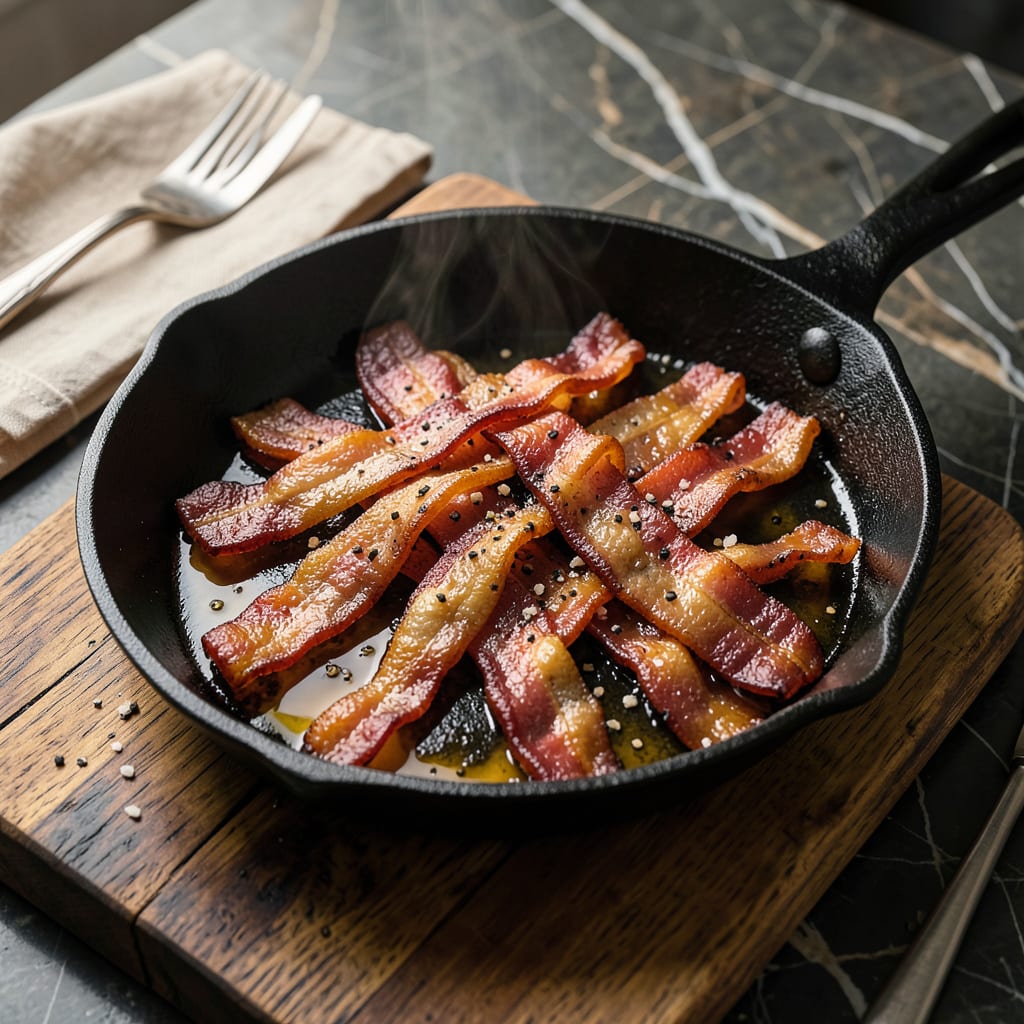
Bacon doesn’t need added oil because its high fat content renders naturally during cooking, creating its own grease. Start with a cold pan for even crispiness and to prevent sticking.
I’ve cooked thousands of bacon strips in my pitmaster career, and here’s what I’ve learned: that marbled fat isn’t just for flavor—it’s your built-in nonstick agent. 🔥 As the pan heats, the fat slowly liquefies, coating the surface better than any oil could. This is why I always recommend starting with a cold pan—it gives the fat time to render gradually, preventing those frustrating stuck-on bits that happen with high heat.
The science backs this up too. Bacon typically contains 40-50% fat, which is far higher than most meats. When heated, these fats break down into liquid, essentially basting the meat as it cooks. This self-lubricating process is what gives you that perfect balance of crispy edges and tender centers—no extra oil required. ✨
💡 In This Article
- Why Bacon Cooks Perfectly Without Added Oil
- Best Cooking Techniques for Crispy, Non-Stick Bacon
Why Bacon Cooks Perfectly Without Added Oil
Bacon’s fat content is its secret weapon—typically 40-50% by weight, which is significantly higher than most meats. This isn’t just random marbling; it’s a carefully balanced composition of saturated and unsaturated fats that begin melting at different temperatures.
As the pan heats, the fat gradually liquefies, creating a natural nonstick surface that coats both the meat and the cooking vessel. This process starts at about 140°F and continues until the fat fully renders at 350°F. 🔥
Here’s what’s actually happening at the molecular level: The fat cells in bacon contain triglycerides that break down into glycerol and free fatty acids when heated. These components then interact with the meat proteins to create that perfect crispy texture.
Unlike lean meats that require external lubrication, bacon’s fat distribution means every slice carries its own cooking medium. Adding oil would actually interfere with this process by creating uneven heat distribution and potentially causing dangerous splatter.
The self-basting effect is what makes bacon so forgiving to cook. As the fat renders, it continuously bathes the meat, preventing dryness while allowing the edges to crisp. This is why I always recommend starting with a cold pan—it gives the fat time to render slowly and evenly.
Compare this to chicken breast (only 3% fat) or even pork chops (10-15% fat), which require oil to prevent sticking and maintain moisture. ✨
There’s also the Maillard reaction to consider. The natural sugars in bacon (about 1-2% by weight) combine with amino acids when heated, creating those complex, savory flavors we love. The rendered fat facilitates this reaction by maintaining consistent contact between the meat and the hot surface.
Too much added oil would create a barrier, preventing proper browning and flavor development. 🌟
What most people don’t realize is that bacon fat has a higher smoke point (375°F) than many cooking oils. This means it can handle the sustained heat needed for crisping without breaking down into bitter compounds.
The fat also contains natural antioxidants that help preserve its stability during cooking—another reason why it performs so well without additives.
For comparison, think about how butter behaves in a pan. It contains about 80% fat but also water and milk solids that cause splattering. Bacon fat, being nearly pure rendered fat, creates a more stable cooking environment.
This purity is why chefs often save bacon grease for other cooking applications—it’s essentially a free, flavorful cooking fat that’s been perfectly rendered for you. ⚡
The only exception might be extremely lean bacon varieties (under 30% fat), which are rare in commercial products. Even then, the small amount of fat present is usually sufficient if you use proper technique. The key is patience—letting the fat render gradually creates that ideal crispy-yet-tender texture that makes bacon so universally loved.

Trained in classic French technique but raised on slow-cooked ribs and spicy rubs, she blends culinary skill with smoke and soul.
- Recipe for Kabsa Rice: Spiced Middle Eastern Feast in One Pot - October 3, 2026
- Hamburger Stir Fry Recipe Healthy: Lean Protein and Veggie-Packed Dinner - October 3, 2026
- Recipe for Curried Lamb Chops: Spice-Rubbed and Pan-Seared to Succulence - October 3, 2026