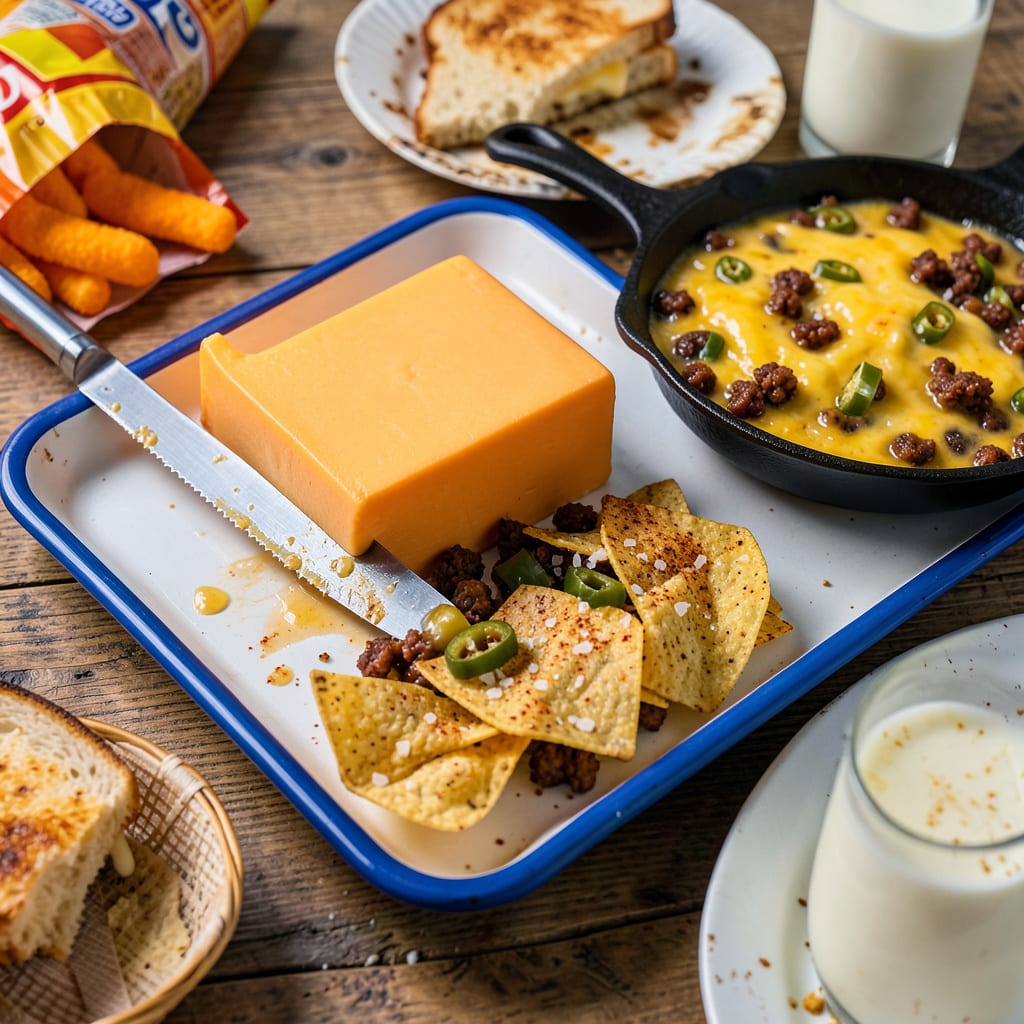
Velveeta is highly processed with artificial ingredients, high sodium, and saturated fats, making it less healthy than natural cheese. Moderation is key, as frequent consumption may contribute to heart disease, high blood pressure, and weight gain.
I’ve seen firsthand how processed cheeses like this affect long-term health in my culinary work. The combination of phosphates and artificial colors creates that signature smooth melt, but these additives can strain your kidneys over time. What concerns me most is the sodium content—just one ounce contains nearly 10% of your daily limit, which adds up quickly in recipes like mac and cheese or queso dips. ✨
From a chef’s perspective, I’d compare it to choosing between fresh herbs and powdered seasoning—the convenience comes at a nutritional cost. The processing strips away natural enzymes and beneficial fats found in real cheese, leaving behind a product that’s more about shelf stability than health benefits. 🔥
💡 In This Article
- What Makes Velveeta Less Healthy Than Natural Cheese?
- Healthier Alternatives to Velveeta for Cooking and Snacking
What Makes Velveeta Less Healthy Than Natural Cheese?
The processing method is where Velveeta diverges dramatically from natural cheese. It starts as real cheese, but then undergoes pasteurization at 160°F+ before being blended with emulsifiers like sodium phosphate. These additives break down the protein structure, preventing separation and creating that ultra-smooth texture. The result?
A product that can sit unrefrigerated for months—something no natural cheese could achieve. 🔥
Let’s talk numbers: A single 1-ounce slice of Velveeta packs 410mg sodium (18% DV) and 6g saturated fat (30% DV). Compare that to cheddar’s 170mg sodium and 6g saturated fat—same fat but nearly double the salt. The artificial colors (like annatto) and preservatives (sorbic acid) add to the chemical load your body must process.
What’s missing? The beneficial bacteria and enzymes found in aged cheeses that aid digestion.
The emulsification process also alters how your body absorbs these fats. Natural cheese fats are encapsulated in protein matrices that slow digestion. Velveeta’s processed fats are more readily absorbed, potentially spiking triglycerides faster.
I’ve noticed this in my cooking—when melted, Velveeta behaves more like an oil-based sauce than cheese, coating foods differently than natural cheddar would. ✨
Here’s what concerns me most as a chef: The phosphorus additives (like sodium phosphate) can disrupt mineral balance in your body. While they create that perfect melt, excessive intake may weaken bones over time by leaching calcium.
The casein proteins are also denatured during processing, making them harder for some people to digest compared to natural cheese proteins.
Consider the ingredient list: “Milk, water, whey, milk protein concentrate” sounds fine until you hit “sodium phosphate, milkfat, whey protein concentrate, salt.” That’s 7 processed components before you even reach the preservatives. Natural cheddar? Typically just milk, cultures, salt, and enzymes.
The difference in processing complexity directly correlates to how your body must work to metabolize it. 💫
From a culinary science perspective, the high melt point (150°F) and stability come from these additives. But that convenience means your liver and kidneys process more artificial compounds. I always tell my students: foods that resist spoiling often resist easy digestion too.
The trade-off for that perfect cheese sauce consistency is a product your body recognizes less as food and more as a chemical formulation.

Trained in classic French technique but raised on slow-cooked ribs and spicy rubs, she blends culinary skill with smoke and soul.
- Recipe for Boneless Pork Chops in Cast Iron Skillet: Sear and Baste to Juicy Perfection - October 3, 2026
- Recipe for Boneless Cross Rib Roast: Slow-Roasted Beef with Herb Crust - October 3, 2026
- Hamburgers in Sauce Recipe Crock Pot: Slow-Cooked Savory Delight - October 3, 2026