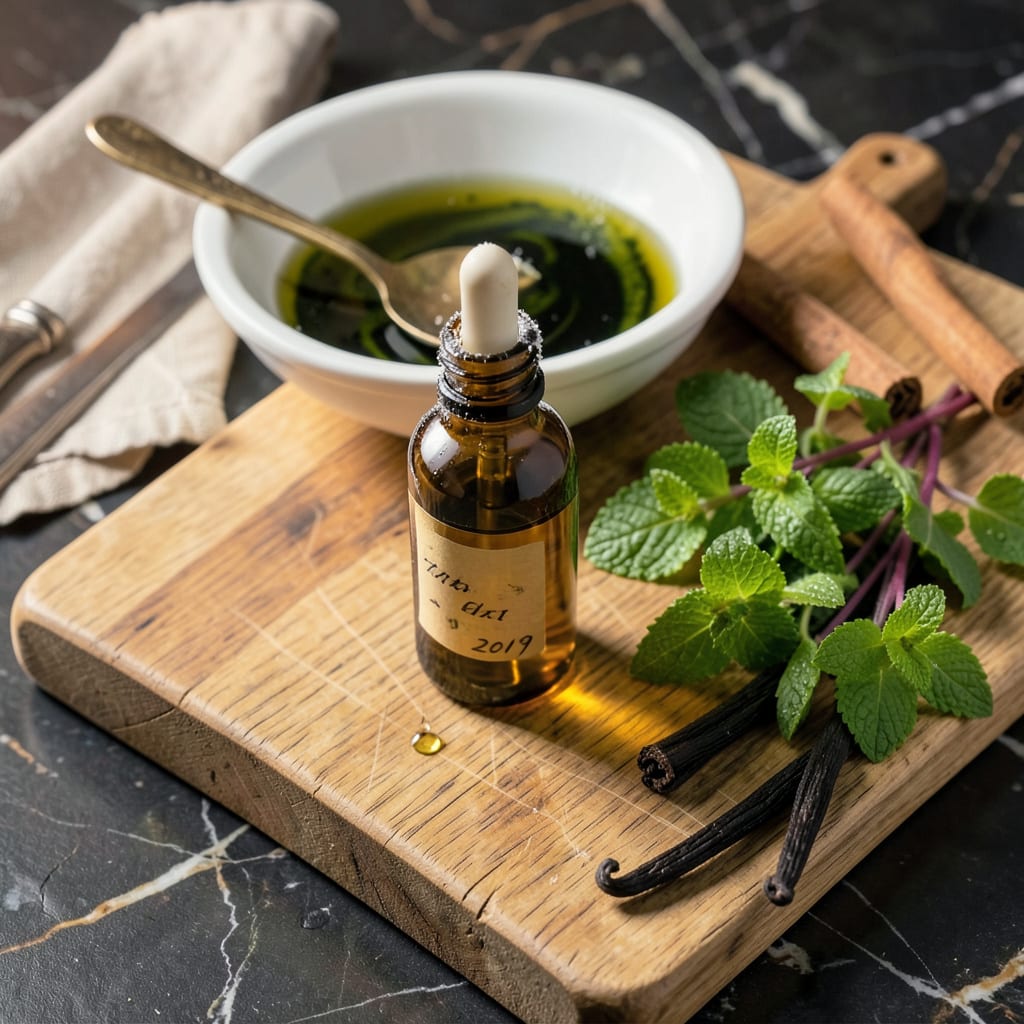
Pure peppermint extract has an indefinite shelf life if stored properly in a cool, dark place with the lid tightly sealed. While it won’t spoil, its potency and flavor may weaken over several years.
I’ve kept bottles of peppermint extract in my pantry for years without issues, and here’s why it lasts so long: the high alcohol content acts as a natural preservative, preventing bacterial growth. ✨ What changes over time isn’t safety but intensity—older bottles might require a splash more to achieve the same bold flavor in recipes. Think of it like vanilla extract: technically “good” forever, but fresher bottles pack more punch. I always store mine away from heat sources to maintain its vibrant, minty character.
💡 In This Article
- Why Peppermint Extract Stays Fresh for Years
- Signs Your Peppermint Extract Has Lost Potency
Why Peppermint Extract Stays Fresh for Years
The secret lies in its alcohol base—pure peppermint extract is typically 80-90% alcohol, creating an environment where bacteria and mold simply can’t survive. This high-proof solution acts like a natural preservative, similar to how vodka or rum stay shelf-stable indefinitely.
The alcohol also extracts and preserves the peppermint oil’s volatile compounds, locking in that signature cool, crisp flavor for years. 💫
Unlike water-based ingredients that spoil quickly, peppermint extract has virtually no water activity (measured below 0.6 on the water activity scale). This means microorganisms can’t access the moisture they need to grow. Even the peppermint oil itself contains antimicrobial properties—studies show menthol (the main compound) inhibits bacterial growth at concentrations as low as 0.2%.
That’s why your bottle stays safe even after opening. ✨
Compare this to imitation peppermint extracts, which often use propylene glycol or glycerin as carriers. These versions typically last 2-3 years because their lower alcohol content (around 35-50%) provides less preservation power.
I always check labels—if the first ingredient isn’t alcohol, I know it won’t have the same staying power as the pure extract in my grandma’s vintage recipe collection. 🔥
The glass bottles most extracts come in aren’t just for looks—they block UV light that could degrade the peppermint oil over time. I once stored a bottle in a clear plastic container near my stove (big mistake!). After 18 months, the flavor had noticeably dulled compared to its twin kept in the original amber glass.
The temperature fluctuations from cooking had accelerated the evaporation of volatile compounds. ⚡
Here’s what’s fascinating: the extraction process itself contributes to longevity. Commercial peppermint extract is made by steeping peppermint leaves in high-proof alcohol for weeks, which fully stabilizes the plant’s oils. Home infusions (where people might use lower-proof vodka) often develop off-flavors within 12-18 months because the alcohol isn’t strong enough to fully preserve the botanicals.
🌟
Even the cap matters—most quality extracts use polycone liners that create an airtight seal. I learned this the hard way when a cheap plastic cap let air seep in, causing my extract to develop a slightly medicinal off-note after 3 years.
Now I always transfer extracts to bottles with glass droppers if the original cap seems flimsy. The difference in flavor retention is remarkable. 💛
Think of it like fine liquor: a bottle of 10-year-old peppermint extract won’t make you sick, but it might taste more mellow than a fresh one. That’s why I keep a “tester bottle” of older extract—when its aroma doesn’t make my nose tingle immediately, I know it’s time to replace my baking supply.
The science is solid, but our senses are the best tools for judging when to refresh our pantry staples. ⚡

Trained in classic French technique but raised on slow-cooked ribs and spicy rubs, she blends culinary skill with smoke and soul.
- Recipe for Crock Pot Swiss Steak: Slow-Cooked Beef With Mushroom Gravy - October 3, 2026
- Recipe for Kabsa Rice: Spiced Middle Eastern Feast in One Pot - October 3, 2026
- Hamburger Stir Fry Recipe Healthy: Lean Protein and Veggie-Packed Dinner - October 3, 2026