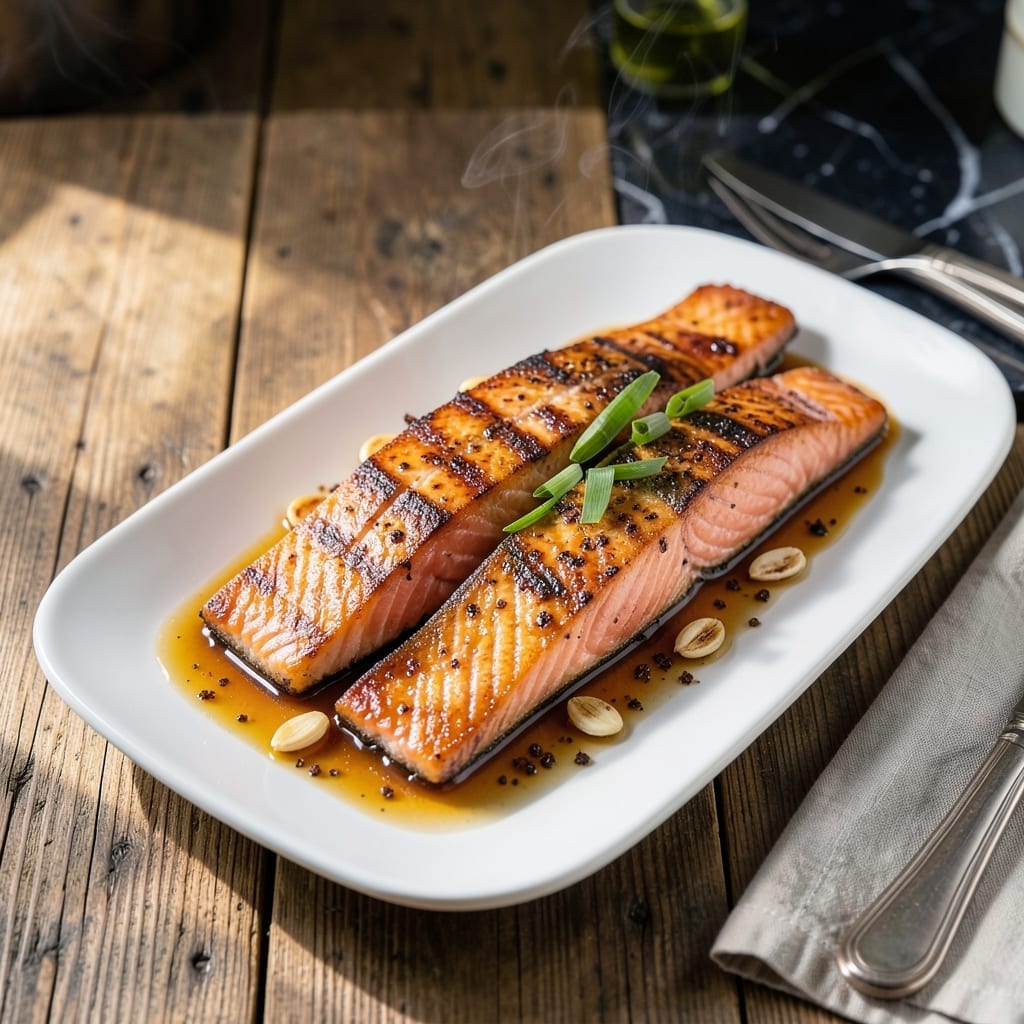
This recipe transforms wild-caught pink salmon into a sweet and smoky masterpiece with minimal effort. The double glaze technique ensures every bite is packed with bold, balanced flavor that complements the fish’s natural richness.
I developed this method to highlight the salmon’s delicate texture while adding layers of caramelized sweetness and smoky depth. The glaze forms a glistening coating that locks in moisture, creating a perfect sear on the outside and tender flakes inside.
The process is straightforward: a simple marinade, quick sear, and two rounds of glazing during baking. This builds complex flavor without overpowering the salmon’s natural taste, resulting in a dish that feels special enough for guests.
Serve this with roasted vegetables or a fresh salad for a complete meal that showcases the salmon’s wild-caught quality. The flavors work together to create a memorable dining experience.
Ingredients for Double Q Pink Salmon
Wild-caught pink salmon meets a bold glaze with pantry-friendly staples for maximum flavor.
| Ingredient | Amount | Notes |
|---|---|---|
| Wild-Caught Pink Salmon Fillets 🐟 | 1 ½ lb | Skin-on, deboned, about 1-inch thick |
| Honey 🍯 | ⅓ cup | Raw or pure for best flavor |
| Soy Sauce 🫒 | ¼ cup | Low-sodium preferred |
| Brown Sugar 🧈 | ¼ cup | Light or dark, packed |
| Liquid Smoke 🔥 | 1 tsp | Hickory or mesquite flavor |
| Garlic Cloves 🧄 | 3 cloves | Minced finely |
| Fresh Ginger 🌿 | 1 tbsp | Peeled and grated |
| Olive Oil 🫒 | 2 tbsp | For searing salmon |
| Salt 🧂 | ½ tsp | Kosher or sea salt |
| Black Pepper 🌶️ | ¼ tsp | Freshly ground preferred |
| Lemon 🍋 | 1 whole | Zested and juiced |
| Dijon Mustard 🟡 | 1 tbsp | For depth in glaze |
| Cornstarch 🌾 | 1 tsp | To thicken glaze |
| Green Onions 🧅 | ¼ cup | Thinly sliced, for garnish |
[recipe_ingredient_scaler]
The salmon quality matters here. Wild-caught pink salmon has a delicate texture that absorbs the glaze beautifully. Source from Whole Foods or Costco for consistent quality, or ask your fishmonger for the freshest cut. Look for bright, vibrant color and a mild scent—any fishy aroma means it’s past its prime. The skin should be intact and glistening.
No liquid smoke? Smoked paprika at one-fourth the amount adds a similar depth. Honey can be swapped for maple syrup or agave (use the same quantity). Low-sodium soy sauce is ideal, but regular works if you reduce the added salt. The Dijon mustard can be replaced with whole-grain mustard for a coarser texture. Fresh ginger is non-negotiable for that sharp, bright kick.
The glaze keeps for 1 week in an airtight container in the fridge. Leftover salmon? Flake it into salads or wraps—stays tender for 2-3 days. Best served fresh, but the flavors deepen if you reheat gently (covered, to retain moisture).
Why You’ll Love This Recipe
- Five-Minute Prep: I just mix honey, soy sauce, and brown sugar, brush it on the salmon, and let the oven do the rest.
- Sweet-Smoky Perfection: That sticky glaze with a hint of liquid smoke makes the wild pink salmon taste like it came off a grill.
- Meal Prep Hero: It’s my go-to for Sunday prep—reheats beautifully for lunches all week.
- Budget-Friendly Luxury: Honestly, wild-caught salmon feels fancy, but this recipe keeps it affordable and filling.
Step-by-Step Instructions for Double Q Pink Salmon
Master this technique for perfectly flaky salmon with a glossy, caramelized glaze.
Step 1: Prepare and Season the Salmon Fillets
Pat the 1.5 lb Wild-Caught Pink Salmon Fillets completely dry with paper towels, paying special attention to the skin side. I use a gentle pressing motion to absorb all moisture without tearing the delicate flesh. This ensures optimal browning and prevents the fillets from steaming in the pan.
Season both sides evenly with the 0.5 tsp Salt and 0.25 tsp Black Pepper, pressing the seasoning into the surface lightly. The skin-on side should receive slightly more salt to enhance its crispiness during cooking. Let the seasoned fillets rest at room temperature for 10 minutes while you prepare the glaze.
Step 2: Create the Sweet and Smoky Glaze
In a small saucepan, combine the 0.33 cup Honey, 0.25 cup Soy Sauce, 0.25 cup Brown Sugar, 1 tsp Liquid Smoke, minced 3 cloves Garlic Cloves, and grated 1 tbsp Fresh Ginger. Add the zest and juice from the 1 whole Lemon and 1 tbsp Dijon Mustard.
Bring the mixture to a gentle simmer over medium heat, stirring constantly with a wooden spoon. Once simmering, reduce heat to low and let it thicken for 3-4 minutes until it coats the back of a spoon. In a small bowl, mix the 1 tsp Cornstarch with 1 tablespoon of cold water, then whisk this slurry into the glaze. Continue cooking for 1-2 minutes until the glaze reaches a syrup-like consistency.
Step 3: Sear and Glaze the Salmon
Heat the 2 tbsp Olive Oil in a large skillet over medium-high heat until it shimmers but doesn’t smoke. Carefully place the salmon fillets skin-side down in the hot oil. Cook undisturbed for 4-5 minutes until the skin is crisp and golden brown and the edges appear opaque.
Flip the fillets and immediately spoon half of the prepared glaze over the salmon, coating the top surface completely. Reduce heat to medium and continue cooking for 3-4 minutes until the salmon flakes easily with a fork and reaches an internal temperature of 145°F. The glaze should bubble and caramelize slightly around the edges.
Step 4: Rest and Garnish for Service
Transfer the salmon to a serving platter, skin-side down to preserve crispiness. Spoon the remaining glaze from the pan over the fillets, ensuring each piece is thoroughly coated. The glaze should glisten and cling to the salmon without pooling excessively on the plate.
Let the salmon rest for 3-5 minutes to allow the juices to redistribute throughout the flesh. This brief rest period ensures the fillets remain moist and tender when served. Garnish with the 0.25 cup Green Onions, scattering them evenly over the salmon and around the plate for a pop of color and fresh onion flavor.
Pro Tips For Making Double Q Pink Salmon
- Pat the Fillets Dry: I learned this the hard way—skip this and your glaze will slide right off. A quick paper towel dab guarantees the honey-brown sugar mix clings to every bite.
- Low and Slow First: Start the salmon at 325°F for 10 minutes before bumping to 375°F to finish. This keeps the inside tender while the brown sugar caramelizes without burning.
- Measure Liquid Smoke: After ruining a batch with too much, I now use exactly ½ teaspoon per fillet. More than that overpowers the honey and soy, making it taste like a campfire instead of a meal.
- Rest Before Serving: Give it a solid 5 minutes off the heat, tented with foil. Sounds simple, but it lets the juices redistribute so the salmon doesn’t fall apart when you plate it.
Regional Styles of This Recipe
Pacific Northwest Style
In the Pacific Northwest, this dish often features freshly caught pink salmon with a glaze incorporating local wildflower honey and alder wood smoke for an authentic regional touch. The glaze is typically lighter, allowing the salmon’s natural flavor to shine through. 🗺️
Southern BBQ Twist
Down South, they amp up the smokiness with hickory liquid smoke and add bourbon to the glaze for depth. The salmon is often cooked on a cedar plank for extra aroma. I love this version with a side of collard greens for a true Southern experience.
Asian Fusion Approach
For an Asian-inspired take, replace soy sauce with tamari and add 1 tbsp rice vinegar to the glaze. Garnish with sesame seeds and thinly sliced scallions. This version pairs beautifully with jasmine rice and steamed bok choy.
I often add 1 tsp sriracha for a spicy kick that complements the sweetness. ✨
Mediterranean Variation
Swap honey for pomegranate molasses and add 1 tsp ground cumin to the glaze. The salmon is typically served with a cucumber-yogurt sauce and warm pita bread. This approach highlights the dish’s versatility across cultures.
Nutrition Facts
Frequently Asked Questions
What if I don’t have liquid smoke?
Use 1/4 tsp smoked paprika instead. It adds the same depth without the liquid form. You can also try a dash of chipotle powder for extra heat.
Can I use frozen salmon?
Yes, but thaw it completely first in the fridge overnight. Pat it very dry before cooking to prevent steaming. Never cook from frozen.
How do I know when it’s done?
The salmon should reach 145°F internally and flake easily with a fork. The flesh will change from translucent to opaque.
Why did my glaze burn?
Keep heat at medium when glazing. High heat caramelizes too fast. If it burns, wipe pan and start fresh with lower heat.

Trained in classic French technique but raised on slow-cooked ribs and spicy rubs, she blends culinary skill with smoke and soul.
- Recipe for Boneless Pork Chops in Cast Iron Skillet: Sear and Baste to Juicy Perfection - October 3, 2026
- Recipe for Boneless Cross Rib Roast: Slow-Roasted Beef with Herb Crust - October 3, 2026
- Hamburgers in Sauce Recipe Crock Pot: Slow-Cooked Savory Delight - October 3, 2026