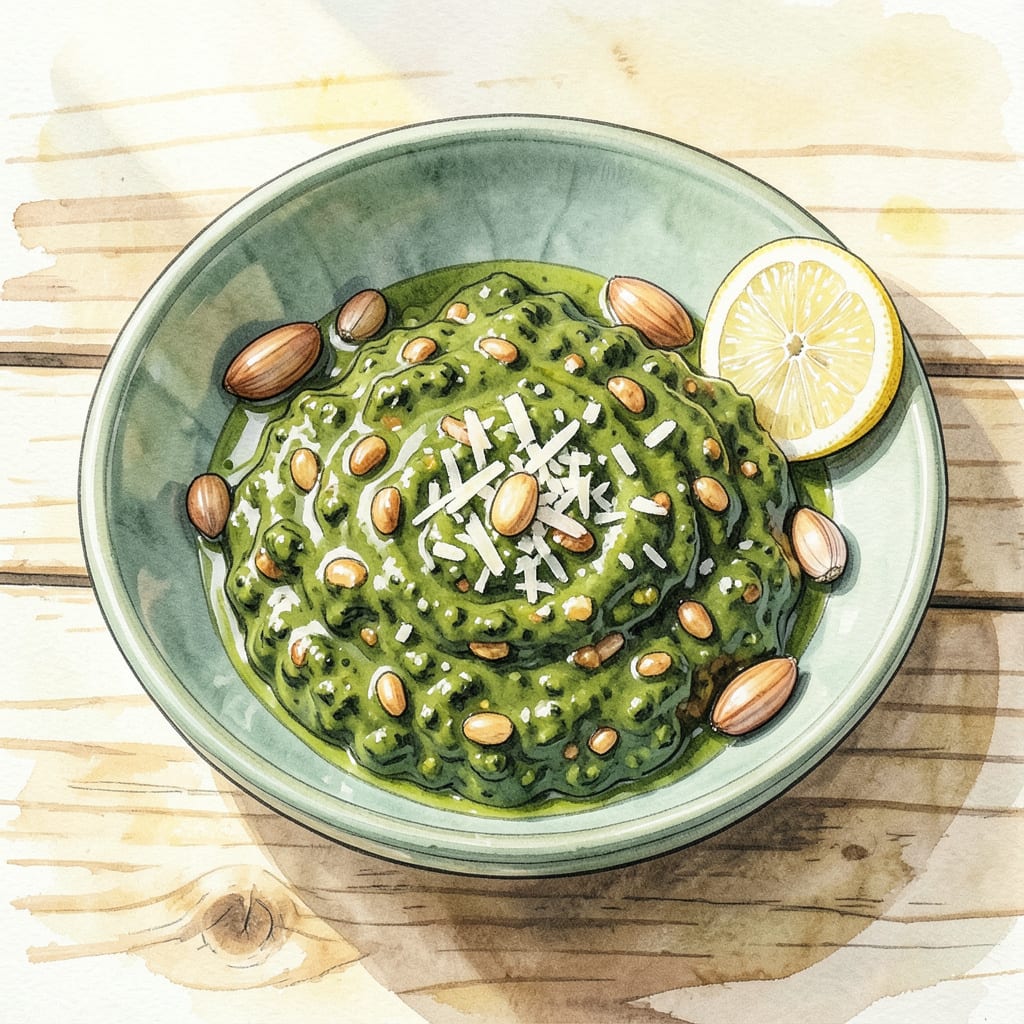
When fresh basil isn’t available, dried basil pesto delivers the same nutty, vibrant flavor with pantry staples. This recipe transforms simple ingredients into a versatile condiment that rivals traditional versions. The key lies in rehydrating the dried basil properly to unlock its full aromatic potential.
Perfect for pasta, sandwiches, or as a marinade, this pesto maintains its bold character for weeks when stored correctly. The combination of toasted nuts, sharp cheese, and quality olive oil creates a rich, complex sauce that proves fresh herbs aren’t always necessary for exceptional flavor.
Ingredients for Dried Basil Pesto
Eight pantry staples transform into a rich, aromatic pesto rivaling fresh-herb versions with proper technique.
| Ingredient | Amount | Notes |
|---|---|---|
| Dried basil leaves 🌿 | ¾ cup | Rehydrated in warm water |
| Pine nuts 🥜 | ½ cup | Lightly toasted for depth |
| Parmesan cheese 🧀 | ¾ cup | Freshly grated, aged 12+ months |
| Extra-virgin olive oil 🫒 | ¾ cup | Cold-pressed, robust flavor profile |
| Garlic cloves 🧄 | 4 cloves | Minced to fine consistency |
| Lemon juice 🍋 | 1 ½ tbsp | Freshly squeezed preferred |
| Sea salt 🧂 | ¾ tsp | Fine grain, Diamond Crystal recommended |
| Black pepper 🌶️ | ¼ tsp | Freshly cracked for potency |
| Nutritional yeast 🧂 | 2 tbsp | Optional for cheesy depth |
[recipe_ingredient_scaler]
The dried basil quality determines final flavor intensity. Opt for organic dried basil with vibrant green color—avoid dull, brownish leaves which indicate age. Penzeys or Spicewalla offer premium options, though well-stocked grocery stores carry adequate brands. Rehydration requires 105°F water (not boiling) to preserve volatile oils. Parmesan selection matters: Parmigiano-Reggiano provides the necessary sharpness and umami depth that pre-grated versions lack.
Pine nut substitutions include raw cashews or walnuts at equal volume, though flavor profiles differ slightly. For nut-free versions, sunflower seeds work well when toasted. Olive oil selection should prioritize single-origin, cold-pressed varieties—California Olive Ranch or Colavita offer reliable options. Lemon juice can be replaced with white wine vinegar at half the quantity, though citrus brightness is preferred. Nutritional yeast enhances cheesiness without dairy, particularly useful for vegan adaptations.
Pesto oxidizes rapidly—store in airtight containers with a 1/4-inch olive oil layer on top. Refrigerated shelf life extends to 3 weeks with this method. For long-term storage, freeze in ice cube trays (up to 6 months) then transfer to bags. Bring to room temperature before using to restore proper texture. Avoid microwave thawing which compromises flavor integrity.
Why You’ll Love This Recipe
- No Fresh Herbs Needed: I’ve burned through too many bunches of wilted basil—this version uses dried leaves, so I can make it anytime without a last-minute grocery run. The flavor still packs a punch, especially when the pine nuts toast in the oil.
- Garlic Lovers’ Dream: Here’s what sold me—the raw garlic mellows just enough when blended with the parmesan and olive oil, giving that sharp, sweet bite without overpowering. (Yes, I double the cloves. No regrets.)
- Pasta Night to Lunchbox Hero: Toss it with hot pasta, slather it on sandwiches, or stir a spoonful into soup. I’ve even caught my kid dipping crackers straight into the jar—it’s that kind of versatile.
- Pantry Staple Savior: Between us, this costs half what store-bought pesto does, and it keeps for weeks in the fridge. I make a double batch, freeze half in ice cube trays, and thank my past self later.
Step-by-Step Instructions for Dried Basil Pesto
This method transforms dried basil into a vibrant, nutty pesto with professional texture and balanced flavors.
Step 1: Rehydrate and Prepare the Dried Basil
Begin by placing the 0.75 cup dried basil leaves in a heatproof bowl. Cover with 1 cup of just-boiled water and let steep for 10 minutes until fully rehydrated. The leaves should become pliable and regain their green color. Drain thoroughly in a fine-mesh sieve, pressing gently to remove all excess water. This rehydration step is crucial—it restores the basil’s aromatic qualities and prevents a gritty texture in the final pesto.
Spread the rehydrated basil on a clean kitchen towel and pat completely dry. Any residual moisture will dilute the pesto’s flavor concentration and may cause the oil to separate during storage. The leaves should feel tender but not wet to the touch before proceeding.
Step 2: Toast the Pine Nuts and Prepare Aromatics
In a dry skillet over medium-low heat, toast the 0.5 cup pine nuts for 3-5 minutes, stirring constantly until they emit a nutty aroma and develop a light golden color. Immediately transfer to a plate to cool—this prevents over-toasting from residual heat. Pine nuts burn quickly, so maintain constant motion in the pan.
While the pine nuts cool, mince the 4 cloves garlic cloves to a fine consistency—aim for pieces no larger than 1/16 inch. The garlic should be uniformly small to distribute evenly throughout the pesto without overpowering any single bite. Combine the cooled pine nuts and minced garlic in your food processor bowl.
Step 3: Process the Base Ingredients
Add the prepared dried basil, 0.75 tsp sea salt, and 0.25 tsp black pepper to the food processor with the pine nuts and garlic. Pulse in 1-second bursts until the mixture forms a coarse paste. Stop to scrape down the sides of the bowl as needed. The texture should resemble wet sand—you want some texture to remain for mouthfeel.
With the processor running, slowly drizzle in 0.75 cup extra-virgin olive oil through the feed tube. Process for 30-45 seconds until the mixture becomes creamy but still shows flecks of green. The oil should fully incorporate without separating. Stop immediately if the mixture begins to warm—heat will turn the pesto bitter.
Step 4: Finish with Cheese and Acid
Transfer the pesto base to a mixing bowl. Add the 0.75 cup parmesan cheese and 2 tbsp nutritional yeast, folding them in with a silicone spatula. The cheese should distribute evenly without melting. Then stir in the 1.5 tbsp lemon juice—this brightens the flavors and balances the richness of the oil and cheese.
Taste and adjust the seasoning if needed. The pesto should have a vibrant herbal quality with nutty undertones, balanced saltiness, and a subtle acidic finish. For immediate use, thin with 1-2 tbsp of pasta water if tossing with hot pasta. For storage, press plastic wrap directly onto the surface to prevent oxidation.
Essential Equipment for Perfect Results
Food Processor Essentials
I swear by my Cuisinart 14-Cup Food Processor for pesto—its powerful motor handles nuts and cheese without overheating. The wide feed tube lets me add oil gradually while processing, which is key for emulsion. Look for models with stainless steel blades that won’t discolor your pesto. A 7-cup capacity works for double batches, but 3-4 cups suffices for single recipes. 💡
Precision Scale Matters
For consistent results, I use my OXO Good Grips 11-Pound Scale to weigh dried basil and nuts. Volume measurements can vary wildly—0.75 cup dried basil might weigh 10-15 grams depending on how it’s packed. Weighing ensures perfect texture every time. Even 2-gram differences in garlic or salt can throw off the balance in this concentrated condiment.
Quality Olive Oil Bottle
Invest in a dark glass bottle with a pour spout for your olive oil—I love Miallegro’s 17oz bottles with the narrow neck. This lets you drizzle oil slowly while processing without overpowering the mixture. The dark glass protects the oil from light degradation between uses. Never use plastic containers, as they can impart off-flavors to your pesto over time.
Fine Mesh Sieve
A 8-inch fine mesh sieve is non-negotiable for draining rehydrated basil. I use the RSVP Endurance model—its tight weave catches every basil particle while allowing water to pass quickly. Press the basil gently with a spoon to extract maximum moisture without crushing the leaves. This step prevents watery pesto that separates during storage.
Silicone Spatula Set
Heat-resistant silicone spatulas are perfect for scraping every bit of pesto from the processor bowl. I keep DI Oro Chef Series spatulas in my kitchen—their thin edges get into corners without scratching. The flexible heads help fold in cheese evenly. Avoid wooden spoons that absorb oils and flavors between batches.
Storage Containers
For short-term storage, I use 4oz glass jars with airtight lids—Le Parfait Super jars are my favorite. Their wide mouths make scooping easy, and the glass won’t absorb odors. For freezing, silicone ice cube trays with lids prevent freezer burn. Always leave 1/4-inch headspace for expansion when freezing pesto cubes. ❄️
Nutrition Facts

Trained in classic French technique but raised on slow-cooked ribs and spicy rubs, she blends culinary skill with smoke and soul.
- Recipe for Boneless Pork Chops in Cast Iron Skillet: Sear and Baste to Juicy Perfection - October 3, 2026
- Recipe for Boneless Cross Rib Roast: Slow-Roasted Beef with Herb Crust - October 3, 2026
- Hamburgers in Sauce Recipe Crock Pot: Slow-Cooked Savory Delight - October 3, 2026