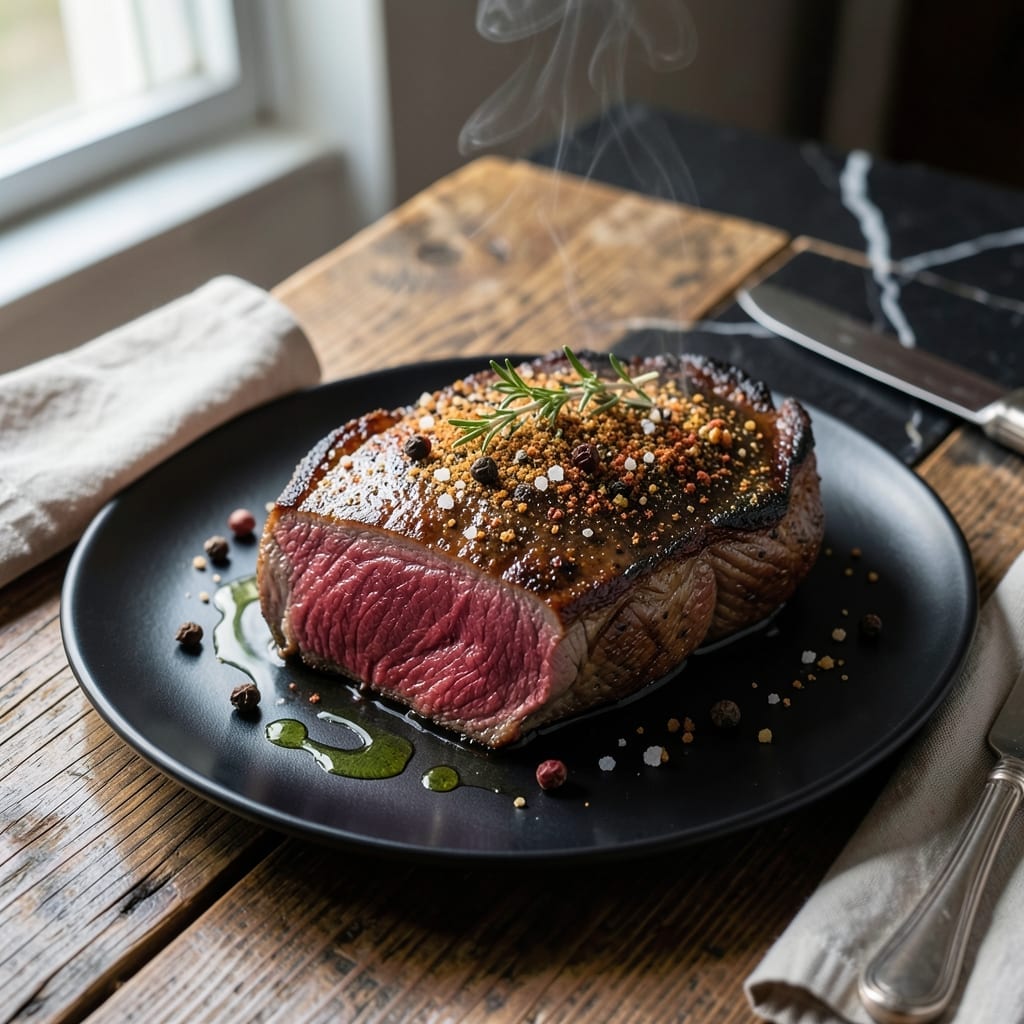
This method transforms affordable cuts into juicy, flavorful steaks with almost no active work. I learned the power of dry brining in Nana Mae’s diner, where we used it to keep meats tender during busy service.
By salting the steak 1-24 hours before cooking, you’ll achieve perfect seasoning and moisture retention. The technique is foolproof and requires just salt, time, and your favorite cooking method.
Ingredients for Dry Brine Steak
Just steak, salt, and a little time. That’s all you need for this method.
| Ingredient | Amount | Notes |
|---|---|---|
| Ribeye Steak 🥩 | 2 lb | 1 to 1.5 inches thick, bone-in preferred |
| Kosher Salt 🧂 | 1 tbsp | Diamond Crystal preferred for even distribution |
| Freshly Ground Black Pepper 🌶️ | 2 tsp | Coarse grind for texture |
| Garlic Powder 🧄 | 1 tsp | Optional for dry brine rub |
| Onion Powder 🧅 | 1 tsp | Optional for dry brine rub |
| Smoked Paprika 🌶️ | ½ tsp | Optional for dry brine rub |
| Olive Oil 🫒 | 2 tbsp | High smoke point, for searing |
| Unsalted Butter 🧈 | 2 tbsp | For basting during cooking |
| Fresh Rosemary Sprigs 🌿 | 2 whole | Optional for aromatic basting |
| Fresh Thyme Sprigs 🍃 | 2 whole | Optional for aromatic basting |
| Garlic Cloves 🧄 | 2 cloves | Smashed, for aromatic basting |
[recipe_ingredient_scaler]
The steak cut makes all the difference here. Ribeye is my go-to for dry brining—plenty of fat for flavor and it stays juicy. Costco has great pre-cut options, but ask your butcher for a thick-cut (about 1.5 inches) if you want to splurge. Bone-in adds even more flavor and helps with even cooking. Salt choice matters too—Diamond Crystal kosher salt is what Nana Mae used, and I’ve stuck with it ever since.
No ribeye? New York strip or sirloin work well too (just avoid lean cuts like filet—they dry out). Out of kosher salt? Flaky sea salt at the same volume is fine, but skip iodized table salt—it can taste metallic. Want extra flavor in your dry brine? Mix the salt with garlic powder, onion powder, or smoked paprika. These aren’t required, but they add a nice crust.
Dry brined steaks keep beautifully in the fridge—up to 24 hours is ideal, but even an hour makes a difference. Cook from cold (no need to bring to room temp first). Leftovers? Rare with this method, but they’ll keep 3-4 days wrapped tightly. Freezing isn’t recommended—steak texture changes too much.
Why You’ll Love This Recipe
- I’ll be real: cold slices on salad the next day taste even better, and it’s still juicy after reheating.
- No-Fuss Seasoning: I just pat the ribeye dry, dust it with kosher salt and those powders, and let it sit—no marinade mess, no last-minute rubs.
- Meat Candy Crust: Honestly, the crust you get from the salt drawing out moisture then reabsorbing with garlic and onion? Ridiculously good.
- Weeknight to Weekend: Between us, I’ve served this for a quick Tuesday dinner and for my in-laws’ anniversary—same rave reviews every time.
Step-by-Step Instructions for Dry Brined Steak
This method guarantees juicy, flavorful results with minimal active cooking time.
Step 1: Season and Dry Brine the Ribeye
Pat the 2 lb Ribeye Steak completely dry with paper towels. This step is crucial—any moisture prevents the salt from penetrating properly. Place it on a wire rack set over a baking sheet to allow air circulation.
Combine the 1 tbsp Kosher Salt, 2 tsp Freshly Ground Black Pepper, 1 tsp Garlic Powder, 1 tsp Onion Powder, and 0.5 tsp Smoked Paprika in a small bowl. Rub this mixture evenly over every surface of the ribeye, pressing gently so it adheres. Leave the steak uncovered in the refrigerator for 12-24 hours.
Step 2: Bring to Room Temperature and Prep Aromatics
Remove the ribeye from the fridge 1 hour before cooking to allow it to come to room temperature. This ensures even cooking from edge to center. While waiting, smash the 2 cloves Garlic Cloves lightly with the side of your knife—this releases their oils without breaking them into pieces.
Prepare your fresh herbs by leaving the 2 whole Fresh Rosemary Sprigs and 2 whole Fresh Thyme Sprigs whole. These will infuse the butter with aromatic flavor during basting. The dry brine process has already concentrated the seasoning, so these herbs just add a final layer of complexity.
Step 3: Sear the Steak to Perfection
Heat a heavy skillet (cast iron works best) over medium-high heat until it’s screaming hot—you should see a slight shimmer when you wave your hand above it. Add the 2 tbsp Olive Oil and swirl to coat the pan. Carefully place the ribeye in the pan and sear undisturbed for 3-4 minutes until a deep, golden crust forms.
Flip the steak only once—it should release easily when ready. Add the 2 tbsp Unsalted Butter, 2 whole Fresh Rosemary Sprigs, 2 whole Fresh Thyme Sprigs, and 2 cloves Garlic Cloves to the pan. Tilt the skillet slightly and begin basting the steak with the melted butter and aromatics for the remaining 3-4 minutes of cooking.
Step 4: Rest and Slice for Maximum Juiciness
Transfer the steak to a cutting board and let it rest for 10 minutes before slicing. This resting period allows the juices to redistribute throughout the meat—cutting too soon will cause all those beautiful juices to spill out onto the board instead of staying in the meat.
Slice against the grain into ½-inch thick pieces. The dry brine ensures each bite is evenly seasoned from the outside in, while the high-heat sear creates a beautiful crust that gives way to tender, juicy meat. Serve immediately while hot, with any accumulated pan juices spooned over the top.
Pro Tips For Making Dry Brine Steak
- Salt the Night Before: I learned this the hard way—dry brining works best with at least 12 hours, so salt your ribeye the evening before and leave it uncovered in the fridge. Sounds weird, but it works: the salt penetrates deep and the surface dries out for a perfect sear.
- Pat It Dry: After dry brining, pat the steak thoroughly with paper towels before cooking—any moisture left will steam the meat instead of searing it. This isn’t the prettiest step, but it’s the tastiest.
- Skip the Cold Steak: Resist the urge to cook straight from the fridge; let the ribeye sit at room temperature for 30-45 minutes first. My grandmother swore by this, and she was right: it cooks more evenly and avoids a gray band.
- Crush Your Spices: Lightly crush the kosher salt, pepper, garlic powder, and onion powder between your fingers as you apply them—it releases more flavor and helps the dry brine cling better to the meat. I was skeptical until I tried it.
Storing and Reheating Leftovers
Refrigerator Storage
After cooking, let your steak rest completely before storing. Wrap tightly in plastic wrap or place in an airtight container—I swear by Ziploc freezer bags for this. Store in the fridge for up to 3-4 days. The dry brine preserves moisture better than traditional methods. ❄️
Freezing Guidance
Honestly, I don’t recommend freezing dry brined steaks. The texture changes significantly after thawing, and you lose that perfect juiciness we worked so hard to achieve. If you must, freeze cooked steak slices in a single layer first, then transfer to a bag.
Reheating Methods
For best results, reheat in a skillet over medium-low heat with a splash of beef broth or water. Cover and warm for 2-3 minutes per side. David, my taste-tester, prefers this to microwaving—it keeps the meat tender.
Microwave Option
If you’re in a hurry, place slices on a microwave-safe plate with a damp paper towel. Heat on 50% power in 30-second intervals until reaching 145°F. Let rest 1 minute before serving. 💡
Repurposing Leftovers
Transform leftovers into steak sandwiches or tacos. Slice thin and warm with sautéed onions and peppers. The dry brine seasoning works beautifully in these dishes. I often do this for quick Austin-style lunch wraps.
Nutrition Facts
Frequently Asked Questions
How long should I dry brine a steak?
For best results, dry brine for 12-24 hours in the fridge. Even 1 hour helps, but overnight gives the salt time to fully penetrate and tenderize the meat.
Can I dry brine a thin steak?
Thin cuts under 1 inch risk over-salting. Stick to thicker steaks (1.5 inches ideal) for dry brining. Thin cuts cook too fast for the method to work properly.
Do I need to rinse off the salt before cooking?
Never rinse—you’ll wash away flavor and moisture. The salt absorbs into the meat, so just pat dry if any excess remains. The crust forms beautifully without rinsing.
What if my steak looks dry after brining?
This is normal! The surface dries out in the fridge, creating the perfect crust when cooked. The interior stays juicy thanks to the salt’s moisture-retaining properties.

Trained in classic French technique but raised on slow-cooked ribs and spicy rubs, she blends culinary skill with smoke and soul.
- Recipe For Fried Pork Chops In An Iron Skillet: Crispy Crust With Juicy Centers - October 3, 2026
- Recipe for Fully Cooked Spiral Ham: Sweet Glaze and Effortless Elegance - October 3, 2026
- Recipe for Cream of Rice: Silky Smooth Breakfast Comfort - October 3, 2026