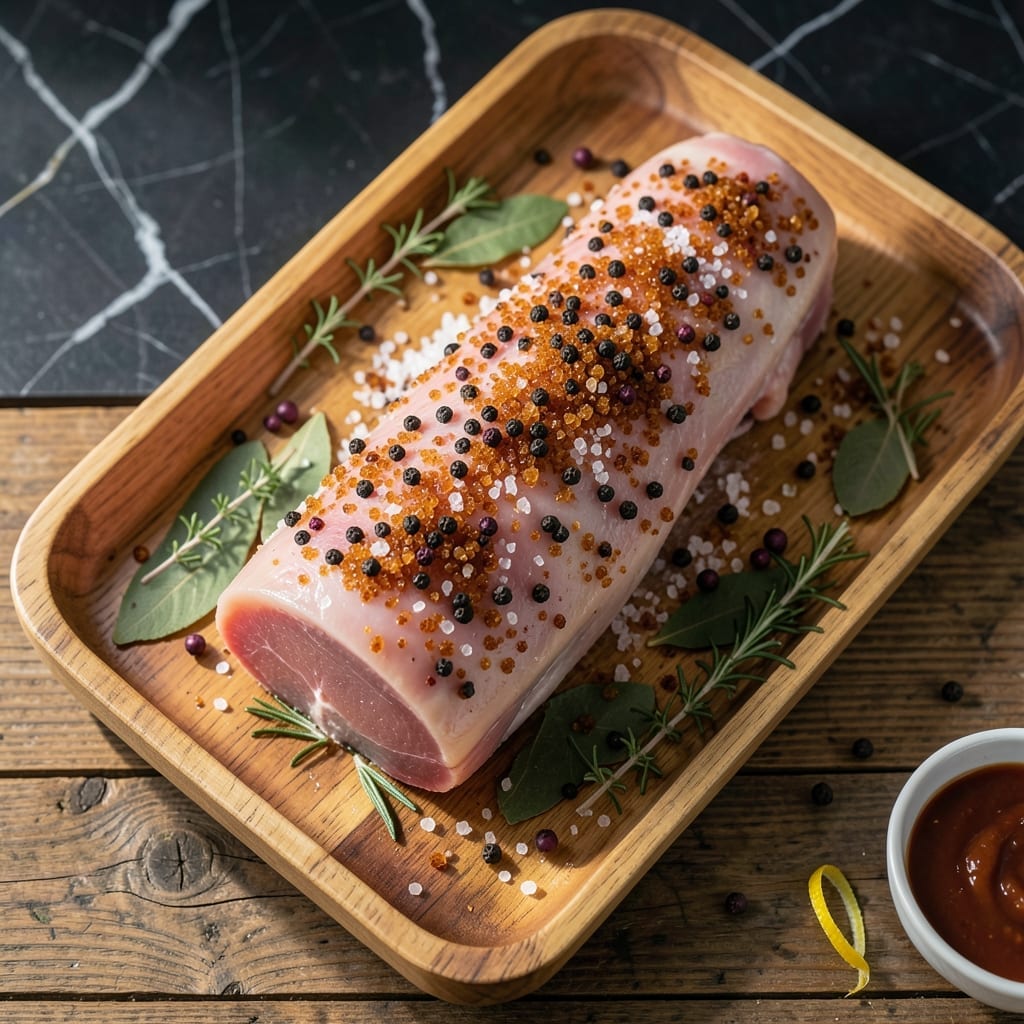
This dry-cured ham recipe transforms fresh pork into a salt-crusted delicacy using time-honored preservation techniques. The method requires patience but rewards with deeply flavorful, artisan-quality results that store beautifully.
I developed this approach after studying traditional curing methods, adapting them for home cooks. The salt cure draws out moisture while infusing the meat with complex flavor, creating a texture that’s firm yet tender.
What emerges is a ham with rich, concentrated pork flavor and a firm texture that slices cleanly. The curing process takes several weeks, but the hands-on time is minimal—just mixing the cure and monitoring progress.
Perfect for charcuterie boards or as a centerpiece for special meals. Here’s how to begin.
Ingredients for Dry Cure Ham
Fresh pork leg and a precise salt cure transform into artisan quality ham.
| Ingredient | Amount | Notes |
|---|---|---|
| Fresh Pork Leg 🐖 | 8 lb | Skin-on, bone-in preferred |
| Kosher Salt 🧂 | 2 ½ lb | Diamond Crystal or Morton preferred |
| Brown Sugar 🍚 | 1 cup | Light or dark variety |
| Black Peppercorns 🌶️ | 2 tbsp | Freshly cracked for texture |
| Juniper Berries 🌿 | 1 tbsp | Lightly crushed for aroma |
| Bay Leaves 🍃 | 6 pieces | Dried, whole leaves |
| Fresh Thyme 🌿 | 2 tbsp | Chopped, stems removed |
| Fresh Rosemary 🌿 | 2 tbsp | Chopped, stems removed |
| Garlic Cloves 🧄 | 10 cloves | Peeled and smashed |
| Pink Curing Salt 🧂 | ½ oz | Prague Powder #1 essential |
| Red Wine 🍷 | 2 cups | Dry variety for depth |
| Distilled Water 💧 | 1 cup | For adjusting cure consistency |
[recipe_ingredient_scaler]
The pork leg is non-negotiable—source from a trusted butcher for proper fat marbling and skin thickness. Diamond Crystal kosher salt is the professional standard for consistent curing (its hollow crystals dissolve evenly). Pink curing salt isn’t optional—Prague Powder #1 ensures safety and proper preservation. For best results, use a fresh, never-frozen leg with skin intact to protect the meat during curing.
No fresh rosemary or thyme? Dried herbs at half the quantity work, though flavor will be less vibrant. Substitute gin for red wine if needed—its juniper notes complement the berries. Skip the brown sugar? Maple syrup or honey (not for vegans) can replace, but adjust moisture levels. The bay leaves are essential—don’t omit—as they provide the base aromatic profile that defines this cure.
The cured ham keeps in a cool, dark place for 12-18 months. Store unwrapped during curing, then wrap in cheesecloth or breathable fabric. Once fully cured, vacuum-seal portions for 6 months refrigerated. The flavor deepens with time, so resist the urge to sample too early (worth the wait).
Why You’ll Love This Recipe
- Set It and Forget: I rub the pork leg with salt, sugar, and spices, then let time do the heavy lifting—no babysitting required.
- Sweet-Savory Magic: The brown sugar caramelizes while the juniper and peppercorns add this deep, earthy note that makes every bite ridiculous.
- Holiday Hero: I cure a batch in November and suddenly I’m the star of Christmas charcuterie boards and New Year’s brunch.
- Pantry MVP: One cured ham gives me sandwiches, soups, and breakfast hash for weeks—saves me a fortune on deli meats.
Step-by-Step Instructions for Dry Cure Ham
Master the traditional dry-curing technique for perfectly preserved ham with rich, complex flavors.
Step 1: Prepare the Cure Mixture
In a large bowl, combine the 2.5 lb kosher salt, 1 cup brown sugar, 2 tbsp black peppercorns, 1 tbsp juniper berries, 6 pieces bay leaves, 2 tbsp fresh thyme, and 2 tbsp fresh rosemary. Crush the juniper berries lightly to release their aromatic oils.
Add the 10 cloves garlic cloves, 0.5 oz pink curing salt, 2 cups red wine, and 1 cup distilled water. Mix thoroughly until the brown sugar and curing salt are fully dissolved. The mixture should resemble wet sand, with the liquid just enough to bind the dry components without forming a paste.
Step 2: Apply the Cure to the Pork Leg
Place the 8 lb fresh pork leg skin-side down on a clean, non-reactive surface. Using your hands, generously apply a thick, even layer of the cure mixture all over the pork, pressing firmly to ensure it adheres to every surface, including the crevices and around the bone.
Flip the pork leg and repeat the process on the skin side. The cure should completely encase the meat with no bare spots visible. This ensures even penetration and consistent flavor development throughout the curing process.
Step 3: Begin the Curing Process
Place the pork leg in a large, non-reactive container or on a wire rack set over a tray to catch any dripping brine. Cover the pork loosely with plastic wrap or a clean cloth to protect it from dust and insects while still allowing air circulation.
Store in a cool, dry place with a consistent temperature between 36-40°F. This controlled environment is critical for safe and effective curing. The pork leg will begin to release liquid as the salt draws moisture out of the meat, forming a natural brine that enhances the cure.
Step 4: Maintain and Rotate During Curing
Every 3-4 days, check the pork leg and rotate it to ensure even exposure to the cure. Baste the meat with the accumulated liquid to redistribute the curing mixture and maintain consistent flavor penetration.
The curing process typically takes 1-2 days per pound of meat. For the 8 lb fresh pork leg, plan for approximately 8-16 days of curing. The meat is ready when the interior feels firm to the touch and the cure has penetrated evenly throughout.
Step 5: Rinse and Dry Before Aging
Once cured, remove the pork leg from the container and rinse off the excess cure mixture under cold running water. Pat the surface completely dry with clean towels to remove all traces of the cure. This step prevents over-salting during the aging process.
Allow the pork leg to air-dry in a cool, well-ventilated space for 24-48 hours. The surface should develop a slightly tacky texture, known as the “pellicle,” which helps protect the meat and enhances flavor during aging. Your ham is now ready for the final aging stage or immediate cooking.
Pro Tips For Making Dry Cure Ham
- Weigh Your Salt: Use a kitchen scale for the kosher salt—1.5% of the pork leg’s weight is the sweet spot. I learned this the hard way after ruining a batch with eyeballed measurements.
- Crush the Spices: Lightly crush the juniper berries and peppercorns before mixing into the cure. It releases more flavor and ensures even distribution across the meat.
- Pat It Dry: Before applying the cure, thoroughly dry the pork leg with paper towels. Any moisture left on the surface can prevent the cure from adhering properly.
- Flip Daily: Rotate the ham every 24 hours during the curing process to make sure the brine penetrates evenly. Skipping this step can leave you with uneven texture and flavor.
Creative Variations of This dry cure ham
Spanish-Inspired Chorizo
Swap 1 tbsp smoked paprika and 1 tsp cayenne for the juniper berries. Add 1 tsp ground coriander and ½ tsp ground cumin to the cure. This gives your ham that bold, smoky Spanish chorizo character I fell in love with on my first coastal ride through Barcelona. 🌶️
Maple-Bourbon Glaze
Replace brown sugar with 1 cup pure maple syrup and add ¼ cup bourbon to the cure. The sweetness of the maple pairs beautifully with the oak notes from the bourbon. I forage wild herbs to add a fresh twist to the glaze.
Herb-Crusted Provençal
Increase fresh thyme and rosemary to 3 tbsp each, and add 1 tbsp herbes de Provence. This French-inspired variation highlights the herbs I love to collect on my motorcycle rides along the coast. It’s a nod to my French technique training.
Apple Cider Cure
Substitute red wine with 2 cups apple cider and add 1 tsp ground cinnamon. The apple’s natural sweetness complements the pork beautifully. I first tried this at a local BBQ competition, and it’s been a favorite ever since.
Spicy Cajun Style
Add 1 tbsp Cajun seasoning and 1 tsp red pepper flakes to the cure mix. This brings the heat and depth of Louisiana flavors to your ham. Perfect for those who love a little kick, just like the spicy rubs I grew up with. 🔥
Honey-Glazed Variation
Replace brown sugar with ¾ cup honey and add 1 tbsp grated ginger. The honey adds a smooth sweetness, while the ginger gives it a subtle zing. This is a go-to for my charcuterie boards at family gatherings.
Nutrition Facts
Frequently Asked Questions
How long should I cure an 8 lb ham?
For an 8 lb leg, plan for 8-16 days total. The standard is 1-2 days per pound, so check firmness after 8 days and extend if needed.
Can I use regular table salt instead of kosher?
No, table salt has additives and a finer grain. Stick with Diamond Crystal kosher salt for consistent results. Measuring by weight (2.5 lb) is most accurate.
What’s the purpose of pink curing salt?
Pink curing salt (Prague Powder #1) prevents botulism and ensures proper preservation. It’s essential—never skip it. Use exactly 0.5 oz for 8 lb of pork.
Why rotate the ham during curing?
Rotating every 3-4 days ensures even exposure to the cure. This prevents dry spots and guarantees consistent flavor and texture throughout the meat.

Trained in classic French technique but raised on slow-cooked ribs and spicy rubs, she blends culinary skill with smoke and soul.
- Meat and Potato Recipe Ideas: Savory Pairings for Hearty Meals - October 3, 2026
- Recipe for Fried Prawns Batter: Ultra-Crispy Golden Shell - October 3, 2026
- Indian Lamb Curry Recipe Pressure Cooker: Fragrant Spices in a Fraction of the Time - October 3, 2026