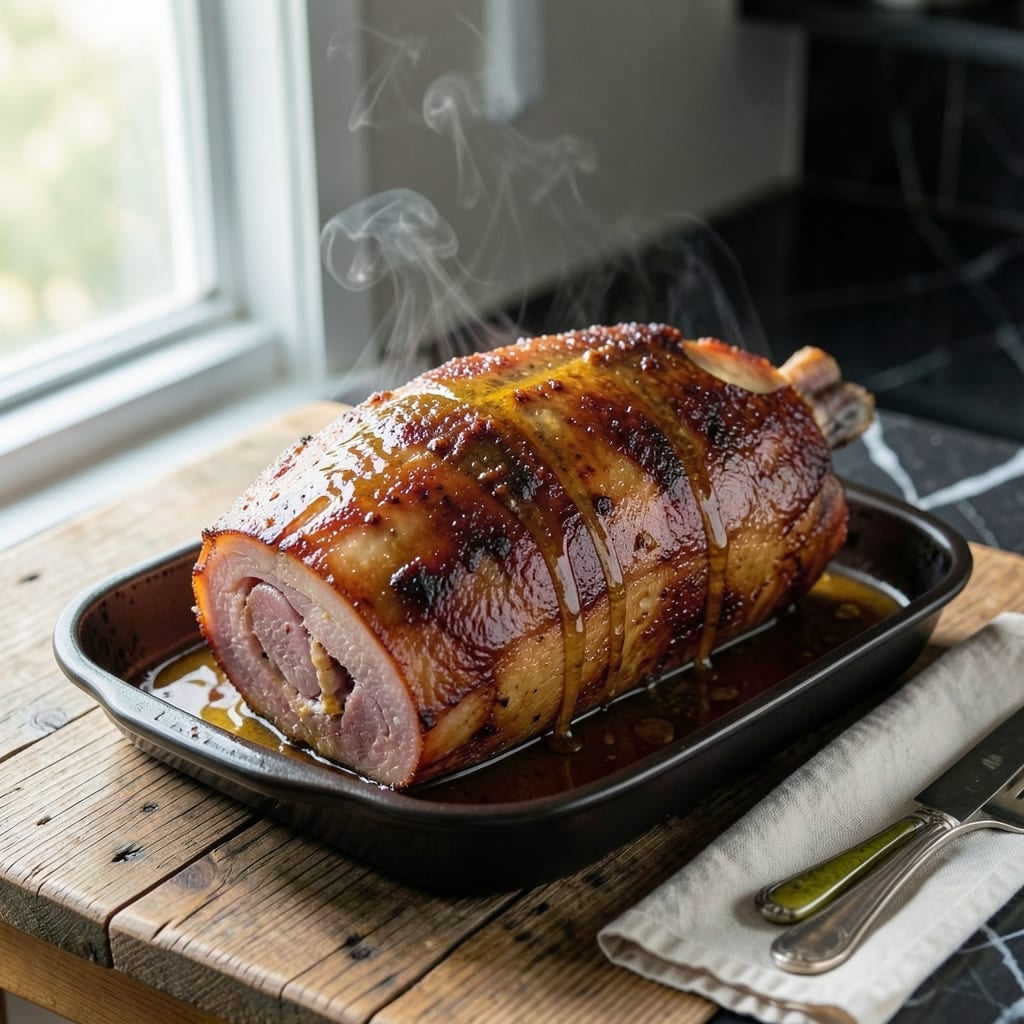
This honey glaze transforms a simple ham into a showstopping centerpiece with minimal effort. The combination of brown sugar and honey creates a sticky coating that caramelizes beautifully in the oven.
I’ve perfected the balance of sweetness and depth, ensuring every bite delivers rich, glossy flavor. The glaze clings perfectly to the ham, making it ideal for holidays or Sunday dinners.
Ingredients for Honey Glaze Recipe Ham
Transform your ham with this glossy, caramelized glaze. Sweet, sticky, and full of warm spice.
| Ingredient | Amount | Notes |
|---|---|---|
| Fully Cooked Bone-In Ham 🍖 | 6 lb | Spiral-cut preferred for ease |
| Honey 🍯 | 1 cup | Pure, unprocessed for best flavor |
| Light Brown Sugar 🧈 | 1 cup | Packed firmly into measuring cup |
| Dijon Mustard 🟡 | 2 tbsp | Adds tangy depth to glaze |
| Unsalted Butter 🧈 | ½ cup | Melted for smooth consistency |
| Apple Cider Vinegar 🍏 | 1 tbsp | Balances sweetness with acidity |
| Ground Cloves 🌿 | ½ tsp | Warm spice for complexity |
| Ground Cinnamon 🌰 | ½ tsp | Complements the honey's sweetness |
| Vanilla Extract 🌿 | 1 tsp | Pure extract for depth of flavor |
| Kosher Salt 🧂 | ½ tsp | Adjust to taste after glazing |
| Black Pepper 🌶️ | ¼ tsp | Freshly ground preferred |
| Fresh Rosemary 🌿 | 2 tbsp | Chopped for aromatic garnish |
[recipe_ingredient_scaler]
The ham is the foundation—spiral-cut bone-in saves you the work of slicing later. Honey and brown sugar are non-negotiable for that sticky caramelization, so don’t swap them out. I grab local honey from farmers markets when I can (better flavor, and you’re supporting small producers). For the spices, McCormick or Penzeys are reliable. The butter should be unsalted so you control the seasoning.
Out of Dijon? Whole-grain mustard works in a pinch—just give it a quick whisk to break up the seeds. No apple cider vinegar? White vinegar or lemon juice at half the amount. The cloves and cinnamon can be skipped if you’re not a spice fan, but they add that subtle warmth that makes the glaze special. For a smoother finish, strain the glaze before brushing it on.
Leftovers keep 4-5 days in the fridge, sealed tight. The glaze itself can be made 2 days ahead—just reheat gently before using. Freeze ham slices for 2-3 months if you won’t eat it all. That glaze? It’s even better the next day (the flavors meld).
Why You’ll Love This Recipe
- Five Minute Glaze: Honestly, just whisk honey, brown sugar, mustard, and butter while the ham heats—no babysitting required.
- Sweet and Tangy: That mix of honey and Dijon creates a caramelized crust with a little kick I can’t get enough of.
- Holiday or Tuesday: I’ve served this for Easter and also just because it’s Wednesday and we crave comfort.
- Leftovers for Days: One bone-in ham means sandwiches, soups, and breakfasts all week with barely any extra effort.
Step-by-Step Instructions for Honey Glaze for Ham
Simple technique, extraordinary flavor—this method transforms your ham into a showstopper.
Step 1: Prep the Ham and Oven
Preheat your oven to 325°F. While it heats, remove the 6 lb Fully Cooked Bone-In Ham from its packaging and pat it dry with paper towels. Place it cut-side down in a roasting pan or baking dish.
This temperature ensures the ham heats through gently without drying out. If using a spiral-cut ham, keep it intact for now—the glaze will seep into all those beautiful layers during baking.
Step 2: Create the Honey Glaze
In a medium saucepan, combine the 1 cup Honey, 1 cup Light Brown Sugar, 2 tbsp Dijon Mustard, 0.5 cup Unsalted Butter, 1 tbsp Apple Cider Vinegar, 0.5 tsp Ground Cloves, 0.5 tsp Ground Cinnamon, 1 tsp Vanilla Extract, 0.5 tsp Kosher Salt, and 0.25 tsp Black Pepper.
Cook over medium heat, stirring constantly, until the mixture comes to a gentle boil. Reduce heat to low and let it simmer for 3-4 minutes until slightly thickened. The glaze should coat the back of a spoon but still be pourable.
Step 3: Glaze and Bake the Ham
Brush about one-third of the warm glaze over the ham, making sure to get into all the crevices. Cover the pan loosely with foil and bake for 1 hour. The foil prevents the glaze from burning before the ham is heated through.
After 1 hour, remove the foil and brush with another third of the glaze. Increase the oven temperature to 375°F and bake uncovered for 15-20 minutes, allowing the glaze to caramelize into a sticky, glossy coating.
Step 4: Finish and Garnish
Remove the ham from the oven and brush with the remaining glaze. Sprinkle the 2 tbsp Fresh Rosemary over the top, pressing it lightly so it adheres to the sticky surface. Let the ham rest for 10-15 minutes before slicing.
This resting period allows the juices to redistribute and the glaze to set slightly. The rosemary adds a fresh, aromatic contrast to the rich sweetness. Serve warm, with extra glaze from the pan drizzled over each serving.
Pro Tips For Making Honey Glaze Recipe Ham
- Score the Ham: Use a sharp knife to cut a diamond pattern into the ham’s surface before glazing—this helps the honey mixture penetrate deeper and creates more surface area for caramelization.
- Warm the Honey: Gently heat the honey for 10-15 seconds in the microwave before mixing with brown sugar and mustard; it blends smoother and coats the ham more evenly.
- Skip Boiling the Glaze: I learned this the hard way—simmering the glaze too long thickens it into a sticky mess that won’t spread. Just warm it enough to combine, then brush it on.
- Butter Last: Stir the unsalted butter into the glaze just before brushing it on the ham; adding it too early can cause the mixture to separate.
Common Mistakes When Making honey glaze recipe ham
Over-Reducing the Glaze
Cooking the glaze too long over high heat causes it to thicken excessively and burn. I recommend simmering over low heat for only 3-4 minutes until it coats a spoon. If it gets too thick, whisk in 1-2 tbsp hot water to restore the right consistency. 🔥
Skipping the Initial Bake
Applying all the glaze at once leads to uneven caramelization. Instead, bake the ham covered with one-third of the glaze for 1 hour at 325°F first. This gentle heat ensures the ham warms through without drying out.
Not Using Foil
Without foil during the first hour, the glaze can burn before the ham cooks. I use heavy-duty aluminum foil loosely tented over the pan. After the first hour, remove it to let the glaze caramelize and develop that beautiful sticky coating.
Overcrowding the Pan
Placing the ham in a pan that’s too small causes the glaze to pool and burn. Use a roasting pan that’s at least 2 inches larger than the ham on all sides. This gives the glaze room to spread and caramelize evenly.
Neglecting Rest Time
Slicing the ham immediately after baking causes the juices to spill out. I always let it rest for 10-15 minutes after the final glaze application. This allows the glaze to set and the juices to redistribute, ensuring every bite is moist and flavorful. 💡
Using Cold Glaze
Brushing cold glaze on the ham prevents it from adhering properly. Keep the glaze warm in the saucepan while the ham bakes. If it thickens too much while sitting, reheat it gently over low heat before applying the next coat.
Frequently Asked Questions
Can I use a different type of mustard?
Yes, you can substitute whole-grain mustard for Dijon. It will add a slightly coarser texture, so whisk it well. Avoid yellow mustard—it lacks the depth of flavor.
How do I prevent the glaze from burning?
Bake the ham covered with foil for the first 1 hour at 325°F. Then, uncover and increase the heat to 375°F for the final 15-20 minutes to caramelize.
Can I make the glaze ahead of time?
The glaze can be prepared 2 days in advance. Store it in an airtight container in the fridge. Reheat gently over low heat before using.
What if my glaze is too thick?
If the glaze over-reduces, whisk in 1-2 tbsp hot water to thin it. The consistency should coat the back of a spoon but still be pourable.
Nutrition Facts

Trained in classic French technique but raised on slow-cooked ribs and spicy rubs, she blends culinary skill with smoke and soul.
- Recipe for Boneless Pork Chops in Cast Iron Skillet: Sear and Baste to Juicy Perfection - October 3, 2026
- Recipe for Boneless Cross Rib Roast: Slow-Roasted Beef with Herb Crust - October 3, 2026
- Hamburgers in Sauce Recipe Crock Pot: Slow-Cooked Savory Delight - October 3, 2026