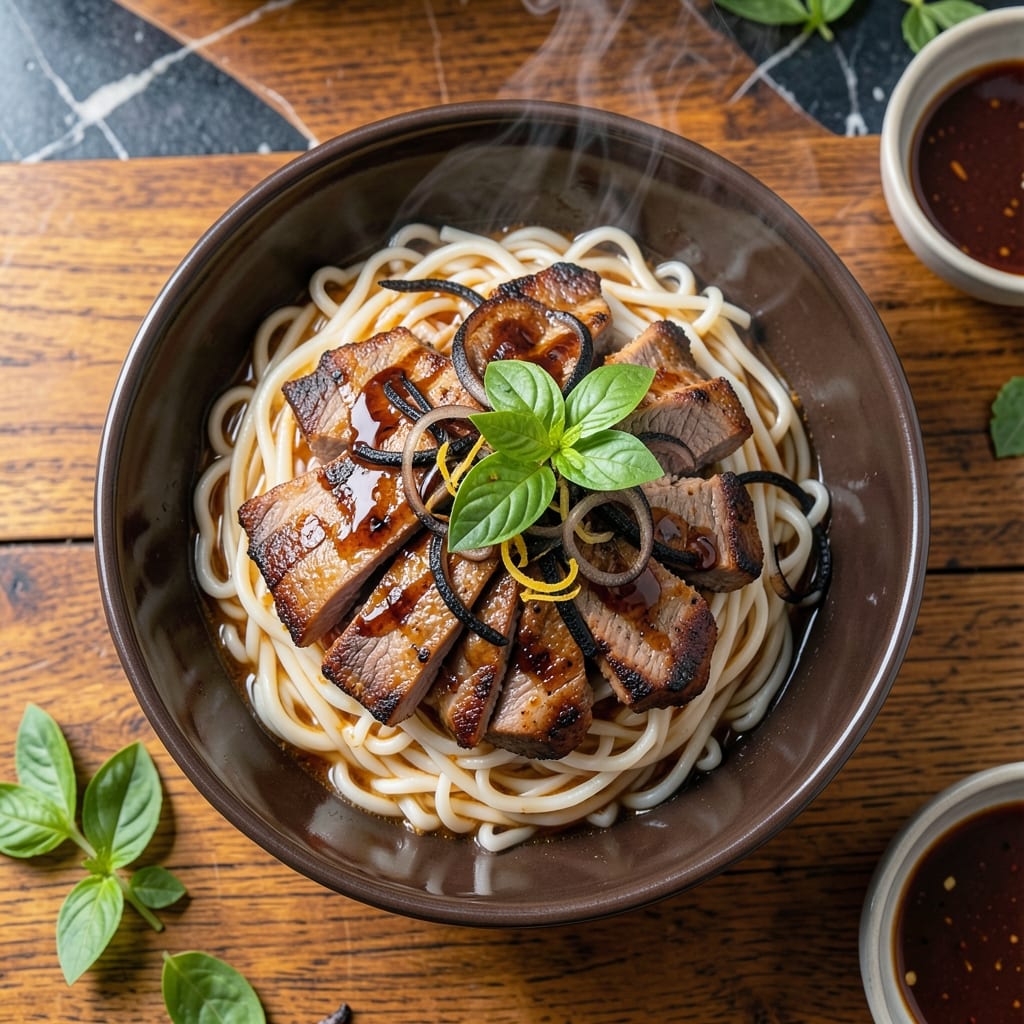
This dry pho delivers the aromatic depth of traditional Vietnamese soup in a concentrated, sauce-coated form. The technique transforms classic pho elements into a no-slurp dish with intense flavor in every bite.
I developed this method to capture the essence of pho without the broth. The key is reducing the liquid to a rich, syrupy concentrate that clings to rice noodles, protein, and fresh herbs. It requires patience but rewards with exceptional taste.
The result is a plate of tender noodles, perfectly cooked meat, and vibrant garnishes all united by the concentrated broth. Each component maintains its identity while contributing to the harmonious whole.
Serve immediately for the best texture and flavor experience. This approach works with chicken, beef, or tofu.
Ingredients for Dry Pho
Transform traditional pho elements into a concentrated, intensely flavored dry dish with these ingredients.
| Ingredient | Amount | Notes |
|---|---|---|
| Rice Stick Noodles 🍜 | 8 oz | Dried, banh pho variety |
| Beef Sirloin 🥩 | 1 lb | Thinly sliced against grain |
| Pho Spice Blend 🌿 | 1 package | Includes star anise, cinnamon, cloves |
| Fish Sauce 🐟 | 3 tbsp | Vietnamese preferred, like Red Boat |
| Soy Sauce 🫒 | 2 tbsp | Low-sodium for balance |
| Brown Sugar 🍚 | 2 tbsp | Light or dark variety |
| Onion 🧅 | 1 whole | Yellow or white, charred |
| Fresh Ginger 🌱 | 3 oz | Peeled and sliced |
| Garlic Cloves 🧄 | 4 cloves | Smashed, skin on |
| Beef Broth 🥣 | 4 cups | Low-sodium preferred |
| Fresh Thai Basil 🌿 | ½ cup | Leaves only, for garnish |
| Culantro 🌿 | ½ cup | Or substitute cilantro |
| Lime 🍈 | 1 whole | Cut into wedges |
| Jalapeño 🌶️ | 1 whole | Thinly sliced (optional) |
| Bean Sprouts 🌱 | 1 cup | Fresh, rinsed |
[recipe_ingredient_scaler]
The beef is critical here. Sirloin offers the perfect balance of tenderness and flavor when thinly sliced against the grain. For authentic results, source Vietnamese fish sauce—Red Boat is widely available at Asian markets or online. The pho spice blend (star anise, cinnamon, cloves) must be fresh; old spices lose their aromatic potency and won’t deliver the depth this dish requires.
No beef? Chicken thighs or tofu work beautifully with the same technique. Short on time? Use pre-sliced beef from the butcher counter. If Thai basil is unavailable, regular basil at double the amount is acceptable (though the flavor profile shifts slightly). The brown sugar can be swapped for coconut sugar, but avoid white sugar—it lacks the caramel notes that balance the savory elements.
The broth concentrate keeps in the fridge for 3-4 days or can be frozen for up to 3 months. Soak the noodles just before serving to prevent mushiness. Fresh herbs and lime wedges should be prepped last—add them right before eating to preserve their vibrant color and aroma.
Why You’ll Love This Recipe
- One Pot Meal: I love that this dry pho comes together in a single pan—just toss the rice noodles, seared beef, and pho spices with a splash of fish sauce.
- Rich Umami Bomb: The soy and fish sauce mix with the pho spices to create this deep, savory flavor that clings to every noodle.
- Weeknight Lifesaver: Between us, this is my go-to when I need dinner on the table fast but still want restaurant-worthy taste.
- Stretches Further: Honestly, the leftovers taste even better the next day, and it’s way kinder to my wallet than takeout.
Step-by-Step Instructions for Dry Pho
Master the technique of reducing broth into a concentrated sauce for this unique take on pho.
Step 1: Char the Aromatics and Prepare the Broth
Heat a dry skillet over medium-high heat and char the onion and fresh ginger until blackened in spots, about 8-10 minutes. This deepens their natural sweetness and adds smoky complexity to the dish. Meanwhile, rinse the 8 oz Rice Stick Noodles under cold water to remove excess starch, then soak in warm water for 15 minutes until pliable.
In a large pot, combine the charred onion, 3 oz Fresh Ginger, 4 cloves Garlic Cloves, 1 package Pho Spice Blend, 4 cups Beef Broth, 3 tbsp Fish Sauce, 2 tbsp Soy Sauce, and 2 tbsp Brown Sugar. Bring to a boil, then reduce to a simmer for 20 minutes to infuse the flavors.
Step 2: Reduce the Broth to a Syrupy Concentrate
Strain the broth through a fine-mesh sieve into a clean saucepan, pressing gently on the solids to extract all liquid. Discard the solids. Return the strained broth to medium-high heat and simmer vigorously for 25-30 minutes, stirring occasionally, until reduced to about 1 cup of thick, syrupy liquid.
Watch for the broth to coat the back of a spoon and leave a clear trail when your finger is drawn through it. This reduction is critical—it transforms the broth into a glossy, flavor-packed sauce that clings to the noodles. Be patient; rushing this step will result in a watery finished dish.
Step 3: Cook the Beef and Noodles
Drain the soaked Rice Stick Noodles and rinse briefly under cold water. In the same skillet used for charring, sear the 1 lb Beef Sirloin over high heat for 1-2 minutes per side until just browned but still slightly pink inside. Remove from heat and slice thinly against the grain.
In a separate pot of boiling water, blanch the noodles for 30-45 seconds until just tender. Drain immediately and rinse under cold water to stop the cooking process. This keeps them chewy and prevents mushiness when combined with the hot sauce and beef.
Step 4: Assemble and Finish the Dry Pho
In a large bowl, toss the cooked noodles with the reduced broth concentrate until evenly coated. The noodles should glisten with sauce but not be soupy. Add the sliced Beef Sirloin and any accumulated juices, then gently fold to combine without breaking the noodles.
Divide the noodles and beef among serving plates. Top with 1 cup Bean Sprouts, 0.5 cup Fresh Thai Basil, and 0.5 cup Culantro. Serve with lime wedges and jalapeño slices on the side for customizable heat and acidity. The dish should be aromatic, with each bite delivering layers of spice, umami, and herbal freshness.
Pro Tips For Making Dry Pho
- Toast the Spices: Dry-toast your pho spice blend in a pan for 1-2 minutes until fragrant—I learned this the hard way after my first batch tasted flat and underwhelming.
- Slice Thin Against Grain: Cut the beef sirloin into paper-thin slices against the grain, about 1/8-inch thick, so it cooks fast and stays tender in the hot noodles.
- Soak Noodles Fully: Cover rice stick noodles completely with hot water for soaking, not just a quick rinse, or they’ll stay hard in the middle no matter how long you stir-fry.
- Use Both Sauces: Don’t skip the soy sauce just because you have fish sauce—using both adds depth that one alone can’t, and I was skeptical until I tried it.
Perfect Pairings for dry pho
Fresh Herb Pairings
Fresh Thai basil and culantro are non-negotiable for authentic flavor. Their aromatic profiles cut through the richness of the broth concentrate. I always add a handful at the end for bright, herbal notes. 🌿
Crunchy Textures
Bean sprouts add a refreshing crunch that contrasts beautifully with the tender noodles. I use 1 cup per serving for the perfect bite. Soak them in cold water for 10 minutes before serving to crisp them up.
Citrus Brightness
A squeeze of lime is essential to balance the deep umami flavors. I serve wedges on the side so everyone can adjust the acidity to their taste. The citrus also enhances the herbal garnishes.
Heat Control
For those who love spice, thin slices of jalapeño add a gentle heat without overpowering. I remove the seeds for milder flavor or leave them in for extra kick. They also add a pop of color to the dish.
Beverage Pairings
A cold Vietnamese iced coffee with sweetened condensed milk is my go-to. The bitterness of the coffee cuts through the richness, while the sweetness complements the savory broth. 🍺
Extra Garnishes
For added depth, try crushed peanuts or fried shallots on top. These add a nutty crunch that takes the dish to the next level. I always keep some on hand for customization.
Nutrition Facts
Frequently Asked Questions
Can I use chicken instead of beef?
Yes! Swap beef for 1 lb boneless chicken thighs, sliced thin. Cook for 2-3 minutes per side over medium-high heat until just done. Chicken absorbs the broth concentrate beautifully.
How do I store leftovers?
Keep components separate in airtight containers in the fridge for up to 3 days. Reheat noodles and beef gently with a splash of water to refresh the sauce.
Why did my sauce turn out watery?
You likely didn’t reduce the broth enough. Simmer the strained liquid for 25-30 minutes until it coats a spoon thickly. Patience is key for that perfect syrupy texture.
Can I make this gluten-free?
Use tamari instead of soy sauce and ensure your fish sauce is gluten-free. Rice noodles are naturally gluten-free, so no other changes are needed.

Trained in classic French technique but raised on slow-cooked ribs and spicy rubs, she blends culinary skill with smoke and soul.
- Recipe for Boneless Pork Chops in Cast Iron Skillet: Sear and Baste to Juicy Perfection - October 3, 2026
- Recipe for Boneless Cross Rib Roast: Slow-Roasted Beef with Herb Crust - October 3, 2026
- Hamburgers in Sauce Recipe Crock Pot: Slow-Cooked Savory Delight - October 3, 2026