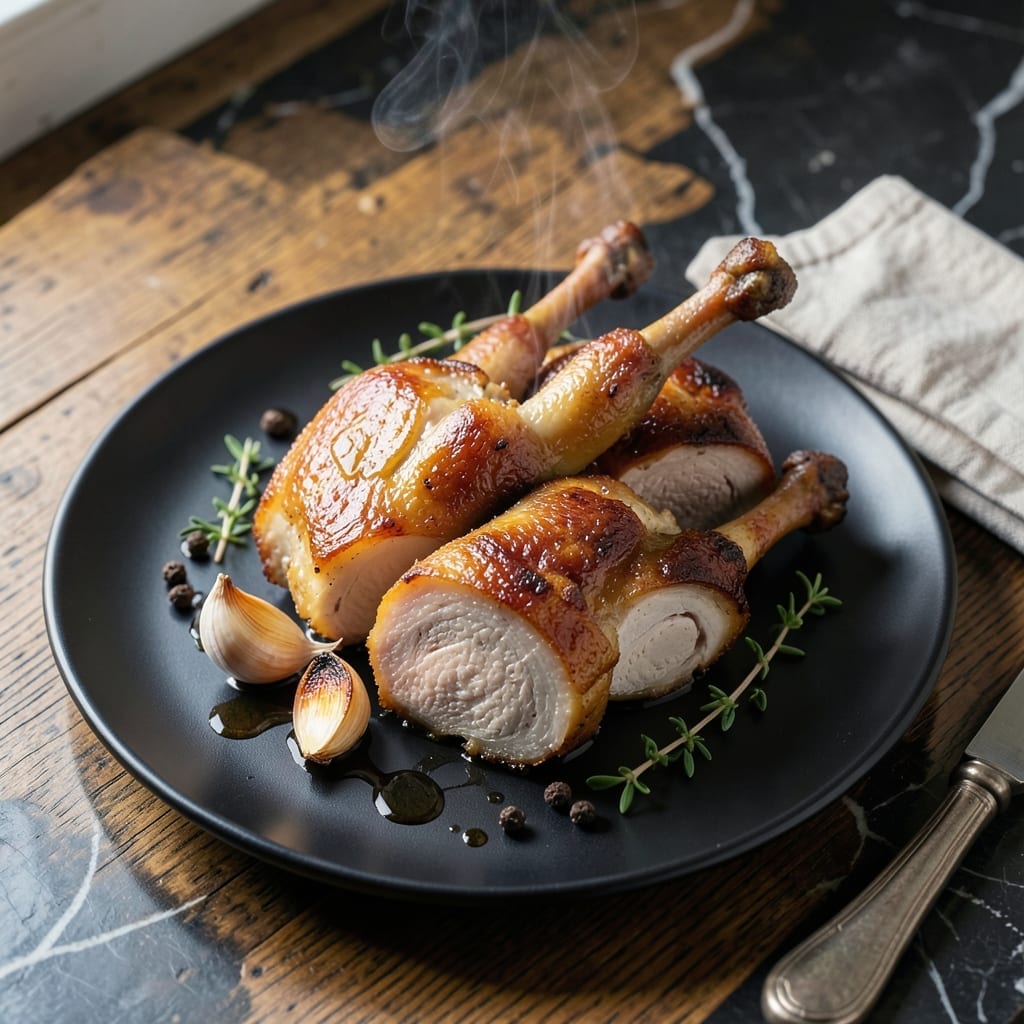
Mastering duck confit at home delivers restaurant-quality results with surprisingly simple technique. The French method of slow-cooking duck in its own fat creates meat so tender it falls off the bone, with skin that crisps to golden perfection when finished.
This traditional preparation requires patience but rewards with unmatched depth of flavor. The duck confits gently in rendered fat at low temperature, allowing the connective tissue to melt away while the meat absorbs rich, savory notes that define classic French cuisine.
The final step of crisping the skin transforms the dish, creating a contrast between the succulent meat and shatteringly crisp exterior. Each element works together to produce a dish that’s both rustic and refined.
Serve with a simple salad or roasted potatoes to let the duck’s rich flavor shine. The process is worth every minute of the wait.
Ingredients for Duck Confit Recipe Gordon Ramsay
A handful of quality ingredients transform into French bistro-worthy duck confit at home.
| Ingredient | Amount | Notes |
|---|---|---|
| Duck Legs 🦆 | 4 whole | Skin-on, about 6 oz each |
| Duck Fat 💧 | 4 cups | Rendered, for confiting |
| Kosher Salt 🧂 | ¼ cup | Diamond Crystal preferred |
| Black Peppercorns 🌶️ | 1 tbsp | Lightly crushed |
| Fresh Thyme Sprigs 🌿 | 6 whole | Plus extra for garnish |
| Garlic Cloves 🧄 | 4 cloves | Smashed, peeled |
| Bay Leaves 🍃 | 2 whole | Dried or fresh |
| Juniper Berries 🫒 | 10 pieces | Lightly crushed |
| Shallots 🧅 | 2 whole | Peeled, halved |
| Dry White Wine 🍷 | ½ cup | Such as Sauvignon Blanc |
| Fresh Parsley 🌿 | ¼ cup | Chopped, for garnish |
[recipe_ingredient_scaler]
Duck legs are the foundation here—look for skin-on, meaty thighs from a butcher or specialty grocer like Whole Foods. The fat must be duck fat (not chicken, not lard) for authentic flavor and texture. Diamond Crystal kosher salt is ideal for its clean taste and consistent grain size. Fresh thyme and bay leaves add aromatic depth, but dried work if that’s what you have.
No duck fat? Chicken fat in a pinch, but the flavor won’t be as rich. Substitute lard only if absolutely necessary. Juniper berries can be tricky to find—omitting them is fine, but they add a subtle piney note. For the wine, any dry white works (Sauvignon Blanc or Pinot Grigio). The shallots can be swapped for pearl onions if you prefer.
Confit keeps beautifully—1 month submerged in fat in the fridge, or 6 months frozen. The fat solidifies when cold; just reheat gently to melt. Always crisp the skin just before serving for that perfect texture contrast.
Why You’ll Love This Recipe
- Set and Forget: Most of the time is hands-off while the duck legs confit slowly in their own fat with thyme and peppercorns.
- Crispy, Tender Magic: The skin turns impossibly crisp while the meat stays fall-off-the-bone tender, all thanks to that duck fat.
- Fancy Without Fuss: I serve it for dinner parties or weeknight dinners—same incredible result every time.
- Leftovers Luxury: The confit keeps beautifully, so I can pull out a leg for quick meals all week. Honestly, it tastes even better the next day.
Step-by-Step Instructions for Duck Confit
Master the technique behind this classic French preparation with precision and patience.
Step 1: Cure the Duck Legs Overnight
Rub the 4 whole Duck Legs with the 0.25 cup Kosher Salt on all sides, paying special attention to the skin and any folds. This dry cure draws out moisture and seasons the meat deeply.
Arrange the legs in a single layer in a baking dish. Add the 1 tbsp Black Peppercorns, 6 whole Fresh Thyme Sprigs, 4 cloves Garlic Cloves, 2 whole Bay Leaves, 10 pieces Juniper Berries, and 2 whole Shallots around the duck. Cover and refrigerate for 12-24 hours to allow the cure to penetrate fully.
Step 2: Rinse and Dry the Duck Thoroughly
Remove the duck legs from the refrigerator and rinse off the excess salt under cold running water. Pat them completely dry with paper towels—any remaining moisture will prevent the skin from crisping properly during cooking.
This step is crucial for achieving the signature texture of confit. The duck should be as dry as possible before submerging in fat. Discard the used aromatics and prepare fresh ones for the cooking process.
Step 3: Slow-Cook in Duck Fat
Preheat your oven to 300°F. In a deep oven-safe dish, arrange the duck legs in a single layer, skin-side down. Add the 4 cups Duck Fat and the fresh aromatics: 6 whole Fresh Thyme Sprigs, 4 cloves Garlic Cloves, 2 whole Bay Leaves, 10 pieces Juniper Berries, and 2 whole Shallots.
The fat should completely cover the duck legs. Place the dish in the oven and cook for 2-2.5 hours until the meat is fork-tender but not falling off the bone. The fat will render slightly, and the duck will take on a golden hue.
Step 4: Crisp the Skin and Finish
Carefully remove the duck legs from the fat and place them skin-side down in a large skillet over medium heat. Pour in 0.5 cup Dry White Wine to deglaze the pan and add depth to the final dish.
Cook for 3-5 minutes per side until the skin turns deep golden brown and crispy. The duck is ready when the skin crackles slightly when pressed. Transfer to a serving platter and garnish with 0.25 cup Fresh Parsley for a pop of color and freshness.
Pro Tips For Making Duck Confit Recipe Gordon Ramsay
- Cure Overnight: Give the duck legs a full 12-24 hours in the salt, thyme, and peppercorn mix—I learned this the hard way after my first batch came out bland.
- Use Enough Fat: Submerge those legs completely in duck fat, even if it means melting extra. Sounds wasteful, but it’s the only way to get that buttery texture.
- Low and Slow: Keep the oven at 150°C (300°F) max, or the fat will fry instead of confit. After burning a batch at higher heat, I now set a timer to check every hour.
- Skip the Rush: Let the confit cool in the fat before storing—this locks in flavor and prevents dryness. I was skeptical until I tried it, and now I never skip it.
Creative Variations of duck confit recipe gordon ramsay
Herb-Infused Variations
Swap the thyme for rosemary sprigs and add orange zest for a bright, citrusy twist. I forage wild rosemary along coastal rides—its piney aroma pairs beautifully with duck. This combination adds a modern touch while keeping the French soul intact. 🌿
Spicy Cajun Twist
Rub the duck legs with 1 tbsp Cajun seasoning (I use Tony Chachere’s) before curing. Replace juniper berries with ½ tsp cayenne pepper for heat. The result is a bold, smoky version that reminds me of my pitmaster roots.
Asian Five-Spice
Add 1 tsp five-spice powder to the salt cure, and replace thyme with star anise pods. The warm, aromatic spices transform this into a fusion dish. I love serving this with a hoisin glaze drizzle.
Citrus and Fennel
Include 1 sliced lemon and 1 tbsp fennel seeds in the confit fat. The citrus brightens the richness, while fennel adds a subtle anise note. This variation feels lighter, perfect for spring gatherings.
Smoked Duck Confit
After confiting, smoke the duck legs at 225°F for 1 hour using hickory wood. This blends my French training with BBQ tradition. The smoke deepens the flavor without overpowering the dish. 🔥
Honey-Glazed Finish
Before crisping, brush the skin with 2 tbsp honey mixed with 1 tbsp Dijon mustard. The sweetness caramelizes beautifully, creating a sticky, glossy crust. A sprinkle of flaky sea salt finishes it perfectly.
Nutrition Facts
Frequently Asked Questions
Can I use chicken fat instead of duck fat?
Chicken fat works in a pinch but lacks the rich flavor of duck fat. For best results, stick with rendered duck fat to achieve authentic texture and taste.
How long can I store duck confit?
Properly submerged in fat, it keeps for 1 month refrigerated or 6 months frozen. Always reheat gently to preserve texture.
Why did my skin not crisp up?
Pat the duck completely dry before crisping, and use medium heat. Any moisture prevents proper browning.
Can I skip the overnight curing step?
Skipping the cure risks uneven seasoning and texture. The 12-24 hour rest is essential for flavor penetration.

Trained in classic French technique but raised on slow-cooked ribs and spicy rubs, she blends culinary skill with smoke and soul.
- Recipe for Boneless Pork Chops in Cast Iron Skillet: Sear and Baste to Juicy Perfection - October 3, 2026
- Recipe for Boneless Cross Rib Roast: Slow-Roasted Beef with Herb Crust - October 3, 2026
- Hamburgers in Sauce Recipe Crock Pot: Slow-Cooked Savory Delight - October 3, 2026