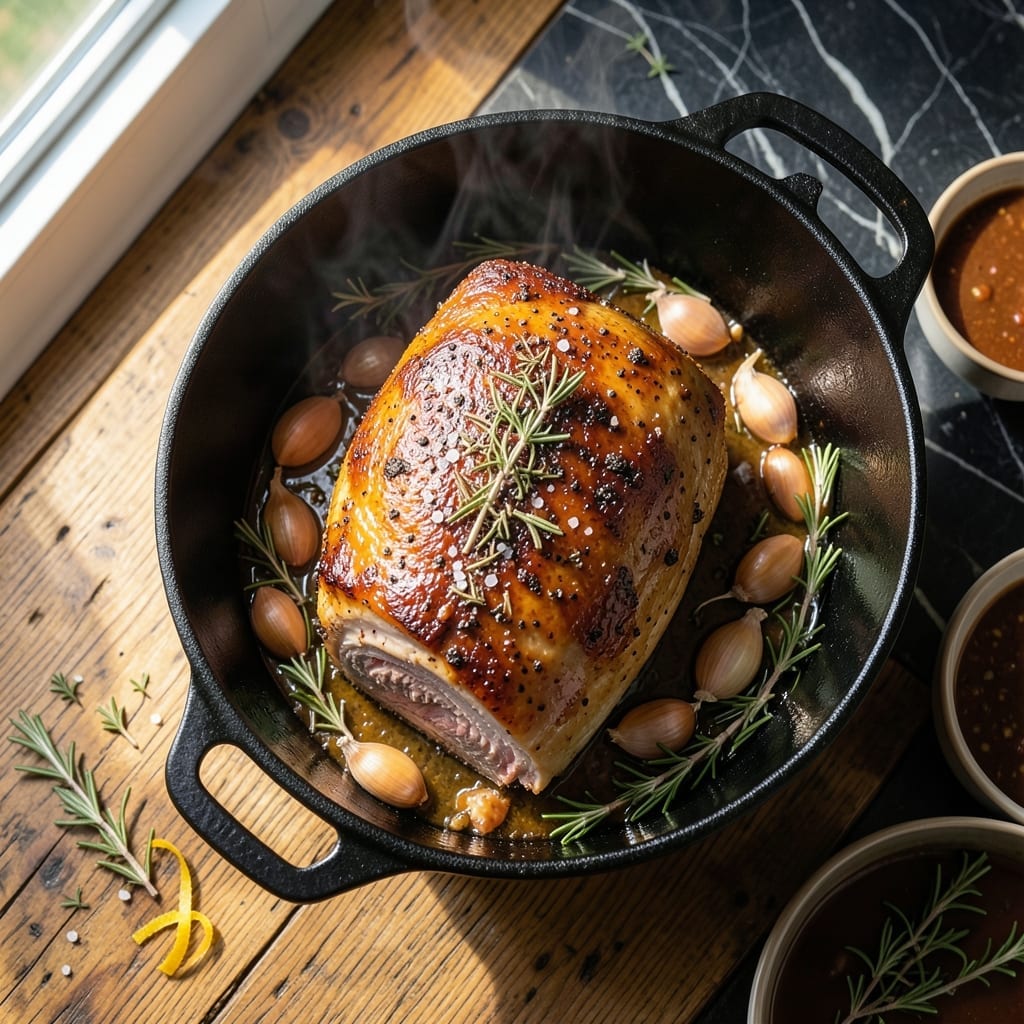
Getting my first whiff of hickory smoke always takes me back to family cookouts. This dish brings that same comfort with melt-in-your-mouth results.
I’ve perfected the herb crust over years of slow-cooking, blending French technique with my pitmaster roots. The Dutch oven locks in moisture for that tender finish.
Ingredients for Dutch Oven Pork Roast
Simple ingredients, extraordinary results. That’s the magic of this slow-cooked masterpiece.
| Ingredient | Amount | Notes |
|---|---|---|
| Pork Shoulder 🥩 | 3 lb | Bone-in for best flavor |
| Kosher Salt 🧂 | 1 ½ tbsp | Diamond Crystal preferred |
| Black Pepper 🌶️ | 1 tbsp | Freshly ground coarse |
| Dried Rosemary 🌿 | 1 tbsp | Crushed to release oils |
| Dried Thyme 🍃 | 1 tbsp | French thyme if available |
| Garlic Cloves 🧄 | 6 cloves | Smashed, not minced |
| Yellow Onion 🧅 | 1 whole | Quartered with skin on |
| Carrots 🥕 | 3 whole | Cut into 2-inch chunks |
| Celery Stalks 🥬 | 2 whole | Cut into 2-inch chunks |
| Chicken Broth 🍲 | 2 cups | Low-sodium preferred |
| Red Wine 🍷 | 1 cup | Dry variety like Cabernet |
| Olive Oil 🫒 | 2 tbsp | For searing pork |
| Dijon Mustard 🟡 | 2 tbsp | For herb crust binding |
| Fresh Parsley 🌿 | ¼ cup | Chopped for garnish |
[recipe_ingredient_scaler]
The pork shoulder is non-negotiable here. Bone-in gives you that melt-in-your-mouth texture the intro promises, and 3 pounds feeds four with leftovers. I get mine from Whole Foods—their butchers cut it to order. Look for good marbling (those white streaks) and a thick fat cap. The herb crust needs freshly ground black pepper and Diamond Crystal kosher salt—they dissolve perfectly into the meat.
No red wine? Substitute with extra broth plus a splash of balsamic vinegar. Out of fresh rosemary or thyme? Dried works at half the amount, but fresh is ideal. If you’re missing Dijon, whole-grain mustard adds a nice texture. The veggies are flexible—swap celery for fennel or add potatoes. The Dutch oven does the heavy lifting, so don’t stress about perfection here.
Leftovers keep 4-5 days in the fridge, and honestly taste better the next day. Freezes beautifully for 3 months—portion before freezing for easy meals. The herb crust stays crispy if you reheat in the oven (skip the microwave).
Why You’ll Love This Recipe
- Set and Forget: Honestly, just season the pork shoulder, pop it in the Dutch oven, and let the oven do the work.
- Herb Crust Magic: The rosemary and thyme form this insane crust on the pork that’s crispy outside, tender inside.
- Feeds the Family: I make this for Sunday dinner and have enough for tacos or sandwiches later that week.
- Budget Stretch: Pork shoulder is cheap, and one roast gives us at least three solid meals.
Step-by-Step Instructions for Dutch Oven Pork Roast
This method guarantees fall-apart tenderness with a fragrant herb crust every time.
Step 1: Season and Sear the Pork Shoulder
Pat the 3 lb Pork Shoulder dry with paper towels. Combine the 1.5 tbsp Kosher Salt, 1 tbsp Black Pepper, 1 tbsp Dried Rosemary, and 1 tbsp Dried Thyme in a small bowl, then rub this mixture evenly over all surfaces of the pork. The herbs should adhere well to the slightly tacky surface.
Heat the 2 tbsp Olive Oil in your Dutch oven over medium-high heat until shimmering. Add the pork and sear for 4-5 minutes per side until deeply golden brown. You’ll know it’s ready to flip when it releases easily from the pot. This sear builds a flavorful fond that will enrich your braising liquid later.
Step 2: Build the Aromatic Base
Remove the pork and set aside. In the same pot, add the 6 cloves Garlic Cloves (smashed), 1 whole Yellow Onion (quartered with skin on), 3 whole Carrots (in 2-inch chunks), and 2 whole Celery Stalks (in 2-inch chunks). Cook over medium heat for 5-6 minutes until the vegetables begin to soften and develop color.
The onion skin adds a beautiful amber hue to the finished sauce, and the smashed garlic releases its aroma without risk of burning. Stir occasionally to prevent sticking, but don’t worry about perfect even browning—some darker spots add depth.
Step 3: Deglaze and Braise
Pour in the 1 cup Red Wine and scrape up all the browned bits from the bottom with a wooden spoon. Let it simmer for 3-4 minutes until reduced by half. This step is crucial for developing complex flavors in your sauce.
Return the pork to the pot. Add the 2 cups Chicken Broth, then spread the 2 tbsp Dijon Mustard over the top of the pork. The mustard will help the herbs adhere and create a beautiful glaze. Cover and transfer to a preheated 325°F oven.
Step 4: Slow Cook to Perfection
Braise for 3-3.5 hours, turning the pork every 45 minutes to ensure even cooking and prevent sticking. You’ll know it’s done when a fork slides in with no resistance and the meat easily pulls apart at the edges.
Real talk: the pork might look done earlier, but trust the process—this long, slow cook transforms the connective tissue into gelatin, giving you that melt-in-your-mouth texture. The braising liquid should be bubbling gently the entire time, not at a rolling boil.
Step 5: Rest and Serve
Carefully remove the pork to a serving platter and tent loosely with foil. Skim any excess fat from the braising liquid, then simmer on the stovetop for 5-7 minutes until slightly thickened. This creates a beautiful sauce to spoon over the meat.
Let the pork rest for 15 minutes before serving. This allows the juices to redistribute. Garnish with the 0.25 cup Fresh Parsley just before serving. The parsley adds a bright, fresh contrast to the rich, savory pork and its deeply flavored sauce.
Pro Tips For Making Dutch Oven Pork Roast
- Sear It Hard: Get the Dutch oven screaming hot before searing the pork shoulder—about 3-4 minutes per side. I learned this the hard way when my roast came out pale and lacking that deep, caramelized crust.
- Rub It Overnight: Mix the kosher salt, black pepper, rosemary, and thyme into the pork the night before. Sounds like extra work, but it actually changes the outcome—way more flavor penetration.
- Don’t Drown the Meat: Add just enough liquid to deglaze—about ½ cup—then resist the urge to add more. Too much braising liquid steams the pork instead of roasting it.
- Use a Probe: Skip guessing and use a meat thermometer—pull the pork at 195°F for perfect pull-apart tenderness. After burning three batches, I finally figured out that timing alone isn’t reliable.
Serving Suggestions for This Dutch Oven Pork Roast
Plating Like a Pro
I like to slice the pork against the grain into 1-inch thick pieces and fan them out on a platter. This shows off the beautiful herb crust and makes serving a breeze. The sauce should pool slightly under the meat for visual appeal.
Garnish Generously
Fresh parsley isn’t just for color—it adds a bright, herbal note that cuts through the richness. I often add a few extra rosemary sprigs on the platter for a rustic touch. A light dusting of flaky sea salt elevates the presentation. 🌿
Side Dish Pairings
Creamy mashed potatoes soak up the sauce beautifully. For something lighter, try roasted Brussels sprouts with a balsamic glaze. My local butcher swears by serving this with polenta—it’s become my go-to pairing.
Bread for Sauce
A crusty baguette or sourdough loaf is essential for mopping up every last bit of sauce. I warm the bread in the oven for 5 minutes while the pork rests. Toasted slices also make great open-faced sandwiches with leftovers.
Honestly, I’ve been known to serve this straight from the Dutch oven at BBQ competitions—no fancy plating needed when the flavors speak for themselves. 💛
Nutrition Facts
Frequently Asked Questions
What’s the best cut for this recipe?
Use bone-in pork shoulder for the juiciest results. The connective tissue breaks down beautifully during the long braise, creating that signature melt-in-your-mouth texture. Avoid lean cuts like tenderloin as they dry out.
Can I use a slow cooker instead?
Yes, but the Dutch oven gives better browning. Sear the pork first, then transfer to a slow cooker on low for 8 hours. The flavor will be slightly less complex without the fond development.
How do I know when it’s done?
Check after 3 hours – it’s ready when a fork slides in effortlessly and the meat pulls apart. The internal temperature should reach 195°F for perfect tenderness.
Can I make this ahead of time?
The flavors deepen overnight. Refrigerate in the braising liquid for up to 2 days, then reheat gently on the stove. The sauce may thicken – thin with broth if needed.

Trained in classic French technique but raised on slow-cooked ribs and spicy rubs, she blends culinary skill with smoke and soul.
- Recipe for Boneless Pork Chops in Cast Iron Skillet: Sear and Baste to Juicy Perfection - October 3, 2026
- Recipe for Boneless Cross Rib Roast: Slow-Roasted Beef with Herb Crust - October 3, 2026
- Hamburgers in Sauce Recipe Crock Pot: Slow-Cooked Savory Delight - October 3, 2026