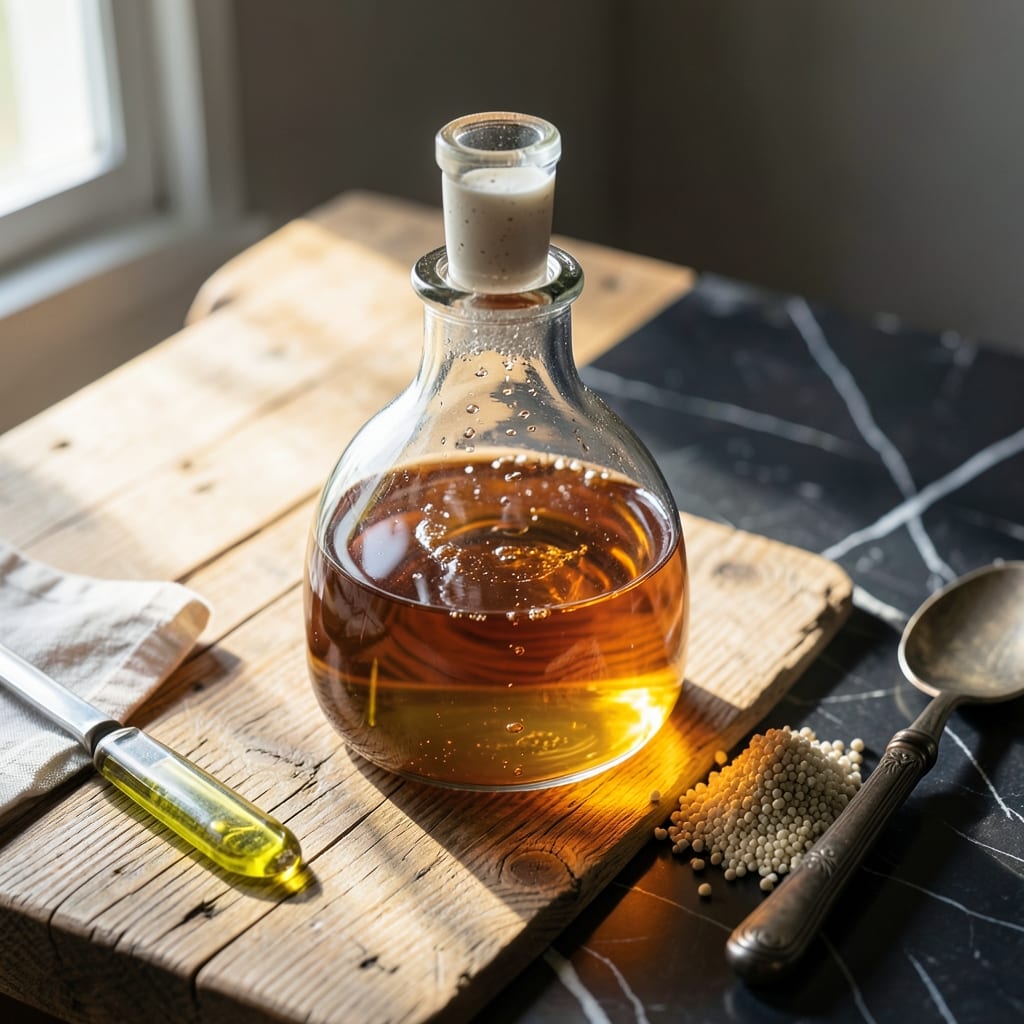
Crafting mead at home is simpler than most realize, and this small batch method delivers consistent results every time. I developed this 1-gallon recipe after testing numerous variations to find the perfect balance of honey, water, and yeast.
The process requires minimal equipment—just a fermentation vessel, airlock, and basic kitchen tools. With only 3 ingredients and about 30 minutes of active prep, you’ll start a batch that transforms over weeks into a smooth, fermented honey wine.
What emerges after fermentation is a crisp, lightly sweet beverage with subtle floral notes from the honey. The beauty lies in its simplicity: no complex techniques, just patience and precise ratios.
David insists this is my most foolproof recipe yet, and he’s right. The results are always worth the wait.
Ingredients for Easy Mead Recipe 1 Gallon
Three ingredients transform into something extraordinary with time and patience.
| Ingredient | Amount | Notes |
|---|---|---|
| Raw Honey 🍯 | 3 lb | Wildflower or clover variety preferred |
| Filtered Water 💧 | 1 cup | Spring or distilled water |
| Champagne Yeast 🍾 | 1 package | Lalvin EC-1118 or similar |
[recipe_ingredient_scaler]
The honey is everything here. Local wildflower honey gives the most complex flavor, but any raw, unprocessed honey works. Avoid pasteurized grocery store honey—it lacks the depth. I source mine from farmers markets or Whole Foods. The yeast needs to be wine or champagne yeast; bread yeast won’t cut it. Lalvin EC-1118 is my go-to for reliability.
No champagne yeast? Lalvin D47 works too (slightly fruitier profile). Water must be chlorine-free—spring or distilled is ideal. If using tap water, let it sit out overnight uncovered to off-gas chlorine. The honey amount can flex slightly (2.5-3.5 lb), but 3 lb gives the perfect balance of sweetness and fermentability.
This will ferment for 4-6 weeks before it’s ready. Store in a dark, temperature-stable spot (60-75°F). The mead improves with age—6 months to a year develops deeper flavors. Keeps indefinitely if properly sealed and stored.
Why You’ll Love This Recipe
- No Fuss Brewing: Honestly, it’s just honey, water, and yeast—no boiling, no fancy equipment.
- Smooth Honey Sweetness: The raw honey gives it this deep, floral taste that’s way more interesting than plain sugar.
- Gift-Worthy Batch: I’ve given jars of this to friends for holidays, and they always ask for the recipe.
- Budget Sipper: A gallon costs less than a single craft cocktail at a bar, and it lasts way longer.
Step-by-Step Instructions for Easy Mead
This straightforward method yields a clean, fermented honey wine with minimal effort.
Step 1: Sanitize All Equipment
Before handling any ingredients, sanitize your fermentation vessel, airlock, spoon, and any other tools that will contact the mead. I use a no-rinse sanitizer solution for 2 minutes of contact time. This step prevents contamination that could spoil your batch.
Ensure your work surface is also clean. Any bacteria or wild yeast at this stage can compete with the champagne yeast and create off flavors. This is the foundation of successful fermentation—don’t skip it.
Step 2: Dissolve the Honey in Warm Water
Heat the 1 cup filtered water to about 120-130°F—hot enough to dissolve honey but not boiling. Pour the 3 lb raw honey into your sanitized fermentation vessel, then add the warm water. Stir vigorously with a sanitized spoon until the honey fully dissolves into a uniform liquid.
The mixture will be thick and syrupy at first. Keep stirring until no honey settles at the bottom. This creates your must—the unfermented liquid that will become mead. The temperature should drop to room temperature before proceeding.
Step 3: Pitch the Yeast and Begin Fermentation
Once the must cools to 70-75°F, sprinkle the 1 package champagne yeast directly on top. I don’t rehydrate the yeast first for this simple method—the nutrients in the raw honey provide everything it needs to activate. Cover the vessel with a clean cloth or loose lid.
After 12-24 hours, you’ll see active bubbling as the yeast begins consuming sugars. At this point, attach your sanitized airlock. The yeast will work aggressively at first, then slow as the alcohol content rises. Store in a dark place at 65-75°F for optimal fermentation.
Step 4: Monitor and Wait for Primary Fermentation
Primary fermentation typically takes 2-4 weeks. You’ll know it’s active when bubbles pass through the airlock every few seconds. After about 1 week, the bubbling will slow significantly. This is normal as the yeast consumes most available sugars.
Check the specific gravity with a hydrometer if you have one—it should drop below 1.000 when fermentation is complete. If not, wait another week and check again. Patience here ensures a dry, clean finish without residual sweetness.
Step 5: Rack and Age the Mead
Once fermentation stops, transfer the mead to a sanitized secondary vessel, leaving the sediment behind. This racking process clarifies the mead and prevents off flavors from prolonged contact with dead yeast cells. Use a sanitized siphon to avoid disturbing the sediment.
Age the mead for at least 4-6 weeks in the secondary vessel. This allows flavors to mellow and any remaining particles to settle. For best results, taste after 3 months—the character becomes more complex and smooth over time. Bottle when clear and stable.
Pro Tips For Making Easy Mead Recipe 1 Gallon
- Use Room-Temp Honey: Pull your raw honey out of the fridge or pantry 2-3 hours before starting—cold honey blends sluggishly with water and can stress the yeast.
- Pitch Yeast at 70°F: I learned this the hard way: if your water-honey mix is too hot or cold when you add champagne yeast, it’ll either sulk or die. Aim for 70°F, no higher.
- Skip Tap Water: Chlorine in tap water can kill your yeast before it even gets going. Filtered or spring water is worth the extra dollar.
- Leave Headspace: Fill your gallon jug to the 15-cup mark, not the top—yeast foam will rise and overflow if you don’t, and you’ll be mopping sticky honey off the counter.
Health Benefits of easy mead recipe 1 gallon
Antioxidant Richness
Raw honey is packed with polyphenols and flavonoids, powerful antioxidants that protect your cells from damage. These compounds are preserved in mead, offering immune-boosting benefits in every sip. I notice my energy levels feel steadier when I enjoy this regularly. 💪
Digestive Health
Fermented foods like mead contain probiotics from the fermentation process, which support gut health. The natural enzymes in raw honey also aid digestion. David swears by a small glass after meals to settle his stomach.
Natural Energy Source
Honey provides natural sugars—fructose and glucose—that offer a steady energy release. Unlike refined sugar, these are paired with trace vitamins and minerals. The fermentation process makes these nutrients even more bioavailable to your body.
Sore Throat Soother
Warm mead has been used for centuries as a remedy for sore throats. The honey coats and soothes, while the alcohol acts as a mild antiseptic. I keep a bottle on hand during winter months for this very reason. 💛
Heart Health Support
Moderate consumption of fermented honey beverages may support cardiovascular health. The antioxidants in honey help reduce LDL cholesterol levels, while the fermentation process creates compounds that promote healthy blood pressure.
Stress Reduction
A small glass in the evening can help relax both body and mind. The natural sugars provide a gentle mood lift, while the ritual of savoring a well-crafted beverage offers a moment of calm in a busy day.
Nutrition Facts
Frequently Asked Questions
What type of container works best?
Use a food-grade plastic bucket or glass carboy for fermentation. Ensure it’s large enough to hold 1 gallon with extra headspace. Avoid metal containers, as they can react with the acidic mead.
How do I know when fermentation is complete?
Check when bubbles in the airlock slow to less than one per 30 seconds. A hydrometer reading below 1.000 confirms fermentation has finished. This typically takes 2-4 weeks.
Can I use a different yeast?
Wine or champagne yeast works best, but bread yeast can be used in a pinch. Expect a slower fermentation and potentially different flavor profile. Lalvin EC-1118 is my top recommendation.
How long should I age it?
Minimum 4-6 weeks in secondary fermentation, but 3-6 months yields the smoothest results. The longer you wait, the more complex the flavors become.

Trained in classic French technique but raised on slow-cooked ribs and spicy rubs, she blends culinary skill with smoke and soul.
- Recipe for Boneless Pork Chops in Cast Iron Skillet: Sear and Baste to Juicy Perfection - October 3, 2026
- Recipe for Boneless Cross Rib Roast: Slow-Roasted Beef with Herb Crust - October 3, 2026
- Hamburgers in Sauce Recipe Crock Pot: Slow-Cooked Savory Delight - October 3, 2026