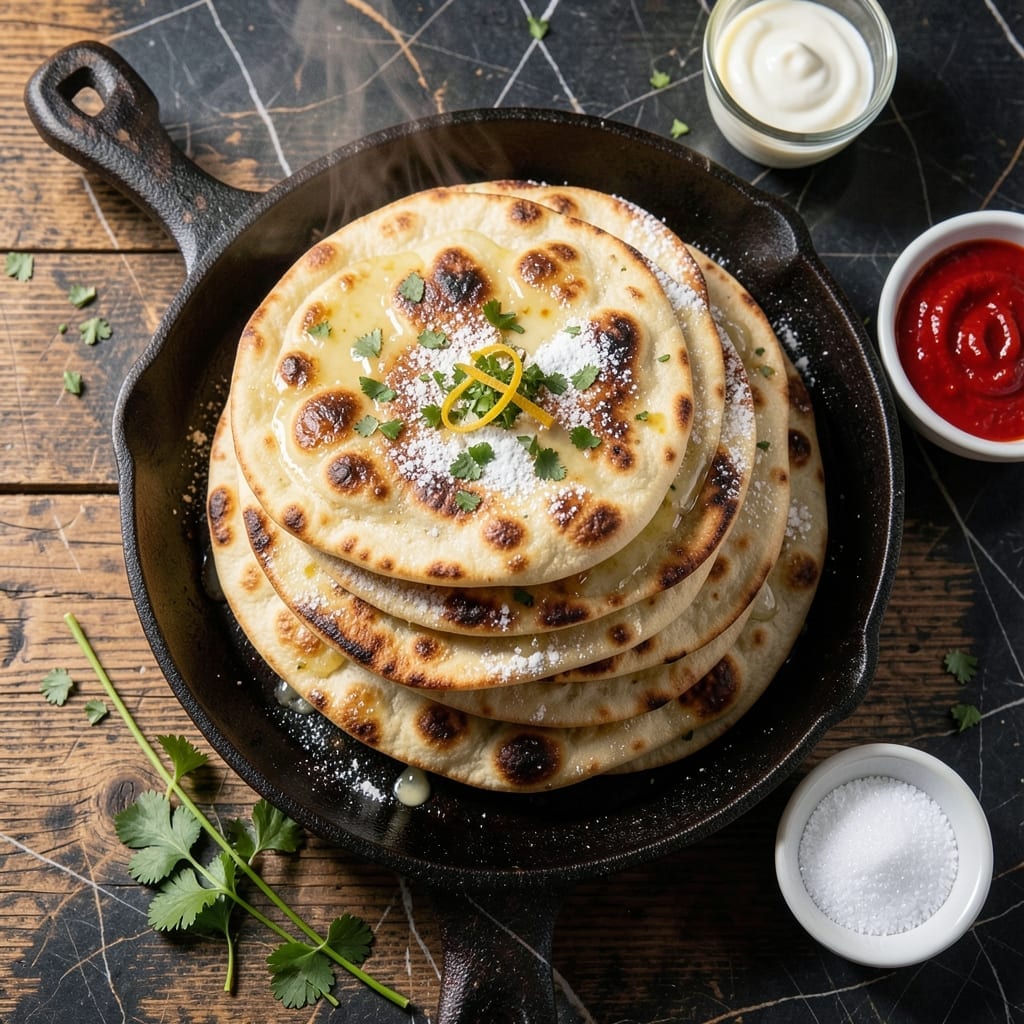
This no-fuss method delivers perfectly puffed naan with minimal effort. The trick is letting the dough rest, which makes all the difference in texture and flavor.
You’ll have warm, pillowy bread in minutes, ideal for scooping up curries or enjoying on its own. Simple ingredients, professional results.
Ingredients for Easy Naan Bread Recipe Jamie Oliver
Simple pantry staples and yogurt transform into pillowy, restaurant-quality flatbread in no time.
| Ingredient | Amount | Notes |
|---|---|---|
| All-Purpose Flour 🌾 | 3 cups | Plus extra for dusting |
| Baking Powder 🧂 | 2 tsp | Ensures proper rise |
| Granulated Sugar 🍚 | 1 tbsp | Activates the yeast |
| Active Dry Yeast 🍃 | 1 tsp | Check expiration date |
| Plain Yogurt 🥛 | ¾ cup | Greek or regular, full-fat |
| Warm Water 💧 | ½ cup | About 110°F |
| Olive Oil 🫒 | 2 tbsp | Plus extra for greasing |
| Salt 🧂 | 1 tsp | Fine sea salt preferred |
| Melted Butter 🧈 | 3 tbsp | For brushing finished naan |
| Garlic Cloves 🧄 | 2 cloves | Minced, optional garnish |
| Fresh Cilantro 🌿 | ¼ cup | Chopped, optional garnish |
[recipe_ingredient_scaler]
The yogurt is critical here—Greek or full-fat regular from Whole Foods or Trader Joe’s gives the best texture and tang. Always check your yeast expiration date; old yeast won’t activate properly. For the flour, King Arthur or Gold Medal all-purpose works perfectly. The baking powder should be fresh too—if it’s been in your cupboard for over a year, grab a new can.
No yogurt? Buttermilk at the same amount works well. Out of baking powder? Baking soda plus cream of tartar can substitute (use 1/2 tsp of each per 1 tsp baking powder). For a richer flavor, swap half the water for warm milk. The melted butter for brushing can be replaced with ghee or olive oil if preferred.
Store leftover dough covered in the fridge for up to 2 days. Baked naan keeps 1-2 days in an airtight container—reheat in a dry skillet to restore softness. Best served fresh, but dough balls can be frozen for up to 1 month.
Why You’ll Love This Recipe
- No Yeast Waiting: I love that the yogurt does the work—no proofing, no fuss, just mix and cook.
- That Yogurt Tang: The plain yogurt gives it this subtle richness that pairs perfectly with the char from the pan.
- Weeknight Hero: I’ve served this with curry, soup, even as a wrap for leftovers. It never disappoints.
Step-by-Step Instructions for Homemade Naan Bread
This method delivers tender, pillowy bread with minimal effort and maximum flavor in under an hour.
Step 1: Activate the Yeast and Mix the Dough
In a large mixing bowl, whisk together the 0.5 cup Warm Water, 1 tbsp Granulated Sugar, and 1 tsp Active Dry Yeast. Let it sit for 5-7 minutes until the mixture becomes frothy and cloudy—this confirms the yeast is active and ready to work.
Add the 0.75 cup Plain Yogurt, 2 tbsp Olive Oil, 1 tsp Salt, and 2 tsp Baking Powder to the yeast mixture. Stir until fully combined. Gradually incorporate the 3 cups All-Purpose Flour, mixing until a shaggy dough forms. The dough will be slightly sticky but should pull away from the sides of the bowl.
Step 2: Knead and Let the Dough Rise
Turn the dough out onto a lightly floured surface and knead for 8-10 minutes until smooth and elastic. You’ll know it’s ready when the dough springs back slowly when pressed with your finger. The texture should be soft but not sticky—add a dusting of flour if it clings to your hands.
Place the dough in a lightly oiled bowl, cover with a damp towel, and let it rise in a warm, draft-free spot for 30-45 minutes. The dough should nearly double in size. This rise time ensures a light, airy texture in the finished naan.
Step 3: Divide and Shape the Dough
Once the dough has risen, punch it down to release the air and turn it out onto a floured surface. Divide it into 4 equal portions (about 120g each), then roll each piece into a smooth ball. Cover the balls with a towel and let them rest for 10 minutes—this makes rolling easier.
Roll each ball into an oval or round shape, about ¼-inch thick. If the dough resists, let it rest for another 2-3 minutes before continuing. Aim for even thickness to ensure consistent cooking.
Step 4: Cook the Naan in a Hot Skillet
Heat a heavy skillet (cast iron works best) over medium-high heat until very hot. Add one piece of rolled dough and cook for 1-2 minutes per side, until puffed in spots and golden brown with charred bubbles. Press down gently with a spatula to encourage even browning.
While the naan cooks, brush the top with some of the 3 tbsp Melted Butter. Flip and brush the other side as well. Transfer the cooked naan to a plate and cover with a towel to keep warm while you cook the remaining pieces.
Step 5: Garnish and Serve Warm
For added flavor, brush the finished naan with more melted butter and sprinkle with minced 2 cloves Garlic Cloves and chopped 0.25 cup Fresh Cilantro. Serve immediately while still warm and puffy.
The bread should be soft and pliable with a slight chew and blistered, golden-brown spots. If any pieces aren’t fully cooked, return them to the skillet for an additional 20-30 seconds per side. Enjoy with your favorite curry or as a standalone treat.
Pro Tips For Making Easy Naan Bread Recipe Jamie Oliver
- Warm the Yogurt: Take your plain yogurt out of the fridge 30 minutes before mixing—cold yogurt can shock the yeast and slow down the rise. I learned this the hard way after a few dense, sad naans.
- Double the Rest: Let the dough rest for at least 1 hour, or up to 2 if you have time. The yeast and yogurt need that extra time to work their magic and give you that soft, pillowy texture.
- Skip Cold Flour: Measure your all-purpose flour first, then warm it slightly in the microwave for 10-15 seconds. It helps the yeast activate faster and makes the dough more pliable.
- High Heat Only: Crank your pan to the highest heat possible and don’t skimp—naan needs that blast of heat to puff up and get those beautiful charred spots. My first few attempts were floppy because I was too timid with the temperature.
Common Mistakes When Making This Dish
Skipping the Yeast Test
Never assume your yeast is active without testing it first. I always whisk 1 tsp yeast with 1 tbsp sugar and ½ cup warm water and wait for that frothy, cloudy reaction. Old yeast can ruin your entire batch, leaving you with dense, flat bread instead of pillowy naan. 💡
Overworking the Dough
Kneading for 8-10 minutes is perfect, but overdo it and you’ll end up with tough naan. The dough should be smooth and elastic, not stiff or dry. If it starts to fight back, give it a rest—literally. Let it sit for 5 minutes before continuing.
Skipping the Rest
Rushing the rise time is a common mistake. That 30-45 minute rest lets the dough develop flavor and texture. I learned this the hard way—my first few attempts were flat and flavorless because I didn’t let the dough double in size.
Uneven Rolling
Rolling your naan to an even ¼-inch thickness ensures even cooking. If some spots are thinner, they’ll burn while thicker areas stay raw. Use a rolling pin and check the thickness with your fingers as you go.
Cool Skillet
Your skillet needs to be screaming hot—medium-high heat—before adding the dough. A cool skillet means no puff, no blisters, just sad, flat bread. I heat my cast iron for 5 minutes to guarantee it’s ready.
Overcrowding the Pan
Cook one naan at a time to avoid steaming instead of searing. Overcrowding lowers the temperature and leads to soggy results. Keep cooked pieces warm under a towel while you finish the batch. ✨
Nutrition Facts
Frequently Asked Questions
Can I make this without yogurt?
Yes, substitute with buttermilk at the same amount. This maintains the tangy flavor and tender texture. Avoid non-dairy alternatives as they may alter the consistency.
Why isn’t my naan puffing up?
Check your yeast first—it must be fresh and frothy after activation. Also ensure your skillet is screaming hot on medium-high heat before adding the dough.
How do I store leftover dough?
Cover tightly and refrigerate for up to 2 days or freeze dough balls for 1 month. Thaw overnight in the fridge before using.
Can I use whole wheat flour?
Yes, but replace only half the all-purpose flour with whole wheat. The dough may need 1-2 tbsp extra water as whole wheat absorbs more liquid.

Trained in classic French technique but raised on slow-cooked ribs and spicy rubs, she blends culinary skill with smoke and soul.
- Recipe for Boneless Pork Chops in Cast Iron Skillet: Sear and Baste to Juicy Perfection - October 3, 2026
- Recipe for Boneless Cross Rib Roast: Slow-Roasted Beef with Herb Crust - October 3, 2026
- Hamburgers in Sauce Recipe Crock Pot: Slow-Cooked Savory Delight - October 3, 2026