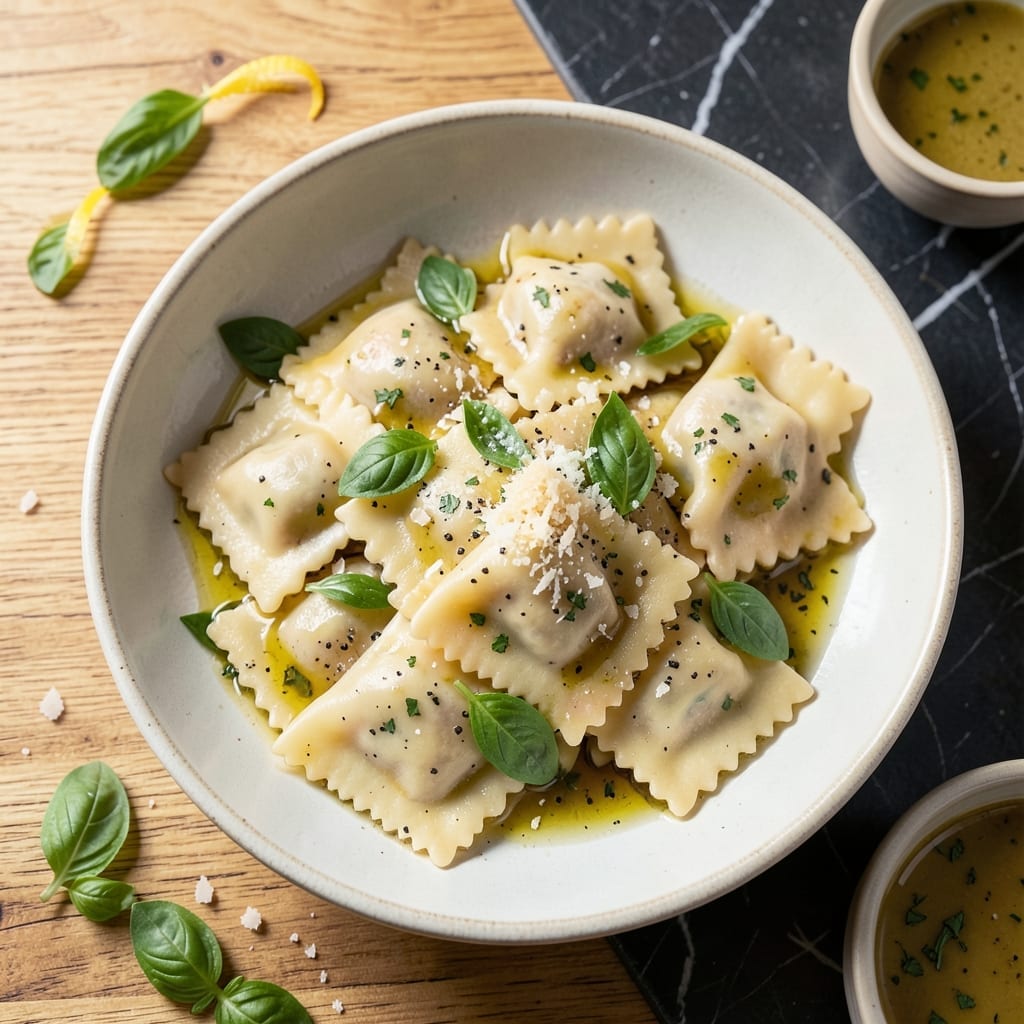
Homemade ravioli without a pasta machine is simpler than you think. This proven technique uses a rolling pin and basic ingredients to create restaurant-quality results at home.
The dough comes together in minutes with flour, eggs, and water. Rolling it thin by hand creates the perfect base for your favorite fillings. No special equipment is required.
Each tender pocket is filled with your choice of cheese, meat, or vegetables. The key is sealing the edges tightly to prevent leaks during cooking.
These homemade ravioli cook in just 3-4 minutes in boiling water. Serve with your favorite sauce for a meal that impresses every time.
Ingredients for Easy Ravioli Recipe Without Pasta Machine
Basic pantry staples plus a few fresh additions for restaurant-quality results at home.
| Ingredient | Amount | Notes |
|---|---|---|
| All-Purpose Flour 🌾 | 2 cups | Plus extra for dusting |
| Large Eggs 🥚 | 3 whole | Room temperature preferred |
| Water 💧 | 2 tbsp | Ice cold for elasticity |
| Olive Oil 🫒 | 1 tbsp | For dough and sealing |
| Salt 🧂 | ½ tsp | Fine sea salt preferred |
| Ricotta Cheese 🧀 | 1 cup | Whole milk for creaminess |
| Parmesan Cheese 🧀 | ½ cup | Freshly grated from block |
| Fresh Spinach 🥬 | 1 cup | Finely chopped and drained |
| Garlic Cloves 🧄 | 2 cloves | Minced for filling |
| Nutmeg 🌰 | ¼ tsp | Freshly grated preferred |
| Black Pepper 🌶️ | ¼ tsp | Freshly ground for filling |
| Butter 🧈 | 2 tbsp | For sauce or topping |
| Fresh Sage Leaves 🌿 | 8 whole | For brown butter sauce |
[recipe_ingredient_scaler]
The flour is your foundation—King Arthur or Gold Medal all-purpose work perfectly. Eggs should be fresh; the yolks add that golden hue. Room temperature eggs blend better into the dough. For the ricotta, whole milk gives you the creamiest filling (skip the low-fat stuff). If you’re making a brown butter sauce, European-style butter has a higher fat content and won’t burn as easily.
No ricotta? Cottage cheese blended smooth works in a pinch. Out of spinach? Swap in finely chopped kale or Swiss chard (squeeze out all the water). For a meat filling, ground beef or Italian sausage browned with garlic and herbs is classic. If you’re avoiding dairy, a mix of mashed tofu, breadcrumbs, and nutritional yeast makes a solid vegan filling.
Fresh pasta dough is best used the same day, but you can refrigerate it wrapped tightly for up to 24 hours. Filled ravioli can be frozen on a tray before cooking—store in bags for up to 1 month. Cook from frozen, just add a minute to the boil time.
Why You’ll Love This Recipe
- No Machine Needed: I roll the dough by hand with just flour, eggs, and a pinch of salt—no fancy equipment, no stress.
- Rich Homemade Taste: The olive oil in the dough gives it that buttery, authentic flavor that store-bought just can’t match.
- Budget Winner: All-purpose flour and eggs cost pennies, yet it feels like a restaurant meal. I’ll be real: that’s a win.
Step-by-Step Instructions for Homemade Ravioli Without a Pasta Machine
Here’s the method. Straightforward, tested, works every time.
Step 1: Make the Pasta Dough
On a clean work surface, mound the 2 cups All-Purpose Flour and create a well in the center. Add the 3 whole Large Eggs, 2 tbsp Water, 1 tbsp Olive Oil, and 0.5 tsp Salt to the well. Using a fork, gradually incorporate the flour into the wet ingredients until a shaggy dough forms.
Knead the dough for 8-10 minutes until smooth and elastic. If it feels too sticky, dust with a bit of extra flour, but don’t add too much—you want a supple dough that springs back when pressed. Wrap it in plastic and let it rest at room temperature for 30 minutes.
Step 2: Prepare the Spinach and Ricotta Filling
In a bowl, combine the 1 cup Ricotta Cheese, 0.5 cup Parmesan Cheese, 1 cup Fresh Spinach, 2 cloves minced Garlic Cloves, 0.25 tsp Nutmeg, and 0.25 tsp Black Pepper. Mix until fully incorporated. The filling should be thick but spreadable—if it seems too loose, add a touch more Parmesan to bind it.
Taste and adjust seasoning if needed, but remember the flavors will concentrate slightly when cooked. Cover and refrigerate until ready to use.
Step 3: Roll and Fill the Ravioli
Divide the rested dough into 4 equal portions. On a lightly floured surface, roll one portion as thin as possible using a rolling pin—aim for about 1/16-inch thickness. Keep the other portions covered to prevent drying out.
Place 1 teaspoon of filling in 2-inch intervals along the dough. Lightly brush the dough around the filling with water to help seal. Lay a second sheet of dough on top and press gently around each mound of filling to remove air pockets. Use a knife or ravioli cutter to separate into individual pieces.
Step 4: Cook the Ravioli
Bring a large pot of salted water to a rolling boil. Gently drop in the ravioli in batches, being careful not to overcrowd the pot. Cook for 3-4 minutes until they float to the surface and the pasta is tender but still al dente.
While the ravioli cook, melt the 2 tbsp Butter in a small pan over medium heat. Add the 8 whole Fresh Sage Leaves and cook for 1-2 minutes until the butter turns golden and the sage becomes crisp. The aroma will be incredible—this is your signal it’s ready.
Step 5: Serve Immediately
Using a slotted spoon, transfer the cooked ravioli directly to the brown butter and sage. Toss gently to coat. The sage butter should cling beautifully to the ridges of the pasta.
Serve immediately while hot. The ravioli should have a delicate, thin pasta exterior with a creamy, flavorful filling that oozes just slightly when cut. Garnish with extra Parmesan if desired.
Pro Tips For Making Easy Ravioli Recipe Without Pasta Machine
- Roll It Thin: Use a rolling pin to stretch the dough as thin as possible—aim for about 1/16 of an inch. I learned this the hard way after my first batch came out like thick dumplings instead of delicate ravioli.
- Rest the Dough: After kneading, let the dough rest for at least 20 minutes under a damp towel. My grandmother swore by this, and she was right: it relaxes the gluten for easier rolling.
- Skip Overfilling: Resist the urge to stuff each ravioli with too much filling—1 teaspoon max. After bursting three in boiling water, I finally figured out less is more.
- Seal Tightly: Press the edges firmly with a fork to lock in the filling. Sounds weird, but it works: this keeps them from opening while cooking.
Common Mistakes When Making Great easy ravioli recipe without pasta machine
Overworking the Dough
Kneading too long or adding excess flour makes the dough tough. I stop at 8-10 minutes when it springs back gently. Let it rest 30 minutes—this relaxes the gluten for easier rolling. 💪
Thickness Issues
Rolling too thick prevents proper cooking, while too thin causes tearing. Aim for 1/16-inch thickness using a rolling pin. Dust lightly with flour to prevent sticking without drying the dough.
Filling Overload
More than 1 teaspoon of filling per ravioli causes leaks. Space mounds 2 inches apart to avoid overcrowding. Press out air pockets before sealing to prevent bursting during boiling.
Poor Sealing
Water is your best friend for sealing edges. Brush lightly around each filling mound before adding the top dough layer. Press firmly with your fingers or a fork to create a tight seal that won’t open while cooking.
Boiling Problems
Overcrowding the pot lowers water temperature, leading to gummy pasta. Cook in batches with plenty of salted water. They’re done when they float and the dough is al dente—about 3-4 minutes total. 🔥
Skipping the Rest
Letting filled ravioli rest 10 minutes before cooking helps the seal set. This prevents fillings from leaking into the water. I always set a timer—it makes a noticeable difference.
Nutrition Facts
Frequently Asked Questions
Can I use a wine bottle instead of a rolling pin?
A clean wine bottle works as a great substitute. The smooth glass surface rolls the dough just as well as a pin. Just dust it with flour first to prevent sticking.
How thin should the dough be?
Aim for about 1/16-inch thickness—thin enough to see your hand through it but not so thin it tears. This ensures even cooking and proper texture.
Why are my ravioli bursting while cooking?
This usually means too much filling or air trapped inside. Use only 1 teaspoon of filling per piece and press out air pockets before sealing.
Can I make ravioli ahead of time?
Yes! Place uncooked ravioli on a floured tray and freeze solid. Then transfer to a bag and store for up to 1 month. Cook from frozen, adding 1 minute to the boil time.

Trained in classic French technique but raised on slow-cooked ribs and spicy rubs, she blends culinary skill with smoke and soul.
- Recipe for Boneless Pork Chops in Cast Iron Skillet: Sear and Baste to Juicy Perfection - October 3, 2026
- Recipe for Boneless Cross Rib Roast: Slow-Roasted Beef with Herb Crust - October 3, 2026
- Hamburgers in Sauce Recipe Crock Pot: Slow-Cooked Savory Delight - October 3, 2026