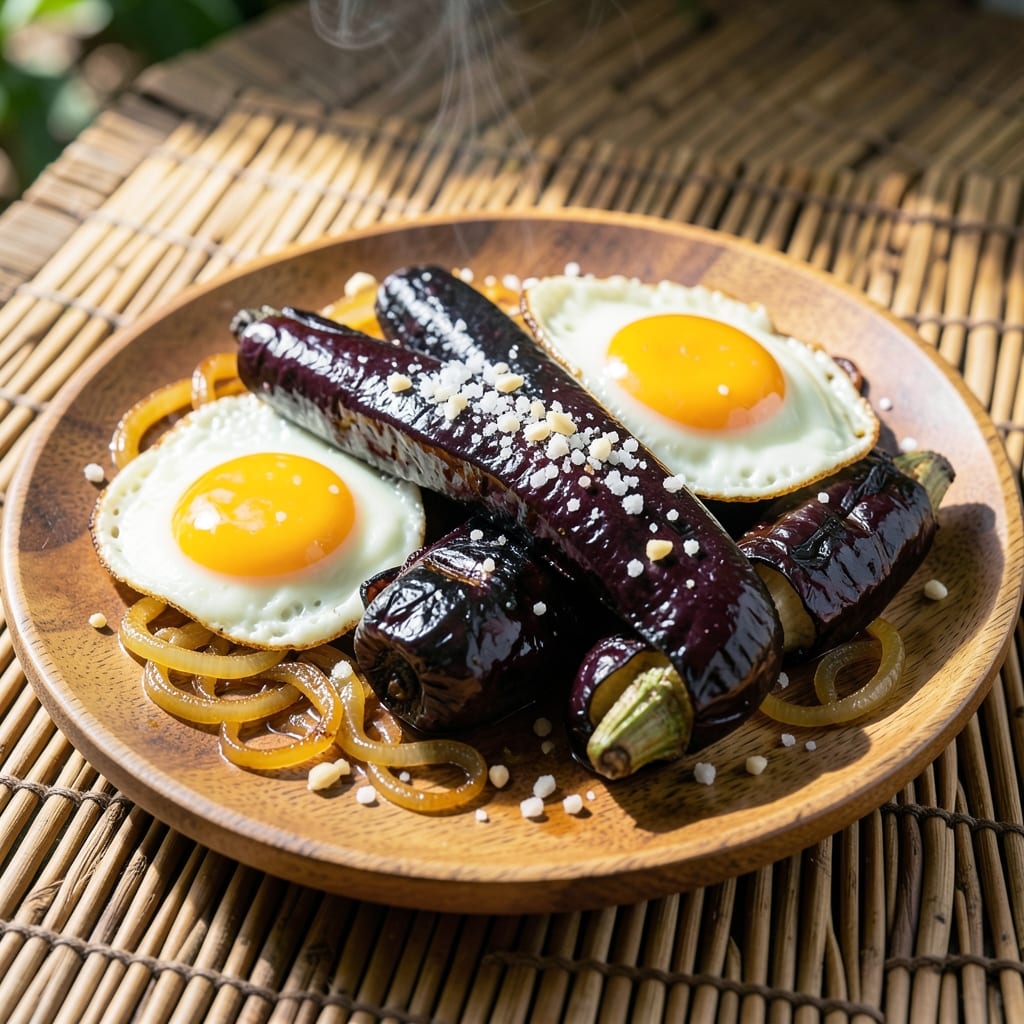
This Filipino eggplant omelet brings savory comfort to your table with minimal effort. I developed this version after tasting the classic in Manila, where the simple combination of egg and eggplant creates magic.
The technique is straightforward: char the eggplant for smoky depth, then combine with beaten eggs for a tender, flavorful dish. The key is using ripe, firm eggplant that holds its shape during cooking.
What results is a golden-brown omelet with a creamy interior and the distinctive smoky flavor of grilled eggplant. It pairs perfectly with steamed rice and a side of spicy vinegar.
Ready in 20 minutes, this dish proves that traditional Filipino flavors can shine in any home kitchen. Here’s how to make it.
Ingredients for Egg and Eggplant Recipe Filipino
Pantry staples meet fresh produce for this classic Filipino dish with smoky charred flavor.
| Ingredient | Amount | Notes |
|---|---|---|
| Japanese Eggplant 🍆 | 2 whole | Ripe, firm, about 1 lb total |
| Large Eggs 🥚 | 6 whole | Beaten for omelet mixture |
| Yellow Onion 🧅 | 1 whole | Medium, thinly sliced |
| Garlic Cloves 🧄 | 4 cloves | Minced for aromatic base |
| All-Purpose Flour 🌾 | 2 tbsp | Optional for binding |
| Salt 🧂 | 1 tsp | Diamond Crystal kosher preferred |
| Ground Black Pepper 🌶️ | ½ tsp | Freshly ground for best flavor |
| Neutral Cooking Oil 🫒 | ½ cup | For charring and frying |
| Green Onions 🧅 | 3 whole | Thinly sliced for garnish |
| Soy Sauce 🥢 | 1 tbsp | For umami depth |
| White Vinegar 🍶 | 1 tbsp | For spicy vinegar dip |
| Red Chili Pepper 🌶️ | 1 whole | Sliced thin for spice |
[recipe_ingredient_scaler]
The eggplant is everything here. Japanese eggplant (the long, thin kind) chars up perfectly and stays tender—avoid the big globe variety, it’s too watery. Look for firm, glossy skin with no soft spots. Asian markets usually have the best selection, but most Whole Foods carry them too. If you can’t find Japanese, Italian eggplant works in a pinch (just salt it first to draw out bitterness).
No Japanese eggplant? Italian or even regular globe works (peel and salt it first). Fresh out of green onions? Chives or shallots add a similar fresh bite. Need more umami? Fish sauce at half the amount boosts the soy sauce, but skip it for strict vegetarian. The vinegar dip is non-negotiable—cane vinegar is traditional, but apple cider works too. For extra heat, add a sliced Thai chili instead of the red pepper.
Eggplant keeps 5-7 days in the crisper drawer, but use it fresh for this. Leftovers? Wrap tightly and refrigerate for 2 days—reheat in a dry pan to crisp the outside. The spicy vinegar keeps 1 week in the pantry, but fresh is always better.
Why You’ll Love This Recipe
- One Pan Wonder: I just toss the sliced eggplant in flour, fry it up, then scramble the eggs right in the same pan with garlic and onion—minimal mess, maximum flavor.
- Garlicky Heaven: Here’s what sold me—the sizzling garlic with tender eggplant and fluffy eggs creates this rich, savory bite that lingers.
- Breakfast to Dinner: Honestly, I serve this for breakfast with rice, or bulk it up for dinner with a side of atchara.
- Stretches the Budget: Japanese eggplant is cheap, eggs are a staple, and this dish feeds four for the cost of one takeout meal.
Step-by-Step Instructions for Egg and Eggplant Filipino-Style
Here’s how to nail this dish with crispy edges and a tender, flavorful center.
Step 1: Char the Japanese Eggplant to Perfection
Heat a grill pan or cast iron skillet over medium-high heat. Rub the 2 whole Japanese Eggplant with a bit of the 0.5 cup neutral cooking oil and place them in the pan. Cook for 8-10 minutes, turning occasionally, until the skin is blackened and blistered all over.
This charring step is crucial—it infuses the eggplant with that signature smoky flavor that defines this dish. The flesh should soften completely and the skin should look almost burnt. Remove from heat and let cool slightly before handling.
Step 2: Prepare the Eggplant for Frying
Once cool enough to handle, peel off the blistered skin from the 2 whole Japanese Eggplant. Flatten each eggplant slightly with your palm or a fork, then make a shallow lengthwise slit in the center of each—this helps the egg mixture penetrate.
In a bowl, beat the 6 whole Large Eggs with 1 tsp salt and 0.5 tsp ground black pepper until well combined. Add the 2 tbsp all-purpose flour and whisk until smooth. This creates a rich, well-seasoned base that will bind everything together.
Step 3: Sauté Aromatics and Combine
In a large skillet, heat 2 tbsp of the 0.5 cup neutral cooking oil over medium heat. Add the 1 whole yellow onion (thinly sliced) and 4 cloves garlic cloves (minced). Sauté for 3-4 minutes until the onion turns translucent and the garlic is fragrant.
Carefully place the peeled eggplant in the skillet with the onions and garlic. Pour the beaten egg mixture over the eggplant, ensuring it fills the slits and coats the sides. Cook for 4-5 minutes until the edges are golden brown and set.
Step 4: Finish and Garnish
Flip the eggplant gently and cook for another 4-5 minutes until the egg is fully set and the bottom is golden and crisp. The egg should be cooked through but still tender, not rubbery.
Transfer to a serving plate. For the dipping sauce, combine the 1 tbsp soy sauce, 1 tbsp white vinegar, and thinly sliced 1 whole red chili pepper in a small bowl. Garnish the dish with thinly sliced 3 whole green onions and serve immediately with the spicy vinegar dip on the side.
Pro Tips For Making Egg And Eggplant Recipe Filipino
- Salt the Eggplant: Sprinkle sliced Japanese eggplant with salt and let sit for 10 minutes to draw out bitterness—I learned this the hard way after my first few batches tasted unpleasantly sharp.
- Thin Egg Coating: Beat eggs with a splash of water to stretch the mixture, ensuring a light, even coat on each eggplant slice without using a dozen eggs.
- Skip the Soaking: Resist the urge to soak eggplant slices in water after salting; just pat them dry with paper towels to avoid a soggy final dish.
- Hot Oil Test: Drop a pinch of flour into the oil—if it sizzles immediately, it’s ready for frying; if not, wait another minute for that perfect golden crust.
Essential Equipment for This Dish
Cast Iron Skillet
A 10-12 inch cast iron skillet is my go-to for this dish. Its even heat distribution ensures perfect charring on the eggplant and consistent cooking for the egg mixture. I use my Lodge skillet—it’s been in my kitchen for years and never lets me down. 🔥
Grill Pan Alternative
If you don’t have cast iron, a ridged grill pan works beautifully for charring the eggplant. The ridges create those beautiful grill marks that add both visual appeal and smoky flavor. Just make sure it’s heavy-bottomed for even heat.
Large Mixing Bowl
You’ll need a large mixing bowl for beating the eggs and combining the ingredients. I prefer glass or stainless steel—easy to clean and won’t absorb odors. A 3-quart bowl gives plenty of room for whisking without spills.
Sharp Chef’s Knife
A sharp 8-inch chef’s knife makes quick work of slicing the onions, garlic, and green onions. I keep mine from Mercer Culinary always razor-sharp. Dull knives slip, but a sharp one gives you control for thin, even slices.
Thin Spatula
For flipping the delicate eggplant and egg mixture, a thin, flexible spatula is essential. It slides under the food without breaking it. I love my fish spatula—it’s perfect for this job.
Small Bowl for Dipping Sauce
Prepare your spicy vinegar dip in a small bowl—something with a 4-6 ounce capacity works well. I use a little glass ramekin; it’s just the right size for mixing the soy sauce, vinegar, and chili. 💡
Nutrition Facts
Frequently Asked Questions
Can I use regular eggplant instead of Japanese?
Yes, but peel and salt it first to remove bitterness. Japanese eggplant is preferred for its tender texture and fewer seeds.
Why do we char the eggplant first?
Charring adds a smoky depth that defines this dish. The blackened skin also peels off easily, revealing the creamy flesh inside for the egg mixture to cling to.
What if my omelet breaks when flipping?
Use a thin, flexible spatula and flip gently. If it breaks, simply press the pieces back together—they’ll hold once the egg sets.
Can I make this ahead of time?
Best served fresh, but leftovers keep for 2 days refrigerated. Reheat in a dry pan to crisp the outside.

Trained in classic French technique but raised on slow-cooked ribs and spicy rubs, she blends culinary skill with smoke and soul.
- Meatball Curry Recipe Kerala Style: Coconut-Spiced Gravy With Tender Bites - October 3, 2026
- Recipe for Curried Tofu: Aromatic Spices With Crispy Edges - October 3, 2026
- Recipe for Dumplings in Crock Pot: Fluffy Pillows with Minimal Effort - October 3, 2026