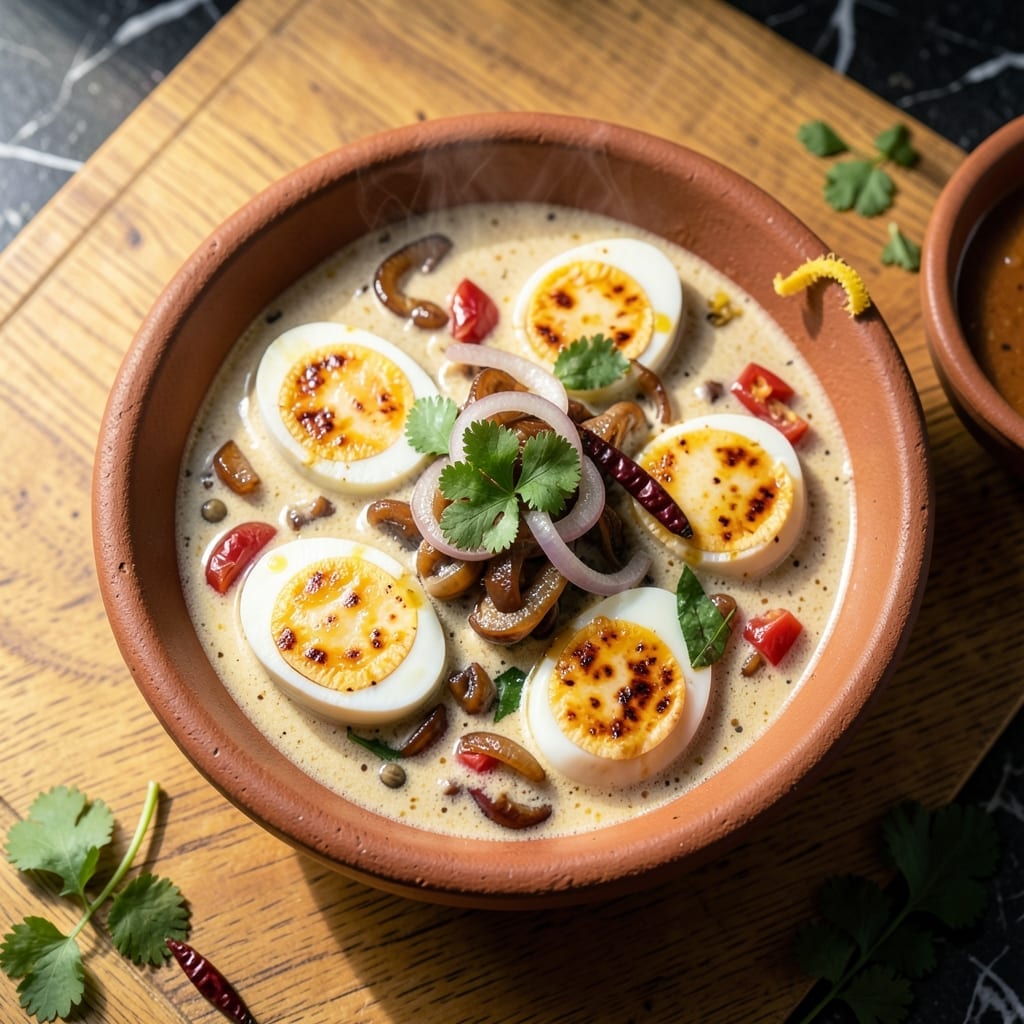
This Kerala-style egg curry brings authentic South Indian flavors to your home kitchen with its rich coconut gravy and traditional spices.
The dish combines hard-boiled eggs with a fragrant sauce built from fresh coconut, aromatic curry leaves, and a careful blend of turmeric, coriander, and red chili. I’ve streamlined the process to maintain authenticity without complicated steps.
What emerges is a creamy, deeply flavorful curry where tender eggs soak up the velvety coconut sauce. The balance of heat and richness makes this dish truly special.
Serve with steamed rice or appam for a complete meal that tastes like it came from a Kerala kitchen. Here’s how to make it.
Ingredients for Egg Curry Recipe Kerala Style with Coconut
Rich coconut gravy and traditional spices bring this authentic Kerala dish to life.
| Ingredient | Amount | Notes |
|---|---|---|
| Hard-Boiled Eggs 🥚 | 8 whole | Peeled, halved lengthwise |
| Fresh Coconut 🥥 | 1 cup | Grated or finely chopped |
| Coconut Milk 🥛 | 1 cup | Full-fat for creaminess |
| Curry Leaves 🍃 | 10 pieces | Fresh, washed thoroughly |
| Onion 🧅 | 1 whole | Large, finely chopped |
| Tomatoes 🍅 | 2 whole | Medium, diced |
| Garlic Cloves 🧄 | 4 cloves | Minced for depth |
| Fresh Ginger 🌿 | 1 tbsp | Grated or minced |
| Green Chili Peppers 🌶️ | 2 whole | Slit lengthwise, seeds removed |
| Turmeric Powder 🌿 | ½ tsp | For color and warmth |
| Coriander Powder 🌿 | 1 tbsp | Freshly ground preferred |
| Red Chili Powder 🌶️ | 1 tsp | Adjust for heat preference |
| Garam Masala 🌿 | ½ tsp | Added at the end |
| Mustard Seeds 🌿 | ½ tsp | For tempering |
| Vegetable Oil 🫒 | 2 tbsp | For sautéing and tempering |
[recipe_ingredient_scaler]
The coconut is non-negotiable here. Fresh grated coconut gives the best texture, but frozen (thawed and drained) works in a pinch. Look for curry leaves at Indian grocery stores—Patel Brothers or local Asian markets usually stock them. The coconut milk should be full-fat for that velvety richness. Skip the light versions; they’ll make the gravy thin and watery.
No fresh coconut? Unsweetened desiccated coconut (soaked in warm water) is your next best bet. Out of curry leaves? A pinch of dried curry leaf powder works, but fresh is worth hunting down. For heat, swap green chilies with serrano peppers or add a dash of cayenne. The garam masala can be store-bought—MDH or Everest brands are reliable.
Eggs keep in the fridge for 1 week, but hard-boil them the day you cook. Fresh coconut lasts 3-4 days refrigerated in a sealed container. The curry tastes even better the next day—store in an airtight container for up to 3 days. Reheat gently to preserve the creamy texture.
Why You’ll Love This Recipe
- One Pot Wonder: I just dump everything—the boiled eggs, coconut milk, and those fragrant curry leaves—into a single pan. Honestly, cleanup’s a breeze.
- Creamy Coconut Bliss: The fresh coconut and milk create this rich, velvety sauce that coats every egg. Between us, I’ve caught myself licking the spoon.
- Weeknight Lifesaver: It’s my go-to when I need something hearty but fast. (Yes, even on a Tuesday night)
- Budget Friendly Feast: Eggs and coconut stretch so far—this feeds my family of four for less than the cost of takeout. I’ll be real: leftovers taste even better the next day.
Step-by-Step Instructions for Kerala Style Egg Curry with Coconut
Here’s the authentic method that delivers rich coconut gravy with perfectly spiced boiled eggs.
Step 1: Temper the Spices in Hot Oil
Heat the 2 tbsp vegetable oil in a heavy-bottomed pan over medium heat. When the oil shimmers, add the 0.5 tsp mustard seeds and let them pop for about 30 seconds until they sizzle and release their aroma.
Immediately add the 10 pieces curry leaves—they’ll crackle and turn slightly crisp. This tempering process releases the full flavor of the spices and creates the authentic base for your curry. Stir for another 10 seconds until the leaves become fragrant.
Step 2: Build the Flavor Base with Aromatics
Add the 1 whole onion (finely chopped) to the pan and sauté for 4-5 minutes until it turns golden brown. The onions should soften completely and develop a sweet, caramelized aroma.
Next, add the 4 cloves garlic cloves, 1 tbsp fresh ginger, and 2 whole green chili peppers. Sauté for 1-2 minutes until the raw smell disappears and the mixture becomes fragrant. Be careful not to burn the garlic—it should turn light golden, not dark brown.
Step 3: Create the Spiced Coconut Gravy
Stir in the 2 whole tomatoes (diced) and cook for 3-4 minutes until they soften and release their juices. Add the 0.5 tsp turmeric powder, 1 tbsp coriander powder, and 1 tsp red chili powder, mixing well to coat the onion-tomato mixture.
Now add the 1 cup fresh coconut and pour in the 1 cup coconut milk. Stir to combine and bring to a gentle simmer. Cook for 5-7 minutes until the gravy thickens slightly and the oil starts to separate at the edges. The mixture should be rich and creamy with a vibrant yellow-orange color.
Step 4: Add Eggs and Finish with Garam Masala
Gently add the 8 whole hard-boiled eggs (halved lengthwise) to the gravy. Spoon the sauce over the eggs to coat them completely. Reduce the heat to low and let them simmer for 3-4 minutes to absorb the flavors.
Sprinkle the 0.5 tsp garam masala over the curry and stir gently to incorporate. Taste and adjust seasoning if needed. The eggs should be fully coated in the rich, creamy coconut gravy with a balance of spices in every bite. Serve hot with rice or bread.
Pro Tips For Making Egg Curry Recipe Kerala Style With Coconut
- Toast the Coconut: Lightly roast the fresh coconut until golden before grinding—this deepens the flavor and removes any raw taste. I learned this the hard way after my first batch tasted flat.
- Boil Eggs Firm: Overcook the eggs slightly, like 10-12 minutes, so they hold up in the curry without falling apart. Sounds obvious, but I’ve ruined two batches by pulling them too early.
- Bloom the Curry Leaves: Fry the curry leaves in hot oil for 10-15 seconds before adding onions to release their aroma. My grandmother swore by this, and the difference is noticeable.
- Use Thick Coconut Milk: Simmer the eggs in the thick first press of coconut milk, not the thin second extract. It gives the curry that rich, creamy texture Kerala-style egg curry is known for.
Make-Ahead Tips for Leftovers
Prep Ahead Strategy
Hard-boil your 8 eggs up to 2 days before cooking and store them peeled in the fridge. This saves time on the day of cooking while keeping the texture perfect. I find this step alone cuts my prep time in half. 💡
Coconut Prep
Grate your 1 cup fresh coconut the night before and refrigerate it in a sealed container. Fresh coconut oxidizes quickly, so keeping it chilled preserves its sweetness and prevents discoloration. Alternatively, use frozen coconut thawed and drained just before cooking.
If using desiccated coconut, soak it in ½ cup warm water for 30 minutes to rehydrate before adding to the curry.
Spice Blend Shortcut
Measure out all your dry spices—turmeric, coriander powder, red chili powder, and garam masala—the night before. Store them in a small bowl covered with plastic wrap. This little prep makes the cooking process seamlessly smooth.
Gravy Base Advance
You can prepare the entire gravy base (up to adding eggs) 1 day ahead. Store it in an airtight container in the fridge. The flavors deepen overnight, making your curry even more delicious. Reheat gently before adding the eggs.
Freezing Tips
This curry freezes beautifully for up to 1 month. Cool completely, then transfer to freezer-safe containers, leaving 1-inch headspace. Thaw overnight in the fridge and reheat on low heat to maintain the creamy texture. ❄️
Nutrition Facts
Frequently Asked Questions
Can I use canned coconut milk instead of fresh?
Yes, full-fat canned coconut milk works perfectly. It provides the same creamy texture as fresh. Just avoid light versions, which can make the gravy thin.
How do I adjust the spice level?
Reduce or omit green chilies for milder heat. For extra spice, add ½ tsp cayenne or an extra 1 tsp red chili powder. Taste as you go.
What if I don’t have curry leaves?
Use 1 tsp dried curry leaf powder as a substitute. Alternatively, a bay leaf adds depth, though the flavor differs. Fresh leaves are ideal.
How long can I store leftovers?
Leftovers keep in an airtight container in the fridge for 3 days. For longer storage, freeze for up to 1 month. Reheat gently on low.

Trained in classic French technique but raised on slow-cooked ribs and spicy rubs, she blends culinary skill with smoke and soul.
- Recipe for Boneless Pork Chops in Cast Iron Skillet: Sear and Baste to Juicy Perfection - October 3, 2026
- Recipe for Boneless Cross Rib Roast: Slow-Roasted Beef with Herb Crust - October 3, 2026
- Hamburgers in Sauce Recipe Crock Pot: Slow-Cooked Savory Delight - October 3, 2026