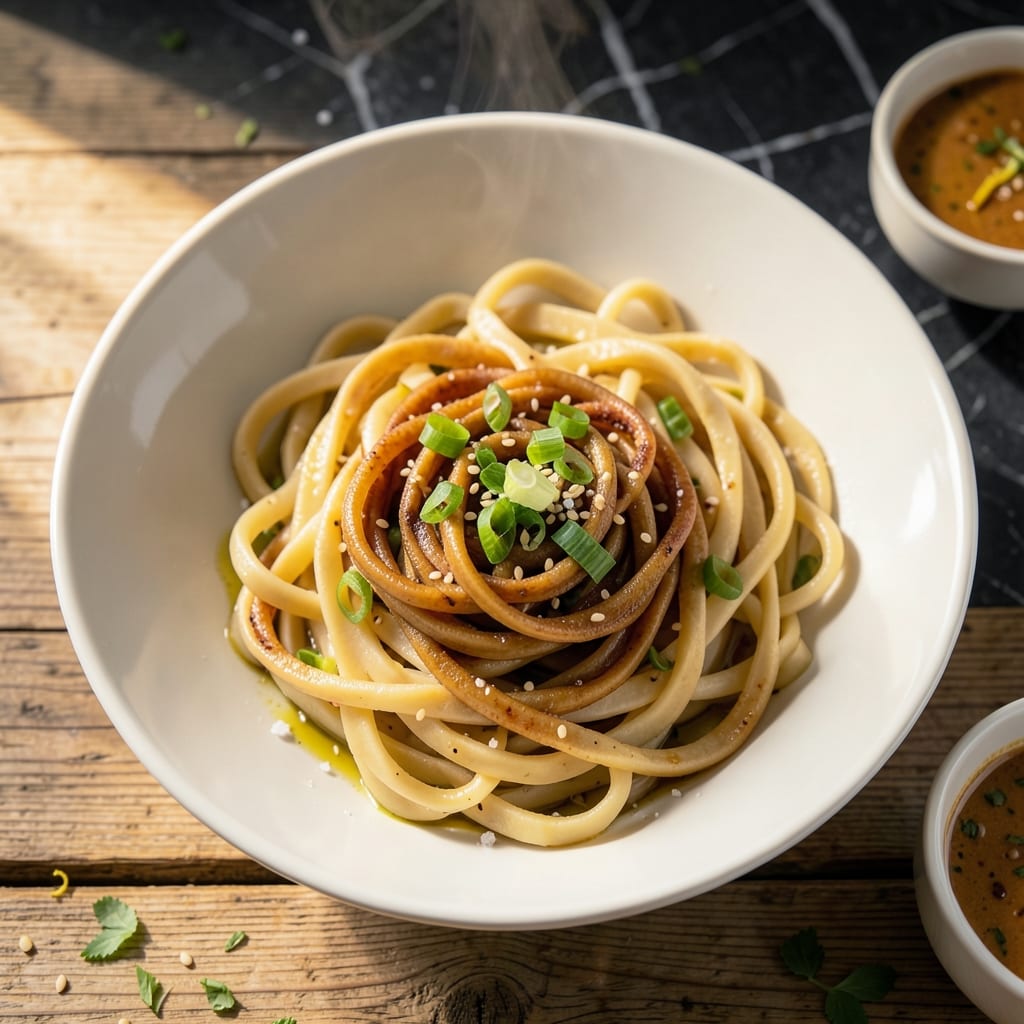
Making fresh egg noodles at home transforms a simple dish into something truly special. The process is rewarding, and the texture of homemade strands is far superior to store-bought versions.
I developed this method to ensure soft, springy noodles every time. With just a few basic ingredients and a little patience, you’ll create strands that hold their shape and absorb flavors beautifully.
These noodles are versatile—perfect for soups, stir-fries, or simple buttered dishes. The key is in the kneading and resting, which build the elastic texture that defines great egg noodles.
Once you try this, you’ll never go back to pre-packaged. The difference in taste and quality is undeniable, and the process is simpler than you might expect.
Ingredients for Egg Noodles Recipe in Tamil Language
Six simple ingredients for soft, springy strands you’ll make again and again.
| Ingredient | Amount | Notes |
|---|---|---|
| All-Purpose Flour 🌾 | 2 cups | Plus extra for dusting |
| Large Eggs 🥚 | 3 whole | Room temperature preferred |
| Salt 🧂 | ½ tsp | Fine grain for even distribution |
| Water 💧 | 1 tbsp | Adjust as needed for dough |
| Olive Oil 🫒 | 1 tsp | For elasticity and shine |
| Egg Yolk 🥚 | 1 whole | Extra for richer color |
[recipe_ingredient_scaler]
The flour is the foundation here. King Arthur all-purpose is my go-to for consistent results, but any decent brand works. Room temperature eggs incorporate better—just pull them out an hour before starting. The extra yolk isn’t mandatory, but it gives the noodles that vibrant golden color (and a slightly richer flavor). If your kitchen is dry, you might need that extra tablespoon of water to bring the dough together.
No all-purpose flour? Bread flour works too—just reduce by a tablespoon or two since it absorbs more liquid. Short on eggs? Two whole eggs plus two yolks can sub for three whole eggs. The olive oil can be swapped for any neutral oil (vegetable, canola), but don’t skip the fat entirely—it keeps the dough from getting tough. For salt, Diamond Crystal is my pick (it dissolves easily).
Fresh noodles cook fast—use within 24 hours or freeze for up to 1 month. Dust them well with flour before storing to prevent sticking. Thaw frozen noodles in the fridge overnight before cooking (don’t microwave—they’ll turn to mush).
Why You’ll Love This Recipe
- One Bowl Wonder: I mix flour, eggs, and a pinch of salt right in my favorite bowl—no fancy equipment, just my hands and 10 minutes of kneading.
- Rich Egg Taste: The large eggs give these noodles a deep, savory richness that store-bought just can’t match, especially with that hint of olive oil.
- Endless Meal Pairing: I toss them into soups, stir-fries, or even a simple agili (Tamil-style spicy sauce) for a quick, satisfying meal.
- Budget Stretcher: Honestly, a pound of flour and a few eggs make enough noodles to feed my family twice, and it costs less than a takeout order.
Step-by-Step Instructions for Homemade Egg Noodles
Creating these strands at home is simpler than you think—just follow my tested method.
Step 1: Create the Dough Base
On a clean work surface or in a large bowl, create a well with the 2 cups All-Purpose Flour. I like to make a wide, shallow well so nothing spills over the sides when mixing. This traditional method gives you perfect control over the texture.
Add the 3 whole Large Eggs, 0.5 tsp Salt, 1 tbsp Water, 1 tsp Olive Oil, and 1 whole Egg Yolk to the center of the well. The extra yolk gives these noodles their signature rich color and tender bite. Use room temperature eggs—they incorporate more smoothly into the flour.
Step 2: Knead Until Smooth and Elastic
Using a fork, gradually whisk the wet ingredients together while slowly incorporating the flour from the edges. Once it becomes too thick to stir, switch to your hands. You’ll feel the dough start to come together into a shaggy mass.
Knead for 8-10 minutes until the dough transforms from rough and crumbly to smooth and slightly springy. Press your thumb into the dough—if it bounces back slowly, you’re there. If it’s too dry, add water 1 teaspoon at a time. If too sticky, dust with a bit of extra flour as you work.
Step 3: Rest the Dough for Workability
Shape the dough into a ball and wrap it tightly in plastic wrap. Let it rest at room temperature for 30 minutes. This rest period allows the gluten to relax, making the dough much easier to roll out thinly without springing back.
I’ve found that resting is non-negotiable—skip this step and you’ll fight the dough the entire time. The plastic wrap prevents the surface from drying out while it rests. After 30 minutes, the dough should feel noticeably softer and more pliable.
Step 4: Roll and Cut the Noodles
Divide the rested dough into 4 equal portions for easier handling. On a lightly floured surface, roll each portion as thin as possible—aim for about 1/16-inch thickness. The thinner you roll, the more delicate your final noodles will be.
Dust the rolled dough lightly with flour to prevent sticking, then fold it loosely and slice into ¼-inch wide strips. Unfold each strip and lay them flat on a floured surface. Repeat with remaining dough. These fresh strands will be slightly irregular—that’s part of their homemade charm.
Step 5: Cook the Noodles to Perfection
Bring a large pot of salted water to a rolling boil. Add the fresh noodles and cook for 2-3 minutes until they float to the surface and look slightly translucent. Fresh pasta cooks much faster than dried, so keep an eye on them.
Test one strand—it should be tender but still have a slight bite. Drain immediately and toss with a bit of olive oil to prevent sticking if not using right away. These noodles are best served immediately in soups or with your favorite sauce, where their soft, springy texture truly shines.
Pro Tips For Making Egg Noodles Recipe In Tamil Language
- Knead Longer: Work the dough for at least 8-10 minutes until smooth and elastic—I learned this the hard way when my first batch turned out chewy and dense.
- Rest the Dough: Let it sit covered for 30 minutes before rolling; skipping this makes the noodles tough and harder to shape.
- Use Warm Water: Mixing the flour with slightly warm water (not hot) helps the gluten develop better and prevents cracking when rolling.
- Dust Generously: Coat your work surface and rolling pin with plenty of flour to stop sticking—yes, even if you think you’ve used enough.
Health Benefits of This Recipe
Balanced Nutrition
Homemade egg noodles offer a good balance of carbohydrates and protein from the eggs, making them more nutritious than plain flour noodles. Each serving provides sustained energy, perfect for active days. The eggs add essential amino acids that support muscle health. 💪
Rich in B Vitamins
The eggs in this recipe provide a significant boost of B vitamins, particularly B12 and riboflavin. These nutrients are vital for energy metabolism and maintaining healthy skin. I notice I feel more energized when I include egg noodles in my meals regularly.
Moderate Calorie Count
A 1-cup serving contains about 200-220 calories, making these noodles a reasonable choice for those watching their intake. The calories come primarily from complex carbs and healthy fats. This makes them a great base for nutrient-dense meals.
Low in Saturated Fat
With only a small amount of olive oil in the dough, these noodles are naturally low in saturated fat. The fat content is mostly from the eggs and olive oil, which are heart-healthy choices. This makes them a better option than many store-bought varieties. 💛
Versatile for Dietary Needs
These noodles can easily fit into various dietary patterns. For a lower-carb option, you can substitute half the flour with whole wheat flour. They also work well in vegetarian dishes, providing a protein boost to meat-free meals.
Good Source of Selenium
Eggs are one of the best sources of selenium, a powerful antioxidant. This mineral supports thyroid function and immune health. Just one serving of these noodles provides a meaningful amount of your daily selenium needs.
Nutrition Facts
Frequently Asked Questions
Can I make this without a pasta machine?
A rolling pin works just as well. Roll the dough as thin as possible, about 1/16-inch thick, then slice into strips. It may take a little more effort, but the texture will be just as good.
How do I store fresh noodles?
Dust them with flour, place in an airtight container, and refrigerate for up to 24 hours. For longer storage, freeze on a tray first, then transfer to a bag for up to 1 month.
Why did my noodles turn out tough?
Over-kneading or not resting the dough can cause this. Knead just until smooth, then let it rest for 30 minutes to relax the gluten. This ensures tender, springy strands.
Can I use whole wheat flour?
Yes, but replace only half the all-purpose flour with whole wheat. The extra bran can make the dough heavier, so adjust with a little more water if needed.

Trained in classic French technique but raised on slow-cooked ribs and spicy rubs, she blends culinary skill with smoke and soul.
- Recipe for Boneless Pork Chops in Cast Iron Skillet: Sear and Baste to Juicy Perfection - October 3, 2026
- Recipe for Boneless Cross Rib Roast: Slow-Roasted Beef with Herb Crust - October 3, 2026
- Hamburgers in Sauce Recipe Crock Pot: Slow-Cooked Savory Delight - October 3, 2026