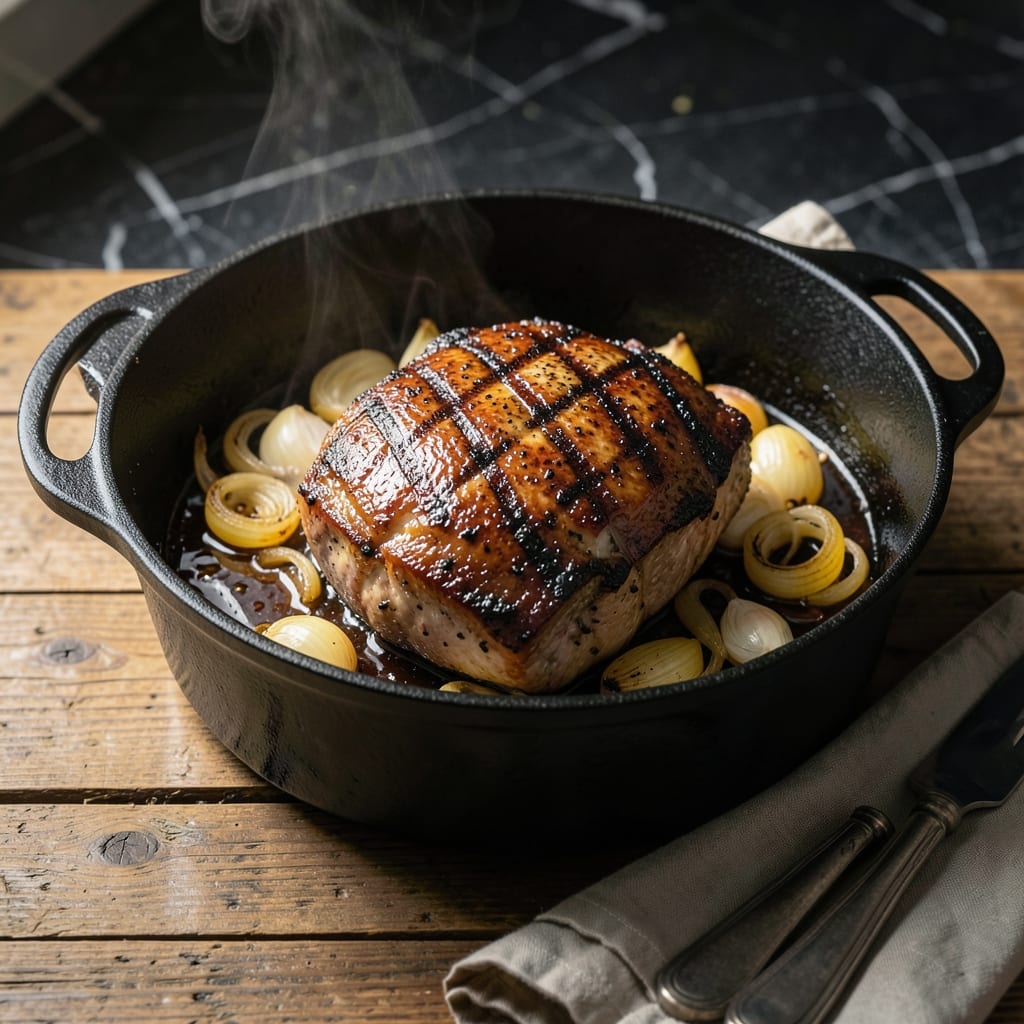
There’s nothing quite like the deep, rich flavor of slow-braised elk roast prepared in a Dutch oven. This method transforms lean wild game into fall-apart tender meat with complex, savory depth.
The Dutch oven’s even heat distribution creates the perfect environment for breaking down elk’s tough fibers while locking in moisture. Low and slow is the only way to achieve that melt-in-your-mouth texture this cut deserves.
What emerges after hours of gentle cooking is meat so tender it nearly dissolves on your tongue, surrounded by a velvety sauce that’s absorbed every bit of the elk’s natural richness. The result justifies every minute of the process.
Perfect for special occasions or when you want to showcase wild game at its finest. This technique never fails to deliver exceptional results.
Ingredients for Elk Roast Recipe Dutch Oven
Rich, wild, and deeply flavorful—these ingredients transform elk into something extraordinary.
| Ingredient | Amount | Notes |
|---|---|---|
| Elk Roast 🦌 | 3 lb | Chuck or shoulder cut preferred |
| Olive Oil 🫒 | 2 tbsp | Divided for searing and cooking |
| Kosher Salt 🧂 | 2 tsp | Diamond Crystal preferred for even seasoning |
| Black Pepper 🌶️ | 1 ½ tsp | Freshly ground for bold flavor |
| Garlic Cloves 🧄 | 6 cloves | Smashed for robust aroma |
| Yellow Onion 🧅 | 2 whole | Large, quartered with skin on |
| Carrots 🥕 | 4 whole | Cut into 2-inch chunks |
| Celery Stalks 🌿 | 3 whole | Cut into 2-inch pieces |
| Red Wine 🍷 | 2 cups | Dry variety like Cabernet Sauvignon |
| Beef Broth 🥘 | 2 cups | Low-sodium preferred for control |
| Tomato Paste 🍅 | 3 tbsp | For depth and umami richness |
| Fresh Rosemary 🌿 | 2 whole | Sprigs, tied with kitchen twine |
| Fresh Thyme 🌿 | 4 whole | Sprigs, for aromatic depth |
| Bay Leaves 🍃 | 2 whole | Dried, for subtle earthiness |
| All-Purpose Flour 🌾 | 2 tbsp | For thickening the sauce |
[recipe_ingredient_scaler]
The elk is the star, so source it carefully. Local butchers or specialty game shops are your best bet—look for deep red color with good marbling (yes, even in wild game). Chuck or shoulder cuts work best for slow braising; avoid lean tenderloin. I’ve had great luck with Colorado-based purveyors like Broken Arrow Ranch when I can’t find it fresh. Don’t trim all the fat—it adds richness to the sauce (trust me on this one).
No red wine? Extra beef broth with a splash of balsamic vinegar gets you 80% there. Out of fresh herbs? Dried will work at one-third the amount, but fresh really shines here. If elk isn’t available, beef chuck roast is the closest substitute—just reduce cooking time by about 25%. The tomato paste is non-negotiable though; it’s what gives the sauce that deep, velvety character (those squeeze tubes at Trader Joe’s are perfect for this).
Braised elk keeps beautifully in the fridge for up to 5 days and actually tastes better the next day. Freeze for up to 3 months—portion it with some sauce for easy reheating. The sauce will thicken as it cools, so thin with a little broth when reheating. Always discard the bay leaves and herb sprigs before storing (don’t skip this part).
Why You’ll Love This Recipe
- One Pot Magic: I toss the elk roast in the Dutch oven with olive oil, salt, pepper, and garlic—then let the oven do the work.
- Rich and Earthy: The garlic cloves mellow into the meat, giving it a deep, savory flavor that’s hard to beat.
- Feeds the Freezer: I always make extra—leftovers reheat beautifully for quick meals later in the week.
- Weeknight Hero: Honestly, it’s simple enough for a Tuesday but impressive enough for company.
Step-by-Step Instructions for Elk Roast Dutch Oven
This method delivers melt-in-your-mouth elk with a rich, deeply flavored sauce.
Step 1: Sear and Season the Elk Roast
Pat the 3 lb elk roast completely dry with paper towels—this ensures a proper sear. Season generously with the 2 tsp kosher salt and 1.5 tsp black pepper, pressing the spices into the meat so they adhere well.
Heat 1 tbsp olive oil in a Dutch oven over medium-high heat until shimmering. Sear the roast on all sides for 8-10 minutes total, turning occasionally, until deeply browned. The fond (browned bits) left in the pot will build the sauce’s flavor. Remove the roast and set aside.
Step 2: Sauté Aromatics and Deglaze
In the same Dutch oven, add the remaining 1 tbsp olive oil. Sauté the 2 quartered yellow onion, 4 carrots, and 3 celery stalks for 5-6 minutes until the onion edges are caramelized and the vegetables soften slightly.
Add the 6 smashed garlic cloves, 3 tbsp tomato paste, 2 fresh rosemary sprigs, 4 fresh thyme sprigs, and 2 bay leaves. Stir for 1-2 minutes until the tomato paste darkens and becomes fragrant. This builds a deep, savory base for the braising liquid.
Step 3: Braise the Elk Roast Low and Slow
Return the seared roast to the Dutch oven. Pour in the 2 cups red wine and 2 cups beef broth, ensuring the liquid covers about two-thirds of the meat. The wine should sizzle as it hits the hot pan—this deglazes the fond and lifts all that flavor into the sauce.
Bring to a simmer, then cover and transfer to a 325°F oven. Braise for 3 to 3.5 hours, turning the roast every 45 minutes, until the elk is fork-tender and nearly falling apart. The liquid should gently bubble throughout the cook time.
Step 4: Thicken the Sauce and Finish
Remove the roast and strain the braising liquid into a saucepan, pressing the vegetables to extract all their flavor. Discard the solids. Skim any excess fat from the surface of the liquid.
Place the saucepan over medium heat and whisk in the 2 tbsp all-purpose flour. Simmer for 5-7 minutes, stirring frequently, until the sauce thickens enough to coat the back of a spoon. Adjust seasoning with additional salt and pepper if needed. Slice the roast and serve with the rich, velvety sauce spooned over the top.
Pro Tips For Making Elk Roast Recipe Dutch Oven
- Sear It Hard: I learned this the hard way—get your Dutch oven screaming hot before adding the elk roast, and don’t move it for at least 3-4 minutes per side to develop that deep crust.
- Dry the Roast: Pat the elk roast completely dry with paper towels before seasoning; any moisture will steam the meat instead of searing it, and that’s a texture you don’t want.
- Don’t Rush the Rest: After pulling the roast from the oven, tent it loosely with foil and let it rest for 15-20 minutes—cutting too soon sends all the juices straight to the cutting board.
- Smash the Garlic: Instead of mincing, lightly smash the garlic cloves with the side of your knife so they infuse the oil and roast whole, adding sweetness without burning.
Dietary Considerations for This Recipe
Low-Fat Protein Source
Elk is significantly leaner than beef, with only 2.4g of fat per 100g compared to beef’s 8-10g. This makes the dish ideal for anyone watching their fat intake while still delivering rich, meaty flavor. I love that we get all the satisfaction without the guilt. 💪
High-Protein Benefits
This dish packs a protein punch with about 28g of protein per 100g of elk. That’s more than chicken breast and nearly double what you’d find in pork. Perfect for muscle maintenance and post-workout recovery.
Gluten-Free Friendly
The recipe is naturally gluten-free if you skip the flour for thickening. I’ve had great results using cornstarch (1 tbsp mixed with 1 tbsp cold water) as a substitute. Always check your broth and wine labels for hidden gluten.
Low-Carb Option
With only 0g carbs per serving from the elk itself, this fits perfectly into low-carb diets. The small amount of flour in the sauce adds minimal carbs. For strict keto, simply omit the flour entirely.
Iron-Rich Meal
Elk provides about 3.5mg of iron per 100g, more than beef or chicken. This is especially beneficial for active individuals or anyone needing to boost their iron intake. The vitamin C from tomatoes helps with iron absorption too.
Allergen Considerations
This recipe is free from common allergens like dairy, nuts, and eggs. The only potential concern is the flour for those with wheat allergies. For nut-free cooking, just ensure your broth and wine are processed in allergen-free facilities.
Nutrition Facts
Frequently Asked Questions
Can I use a different type of wine?
Yes! Any dry red wine works, but avoid sweet varieties. A bold Cabernet Sauvignon or Merlot adds depth. For non-alcoholic, use extra beef broth with 1 tbsp balsamic vinegar for similar acidity.
How do I know when it’s done?
The elk should reach 160°F internally and pull apart easily with a fork. If it resists, braise for another 30 minutes and check again. Overcooking isn’t a concern with this method.
Can I make this on the stovetop?
After searing, cover and simmer on low heat for 3-4 hours. Check occasionally to ensure the liquid doesn’t evaporate completely. The oven method is more hands-off though.
Why is my sauce thin?
Simmer the strained liquid longer to reduce it, or mix 1 tbsp cornstarch with 1 tbsp cold water and stir in. The sauce will thicken as it cools too. Never add flour directly—it clumps.

Trained in classic French technique but raised on slow-cooked ribs and spicy rubs, she blends culinary skill with smoke and soul.
- Hamburger Patty Recipe No Egg: Juicy Bind With Breadcrumbs and Milk - October 3, 2026
- Recipe for Oven Baked Halibut: Buttery White Fish with Zesty Lemon Topping - October 3, 2026
- Meatball Curry Recipe Kerala Style: Coconut-Spiced Gravy With Tender Bites - October 3, 2026