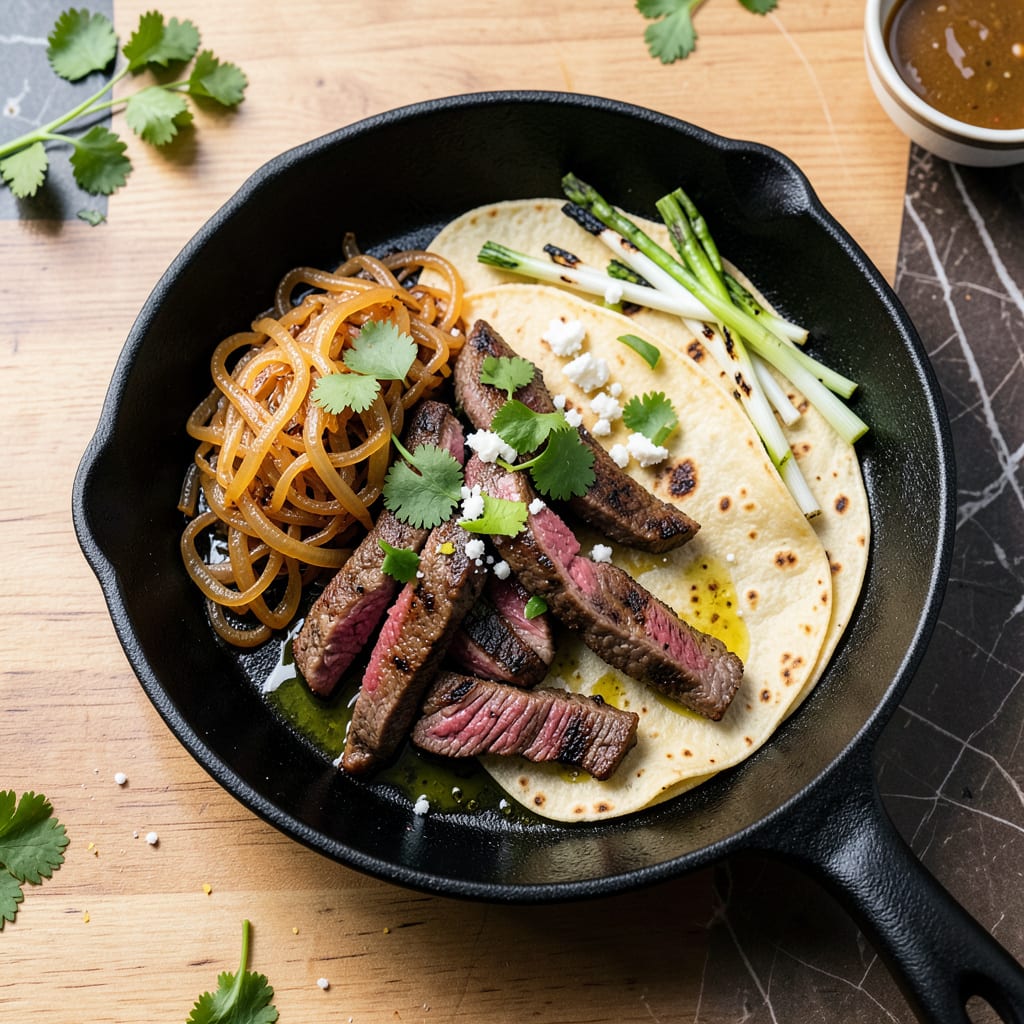
I’ll be real with you—sometimes you just want that sizzling fajita flavor without the peppers. Maybe it’s a texture thing, maybe it’s a preference, or maybe you’re cooking for someone who can’t handle them. That’s where this recipe comes in, and honestly? It might just become your new favorite way to make fajitas.
Here’s the thing—when you remove peppers, you’ve got to double down on what’s left. We’re talking caramelized onions that get sweet and jammy in the skillet, a bold marinade that packs in smoky and tangy flavors, and your choice of protein (steak, chicken, shrimp, or even tofu) cooked just right. No peppers? No problem. The onions bring the sweetness, the spices bring the heat, and the sizzle brings that classic fajita drama.
What you end up with is a skillet full of tender, flavorful meat (or veggie alternative) and those golden, sticky onions that make every bite worth it. Serve it up with warm tortillas, a squeeze of lime, and all your favorite toppings—guac, sour cream, cheese, whatever makes your heart happy. It’s the kind of meal that comes together fast but feels like you put in serious effort.
Fair warning: once you try fajitas this way, you might never go back to the classic version. The onions do something magical here, and the whole dish just works. Let’s get that skillet hot and make some fajita magic happen.
📚 In This Guide
- What You’ll Need
- Instructions
- Tips and Common Mistakes
What Youll Need
- ● Protein (choose one): 1.5 lbs skirt steak (or flank steak), sliced thinly against the grain 🥩
- ● OR 1.5 lbs boneless, skinless chicken thighs, sliced into strips
- ● Vegetables: 2 large yellow onions, thinly sliced (about 4 cups)
- ○ 1 white onion, sliced (optional, for extra depth)
- ● Fajita Seasoning: 2 tbsp chili powder
- ● 1 tbsp ground cumin
- ● 1 tsp smoked paprika (or regular paprika)
- ● 1 tsp garlic powder
- ● ½ tsp oregano (dried)
- ● ½ tsp salt (adjust to taste)
- ● ¼ tsp black pepper
- ○ ¼ tsp cayenne pepper (optional, for heat)
- ● Liquids & Fats: 3 tbsp olive oil (or avocado oil, divided)
- ● 2 tbsp lime juice (freshly squeezed)
- ● ¼ cup low-sodium beef or chicken broth (or water)
- ● Tools & Equipment: 1 large cast-iron skillet (10–12 inches) or heavy-bottomed pan
- ● Tongs (for flipping meat)
- ● Sharp knife + cutting board
- ● Mixing bowls (2 medium-sized)
- ● Measuring spoons & cups
- ○ For Serving (optional but recommended!): 8–10 small flour tortillas (or corn tortillas, warmed)
- ● Sour cream, guacamole, shredded cheese, or pico de gallo
- ● Fresh cilantro, chopped (for garnish)
- ● Lime wedges
Instructions for Sizzling Skillet Steak Fajitas
Let me walk you through making these flavorful fajitas—it’s simpler than you think, and the results are always impressive.
Prepare and Season the Steak
Start by slicing your steak into thin strips, about ¼-inch thick. I find it easiest to cut when the meat is slightly chilled but not frozen. Place the sliced steak in a large bowl and drizzle with olive oil, tossing to coat evenly.
Next, sprinkle the meat with your fajita seasoning blend. I like to use about 2 tablespoons of seasoning for every 1 pound of steak. Use your hands to rub the seasoning into the meat, making sure every piece is well coated. This ensures maximum flavor in every bite.
Caramelize the Onions
Heat a large skillet over medium-high heat and add 2 tablespoons of oil. Once the oil shimmers, add your sliced onions. You’ll want about 2 large onions, thinly sliced, for this recipe. Stir them occasionally, letting them cook for 10-12 minutes until they turn a deep golden brown.
The key here is patience—don’t rush the caramelization. You’ll know they’re ready when they’re soft, sweet, and have developed a rich brown color. If they start to stick, add a splash of water and scrape up those flavorful browned bits. This creates the perfect sweet base for your fajitas.
Cook the Steak to Perfection
Once your onions are caramelized, push them to one side of the skillet and add your seasoned steak strips in a single layer. Let them sear undisturbed for 2-3 minutes before stirring. You want to develop a nice crust on the meat.
Cook the steak for another 3-4 minutes, stirring occasionally, until it’s browned on all sides and cooked to your desired doneness. For medium-rare, aim for an internal temperature of 135°F. The meat should be juicy and tender, not chewy. Once done, mix the steak with the caramelized onions.
Warm the Tortillas and Assemble
While the steak rests for 2-3 minutes, warm your tortillas. I like to heat them directly on a gas flame for about 10 seconds per side, or wrap them in a damp towel and microwave for 30 seconds. This makes them pliable and prevents cracking.
To serve, place a generous portion of the steak and onion mixture on each tortilla. Top with your favorite toppings like shredded cheese, sour cream, or fresh cilantro. The beauty of this dish is how customizable it is—everyone can build their perfect fajita.
Serve Immediately for Best Results
Fajitas are best enjoyed fresh off the skillet while everything is still hot and sizzling. The contrast between the warm, tender steak and the sweet caramelized onions is what makes this dish so special. Serve with lime wedges for a bright, citrusy finish.
If you have leftovers, store them in an airtight container in the refrigerator for up to 3 days. To reheat, simply warm them in a skillet over medium heat with a splash of water to prevent drying out. The flavors actually deepen over time, making leftovers just as delicious!
Tips and Common Mistakes
Let me share what I’ve learned from making these fajitas countless times—small details that make a big difference.
Caramelization Key: In Step 2, those 10-12 minutes for the onions aren’t just about cooking—they’re about transforming. The onions should go from translucent to deep golden brown, developing a sweet, jammy texture. If they’re not sticking slightly to the pan, your heat might be too low. A splash of water helps release those flavorful browned bits that make the dish special.
Steak Slicing Secret: For the most tender results in Step 1, slice the steak against the grain into ¼-inch strips. This shortens the muscle fibers, making each bite melt in your mouth. I find it easiest to do this when the meat is slightly chilled but not cold from the fridge—just 20-30 minutes at room temperature makes it more manageable.
Heat Management: When cooking the steak in Step 3, resist the urge to stir immediately. That initial 2-3 minutes of undisturbed cooking creates the crust that locks in juices. You’ll know it’s ready to flip when the edges start to brown and the meat releases easily from the pan. For medium-rare, pull it at 135°F—it will rise to perfect doneness while resting.
Tortilla Trick: The 10 seconds per side over a gas flame in Step 4 isn’t just about warming—it creates pockets of steam that make tortillas extra pliable. No gas stove? A dry skillet over medium-high heat works just as well. The slight char adds another layer of flavor to your fajitas.
Pro Tips for Fajitas Without Peppers
- Let me share what I’ve learned from making these fajitas countless times—small details that make a big difference.
- Caramelization Key: In Step 2, those 10-12 minutes for the onions aren’t just about cooking—they’re about transformin…
- Steak Slicing Secret: For the most tender results in Step 1, slice the steak against the grain into ¼-inch strips. Th…
Frequently Asked Questions
Got questions about making fajitas without peppers? You’re not alone! Here are the most common ones—answered quick and easy.
Can I make fajitas without peppers and still have great flavor?
Absolutely! Skip the peppers and double down on caramelized onions, garlic, and spices like cumin or smoked paprika. Add a splash of lime juice or a dollop of salsa for extra zing. The key is layering flavors—you won’t miss the peppers!
What’s the best substitute for peppers in fajitas?
Try these tasty swaps:
- Mushrooms (meaty texture, soaks up flavors)
- Zucchini or squash (slightly sweet, holds up well to grilling)
- Pineapple (for a sweet-tangy twist—great with chicken!)
- Extra onions (caramelized = rich, deep flavor)
How do I keep my fajitas from getting soggy without peppers?
Peppers add crunch, so compensate by:
- Pat-drying your protein (steak/chicken) before cooking.
- Sautéing veggies separately on high heat to avoid steam.
- Warming tortillas just before serving (30 sec in a dry skillet).
Can I meal prep fajitas without peppers?
Yes! Cook protein and veggies separately, then store in airtight containers for up to 4 days. Reheat in a skillet (not microwave) to restore that sizzle. Keep tortillas wrapped in foil and warm them fresh. Avoid mixing everything until serving to prevent sogginess.
Why do my fajitas taste bland without peppers?
Peppers add natural sweetness and acidity. Boost flavor by:
- Marinating protein in lime juice + garlic for 30+ minutes.
- Adding a pinch of sugar or honey to caramelize onions deeper.
- Finishing with fresh cilantro, cotija cheese, or a squeeze of lime.
Who says fajitas need peppers to pack a punch? With tender steak, sweet caramelized onions, and bold spices, this dish proves flavor never takes a backseat. Whether you’re dodging nightshades or just craving something different, these pepper-free fajitas deliver all the sizzle—no compromises!
Ready to make them your own? Grab your skillet and try swapping in mushrooms, zucchini, or even pineapple for a fun twist. The possibilities are endless—and delicious! 🌮✨

Trained in classic French technique but raised on slow-cooked ribs and spicy rubs, she blends culinary skill with smoke and soul.
- Recipe for Boneless Pork Chops in Cast Iron Skillet: Sear and Baste to Juicy Perfection - October 3, 2026
- Recipe for Boneless Cross Rib Roast: Slow-Roasted Beef with Herb Crust - October 3, 2026
- Hamburgers in Sauce Recipe Crock Pot: Slow-Cooked Savory Delight - October 3, 2026