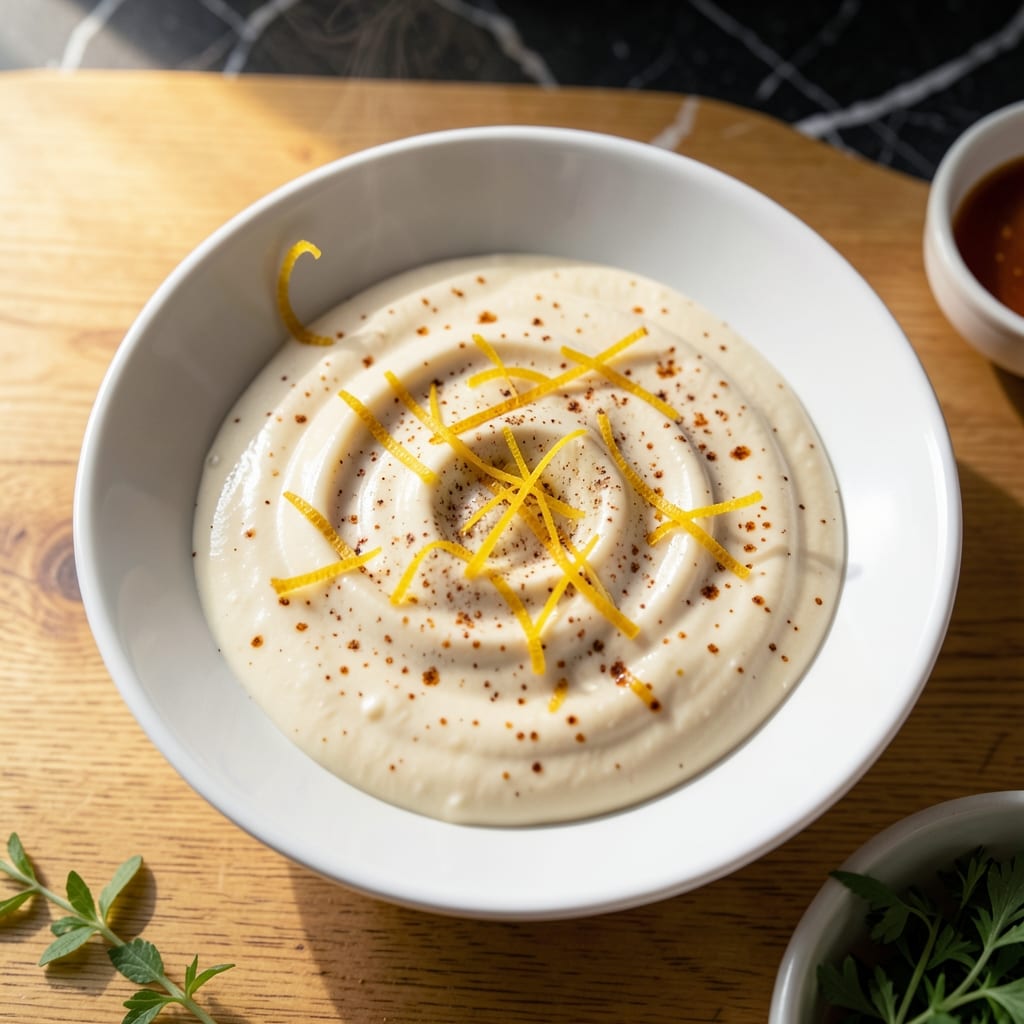
Creating a creamy, rich mayonnaise without any fat might sound impossible, but this recipe delivers exactly that. I developed this after years of testing plant-based alternatives, and the result is surprisingly close to the real thing.
This version uses aquafaba as the base, which provides the perfect consistency when emulsified with oil-free ingredients. The key is patience—adding the acid slowly while blending ensures a smooth, stable texture that won’t separate.
What you get is a silky, spreadable condiment that works beautifully in sandwiches, dressings, or as a base for dips. It keeps in the fridge for up to a week, making it a great make-ahead staple.
Here’s how to make a plant-based mayo that even skeptics will love.
Ingredients for Fat Free Mayo
Nine simple ingredients transform aquafaba into a silky, spreadable condiment everyone will love.
| Ingredient | Amount | Notes |
|---|---|---|
| Aquafaba 🥫 | ½ cup | Unsalted chickpea brine, room temperature |
| Apple Cider Vinegar 🍎 | 2 tbsp | Or white vinegar alternative |
| Lemon Juice 🍋 | 1 tbsp | Freshly squeezed preferred |
| Dijon Mustard 🟡 | 1 tsp | Smooth, no seeds |
| Garlic Powder 🧄 | ½ tsp | Fine grind for even distribution |
| Onion Powder 🧅 | ½ tsp | Complements the garlic |
| Salt 🧂 | ½ tsp | Fine sea salt preferred |
| White Pepper 🌶️ | ¼ tsp | Subtle flavor without color |
| Agave Nectar 🍯 | 1 tsp | Optional, balances acidity |
[recipe_ingredient_scaler]
Aquafaba is the magic here—use the liquid from canned chickpeas (not homemade, which can be too thin). Goya or Eden Organic brands work great. Make sure it’s unsalted and at room temperature for the best emulsion. The vinegar adds tang, but don’t stress over the type—apple cider or white vinegar both do the job. I always keep a few cans of chickpeas on hand just for the brine (the chickpeas get roasted later—no waste).
No aquafaba? Egg white powder reconstituted with water can work in a pinch (though not vegan). Swap agave for maple syrup or date syrup if that’s what you’ve got. The mustard is key for stability, but any smooth variety works—yellow mustard is fine too. If your mayo seems thin, chill it for 30 minutes before using. The garlic and onion powders add depth without chunks.
Store in an airtight container with a thin layer of water on top (prevents drying). Keeps for 5-7 days in the fridge. Don’t freeze—it’ll separate. Give it a good stir before each use. Perfect for sandwiches, wraps, or as a base for creamy salad dressings.
Why You’ll Love This Recipe
- Blender Magic: I just dump aquafaba, vinegar, lemon, mustard, and garlic powder in the blender and let it do the work—no whisking, no fuss.
- Tangy Kick: The combo of apple cider vinegar and lemon juice gives it this bright, zingy flavor that beats store-bought.
- Sandwich Savior: Slather it on veggie burgers, mix into dressings, or use as a dip—honestly, it works everywhere regular mayo does.
- Pantry Friendly: I already have all these ingredients in my cupboard, so it saves me a trip to the store and a few bucks.
Step-by-Step Instructions for Fat Free Mayo
This method transforms humble ingredients into a creamy, rich condiment with zero fat content.
Step 1: Reduce the Aquafaba Base
Pour the 0.5 cup Aquafaba into a small saucepan and bring to a gentle simmer over medium heat. I like to use a light-colored pan so I can monitor the color change as it reduces.
Simmer for 8-10 minutes, stirring occasionally, until the liquid reduces by about half and becomes slightly syrupy. You’ll notice it thickens and turns from watery to the consistency of thin maple syrup.
This reduction step is crucial—it removes excess water, allowing the aquafaba to whip up properly and create that creamy texture we’re after. Don’t let it boil too vigorously or it may reduce too quickly and become too thick.
Step 2: Cool and Blend the Acidic Components
Transfer the reduced aquafaba to a heatproof bowl and let it cool to room temperature, about 15 minutes. Meanwhile, in a small bowl, whisk together the 2 tbsp Apple Cider Vinegar, 1 tbsp Lemon Juice, 1 tsp Dijon Mustard, and 1 tsp Agave Nectar.
The acidity from the vinegar and lemon juice not only provides that classic mayo tang but also helps stabilize the emulsion. The mustard acts as an emulsifier, while the agave nectar rounds out the sharpness with a touch of sweetness.
I always use freshly squeezed lemon juice when possible—it makes a noticeable difference in brightness and freshness of the final product.
Step 3: Combine and Emulsify the Mixture
Once the aquafaba is completely cool, pour it into a tall, narrow container (I use the container that came with my immersion blender). Add the acid mixture you prepared earlier.
Using an immersion blender, blend on high speed for 30-45 seconds until the mixture becomes thick, creamy, and pale. You’re looking for the texture of thin mayonnaise at this stage.
If using a regular blender, blend for 1-2 minutes on high, stopping to scrape down the sides as needed. The mixture will lighten in color and thicken significantly as air incorporates.
Step 4: Season and Adjust Consistency
Add the 0.5 tsp Salt, 0.5 tsp Garlic Powder, 0.5 tsp Onion Powder, and 0.25 tsp White Pepper to the blended mixture. Pulse briefly to combine, then taste and adjust seasoning if needed.
The white pepper is my secret weapon here—it provides that classic mayo peppery bite without the black specks you’d get from regular pepper. The garlic and onion powders add depth without overpowering the delicate flavor.
If the mixture seems too thick, add 1-2 teaspoons of water and blend again. For a thicker consistency, blend for an additional 10-15 seconds to incorporate more air. The final product should coat the back of a spoon but still be pourable.
Transfer to an airtight container and refrigerate for at least 1 hour before using to allow the flavors to meld and the texture to set completely.
Pro Tips For Making Fat Free Mayo
- Chill the Aquafaba: Use cold aquafaba straight from the fridge—it emulsifies better and holds the mayo structure longer. I learned this the hard way after my first few batches separated.
- Drizzle Slowly: Add your vinegar and lemon juice in a thin, steady stream while blending. Dumping it all at once breaks the emulsion every time.
- Skip the Salt: Skip adding salt upfront since Dijon mustard already brings enough. Over-salting can make your mayo taste harsh, especially with the tang from the vinegar.
- Use a Stick Blender: A stick blender with a tall cup works best for this—no transferring, no mess. I was skeptical until I tried it, but it’s the fastest way to get that creamy texture.
Essential Equipment for This Recipe
Immersion Blender
An immersion blender is essential for achieving that perfect silky texture. I use my Cuisinart SmartStick—it’s affordable and powerful enough to handle the thick aquafaba mixture. The tall, narrow container that comes with it is perfect for creating a vortex that helps emulsify everything smoothly. 💡
Small Saucepan
A light-colored saucepan helps monitor the aquafaba as it reduces. I prefer a 2-quart saucepan with a heavy bottom to prevent hot spots. All-Clad or Calphalon are great brands—both distribute heat evenly, which is crucial for reducing the liquid without burning it.
Whisk and Bowls
A stainless steel whisk and a few heatproof bowls in different sizes are handy for mixing the acidic components and cooling the reduced aquafaba. I like OXO Good Grips whisks—they’re comfortable and durable. Look for bowls that can handle hot liquids safely.
Measuring Tools
Precise measurements matter here, so a set of measuring spoons and liquid measuring cups is a must. I keep a 1-cup glass measuring cup for the aquafaba and a set of magnetic measuring spoons from Prepworks for the smaller quantities. They stay organized and are easy to level off.
Airtight Containers
For storage, use glass jars with tight-sealing lids—I repurpose Ball Mason jars for this. They’re perfect for keeping the mayo fresh and preventing any fridge odors from seeping in. Plus, the wide mouth makes scooping out the mayo easy.
Thermometer
While not strictly necessary, an instant-read thermometer helps ensure the aquafaba doesn’t overheat during reduction. I use a ThermoWorks ThermoPop—it’s fast, accurate, and gives me peace of mind, especially when I’m testing new batches. 🌡️
Nutrition Facts
Frequently Asked Questions
Can I use a regular blender instead of an immersion blender?
Yes! A regular blender works fine, though you may need to blend for 1-2 minutes on high. Stop occasionally to scrape down the sides. The texture might be slightly less smooth than with an immersion blender.
Why does my mayo taste too tangy?
Too much acid can overpower the flavor. Balance it by adding 1/2 tsp agave nectar or a pinch of salt. Next time, reduce the vinegar by 1/2 tablespoon and adjust to taste.
How do I fix thin mayo?
Chill it for 30 minutes first—it often thickens as it cools. If still thin, blend in 1 tsp cornstarch or reduce the aquafaba further next time.
Can I substitute the agave nectar?
Use 1 tsp maple syrup or date syrup instead. Skip it entirely if you prefer a sharper flavor, but it helps balance the acidity.

Trained in classic French technique but raised on slow-cooked ribs and spicy rubs, she blends culinary skill with smoke and soul.
- Recipe for Boneless Pork Chops in Cast Iron Skillet: Sear and Baste to Juicy Perfection - October 3, 2026
- Recipe for Boneless Cross Rib Roast: Slow-Roasted Beef with Herb Crust - October 3, 2026
- Hamburgers in Sauce Recipe Crock Pot: Slow-Cooked Savory Delight - October 3, 2026