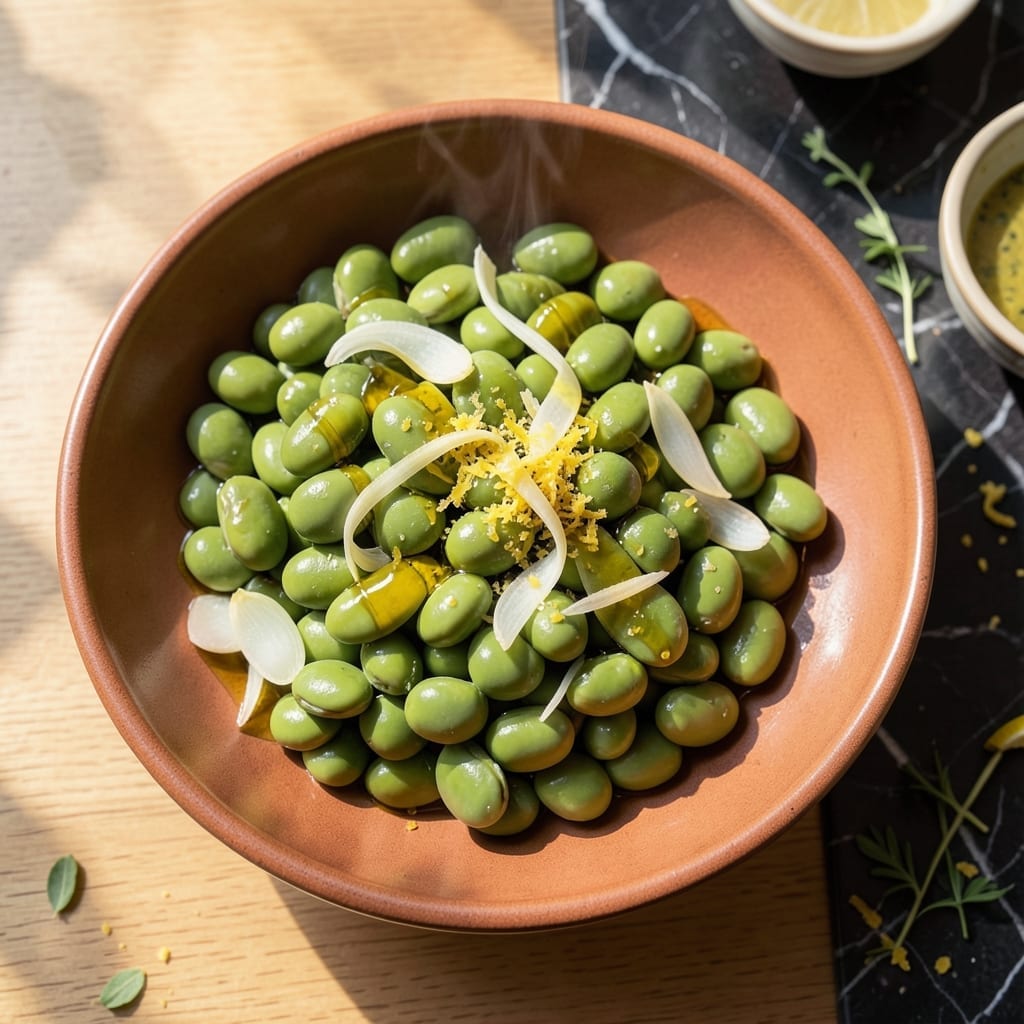
This Mediterranean-style dish transforms fresh fava beans into a vibrant vegetarian main course. The combination of lemon and herbs brightens the earthy beans while keeping the preparation simple and straightforward.
I developed this recipe to maximize flavor with minimal effort—just a handful of ingredients and 30 minutes of cooking time. The beans are lightly simmered until tender, then finished with a zesty dressing that highlights their natural sweetness.
The result is a restaurant-quality dish that feels special but comes together easily. The lemon adds a fresh, tangy note, while the herbs bring a fragrant, aromatic touch to every bite.
Serve as a light lunch or alongside grilled vegetables for a complete meal. Here’s how to make it perfectly every time.
Ingredients for Fava Beans Recipe Vegetarian
Fresh fava beans shine with lemon, herbs, and a touch of olive oil for Mediterranean flair.
| Ingredient | Amount | Notes |
|---|---|---|
| Fresh Fava Beans 🫛 | 2 lb | Shelled, about 4 cups |
| Extra-Virgin Olive Oil 🫒 | ½ cup | Divided, high-quality preferred |
| Shallots 🧅 | 2 whole | Finely diced for dressing |
| Garlic Cloves 🧄 | 3 cloves | Minced for aromatic base |
| Fresh Lemon Juice 🍋 | ⅓ cup | About 2-3 lemons, freshly squeezed |
| Lemon Zest 🍋 | 1 tbsp | From 1-2 lemons, finely grated |
| Fresh Parsley 🌿 | ½ cup | Flat-leaf, chopped for brightness |
| Fresh Dill 🌿 | ¼ cup | Chopped, Mediterranean touch |
| Fresh Mint 🌿 | ¼ cup | Chopped, for fresh finish |
| Sea Salt 🧂 | 1 ½ tsp | Diamond Crystal preferred, divided |
| Black Pepper 🌶️ | ½ tsp | Freshly cracked for best flavor |
| Vegetable Stock 🥕 | 1 cup | Low-sodium for simmering |
| Red Pepper Flakes 🌶️ | ¼ tsp | Optional, for subtle heat |
[recipe_ingredient_scaler]
The fava beans are the star. Look for pods that are bright green and firm at Whole Foods or a specialty market—avoid any with brown spots or excessive bulging. Fresh beans require shelling (peel the outer skin too, it’s tough), but frozen shelled favas (from Trader Joe’s) work in a pinch. The olive oil should be extra-virgin and robust; California Olive Ranch is a dependable choice for everyday cooking at this scale.
No fresh herbs? Dried at one-third the amount, but add them during simmering so they rehydrate. Swap shallots for red onion if needed—just soak the diced pieces in cold water for 10 minutes to mellow the bite. For the stock, Better Than Bouillon vegetable base is a pantry staple that delivers consistent flavor without meat derivatives. The lemon is non-negotiable, though bottled juice works if fresh isn’t available.
Fava beans keep in the pod for 3-4 days in the fridge, but shell them just before cooking. Leftovers taste even better the next day once flavors meld. Store covered in the fridge for up to 5 days or freeze for 3 months (blanch first to preserve texture).
Why You’ll Love This Recipe
- One Pot Wonder: I love that this comes together in a single pan—just sauté the shallots, garlic, and fava beans, then finish with lemon juice and olive oil.
- Bright and Zesty: The fresh lemon juice cuts through the creamy beans, while the garlic and olive oil give it a rich, aromatic depth.
- Meal Prep Hero: I make a big batch on Sunday and toss it into salads, grain bowls, or even toast all week long.
- Budget Keeper: Fresh fava beans are affordable in season, and this dish stretches them into multiple meals without breaking the bank.
Step-by-Step Instructions for Mediterranean-Style Fava Beans With Lemon and Herbs
Master this technique for vibrant fava beans with bright citrus and fresh herbs.
Step 1: Shell and Blanch the Fava Beans
Begin by shelling the 2 lb fresh fava beans from their pods. You should have about 4 cups of shelled beans. Bring a large pot of salted water to a rolling boil and prepare an ice bath in a large bowl.
Add the shelled beans to the boiling water and blanch for 2-3 minutes until the skins loosen and the beans turn bright green. Immediately drain and transfer to the ice bath to stop the cooking process. This preserves their vibrant color and crisp texture.
Step 2: Peel and Sauté the Aromatics
Once cooled, drain the beans and gently squeeze each one to slip off its outer skin. Set the peeled beans aside. In a large skillet, heat ¼ cup of the extra-virgin olive oil over medium heat.
Add the 2 finely diced shallots and cook for 3-4 minutes until translucent and just beginning to soften. Stir in the 3 minced garlic cloves and 0.25 tsp red pepper flakes, cooking for 30 seconds until fragrant—be careful not to let the garlic brown.
Step 3: Simmer Beans in Vegetable Stock
Add the peeled fava beans to the skillet along with the 1 cup vegetable stock and ½ tsp of the sea salt. Bring to a gentle simmer and cook for 8-10 minutes until the beans are tender but still hold their shape.
You’ll notice the stock reducing slightly and the beans absorbing its savory depth. The liquid should coat the beans lightly when they’re done. Season with ½ tsp black pepper during this simmering process.
Step 4: Finish with Lemon and Herbs
In a small bowl, whisk together the remaining ¼ cup extra-virgin olive oil, ⅓ cup fresh lemon juice, and 1 tbsp lemon zest. Pour this mixture over the beans in the skillet.
Off the heat, stir in the ½ cup chopped fresh parsley, ¼ cup chopped fresh dill, and ¼ cup chopped fresh mint. Taste and adjust seasoning with the remaining 1 tsp sea salt if needed. The herbs should be vibrant and the lemon bright but balanced.
Step 5: Rest and Serve Warm or at Room Temperature
Let the beans rest in the skillet for 5 minutes to allow the flavors to meld. The final dish should be glossy with a light, citrusy sauce coating each bean, and the herbs should be evenly distributed throughout.
Serve warm or at room temperature as a side dish or light main. The beans should be tender with a slight bite, and the lemon-herb dressing should provide a refreshing contrast to the rich, earthy fava beans.
Pro Tips For Making Fava Beans Recipe Vegetarian
- Double Peel Beans: After blanching, squeeze each bean to pop it out of its tough outer skin—this is non-negotiable for silky texture. I learned this the hard way after serving a batch with chewy skins.
- Sauté Shallots Low: Cook shallots in olive oil over medium-low heat until translucent, about 5 minutes. Higher heat makes them bitter, and I’ve ruined a few dishes by rushing this.
- Skip Old Garlic: Use fresh garlic cloves—old ones turn pungent and harsh. Sounds obvious, but I’ve grabbed the wrong head from the pantry and regretted it immediately.
- Finish with Cold Lemon: Add the fresh lemon juice off the heat at the very end to keep its bright flavor intact. My grandmother swore by this, and she was right: heat dulls the acidity.
Troubleshooting Perfect Results
Beans Too Tough
If your fava beans remain hard after simmering, they likely need more cooking time. Return them to the skillet with an additional ½ cup vegetable stock and simmer for 5-7 more minutes. Older beans sometimes require extra time to soften. 💡
Bland Flavor
When the dish tastes flat, boost the acidity with an extra 1-2 tbsp fresh lemon juice or a pinch more sea salt. The brightness from the lemon is crucial—taste as you go and adjust gradually.
Overly Watery
If the beans are swimming in liquid, remove the lid and simmer uncovered for 3-4 minutes to reduce the sauce. Stir frequently to prevent sticking. The finished dish should have a light, glossy coating, not a soup.
Herbs Overpowering
When the herbs taste too strong, balance them with a drizzle of extra-virgin olive oil or a splash of vegetable stock. This mellows the intensity while keeping the fresh, vibrant character of the dish.
Beans Discolored
If your beans turn dull green or gray, you likely overcooked them during blanching. Next time, blanch for 2 minutes max and shock immediately in ice water. The ice bath is non-negotiable for preserving that beautiful, bright color.
Garlic Bitter
Burnt garlic can ruin the dish. If it happens, start fresh with new olive oil and garlic, cooking on low heat and pulling it off as soon as it turns fragrant. The 30-second rule is key for perfect garlic flavor.
Nutrition Facts
Frequently Asked Questions
Do I need to peel fava beans after blanching?
Yes, the outer skin can be tough. After blanching for 2-3 minutes, cool in ice water, then gently squeeze each bean to remove the skin. This reveals the tender, bright green interior.
Can I use dried fava beans instead?
Yes, but soak them overnight first. Dried beans require 1-2 hours of simmering until tender. Fresh beans have a sweeter, more vibrant flavor, though.
What if I don’t have fresh herbs?
Use dried herbs at 1/3 the amount, adding them during simmering. For best results, rehydrate them in a bit of warm stock before mixing in.
How long will leftovers keep?
Store in an airtight container in the fridge for up to 5 days. The flavors deepen over time, making leftovers even more delicious.

Trained in classic French technique but raised on slow-cooked ribs and spicy rubs, she blends culinary skill with smoke and soul.
- Energy Ball Recipe Peanut Butter: No-Bake Protein-Packed Bites - September 24, 2026
- Jerk Chicken Recipe Crock Pot: Slow-Cooked Caribbean Heat - September 24, 2026
- Japanese Curry Recipe Kenji: Chef-Tested Rich and Velvety Sauce - September 24, 2026