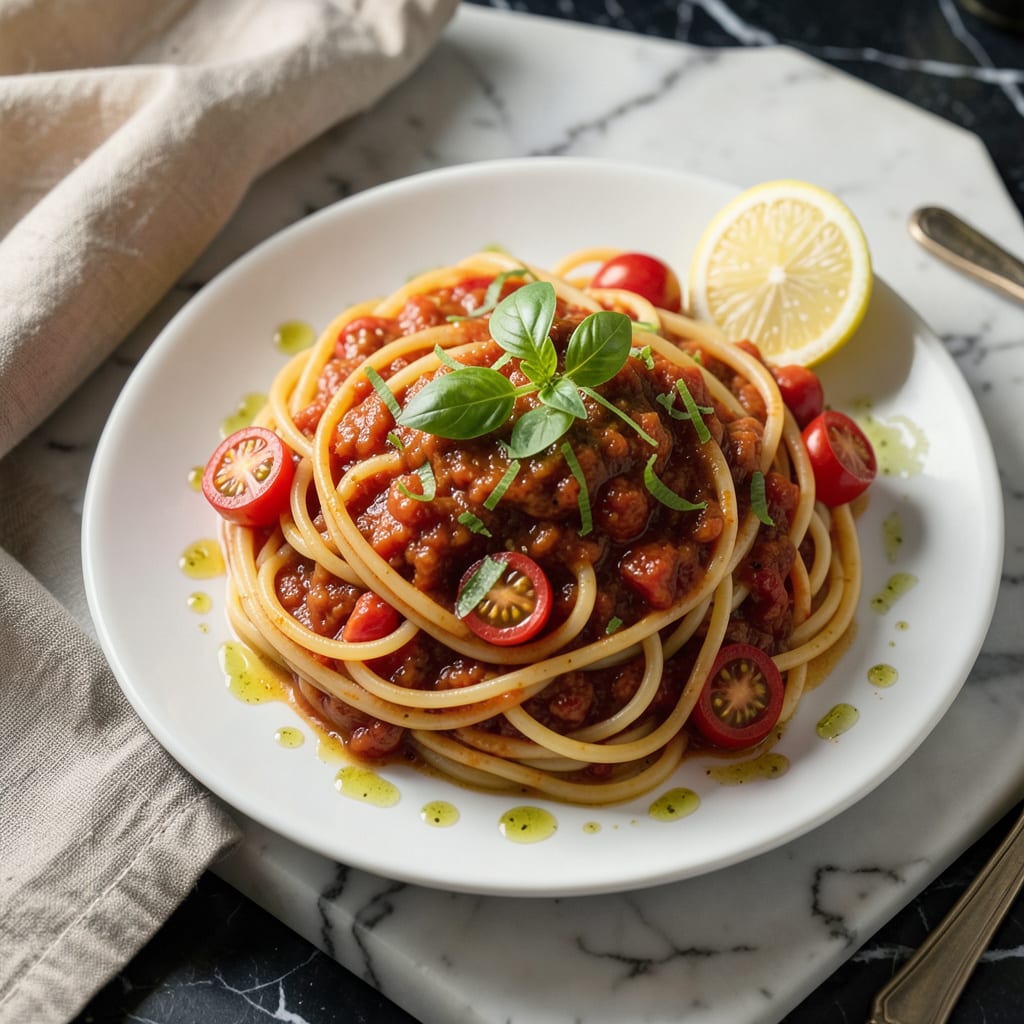
I’ll be real with you—adding lemon juice to spaghetti sauce was a game-changer I stumbled upon by accident. One night, my tomato sauce tasted flat, so I squeezed in some lemon on a whim. The difference was insane. That little hit of acidity made all the flavors pop, cutting through the richness and making the dish taste brighter and more balanced.
This isn’t about making a fancy sauce—it’s about taking classic spaghetti to the next level with one simple trick. The lemon juice doesn’t make it taste citrusy; it just wakes up the tomatoes, garlic, and herbs. I use about 1 tablespoon per 28-ounce can of tomatoes, plus a pinch of sugar to round everything out. It’s the kind of small tweak that makes people ask, “What’s your secret?”
The whole dish comes together in under 30 minutes, with al dente pasta coated in that perfectly balanced sauce. I finish it with fresh basil and a sprinkle of Parmesan (or nutritional yeast for vegan friends). It’s vegetarian, quick enough for weeknights, but impressive enough for company—because sometimes the simplest tricks make the biggest difference.
Serve it with garlic bread to soak up every last drop of that bright, tangy sauce. Trust me, once you try this, you’ll never go back to plain tomato sauce again.
📚 In This Guide
- What You’ll Need
- Instructions
- Tips and Common Mistakes
What Youll Need
- ● Fresh lemons: 1–2 medium (about ¼ cup fresh juice, or 2–4 tbsp to taste) 🍋
- ● Tomato base: 28 oz canned crushed tomatoes (San Marzano preferred) or 6–8 fresh Roma tomatoes (peeled & crushed)
- ● Aromatics: 1 small yellow onion (finely diced), 3 garlic cloves (minced)
- ● Olive oil: 2 tbsp extra-virgin (for sautéing)
- ● Herbs: 1 tsp dried oregano, 1 tsp dried basil or 2 tbsp fresh (chopped)
- ● Salt & pepper: 1 tsp kosher salt (adjust to taste), ½ tsp black pepper
- ○ Optional umami boost: 1 tbsp tomato paste, ½ tsp red pepper flakes, 1 bay leaf
- ○ Sweetener (optional): 1 tsp honey or sugar (balances acidity if needed)
- ● Tools: Medium saucepan (3–4 qt), wooden spoon, citrus juicer, sharp knife, cutting board
- ● Prerequisites: Basic knife skills, 20–30 minutes of simmer time
Instructions
This simple technique transforms your sauce—just follow these straightforward steps for perfect balance.
Prepare Your Base Sauce
Start with your favorite tomato-based spaghetti sauce, whether it’s homemade or store-bought. Warm it gently in a saucepan over medium-low heat. You want it to simmer lightly, with small bubbles breaking the surface occasionally—this helps develop the flavors before adding the lemon.
Give it a good stir to prevent sticking, and let it cook for about 5 minutes before moving to the next step. This ensures the sauce is evenly heated and ready to absorb the bright citrus notes. If you’re using a thicker sauce, you might want to add a splash of pasta water to loosen it slightly.
Add the Lemon Juice Gradually
Begin with 1 tablespoon of fresh lemon juice—this is your starting point. Stir it in completely and let the sauce simmer for another 2-3 minutes. The lemon should blend seamlessly into the sauce, adding brightness without overpowering the tomato flavor.
Taste the sauce carefully. You’re looking for that perfect balance where the acidity lifts the richness of the tomatoes but doesn’t dominate. If needed, add another ½ to 1 teaspoon of lemon juice, stirring well after each addition. Remember, you can always add more, but you can’t take it out once it’s in.
Adjust and Balance the Flavors
After adding the lemon, you might notice the sauce needs a little sweetness to round out the acidity. Add ½ teaspoon of sugar or a pinch of salt, stirring well. This isn’t about making the sauce sweet—it’s about creating harmony between all the flavors.
Let the sauce simmer for an additional 5 minutes to allow everything to meld together. The lemon’s brightness should now complement the tomato’s depth, creating a more complex and vibrant sauce. If the sauce thickens too much during this process, thin it with a bit of warm water or pasta cooking liquid.
Finish and Serve
Once you’re satisfied with the balance, remove the sauce from heat. For an extra layer of freshness, stir in 1 teaspoon of lemon zest if you have it available. The zest adds aromatic oils that enhance the lemon flavor without adding more acidity.
Let the sauce rest for 2-3 minutes before tossing with your cooked spaghetti. This brief rest allows the flavors to settle. When you plate it, you’ll notice how the lemon brightens each bite, making the tomato flavor more vibrant and the overall dish more refreshing. Serve immediately for the best experience.
Tips and Common Mistakes
This simple technique delivers restaurant-quality brightness to your sauce—here’s how to perfect it.
Heat Control: The medium-low heat in Step 1 is crucial for gentle flavor development. You should see small, lazy bubbles breaking the surface—not a rolling boil. Too high heat can cause the sauce to reduce too quickly, concentrating flavors before the lemon has a chance to integrate properly. I always use a heavy-bottomed saucepan to prevent hot spots that might scorch the sauce.
Lemon Integration: When adding the 1 tablespoon of fresh lemon juice in Step 2, stir continuously for the full 2-3 minutes. This isn’t just about mixing—it’s about allowing the acid to fully disperse and react with the tomato base. You’ll notice the sauce brightens visually first, then the flavor follows. If you rush this step, you might end up with pockets of sharp acidity rather than balanced brightness.
Balancing Act: The ½ teaspoon of sugar in Step 3 isn’t about sweetness—it’s about neutralizing any harsh edges from the lemon. I’ve found that adding it immediately after the lemon (rather than waiting) helps create a smoother transition between flavors. Think of it like adding a pinch of salt to coffee—it doesn’t make it salty, it just makes everything taste more complete.
Final Rest: That 2-3 minute rest in Step 4 might seem insignificant, but it’s when the magic happens. The sauce continues to absorb the lemon zest’s aromatic oils during this brief pause. I always use this time to cook my pasta to al dente perfection—timing them to finish together ensures the sauce clings beautifully to each strand.
Pro Tips for Lemon Juice In Spaghetti Sauce
- This simple technique delivers restaurant-quality brightness to your sauce—here’s how to perfect it.
- Heat Control: The medium-low heat in Step 1 is crucial for gentle flavor development. You should see small, lazy bubb…
- Lemon Integration: When adding the 1 tablespoon of fresh lemon juice in Step 2, stir continuously for the full 2-3 mi…
Frequently Asked Questions
Can I use bottled lemon juice instead of fresh in spaghetti sauce?
Yes, but fresh is always best! Bottled lemon juice works in a pinch, but it lacks the bright, complex flavor of fresh. If using bottled, start with half the amount (e.g., ½ tbsp instead of 1 tbsp) and adjust to taste—it can be more concentrated and slightly bitter.
When’s the best time to add lemon juice to spaghetti sauce?
Add it at the end of cooking! Stir in lemon juice during the last 5–10 minutes of simmering to preserve its fresh, zesty flavor. Adding it too early can cause the acidity to mellow out or make the sauce taste flat.
What can I use if I don’t have lemon juice for my sauce?
Try these swaps:
- White wine or vinegar (1:1 ratio, but add slowly—it’s stronger!).
- Lime juice (similar acidity, but slightly different flavor).
- A pinch of citric acid (⅛ tsp = ~1 tbsp lemon juice).
Avoid orange juice—it’s too sweet!
Why does my spaghetti sauce taste too sour after adding lemon juice?
Too much acidity? Balance it out!
- Add a pinch of sugar or grated carrot (simmer 10 mins).
- Stir in a pat of butter or drizzle of olive oil to mellow the sharpness.
- Dilute with a splash of broth or water if needed.
Does lemon juice make spaghetti sauce last longer in the fridge?
Yes! The acidity acts as a natural preservative, extending fridge life by 1–2 days (up to 5–6 days total). For longer storage, freeze it—lemon juice won’t affect freezer stability. Always store in an airtight container!
Adding a splash of lemon juice in spaghetti sauce is your secret weapon for a brighter, more balanced flavor—without overpowering the dish. Whether you’re fixing a too-sweet sauce or just craving that zesty Italian kick, this simple trick elevates every bite. 🍋
Ready to experiment? Start with a teaspoon in your next batch and tweak to taste. Your homemade marinara will never be the same!

Trained in classic French technique but raised on slow-cooked ribs and spicy rubs, she blends culinary skill with smoke and soul.
- Recipe for Boneless Pork Chops in Cast Iron Skillet: Sear and Baste to Juicy Perfection - October 3, 2026
- Recipe for Boneless Cross Rib Roast: Slow-Roasted Beef with Herb Crust - October 3, 2026
- Hamburgers in Sauce Recipe Crock Pot: Slow-Cooked Savory Delight - October 3, 2026